



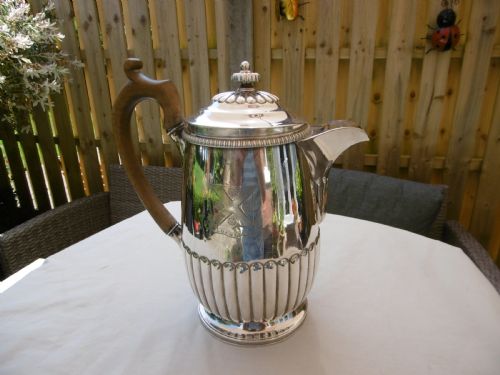


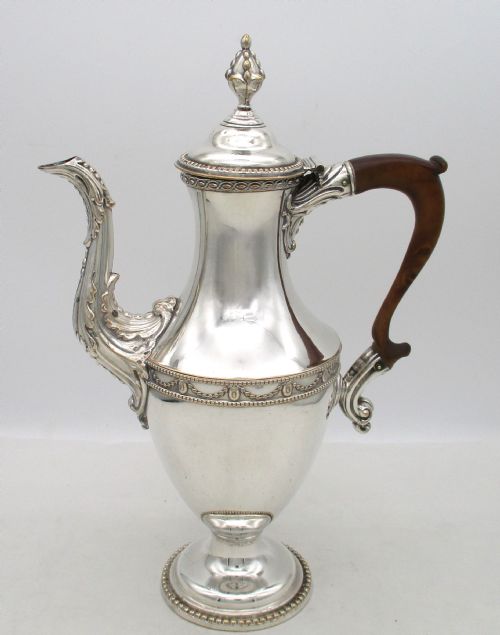

Antique Silver Water Urn
These antique silver water urn pieces offer striking focal points for formal hospitality, bringing classic Georgian and Victorian craft to the table.
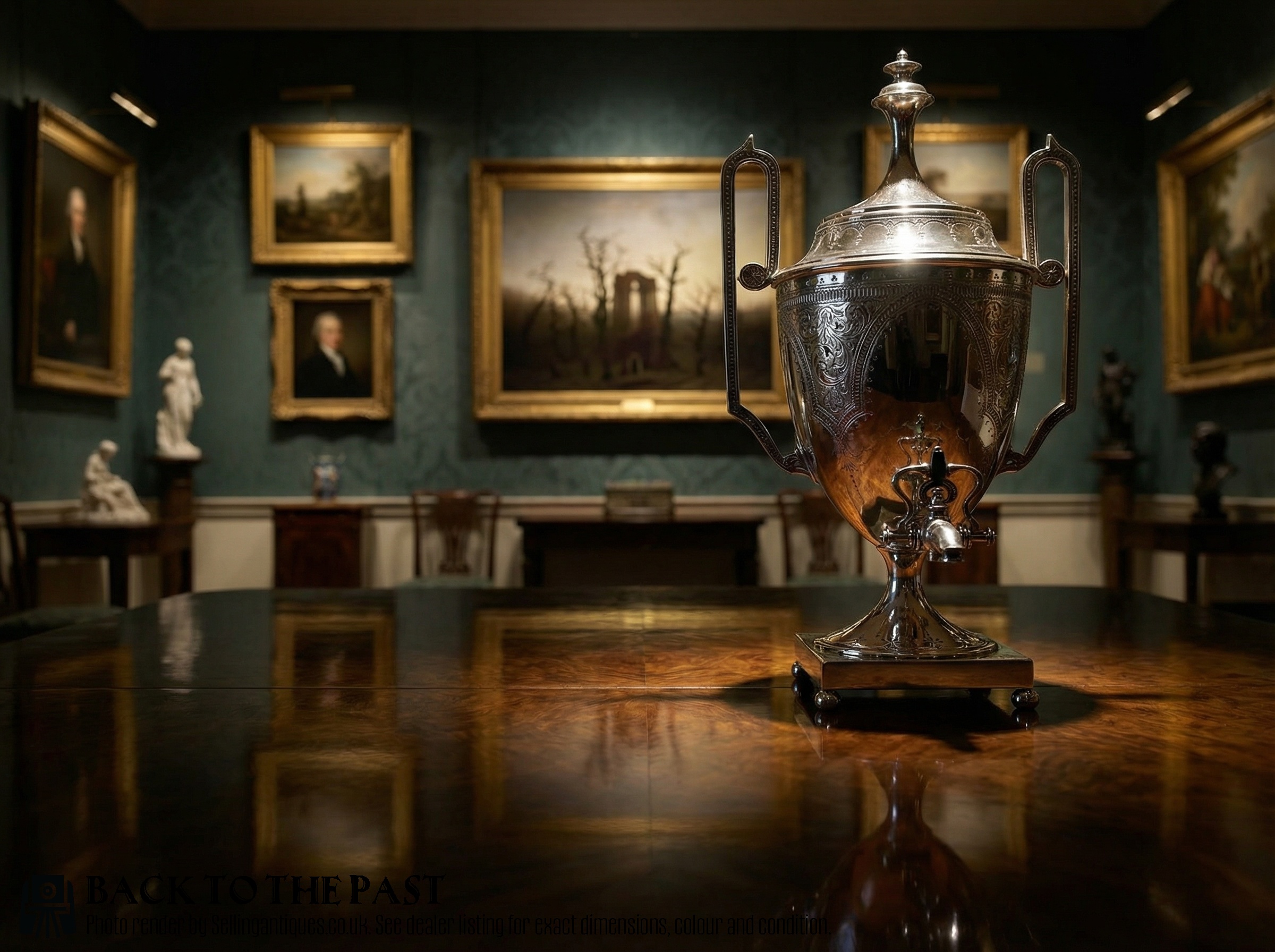
Antique Silver Water Urn
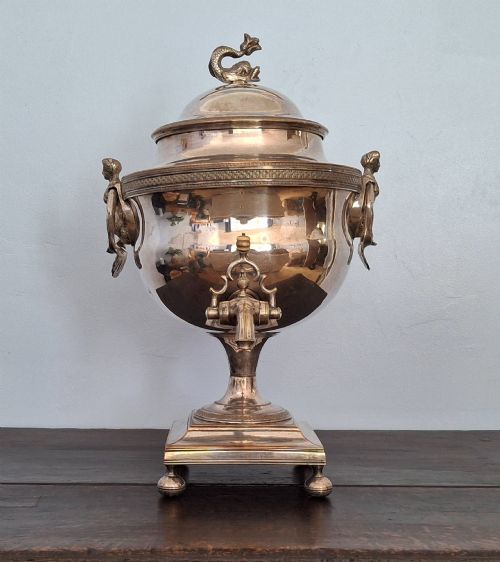
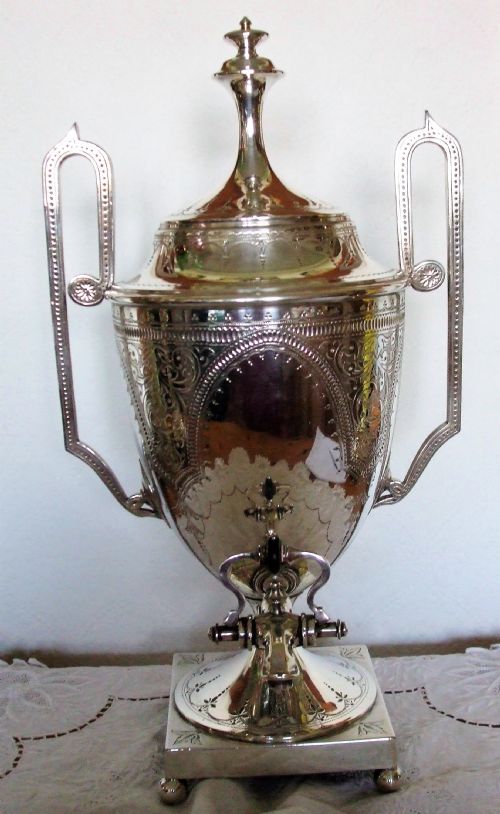
When you search for an antique silver water urn, you encounter substantial vessels designed to heat and dispense water for tea and coffee. The selection spans Georgian, Victorian, and Edwardian periods, appearing alongside related forms such as spirit kettles, samovars, ewers, and coffee pots.
The versions most common on this page include silver-plated samovars, Edwardian spirit kettles on stands with burners, and Georgian coffee pots. These objects originate from English and European makers, reflecting distinct stylistic shifts from Neoclassical austerity to ornate Victorian revivals.
Forms vary from tall Old Sheffield plated coffee pots to elaborate tea urns fitted with taps and wooden or ebony handles. Buyers find pieces ranging from mid-eighteenth-century examples to twentieth-century revivals, all maintaining the functional domestic scale of historical service.
Materials and construction methods
Silversmiths utilised sterling silver and silver plate, often applying Old Sheffield plating techniques over a base metal. Workshops integrated secondary materials like ebony, wood, and wicker for insulated handles and lift knobs, preventing heat transfer during use.
Construction involved raising or spinning metal sheets into hollow forms, then soldering spouts, handles, and cast feet securely to the body. Burners, stands, and taps required precise mechanical fitting to ensure stable operation and leak-free fluid control.
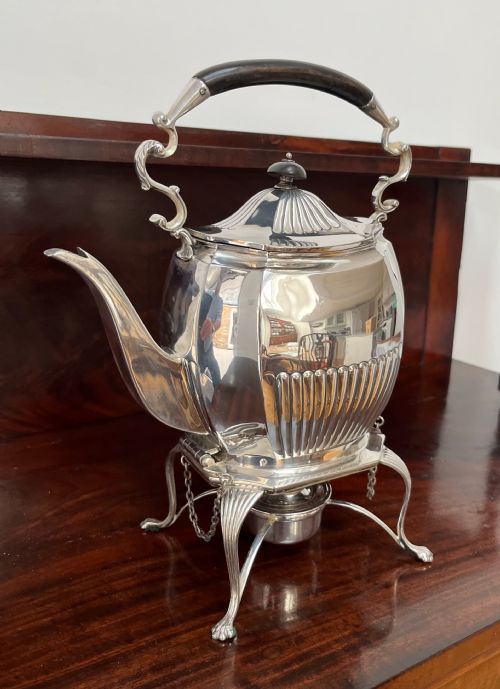
A tiny burner sits beneath the kettle, ready to keep the tea water hot long after the Georgian conversation has wandered off.
Markers of distinction
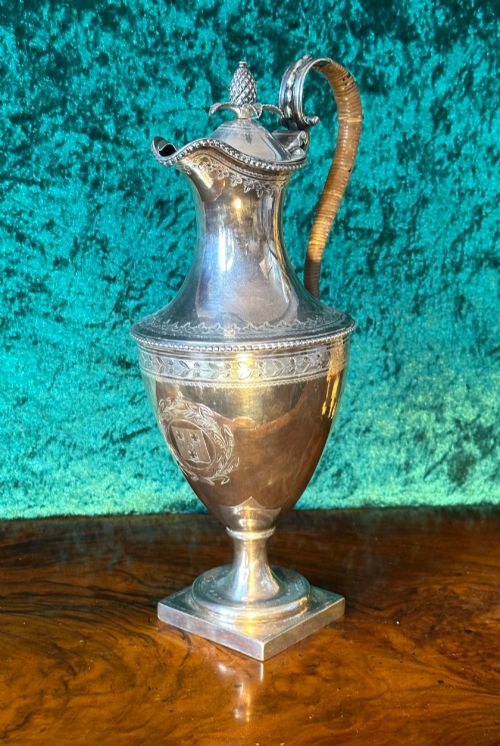
Quality rests in the crispness of chased or engraved heraldic crests and the structural integrity of cast mounts and handles. Superior examples maintain intact silver plating over the base metal without excessive wear through to the substrate.
Makers known for exceptional output, such as Paul Storr or Matthew Boulton, demonstrate superior weight, balanced proportions, and refined finishing compared to standard commercial production. Complete sets retaining their original matching stands and burners command greater interest.
Walker & Hall·Matthew Boulton·John Hoyland·Paul Storr·Risler and Carré Paris·Frederik Ellis Tim & Co
The Antique Silver Water Urn Glossary
- Samovar
- A heated metal urn traditionally used to boil and heat water for tea. These large vessels often feature an internal vertical heating tube and a spigot tap.
- Spirit Kettle
- A portable water kettle mounted on a metal stand above a small spirit burner. They allow hosts to maintain hot water at the tea table.
- Old Sheffield Plate
- An early composite material made by fusing a thin sheet of silver to a thicker copper ingot. This technique preceded modern electroplating.
- Ewer
- A large jug with a wide spout and curved handle, historically used for pouring water. In this category, they often overlap in form with coffee pots.
- Biggin
- A tall coffee pot fitted with an internal cylindrical container for holding ground coffee during brewing. Paul Storr examples are notably substantial.
Antique Silver Water Urn: Frequently Asked Questions
How were antique water urns used?
These vessels sat on sideboards or tea tables to supply hot water for brewing tea and coffee during formal gatherings. Servants lit the internal burners or charcoal chambers to keep the water at temperature throughout a meal.
Hosts operated the spigot taps to fill teapots directly at the table, combining utility with an impressive display of polished metalwork and domestic wealth.
How do I tell Georgian urns from Edwardian ones?
Georgian pieces typically display restrained Neoclassical lines, urn shapes, and bright-cut engraving or crisp heraldic crests. Sterling silver examples from this era show traditional hallmarks indicating exact assay offices and dates.
Edwardian versions often utilise silver plate over base metal and lean into heavier revivals of earlier styles. They frequently incorporate fitted stands with spirit burners and elaborate handles.
Can I use a spirit kettle today?
Many spirit kettles retain their original burners, but modern users generally treat them as decorative display items rather than functional kitchen appliances. The older solders and historical silver plating require careful preservation rather than daily heating.
Displaying them on sideboards or serving tables highlights their historical craftsmanship while protecting delicate components from thermal shock or wear.
What is the difference between a samovar and a spirit kettle?
A samovar is a large, upright water urn featuring a permanent tap and often an internal heating flue. They are designed to stand independently on a table or sideboard.
A spirit kettle is smaller and sits on a dedicated metal stand suspended above a removable burner. These units are more portable and focus on tea service rather than general water boiling.