


Silver Plate Biscuit Jar
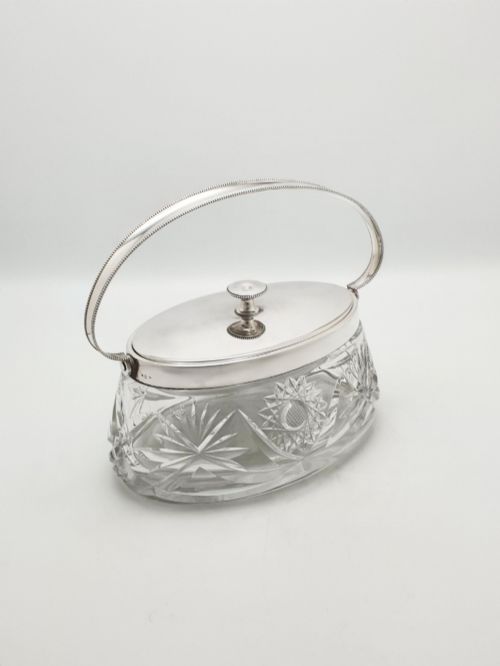
A silver plate biscuit jar sits on the dining table as a container for dry sweets, combining metal mounts with glass, ceramic or wood bodies.
Silver Plate Biscuit Jar
A silver plate biscuit jar represents a distinct form of dining room container originating primarily during the Victorian and Edwardian periods. These table vessels appear in various guises, from cylindrical drums to novelty shapes such as weights, paired with hinged lids and swing handles.
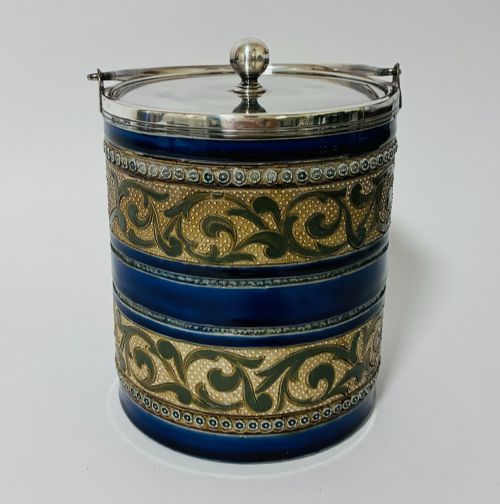
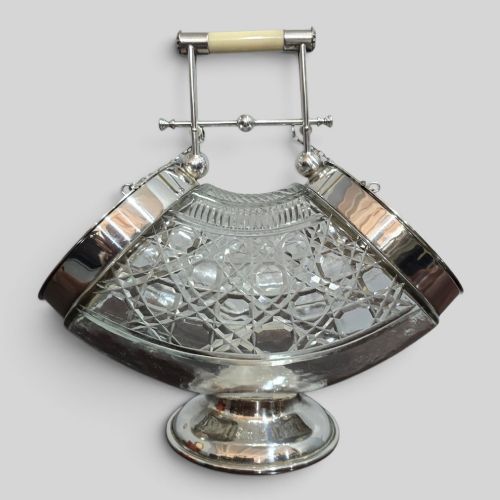
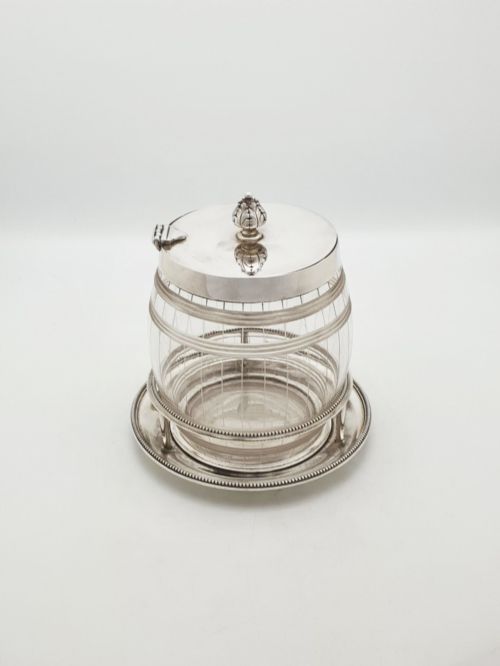
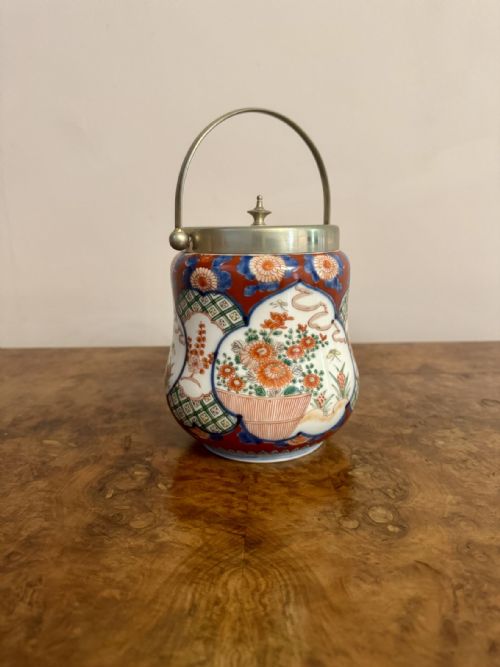
The versions met most frequently on this page combine silver-plated metalwork with cut glass, cranberry glass, or ceramic bodies including stoneware, earthenware, and Jasperware. Makers also utilised oak for novelty and drum-form boxes, alongside lined or pierced metal frameworks.
Production spans the nineteenth and early twentieth centuries, with examples stretching from the 1860s through the Edwardian era into the 1920s. Stylistic influences range from Neoclassical and Arts and Crafts to Japanese Imari patterns and Jugendstil designs.
Materials and Techniques
Silver plating forms the structural exterior of these containers, applied over base metals to create mounts, lids, swing handles, and decorative finials such as heraldic dragons. Manufacturers utilised electroplating techniques to deposit silver onto white metal foundations.
Bodies combine silver-plated mounts with blown and hobnail-cut glass, vibrant cranberry glass, or moulded ceramic bodies such as Doulton Lambeth stoneware and Wedgwood Jasperware. Oak timber also appears, fashioned into staved drum bodies or novelty weight forms bound in silver plate.
Listings feature items spanning the Victorian, Edwardian, and early twentieth-century periods, utilising cut glass, oak, stoneware, and cranberry glass.
Assessing Quality
Quality rests upon the weight and crispness of the silver-plated mounts, the depth of cut glass faceting, and the distinction of the ceramic body. Maker attribution to notable firms such as Elkington, Mappin and Webb, or Walker and Hall adds notable weight.
The integration between the silver-plated hardware and the glass or ceramic liner governs the success of the piece. Superior examples display balanced proportions, finely cast finials, and original glass liners fitting precisely within pierced or engraved frames.
Mappin and Webb·Elkington and Co·Thomas Bradbury·Robert and Belk·Walker and Hall·John Grinsell and Sons
The Silver Plate Biscuit Jar Glossary
- Silver Plate
- A thin layer of silver bonded to a base metal foundation. This technique allowed manufacturers to produce domestic tableware with the appearance of solid silver at a lower cost.
- Jasperware
- A type of fine stoneware developed by Wedgwood, typically featuring matte white relief figures applied against a coloured ground. Blue and multi-coloured variations frequently appear on Victorian examples.
- Hobnail Cut
- A raised, diamond-shaped geometric pattern cut into the surface of glassware. This technique catches the light and adds tactile texture to the body of the container.
- Cranberry Glass
- A rich red glass coloured with gold chloride during production. It provides a translucent, warm tone favoured for Victorian tablewares.
- Finial
- A decorative knob or figure positioned on top of a lid. On these containers, they range from simple spheres to heraldic dragons.
Silver Plate Biscuit Jar: Frequently Asked Questions
What is a silver plate biscuit jar?
A silver plate biscuit jar is a covered tabletop container designed to hold dry biscuits and sweets during tea service. They combine a metal frame and lid with an interior vessel made of glass, ceramic, or wood.
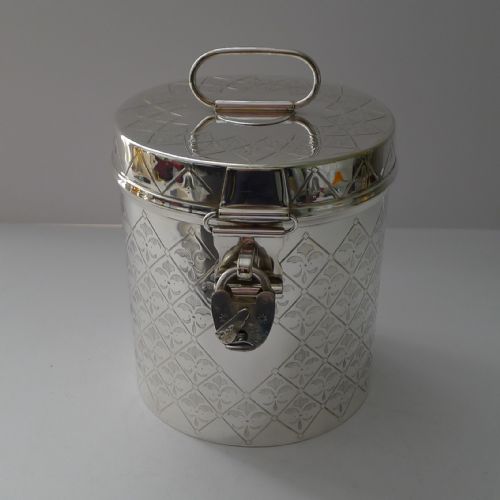
These pieces gained popularity in British households during the Victorian era and continued into the Edwardian period. They frequently feature locking mechanisms or hinged lids with swing handles for easy transport.
How were biscuit jars used?
Victorian and Edwardian households placed these jars on the dining table or sideboard during afternoon tea and formal dinners. They kept dry biscuits fresh and protected from moisture while offering guests a selection.
Servants would fill the glass or ceramic liner in the pantry before bringing the vessel to the table. Locking versions secured richer provisions from the household staff.
How do I clean a silver plate biscuit jar?
Clean the silver-plated mounts using a mild silver polish applied with a soft cloth, taking care to avoid abrasive contact with any glass, ceramic, or wooden elements. Rinse removable glass liners in warm soapy water.
Prevent polish from building up in engraved lines or around ceramic mounts. Ensure all parts are thoroughly dry before reassembling the vessel.
How do I date a silver plate biscuit jar?
Dating relies upon stylistic markers, material combinations, and maker marks stamped into the silver plate. Victorian pieces often display heavier cast mounts and eclectic revival styles, while Edwardian examples lean towards lighter frames and coloured glass.
Manufacturer stamps and registry marks provide specific clues to the decade of manufacture. Comparing the form and glass cutting styles against documented production periods narrows the timeline further.