


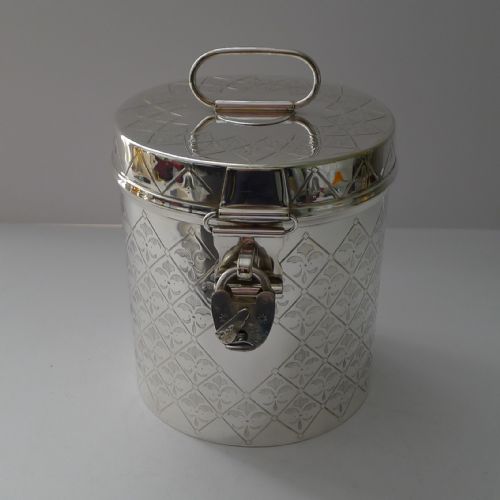


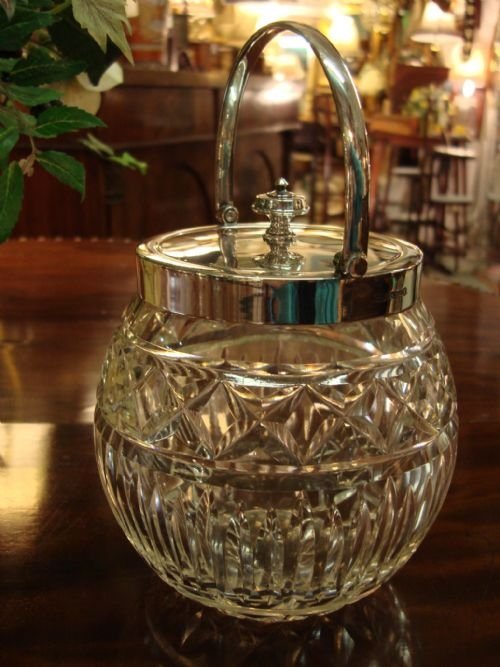


Antique English Biscuit Jar
An antique English biscuit jar is a sturdy table container for dry provisions, merging practical storage with Victorian dining display.
Antique English Biscuit Jar
An antique English biscuit jar is a dedicated storage vessel designed for the parlour or dining room, emerging in various forms across the Victorian and Edwardian eras. Buyers searching for an antique English biscuit jar encounter cylindrical barrels, drum shapes, and square boxes intended to keep dry goods crisp. These pieces combine utilitarian kitchenware roots with decorative domestic presentation.
The versions most frequently met on this page date from the Victorian period through to the George V era, spanning the late nineteenth and early twentieth centuries. Surviving examples incorporate hinged lids, swing handles, and occasionally internal glass liners designed to preserve the contents. Such vessels range from simple ceramic bodies to heavily mounted silver plate and solid sterling silver constructions.
Distinctions in quality
The division between standard and superior pieces rests upon the weight of the metal mounts and the clarity of the glass or ceramic body. Heavy sterling silver lids and fully hallmarked mounts indicate a higher tier of production than thin silver plate over base metal. Precision in the alignment of the hinged lid and the smooth operation of any locking mechanism mark the work of better makers.
Artistic execution in the body material further separates ordinary utilitarian jars from high-end examples. Finely detailed jasper ware reliefs, crisp hand-cut facets in heavy lead glass, and carefully coopered oak staves denote superior craftsmanship. The inclusion of matching original glass liners adds significant merit to surviving specimens.
Antique English Biscuit Jar Retail Price Guide 2026
Typical asking prices for english biscuit jar among the pieces listed under this phrase on Sellingantiques today, from the lower quarter to the upper quarter. They describe what is for sale here now, not the wider market.
Ceramic biscuit barrels on this site encompass both traditional stoneware and Wedgwood jasper ware productions.
Mappin and Webb·John Grinsell and Sons·James Dixon and Sons
The Antique English Biscuit Jar Glossary
- Jasper ware
- A fine stoneware developed by Wedgwood, characterised by a matte surface and contrasting moulded white neoclassical reliefs applied to a coloured ground.
- Silver plate
- A layer of silver fused or electroplated onto a base metal such as copper, nickel, or brass, widely utilised for mounts and lids on nineteenth-century domestic wares.
- Sterling silver
- An alloy consisting of ninety-two point five percent silver by mass and seven point five percent other metals, meeting the legal standard for British hallmarked silver.
- Drum form
- A cylindrical container shape with straight vertical sides and flat top and bottom surfaces, mimicking the proportions of a snare drum.
- Hallmark
- An official stamp applied to precious metals in Britain to guarantee purity, typically including maker marks, assay office symbols, and date letters.
Antique English Biscuit Jar: Frequently Asked Questions
What were antique English biscuit jars used for?
These jars served as lidded containers for dry biscuits and sweet treats, kept on sideboard tables in Victorian dining rooms and parlours.
Hosts used them to serve guests during afternoon tea or after-dinner gatherings while keeping moisture away from delicate baked goods.
How do I date an antique English biscuit jar?
Dating relies heavily on silver hallmarks, registry marks stamped into ceramics, and stylistic shifts between the Victorian and Edwardian periods.
Heavier oak and cut-glass combinations typically point to the late nineteenth century, while lighter sterling silver mounts often align with George V production.
Did these biscuit jars originally come with liners?
Many ceramic, glass, and wooden biscuit boxes featured removable glass liners designed to keep biscuits fresh and protect the outer structure.
Surviving examples with their original glass liners intact are particularly desirable for collectors.
How should I clean a silver plated biscuit jar?
Cleaning requires a soft cloth and specialised silver polish applied gently to avoid wearing through the plated surface on mounts and handles.
Wooden staves and ceramic bodies should be wiped with a dry or barely damp cloth to prevent moisture damage.