


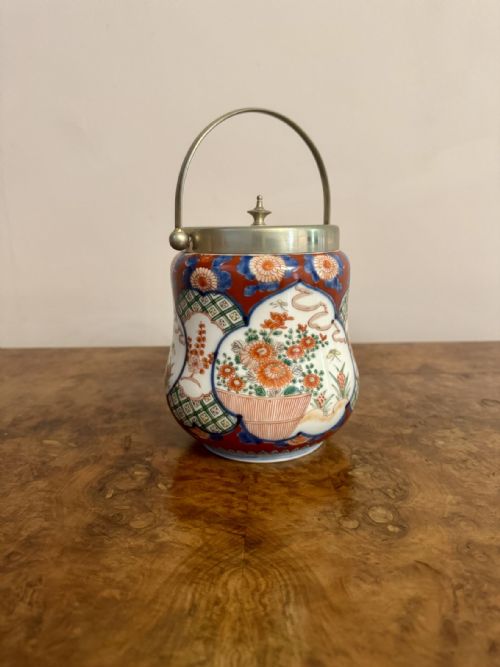


Antique Biscuit Barrel Lid
An antique biscuit barrel lid completes a Victorian or Edwardian table jar, bringing silver plate and glass back together.
Antique Biscuit Barrel Lid
An antique biscuit barrel lid is the protective cover for a lidded jar designed to keep dry baked goods fresh in Victorian and Edwardian parlours. When searching for an antique biscuit barrel lid, a buyer finds matching components for glass, ceramic, and silver-plated containers from the nineteenth and early twentieth centuries.
Most examples encountered here belong to Edwardian cut glass, Victorian cranberry glass, or ceramic bodies mounted with silver plate. These covers range from simple hinged metal mounts to decorated ceramic and enamelled tops intended to seal the container.
Origins span English and continental workshops, reflecting the formal hospitality rituals of the Victorian era and the later Edwardian period. The forms coordinate directly with the barrel bodies, often incorporating matching silver-plated rims or handles.
How they were made
Makers formed these lids using silver plate over base metals, moulded glass, and fired ceramic, often combining multiple materials in a single piece. Silver-plated mounts provide the structural rim and hinge, while cut glass and cranberry glass elements are shaped by blowing and wheel-cutting.
Enamel decoration and gold leaf add surface detail to ceramic and glass variants, reflecting traditional firing and painting techniques of the late nineteenth century. Hallmarked solid silver examples demonstrate traditional silversmithing methods involving hammering, piercing, and structural soldering.
Antique Biscuit Barrel Lid Retail Price Guide 2026
Typical asking prices for biscuit barrel lid among the pieces listed under this phrase on Sellingantiques today, from the lower quarter to the upper quarter. They describe what is for sale here now, not the wider market.
Listings feature items from the Victorian, Edwardian, and Art Deco periods, utilising silver plate, cranberry glass, and porcelain.
What varies in quality
The distinction between standard production and superior work lies in the crispness of the glass cutting and the weight of the silver plating. Finer pieces display deep, clean facets on cranberry glass and robust metal mounts that maintain a precise fit with the jar body.
Hand-painted enamel and gold leaf application show variation in skill, with better examples retaining precise brushwork and vibrant colour saturation. The integrity of the hinge mechanism and the thickness of the metal further separate ordinary domestic items from high-grade parlour pieces.
The Antique Biscuit Barrel Lid Glossary
- Silver Plate
- A thin layer of silver bonded to a base metal foundation. This technique allowed manufacturers to produce durable tableware with the appearance of solid silver at a lower cost.
- Cranberry Glass
- A rich red glass coloured by the addition of gold chloride to the molten batch. It gained popularity during the Victorian period for decorative tableware and jars.
- Cut Glass
- Glassware decorated by grinding facets and patterns into the surface using rotating wheels. This process created brilliant light refraction on Edwardian jars and barrels.
- Enamel
- A glassy substance fused to metal or ceramic surfaces through high-heat firing. It provided durable colour decoration on Victorian and Edwardian containers.
Antique Biscuit Barrel Lid: Frequently Asked Questions
How do I date an antique lid?
Dating relies on identifying the prevailing materials, manufacturing techniques, and stylistic markers recorded in Victorian and Edwardian production. Cut glass facets and cranberry glass colours align closely with late nineteenth and early twentieth-century decorative trends.
Hallmarks on solid silver versions provide exact assay office years, whereas silver-plated and glass examples require stylistic comparison with period tableware.
Can I match a lid to a jar?
Matching a loose lid to an existing jar requires careful measurement of the inner rim diameter and verification of the mounting collar shape. Silver-plated rims must align precisely with the collar dimensions of the original glass or ceramic body.
Differences in Victorian and Edwardian manufacturing tolerances mean that interchangeable fitting is uncommon without identical maker specifications.
How do I care for silver plate?
Silver plate requires gentle cleaning with non-abrasive cloths and mild detergents to preserve the underlying metal layer beneath the silver deposit. Avoiding harsh chemical dips prevents the permanent removal of antique patination and plating.
Stored in stable humidity environments, these metal components retain their finish without developing active corrosion.