





Silver Mounted Biscuit Jar
A silver mounted biscuit jar is a heavy table container holding dry biscuits, prized for its gleaming metal mounts and decorative glass or timber body.
Silver Mounted Biscuit Jar
A silver mounted biscuit jar serves as a handsome receptacle for dining tables, combining a secure lid and swing handle with a robust vessel. Collectors seeking a silver mounted biscuit jar encounter diverse forms spanning the Victorian and Edwardian eras.
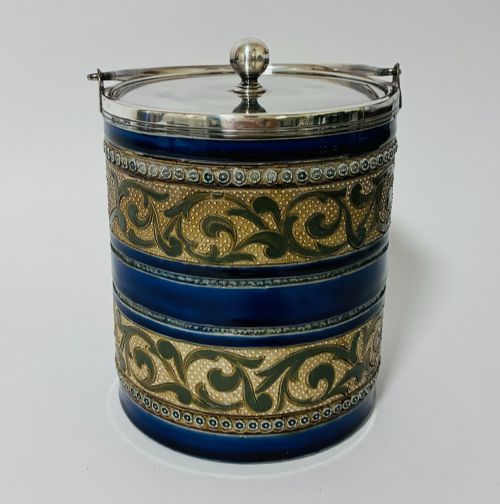
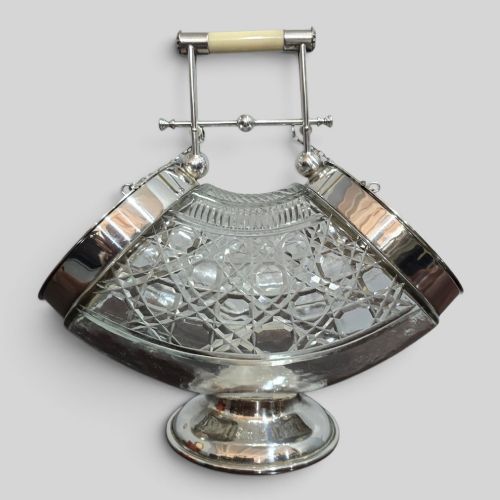
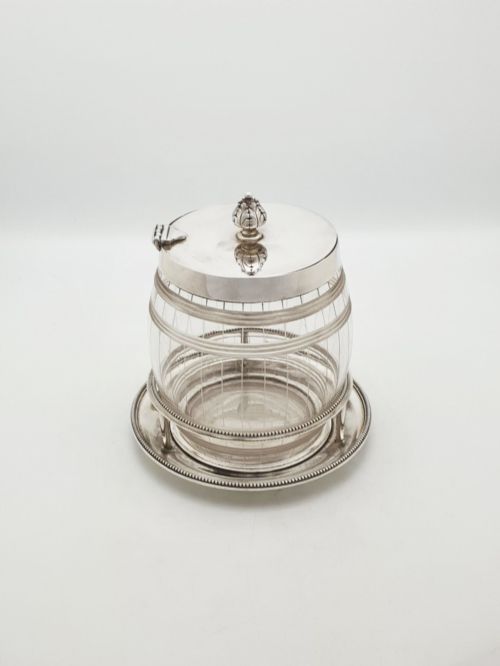
The prevalent iterations on this page comprise cut glass, English oak, cranberry glass, and stoneware bodies fitted with silver or silver-plated mounts. These items bridge utilitarian dining room storage and decorative domestic arts.
Examples range from plain drum forms to colourful ceramic bodies and heavily faceted glass. Each piece reflects the formal hospitality rituals of late nineteenth and early twentieth century households.
Materials and construction
Makers combined silver or plated mounts with heavy cut glass, moulded stoneware, and carved oak bodies to create durable vessels. The metal rims, lids, and swing handles were securely fitted to protect the upper edges of the glass or ceramic containers.
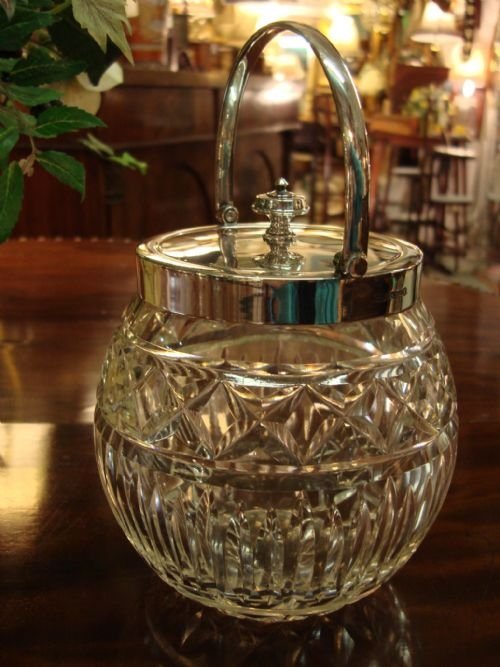
Glass bodies relied on deep hobnail cutting or rich cranberry coloration to catch the light on the dining table. Oak barrels utilised tight coopered staves or solid turned timber reinforced with substantial metal bands and hinged lids.
Silver Mounted Biscuit Jar Retail Price Guide 2026
Typical asking prices for silver mounted biscuit jar among the pieces listed under this phrase on Sellingantiques today, from the lower quarter to the upper quarter. They describe what is for sale here now, not the wider market.
Some Victorian households deployed sturdy oak biscuit barrels as impromptu ice buckets when the dining room called for chilled refreshment.
Assessing quality and character
Quality rests upon the weight and depth of the glass cutting, the richness of coloured glass, and the substantial thickness of the timber. Better examples display crisp metalwork and robust hinges that hold the lid firmly in position.
The distinction between ordinary production and finer work lies in the harmony between the metal mounts and the vessel itself. Marked pieces by established silversmiths demonstrate superior execution in both the mountings and the fitted handles.
John Grinsell and Sons·James Dixon and Sons·Elkington
The Silver Mounted Biscuit Jar Glossary
- Silver plate
- A thin layer of silver fused to a base metal core such as copper or nickel brass. This technique provided the bright appearance of solid silver at a lower cost.
- Cranberry glass
- A rich red-pink transparent glass created by adding gold chloride to the molten batch. It appeared frequently in Victorian and Edwardian tableware.
- Hobnail cut
- A sharp, faceted decorative pattern cut into the surface of glassware resembling the head of a traditional clout nail. This style maximised light refraction.
- Jasperware
- A fine-grained stoneware developed by Josiah Wedgwood featuring applied white porcelain reliefs against a coloured matte background. It is seen in multi-coloured ceramic bodies.
- Stoneware
- A heavy, dense ceramic fired at high temperatures until semi-vitrified and impermeable. Famous examples include salt-glazed vessels from Doulton Lambeth.
Silver Mounted Biscuit Jar: Frequently Asked Questions
What is a silver mounted biscuit jar?
A silver mounted biscuit jar is a covered container designed to keep dry biscuits fresh on the dining table or sideboard. They typically feature a ceramic, glass, or timber body fitted with a metal lid and swing handle.
These vessels became popular household accessories during the Victorian era and continued through the Edwardian period. Their sturdy construction allowed them to withstand daily domestic use while presenting an ornamental appearance.
How do I date a biscuit jar?
Dating relies on stylistic clues, materials, and any metal hallmarks stamped onto the mounts. Victorian examples often display heavier ornamentation, while Edwardian pieces sometimes adopt lighter, cleaner lines.
Changes in glass colours, such as deep cranberry hues, and ceramic body types like Doulton stoneware also point to specific decades. Hallmarks on silver or silver-plated mounts offer the most precise chronological indicator.
Were these jars used only for biscuits?
While primarily manufactured to hold dry sweet biscuits or rusks during formal afternoon tea and after-dinner routines, some variations served secondary purposes. Sturdy timber versions occasionally doubled as ice buckets.
The fitted lids and insulated interior spaces made them suitable for any dry item requiring protection from moisture in a dining room setting.
How should I clean silver mounts?
Silver and silver-plated mounts require gentle cleaning with a specialised soft cloth to maintain their lustre without wearing down the thin metal layer. Avoid abrasive pastes that might scratch adjacent glass or ceramic surfaces.
Care should be taken to keep liquids away from the interior joins of wooden barrels to prevent warping the timber staves or loosening the metal bands.