

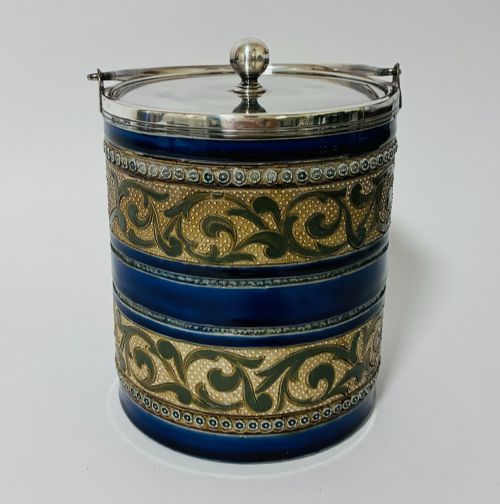
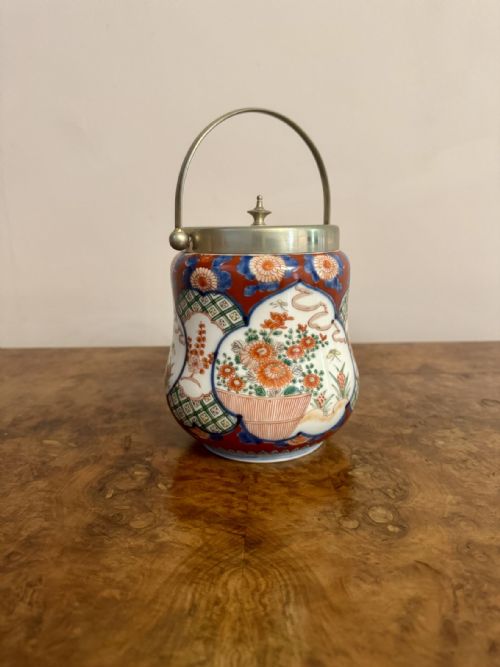


Victorian Ceramic Biscuit Barrel
A Victorian ceramic biscuit barrel sits on the table as a charming relic of parlour life, keeping dry goods secure inside decorated stoneware and earthenware.
Victorian Ceramic Biscuit Barrel
When you search for a Victorian ceramic biscuit barrel, you enter a field defined by lidded vessels designed to hold dry goods for the table. The examples seen on this page span the Victorian era, alongside pieces marked by Edwardian tastes and the turn of the twentieth century.
You are most likely to meet pieces formed from ceramic, earthenware, stoneware, and Jasperware, often paired with metal mounts. These range from Doulton Lambeth and Carlton Ware productions to Wedgwood pieces in multi-coloured clay.
The styles recorded here stretch from Neoclassical and Japanese Imari influences to Victorian Arts and Crafts designs. Each one reflects the domestic habits of the late nineteenth and early twentieth centuries, serving both functional and decorative roles in the home.
How they were made
Potters shaped these bodies from clay, earthenware, stoneware, and porcelain, frequently employing Jasperware techniques for contrasting matte reliefs. Factories such as Wedgwood and Doulton Lambeth utilised specialised moulding and glazing methods to achieve crisp detail and durable surfaces.
Metalworkers fitted many of these ceramic bodies with silver-plated or brass hardware, including hinged lids, rims, and swinging bail handles. The integration of metal mounts required precise engineering to secure the ceramic vessels without causing damage.
Victorian Ceramic Biscuit Barrel Retail Price Guide 2026
Typical asking prices for victorian ceramic biscuit barrel among the pieces listed under this phrase on Sellingantiques today, from the lower quarter to the upper quarter. They describe what is for sale here now, not the wider market.
Materials documented across these listings include silver plate, stoneware, Jasperware, ceramic, porcelain, earthenware, and brass.
What varies in quality
The distinction between ordinary and superior examples lies in the crispness of the moulded ornament and the richness of the ceramic body. Multi-coloured clay bodies, such as three-colour Wedgwood pieces, demand greater skill in execution than single-colour counterparts.
The quality of the accompanying metalwork also defines the piece, with substantial silver-plated mounts and finely cast brass hardware elevating the overall standard. Artisanal execution in hand-painted Japanese Imari decoration or detailed Doulton Lambeth incising separates masterwork from routine factory output.
Doulton Lambeth·Carlton Ware·Wedgwood
The Victorian Ceramic Biscuit Barrel Glossary
- Jasperware
- A type of unglazed stoneware developed by Wedgwood, famous for its matte surface and contrasting white relief decorations. It appears frequently in various colours across late nineteenth-century tableware.
- Silver Plate
- A thin layer of silver applied to a base metal foundation, commonly used for the lids, rims, and handles of these lidded jars. This technique provided the appearance of solid silver at a lower cost.
- Stoneware
- A robust, vitrified pottery fired at high temperatures to produce a dense, impermeable material. It resists moisture absorption naturally, making it ideal for food storage.
- Imari
- A style of Japanese porcelain and ceramics characterised by a palette of underglaze blue, iron red, and gilt highlights. Victorian makers often drew inspiration from these traditional East Asian aesthetics.
- Earthenware
- Porous pottery fired at lower temperatures than stoneware, requiring a liquid glaze to render it waterproof. It served as a versatile canvas for painted and moulded decoration.
Victorian Ceramic Biscuit Barrel: Frequently Asked Questions
What is a biscuit barrel?
A biscuit barrel is a covered ceramic or glass container designed to keep dry biscuits crisp and fresh on the dining or parlour table. They became essential items in middle-class households during the latter half of the nineteenth century.
These vessels usually feature a fitted lid and a carrying handle, allowing hosts to transport them easily from the pantry to the entertaining space.
How were biscuit barrels used?
Victorian hosts used these lidded jars to serve biscuits and small cakes during afternoon tea or evening gatherings. The tight-fitting metal or ceramic lids prevented moisture from softening the baked goods.
They stood prominently on sideboards or tea tables as both decorative ornaments and practical dining accessories.
How do I care for a ceramic biscuit barrel?
Wash these vessels gently by hand using mild soap and warm water, avoiding harsh scouring pads that might scratch the glaze or remove silver plating. Dry the metal mounts thoroughly after cleaning to prevent tarnishing and corrosion.
Display them away from direct sunlight and extreme temperature fluctuations to protect delicate ceramic bodies and historical metal finishes.
How can I tell the period?
Examine the materials, marks stamped on the base, and stylistic motifs such as Neoclassical reliefs or Arts and Crafts lettering to determine the era of manufacture. Victorian pieces often display registration marks or specific factory ciphers associated with late nineteenth-century production.
Compare the weight, handle construction, and mounting style with documented examples from known potteries to narrow down the decade.