


Seventeenth Century Print
A seventeenth century print brings actual history to your walls, capturing centuries-old portraiture, cartography, and classical subjects on paper or vellum.
Seventeenth Century Print
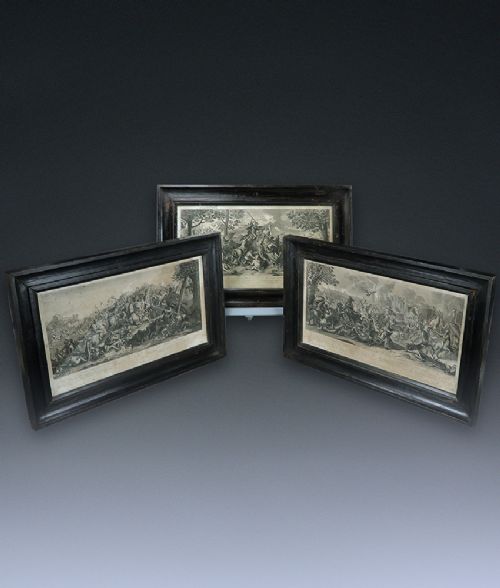
A seventeenth century print encompasses framed engravings, etchings, mezzotints, and antiquarian county maps produced across the seventeen-hundreds and earlier periods.
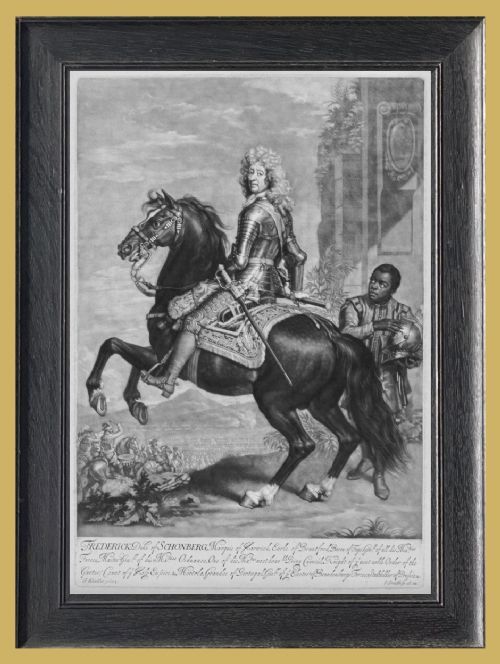
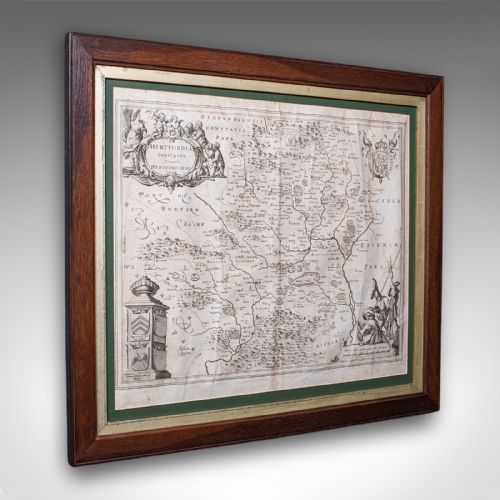
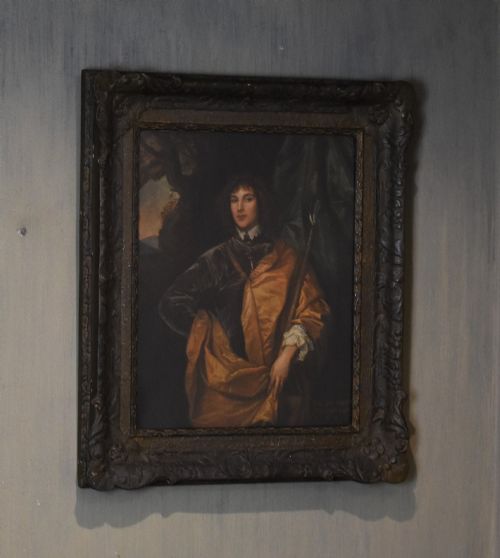
Buyers frequently encounter framed cartography by makers such as Blaeu and Speed alongside portrait prints after van Dyck and Kneller.
The selection extends from seventeenth-century impressions to later reproductions and editions spanning the eighteenth century and the Edwardian era.
Judging quality and execution
Quality rests upon the crispness of the plate impression and the fidelity of the early ink work on paper or vellum.
The significance of the cartographer, publisher, or artist dictates the standing of the piece within its period.
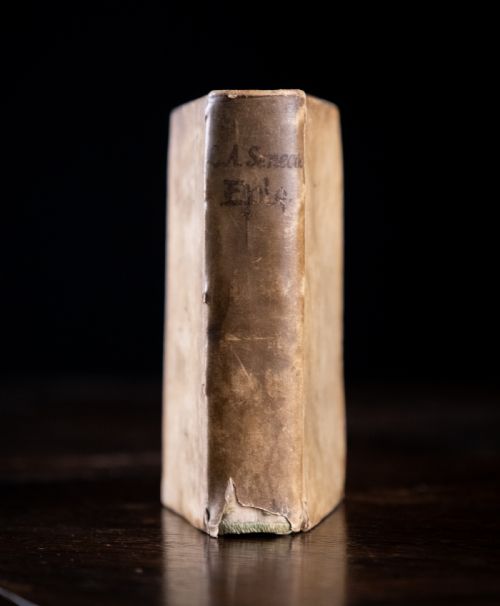
Listings feature paper, vellum, oak, walnut, and glass across seventeenth-century, eighteenth-century, and Edwardian periods.
John Smith·Sir Godfrey Kneller·François Perrier·Le Brun·Joan Blaeu·John Speed·William Hole·Robert Morden·Polidoro de Caravaggio·Claes Jansz Visscher
The Seventeenth Century Print Glossary
- Mezzotint
- A printmaking process of the tonal method, enabling smooth gradations of light and shade. John Smith utilised this method for portraiture.
- Cartography
- The science or practice of drawing maps, represented here by county maps and atlases. Early cartographers included Joan Blaeu and John Speed.
- Etching
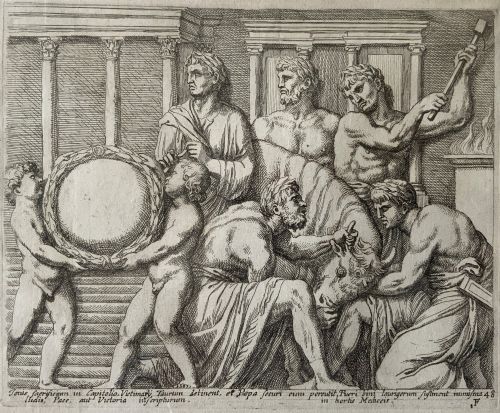
- A method of making prints using acid to cut into the unprotected parts of a metal surface. François Perrier employed this technique for classical antiquity scenes.
- Vellum
- A fine parchment made from calfskin, utilised as a durable writing and printing surface. It appears alongside traditional paper in these listings.
- Carolean
- Pertaining to the reign of Charles the First, often used to describe the style of art and frames from the period.
Seventeenth Century Print: Frequently Asked Questions
How do I identify a seventeenth century print?
Examine the paper quality, ink consistency, and framing materials such as period walnut or oak. Plates from this era often display distinct platemarks and typography characteristic of early printing.
Context is provided by the cartographer or artist named on the work, alongside style markers like Baroque or Carolean design.
Are these maps original period items?
The selection includes genuine seventeenth-century county maps alongside works produced in subsequent centuries such as the Edwardian era. Listings specify the exact period and cartographer for each item.
Checking the associated atlas or publication details helps confirm the age of the specific map impression.
How should I frame and display these prints?
Protect paper and vellum surfaces from direct sunlight by using UV-filtering glass. Period frames complement the age of the artwork but require stable indoor humidity.
Mounting should utilise acid-free materials to preserve the paper and ink over time.
What subjects are most common?
County maps and cartography form a major category, alongside portraits of royalty, dignitaries, and philosophers. Classical antiquity and historical triumphs also appear frequently.
Engravings and etchings document the prominent figures and geographical surveys of the era.