

Seventeenth Century Chest Drawers
Seventeenth century chest drawers offer sturdy storage spanning Jacobean and Charles II periods, bringing solid timber construction and historic character into modern rooms.
Seventeenth Century Chest Drawers
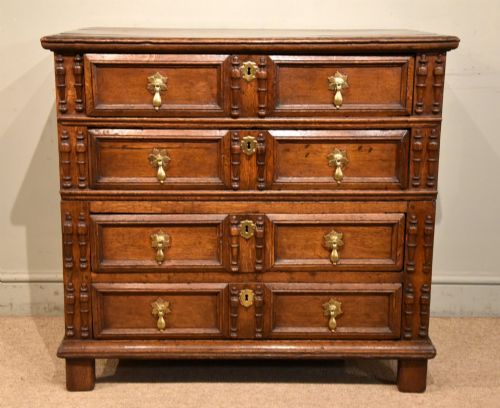
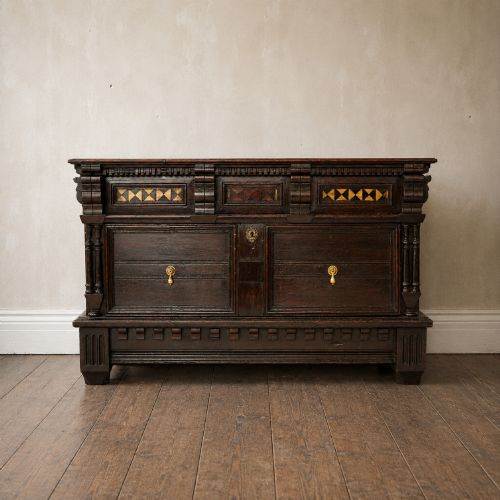
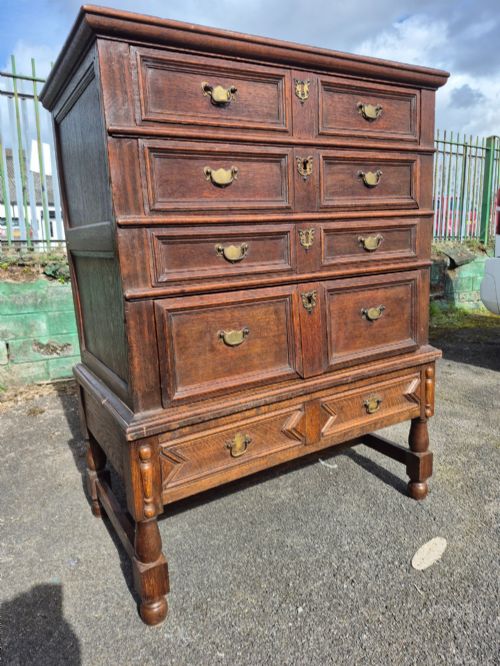
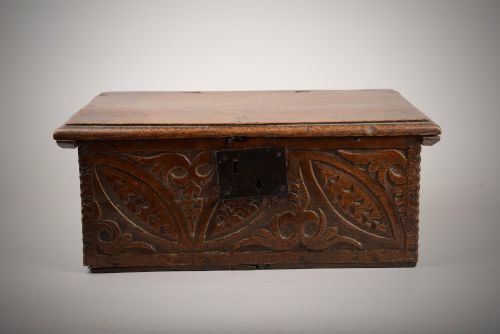
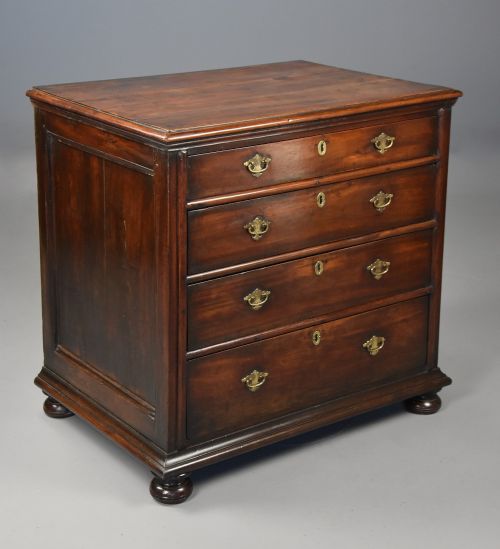
A seventeenth century chest drawers search reveals early British and continental storage furniture primarily built from solid oak, walnut, and fruitwood. Buyers encounter regional variants including two-part chests, pieces raised on stands, and mule chests designed for household linens.
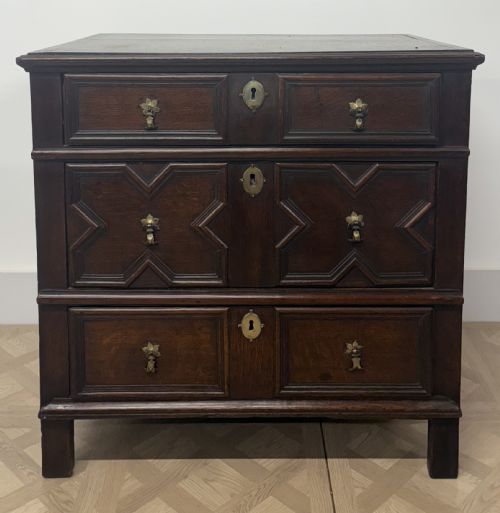
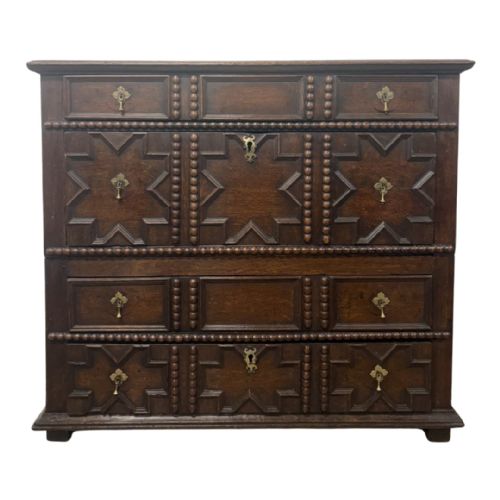
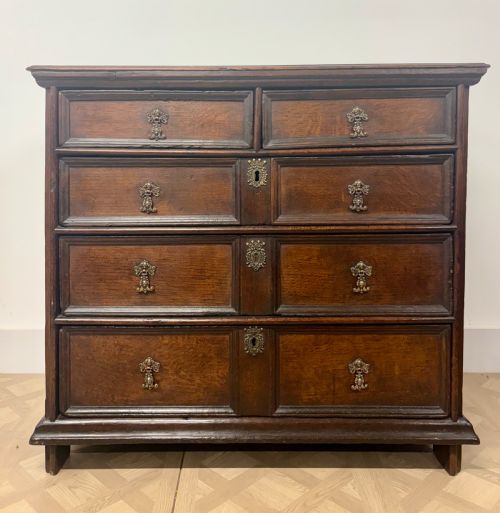
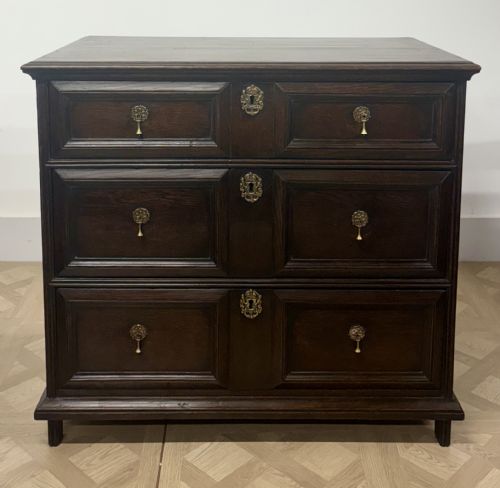
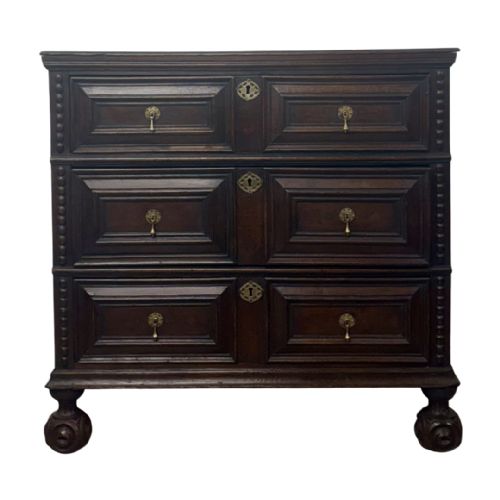
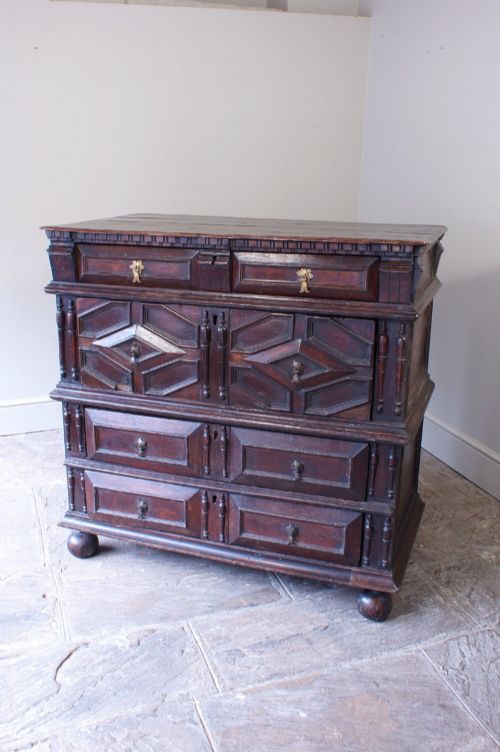
The version most commonly met on this page is the English oak chest bearing geometric or moulded drawer fronts, often dating from the Charles II or William and Mary periods. These practical storage pieces demonstrate the evolution of domestic cabinetry from simple boarded coffers to multi-drawer units.
Materials and Construction Techniques
Cabinetmakers utilised heavy native timbers, predominantly oak for structural integrity and walnut or fruitwood for decorative surfaces. Joinery relied on traditional methods such as frame-and-panel construction and pegged mortise and tenon joints.
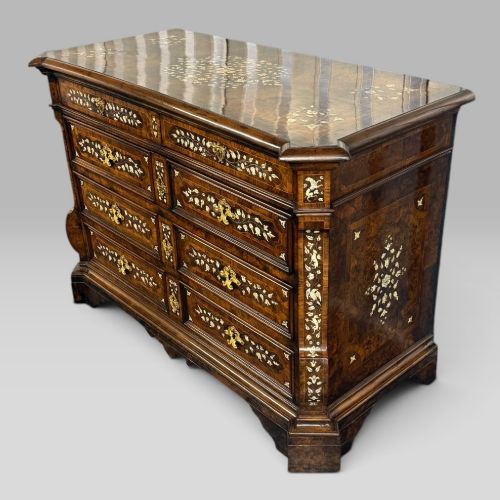
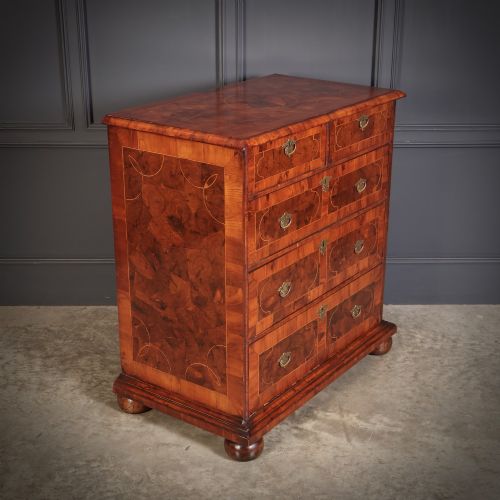
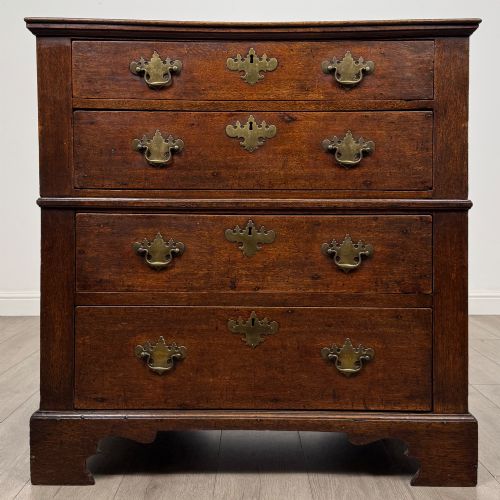
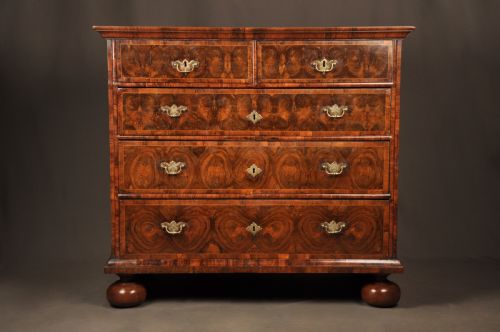
Decorative detailing on seventeenth century chest drawers involved applied geometric mouldings, cross-banding, and intricate veneer work using olive, burl walnut, and wood inlay. Hardware consisted of brass drop handles and plates fixed to drawer faces alongside iron hinges and locks.
Listings feature walnut, oak, and fruitwood timbers across Jacobean, Charles II, and William and Mary styles.
Factors Determining Quality
The distinction between average examples and superior pieces rests on the crispness of the applied geometric mouldings and the complexity of the veneering. Untouched surfaces retaining natural fading and original timber patination outrank pieces with heavily restored or replaced elements.
Proportion and architectural harmony dictate the upper tiers of the market, particularly on chest on stand forms and cabinets. The survival of original brasses and undisturbed internal drawer construction significantly elevates the standing of an individual piece.
The Seventeenth Century Chest Drawers Glossary
- Oyster veneering
- Cutting small branches across the grain to produce circular or oval patterns resembling oyster shells. This technique appeared frequently on late seventeenth century walnut and olive surfaces.
- Geometric mouldings
- Raised wooden strips applied to drawer fronts in repeating rectilinear patterns. These added depth and decorative relief to otherwise plain timber facades during the Charles II period.
- Chest on stand
- A form comprising a primary drawer section elevated upon a separate lower table base with legs. This configuration lifted storage higher off damp floors.
- Mule chest
- A storage chest featuring one or more drawers built into the base beneath the main compartment. It bridged the transition between traditional blanket chests and modern drawer units.
- Cross-banding
- Border strips of veneer laid with the grain running perpendicular to the central panel. It framed drawer fronts and tabletops on high-status case furniture.
Seventeenth Century Chest Drawers: Frequently Asked Questions
How do I date a seventeenth century chest drawers?
Dating relies on observing construction methods, timber choices, and decorative motifs like geometric mouldings or applied split spindles. Earlier Jacobean pieces tend to be heavier oak with straightforward frame-and-panel builds, while later Charles II and William and Mary examples introduce walnut, veneers, and more complex drawer arrangements.
Hardware placement and the presence of original brasses also help establish a chronological window. Over time, construction shifted from boarded sides to sophisticated framed housings designed to combat wood movement.
Where were these chests placed in old homes?
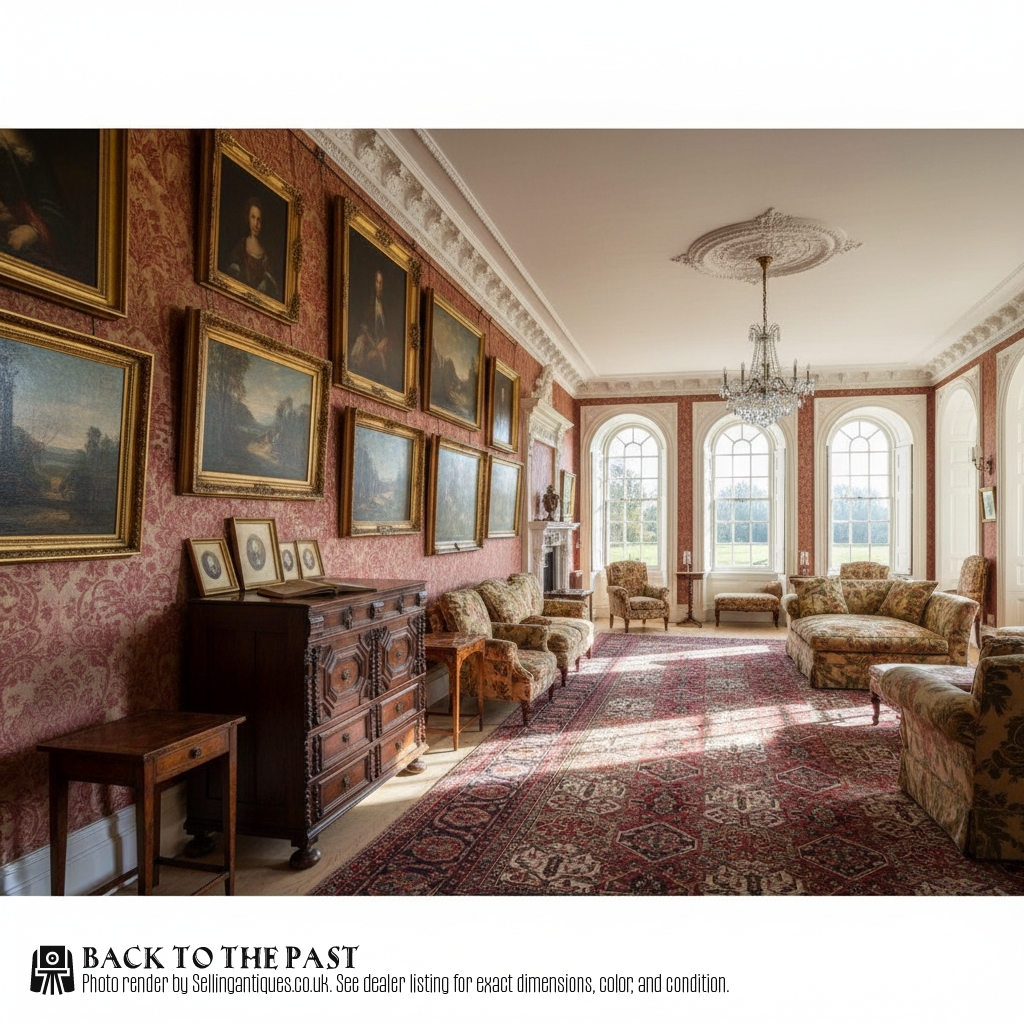
These storage units served primarily in bedchambers and private withdrawing rooms to hold garments, linens, and personal valuables. Their sturdy construction made them suitable for daily domestic handling across upper-status households.
As domestic spaces evolved through the seventeenth century, chests moved into hallways and parlours to display status and decorative veneers. Smaller variations and chests on stands suited tighter chamber layouts and dressing rooms.
How should I care for antique oak furniture?
Maintain stable indoor humidity levels away from direct heat sources and strong sunlight to prevent the timber from splitting or warping. Dust gently with a dry, soft cloth and avoid modern silicone polishes that build up residue over time.
Occasional applications of traditional beeswax nourish dry timber and preserve the historic patina. Ensure the piece rests evenly on the floor to prevent twisting in the ancient joinery.
What is a two-part chest?
A two-part chest consists of separate upper and lower cabinet sections stacked together to form a single tall storage unit. This method made heavy timber furniture easier to transport within large houses or up staircases.
The separation point usually occurs midway down the height, often masked by a heavy moulding. This construction style appeared frequently during the Charles II era.