



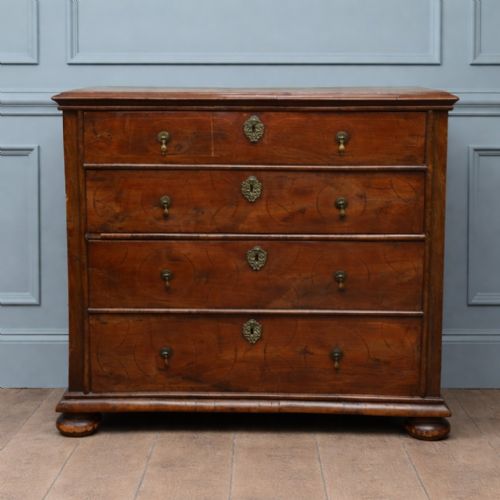

William Mary Geometric Chest
A william mary geometric chest brings heavy architectural mouldings and rich timber grains into a room, offering robust storage rooted in late seventeenth century craftsmanship.
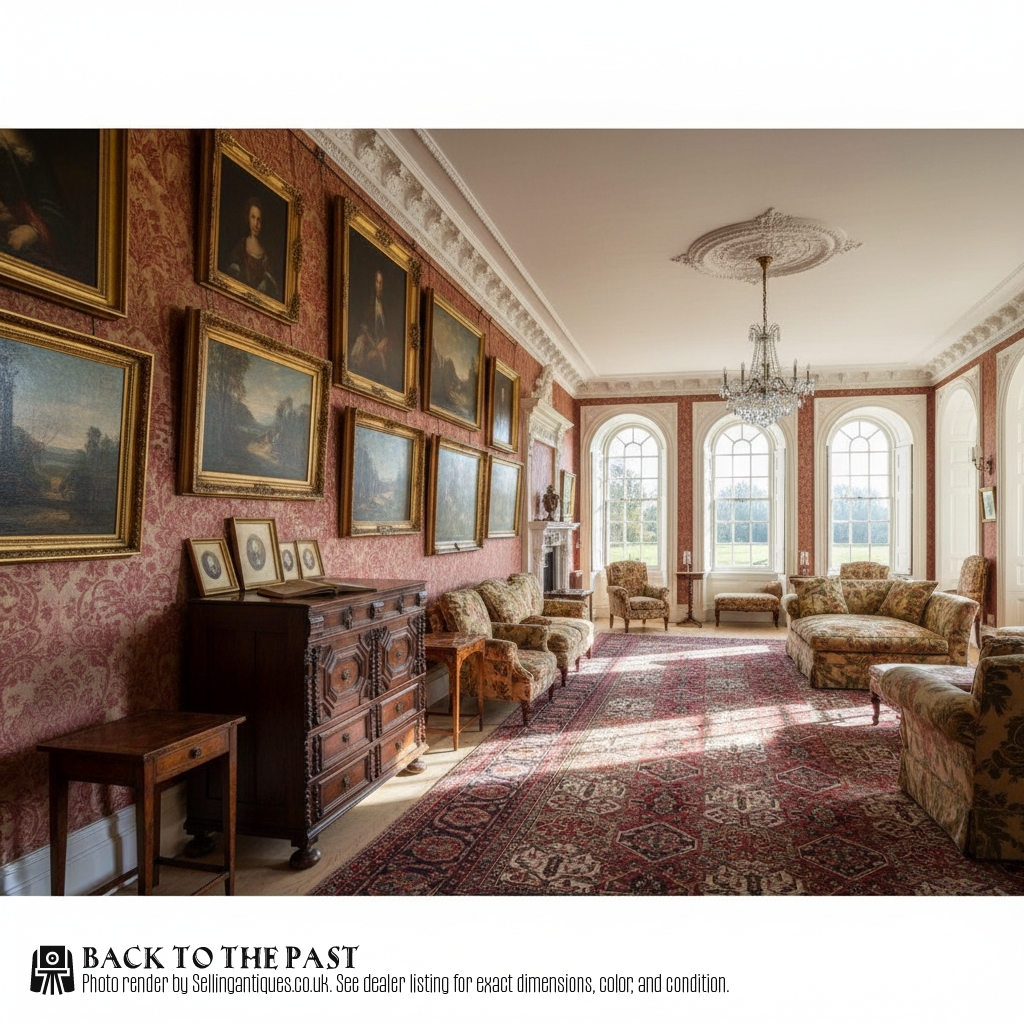
William Mary Geometric Chest
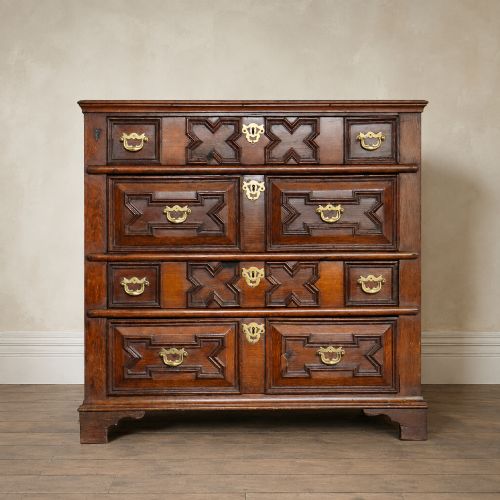
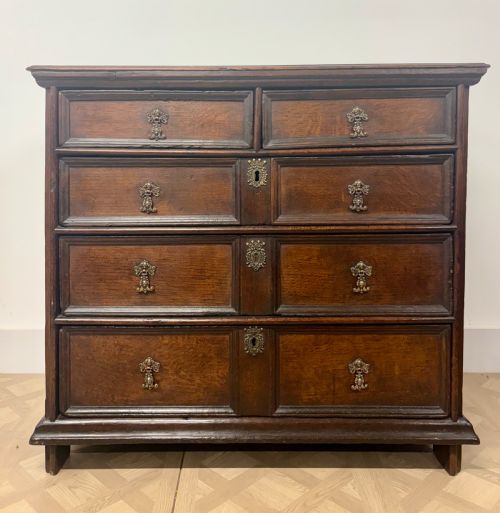
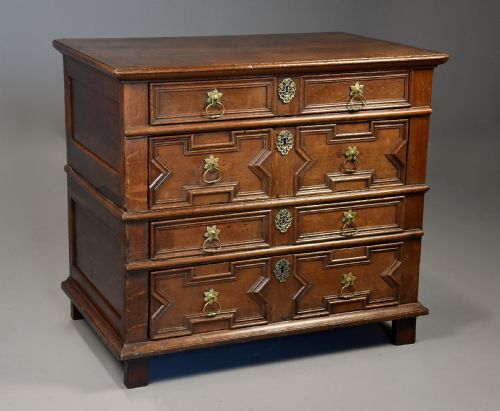
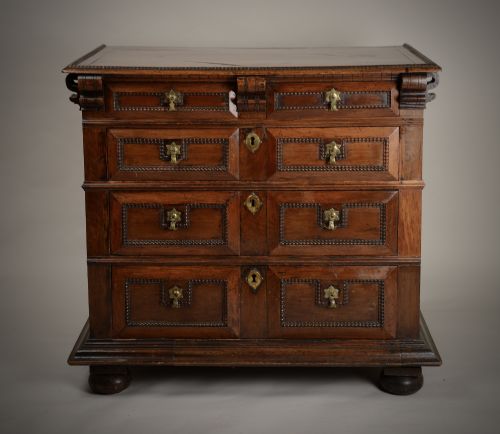
When you search for a william mary geometric chest, you encounter case furniture defined by disciplined surface patterns and strong horizontal lines. The version you meet most often on this page is a substantial oak or walnut chest of drawers constructed in two parts, carrying geometric mouldings across the drawer fronts.
The periods span from the seventeenth century through to the early eighteenth century, encompassing Stuart, Jacobean, William and Mary, and early Georgian styles. Alongside standard chests of drawers, you find smaller examples configured as a chest on stand.
These pieces originated in English workshops, where joiners utilised native and imported timbers to build storage units designed for longevity. The visual weight relies on panelled construction, block fronts, and applied mouldings rather than applied carving.
Materials and Construction
Joiners built the primary carcase of a william mary geometric chest using solid oak, frequently pairing it with walnut or fruitwood inlay to create distinct surface contrasts. Oyster veneering sliced circular sections of branch wood to lay down intricate repeating patterns across the drawer faces.
Mouldings were meticulously shaped and applied directly to the drawer fronts in geometric grids, octagons, and rectangles. Brass drop handles and escutcheons were secured to the timber to complete the hardware.
Two-part construction allowed these heavy chests to be moved between rooms more easily, stacking an upper section onto a lower base. Panel construction accommodated the natural seasonal movement of solid timber without splitting.
William Mary Geometric Chest Retail Price Guide 2026
Typical asking prices for william mary geometric chest among the pieces listed under this phrase on Sellingantiques today, from the lower quarter to the upper quarter. They describe what is for sale here now, not the wider market.
Architectural geometric mouldings dominate these drawer fronts, accompanied by brass drop handles and panelled sides.
Assessing Quality
Quality in a william mary geometric chest rests on the precision of the applied mouldings and the integrity of the timber surfaces. The better examples display crisp geometric alignment and carefully matched veneer work that has aged with a uniform, faded patina.
The choice of primary timber and secondary wood influences the character and finish of the piece. Oak provides a robust, heavily grained framework, while walnut and fruitwood bring finer grain patterns and warmer tones to the facade.
Proportion and scale dictate the visual success of the piece, particularly where smaller chests on stand are concerned. The retention of original brass hardware and untouched drawer linings contributes significantly to the integrity of the piece.
The William Mary Geometric Chest Glossary
- Geometric moulding
- Applied strips of timber arranged in repetitive patterns on drawer fronts. This technique created texture and depth across otherwise flat surfaces.
- Oyster veneer
- Slices cut transversely from small branches to produce circular or oval motifs. This veneer type creates a rich, mottled grain pattern across the wood.
- Chest on stand
- A two-part form comprising an upper chest section raised upon a separate support frame with legs. This configuration lifted the storage space higher off the floor.
- Block front
- A facade shaped with prominent vertical sections projecting forward. It adds a sculptural quality to seventeenth century case furniture.
- Patina
- The surface sheen and colour developed by wood over centuries of handling and exposure to light. A faded patina indicates natural ageing without harsh chemical stripping.
William Mary Geometric Chest: Frequently Asked Questions
How do I date a geometric chest?
Dating relies on examining the construction methods, timber choices, and hardware styles. Joinery details such as hand-cut dovetails and pegged frame structures point towards seventeenth century or early eighteenth century origins.
The presence of specific stylistic markers like applied geometric mouldings and oyster veneers aligns the piece with the William and Mary or Stuart periods.
What is a two-part chest?
A two-part chest consists of an upper and a lower carcase built to stack together. This design facilitated transport in smaller domestic spaces during the late seventeenth century.
The horizontal dividing line is typically concealed behind mouldings or sits neatly between banks of drawers.
Where should I place this chest?
These chests suit hallway spaces, living rooms, or bedrooms where their architectural presence can anchor the room. Ensure the piece sits away from direct heat sources to protect the historic timber and veneer.
Allow sufficient floor space around the chest to appreciate the projection of the geometric mouldings and the depth of the grain.
How do I care for walnut veneer?
Maintain walnut veneer by dusting with a dry, soft cloth and avoiding silicone-based polishes. Stable indoor humidity prevents the timber from shrinking and lifting the delicate veneer sections.
Applying a traditional beeswax sparingly helps preserve the lustre of the aged surface.