
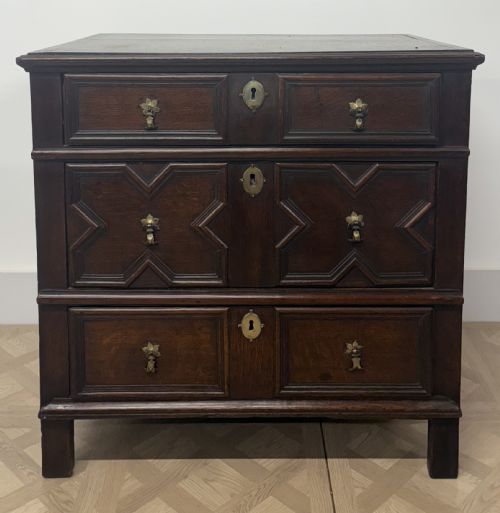
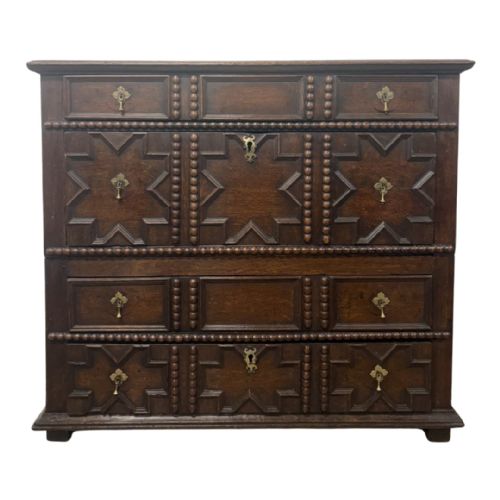
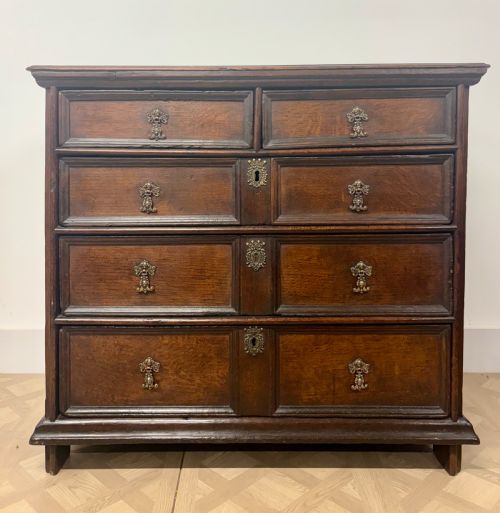
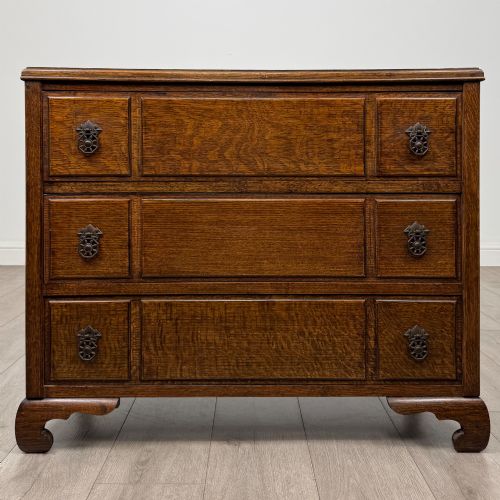
Jacobean Geometric Oak Dresser
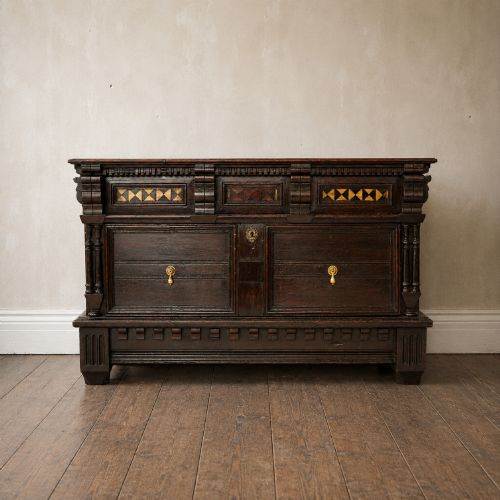
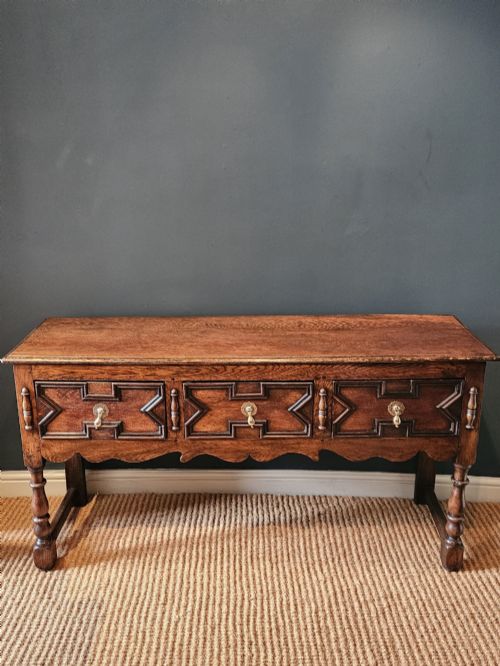
A jacobean geometric oak dresser brings seventeenth-century architectural moulding and dense timber grain directly into a modern interior.
Jacobean Geometric Oak Dresser
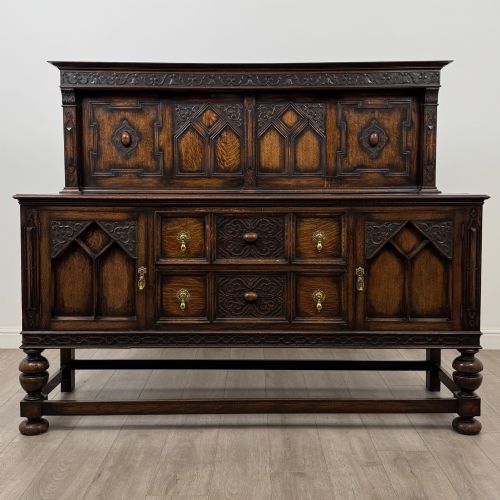
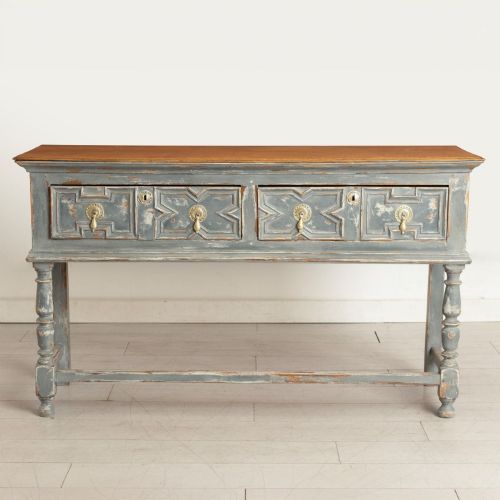
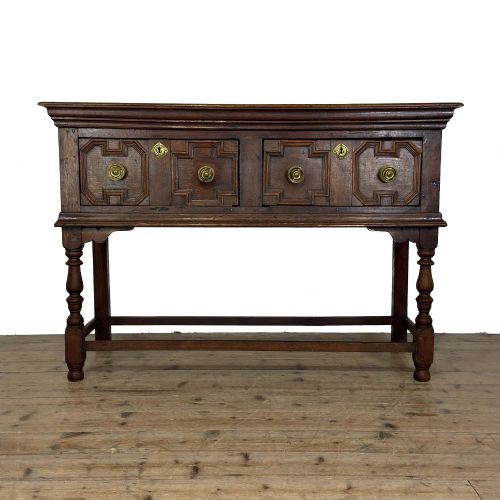
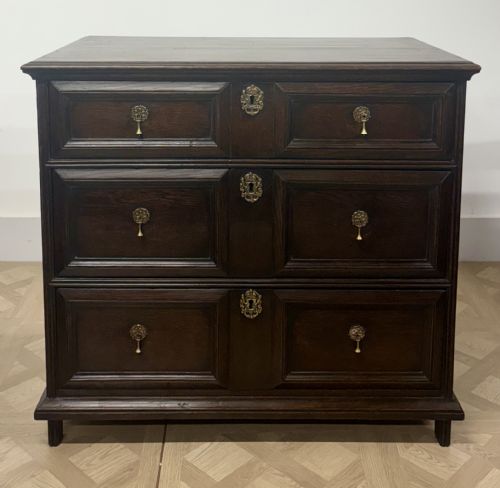
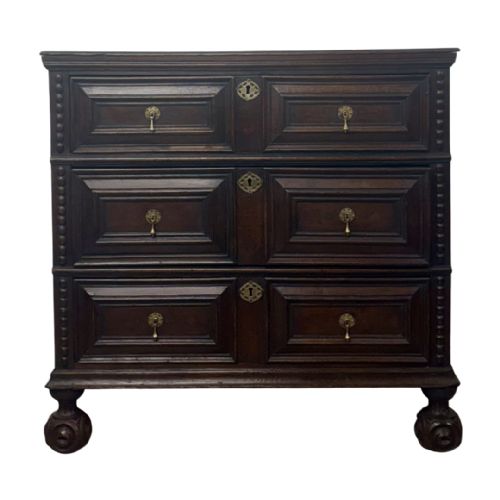
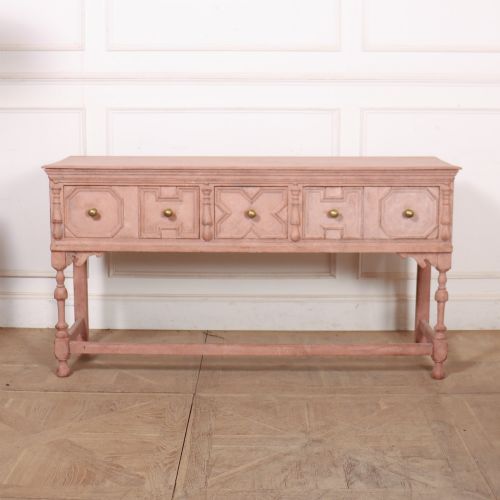
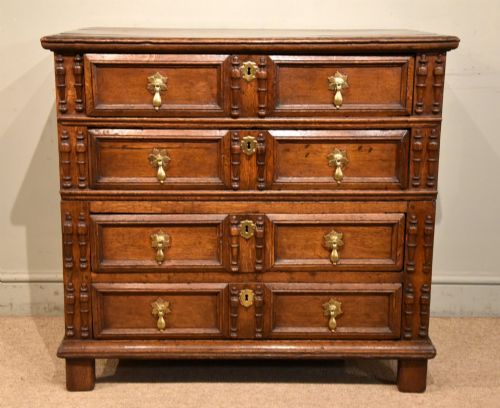
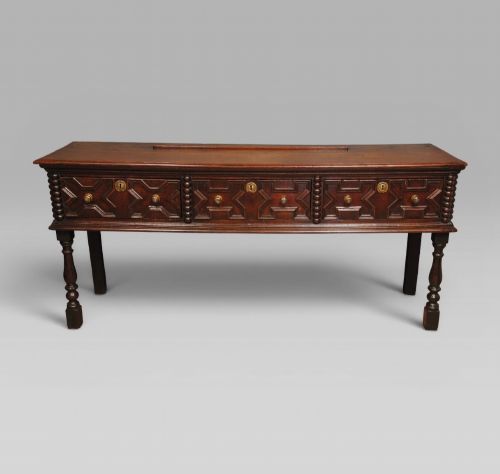
When you search for a jacobean geometric oak dresser, you are looking at sturdy storage furniture built around heavy timber frames, low dresser bases, and serving surfaces. The forms you meet span from original seventeenth-century pieces up to nineteenth-century and Edwardian revivals.
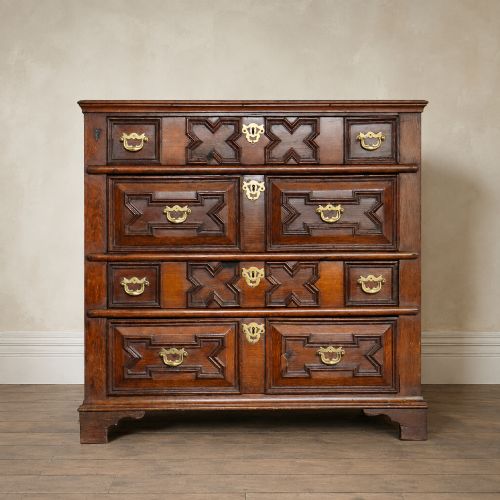
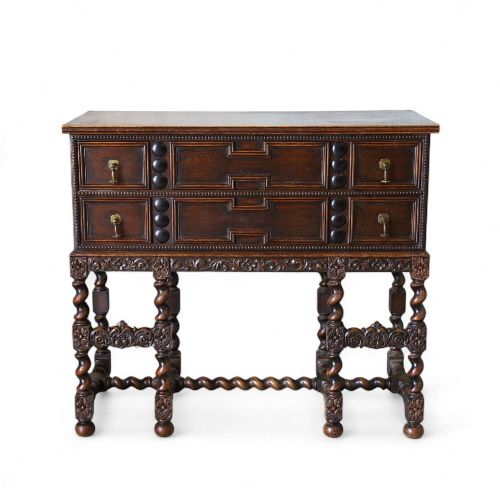
Chest of drawers and dresser base configurations dominate the selection, often displaying structured geometric mouldings across the drawer fronts. These items originate primarily from English workshops working in solid oak and occasional fruitwood.
Materials and construction
Cabinet makers relied predominantly on solid oak combined with walnut, fruitwood, and applied mouldings to build these heavy storage pieces. Iron and brass hardware completed the construction, securing handles and escutcheons onto the timber drawers.
Surfaces frequently show panelled construction, block fronts, and oyster veneering arranged in deliberate geometric patterns. Later revival examples incorporate carved details and barley-twist supports executed in seasoned oak.
Early cabinet makers occasionally sliced branch wood like carrots to create swirling wooden eyebrows across the drawers.
Distinguishing quality
Quality rests in the crispness of the geometric mouldings and the depth of the timber grain rather than simple surface decoration. Original seventeenth-century execution displays deliberate joinery and substantial timber thickness compared to lighter later revivals.
The survival of original brass hardware and untouched surface patination elevates an example far above pieces with replaced fittings or stripped finishes.
The Jacobean Geometric Oak Dresser Glossary
- Geometric moulding
- Applied wooden strips arranged in repeating shapes across drawer fronts to create architectural depth. This technique defined much of the ornamentation during the late seventeenth century.
- Oyster veneering
- Thin circular slices of branch wood laid out to form concentric grain patterns across a flat surface. Cabinet makers used this method on select walnut and oak furniture.
- Dresser base
- A low utilitarian table fitted with drawers beneath the top surface, used historically for serving food and storing household goods. These forms often lack the upper plate rack.
- Carolean
- The period spanning the reign of Charles II, characterised by rich surface carving and structured joinery. Pieces from this era form the backbone of these listings.
Jacobean Geometric Oak Dresser: Frequently Asked Questions
How do I spot a true seventeenth-century piece?
Examine the timber construction, drawer linings, and the hand-cut tool marks left on the oak boards. Original pieces show authentic wear patterns and construction methods distinct from later nineteenth-century revivals.
Check for period-appropriate brass hardware and the natural oxidation of the oak over centuries of handling and exposure.
Where were these dressers used historically?
These robust pieces served practical storage and serving functions in kitchens, halls, and dining rooms of large English houses. Their heavy construction suited daily domestic service.
Over time, many transitioned into principal living spaces as prized examples of early cabinet making.
How should I care for old oak furniture?
Keep the timber away from direct heat sources and sudden humidity changes to prevent the solid oak panels from splitting. Feed the wood occasionally with traditional wax to maintain the surface finish.
Avoid harsh chemical cleaning agents that strip away the historical patination accumulated over generations.