
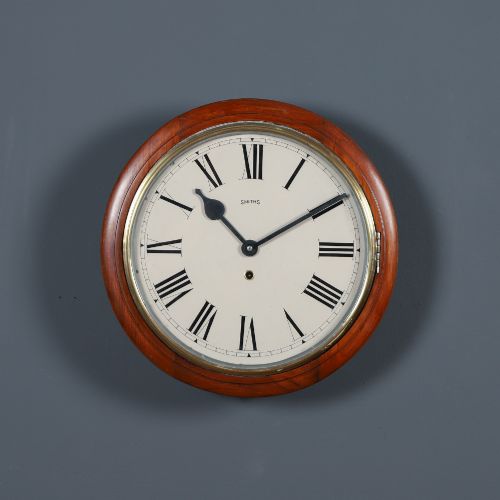
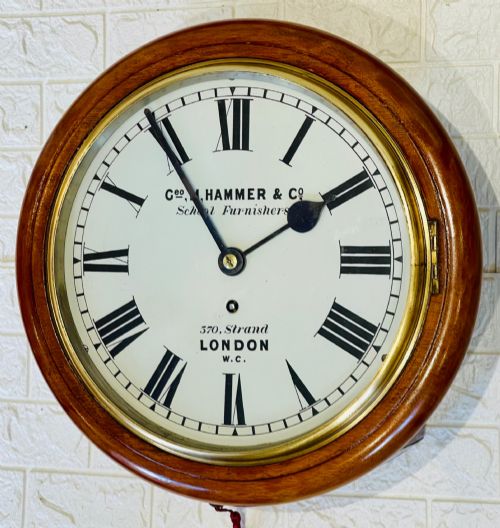
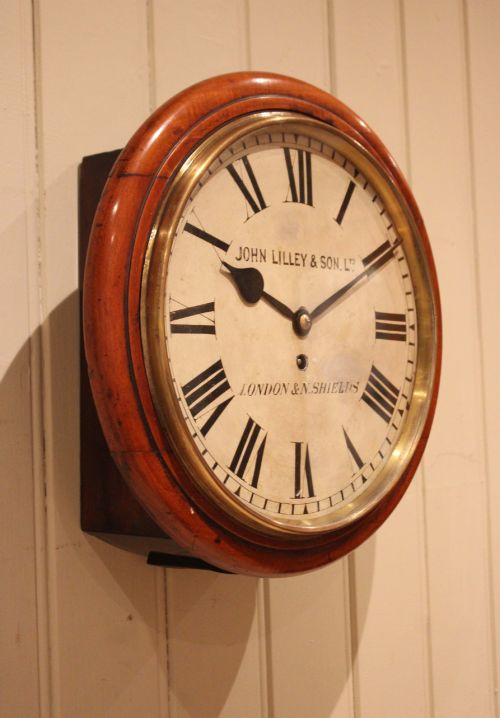
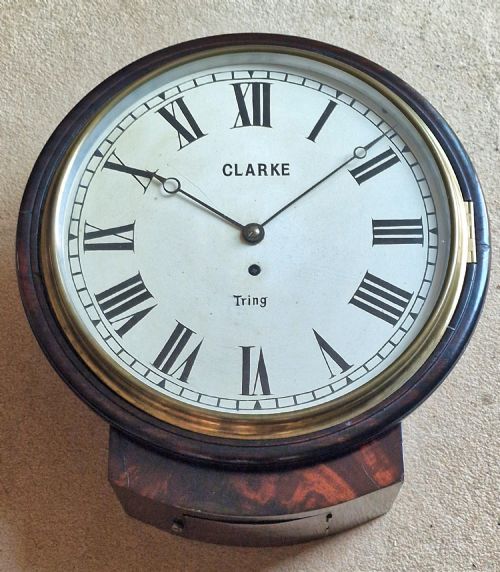
School Dial Clock
When you search for a school dial clock, you are looking at circular wall timepieces rooted in institutional timekeeping across the nineteenth and twentieth centuries.
School Dial Clock
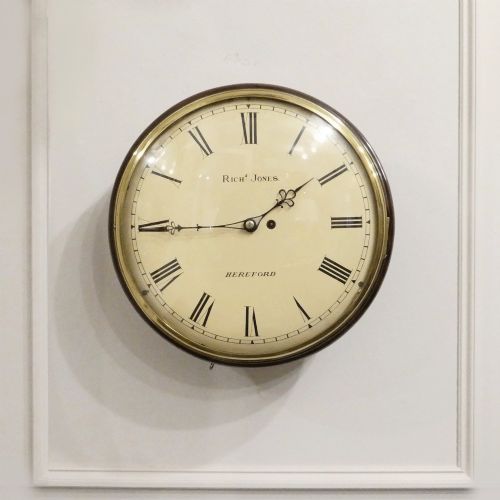
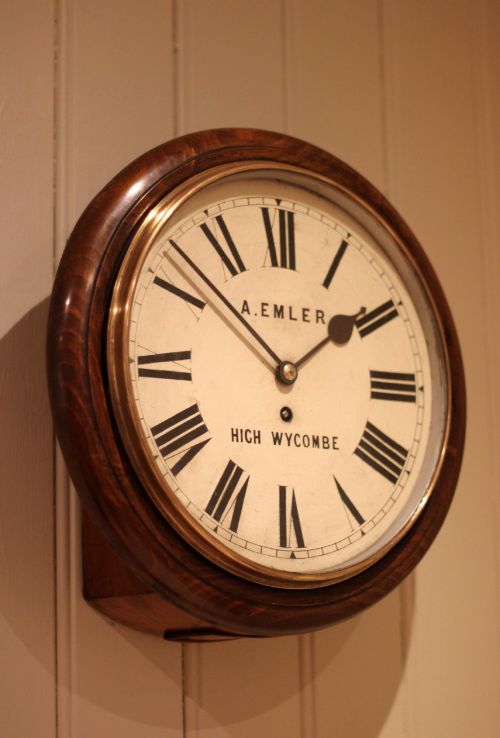
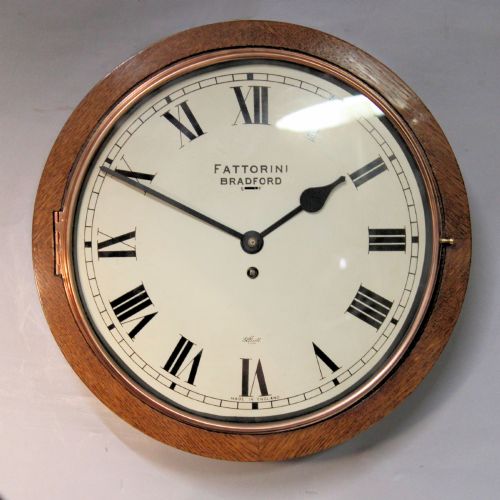
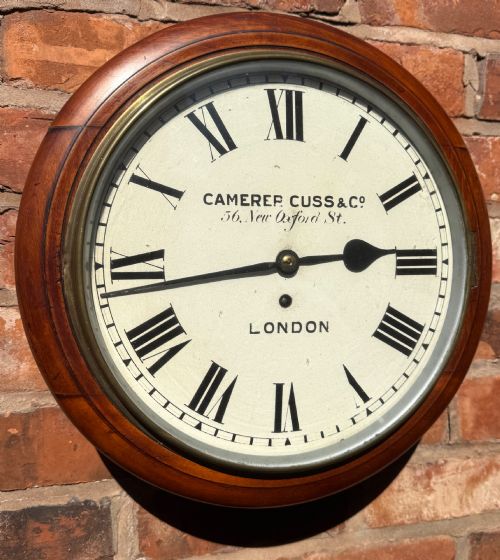
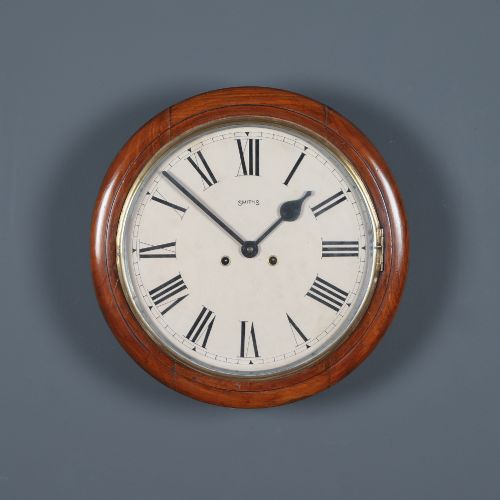
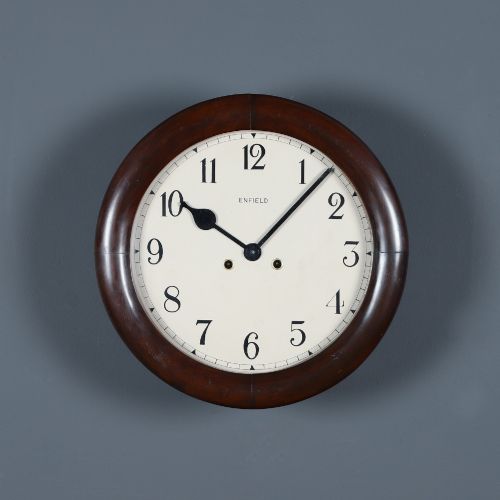
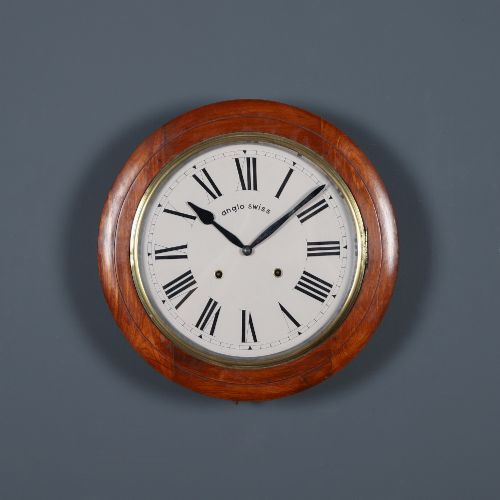
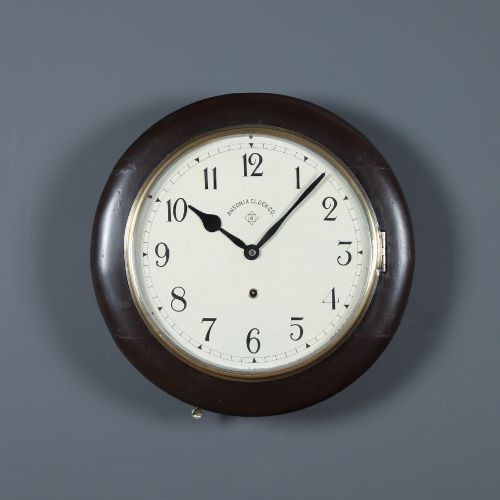
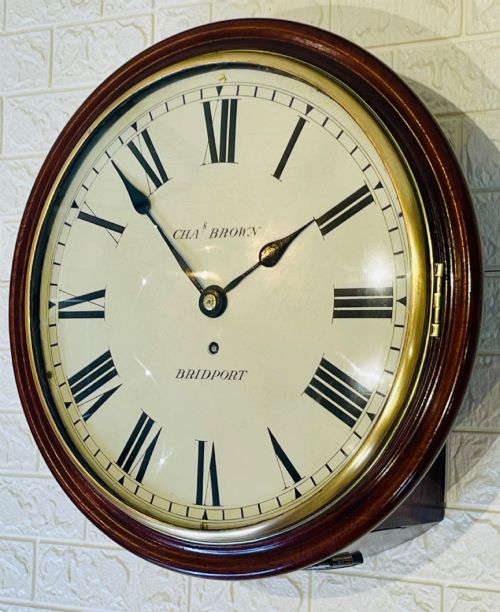
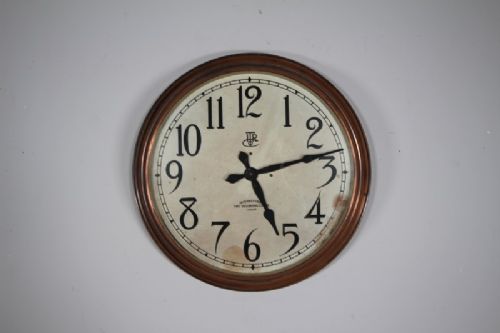
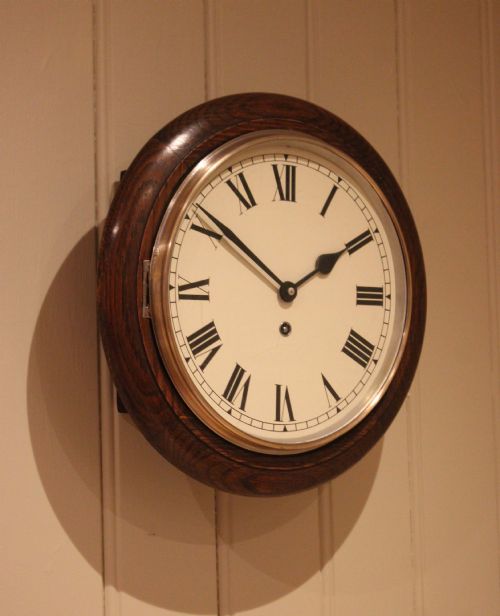
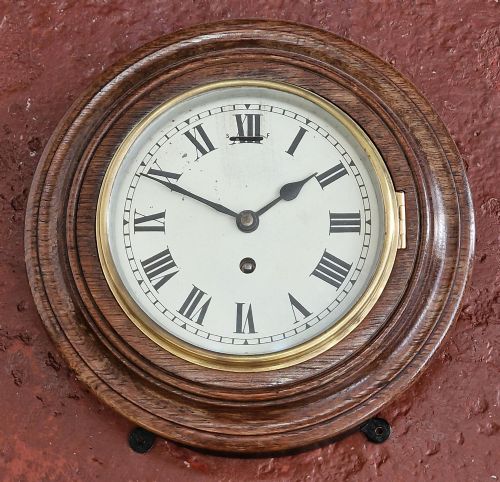
A school dial clock is a round-faced wall timepiece traditionally utilised in public buildings, classrooms, and offices, defined by a clean circular dial designed for legibility from a distance. The examples recorded in our archive and current listings span eras from the Georgian period through the Victorian and Edwardian epochs into the 1930s and twentieth century.
The dominant forms on this page include mahogany, oak, and beech cases housing circular faces with glass covers, sometimes appearing in drop-dial formats or associated with railway stations, telegraph offices, and government departments.
Makers range from provincial watchmakers to renowned London firms, bringing regional variety to the traditional round face.
How they were made
Makers constructed the housings of these timepieces using hardwoods like mahogany, oak, walnut, and beech, turning or joining circular surrounds to protect the internal mechanics. Glass protected the painted iron or wooden dials, while brass components drove the mechanical movements.
Many specimens rely on a chain fusee or single chain fusee movement to maintain even tension as the mainspring uncoils, ensuring steady timekeeping across an eight-day cycle. Other variations incorporate lever escapements, pendulum regulations, or striking and chiming functions depending on the era and intended institutional setting.
School Dial Clock Retail Price Guide 2026
Typical asking prices for school dial clock among the pieces listed under this phrase on Sellingantiques today, from the lower quarter to the upper quarter. They describe what is for sale here now, not the wider market.
The archive includes both simple timepieces and complex examples with bell striking and chiming mechanisms.
What varies in quality
The distinction between standard utility timepieces and finer examples often lies in the choice of cabinet timber, the crispness of the case mouldings, and the pedigree of the movement's maker. Provincial clocks built for local schools sit alongside finely signed London pieces featuring substantial fusee movements and secondary case markings.
The preservation of the original painted dial, the legibility of the numerals, and the integrity of the timber housing without excessive restoration distinguish the top of the range.
Richard Jones of Hereford·Elliott·Camerer Cuss and Co London·George Clarke Tring·D and J Wellby London·Henry Harris of Monythusloyn·Joseph Bird of Stroud·L Morris Islington·Rudge Swindon
The School Dial Clock Glossary
- Fusee
- A conical pulley connected to the mainspring by a chain or cord, designed to equalise the torque as the spring unwinds. This mechanism is central to the accuracy of traditional wall clocks.
- Drop dial
- A clock case featuring a circular dial at the top and a vertical wooden trunk below, often enclosing a pendulum bob. This style was widely adopted for offices and schoolrooms.
- Lever escapement
- A mechanism that controls the release of the gear train, allowing the timepiece to operate reliably in positions where a traditional pendulum might be less stable. It is found in various twentieth-century wall clocks.
- Timepiece
- A clock that indicates the time but does not strike or chime. Many institutional wall clocks were built simply to show the hours without acoustic signals.
- Convex dial
- A clock face that curves outward toward the viewer, often protected by a hinged brass bezel and curved glass. This design reduces glare from overhead light sources.
School Dial Clock: Frequently Asked Questions
What is a school dial clock?
A school dial clock is a wall-mounted timepiece featuring a clear circular face, originally designed for institutional spaces like classrooms, offices, and railway stations.
These clocks prioritise readability and reliable timekeeping over decorative complexity, utilising robust wooden cases and mechanical movements.
How do fusee movements work?
A fusee movement uses a conical pulley and a chain to regulate the power delivered from the mainspring to the gear train.
As the spring loses tension, the chain pulls on a wider part of the cone, maintaining consistent force and improving timekeeping accuracy.
Where were these clocks used?
While often referred to as school clocks, these timepieces were standard fixtures in government offices, railway platforms, post offices, and factories.
Their sturdy construction and clear dials made them essential tools for synchronising schedules across public and commercial buildings.
How do I date a dial clock?
Dating a dial clock involves examining the timber of the case, the construction of the movement, the materials of the dial face, and any maker signatures or stamps.
Victorian and Georgian examples often feature fusee movements and mahogany housings, while twentieth-century versions frequently incorporate oak, beech, or alternative escapement types.