

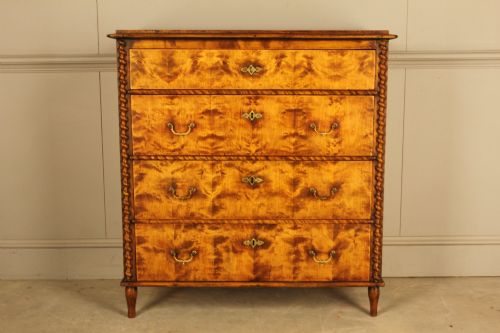
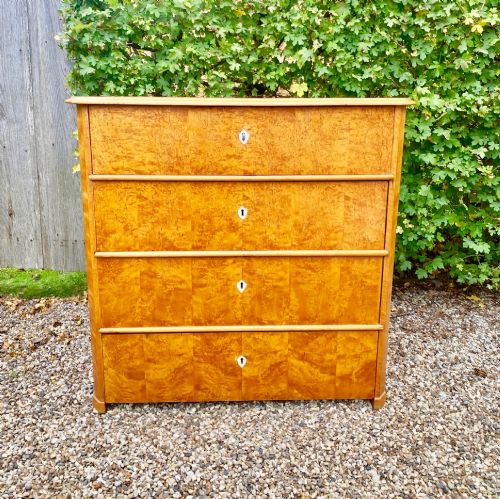
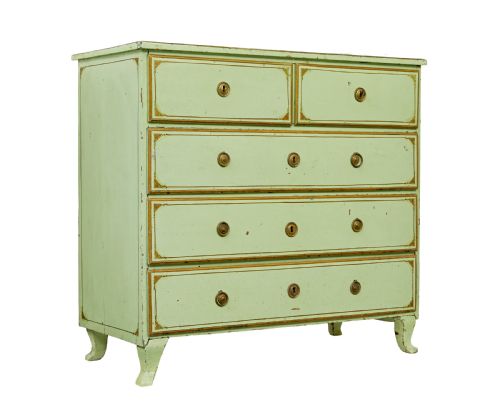
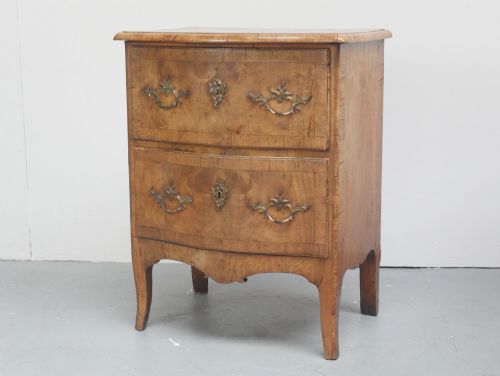
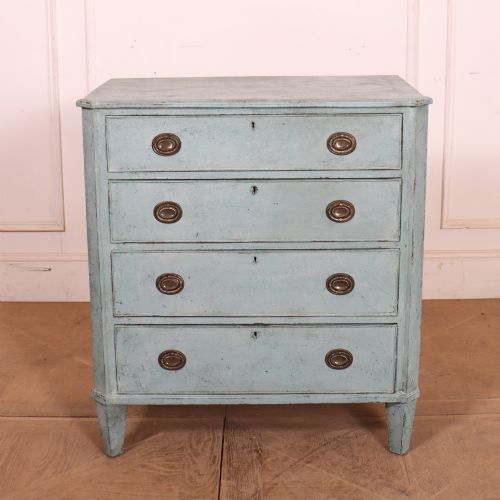
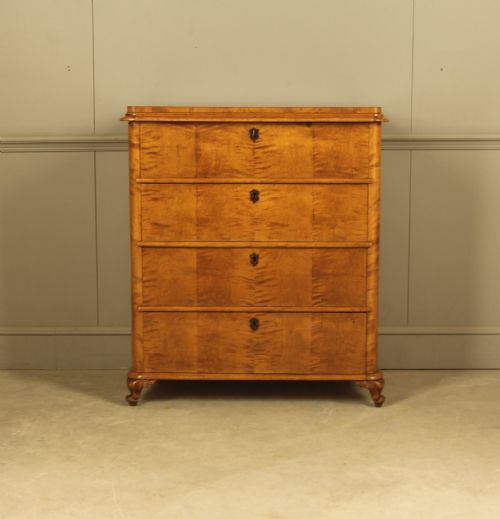
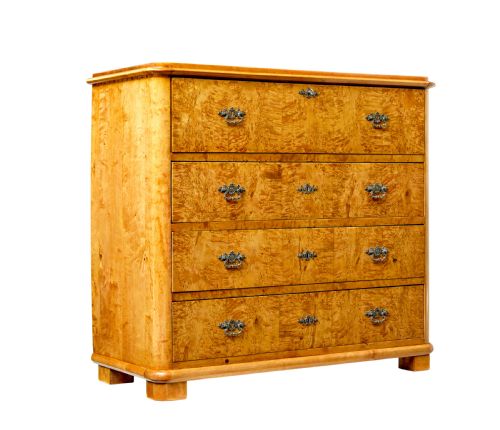


Scandinavian Commode
A Scandinavian antique commode brings architectural restraint and luminous painted surfaces to a room, offering generous storage with exceptional proportion.
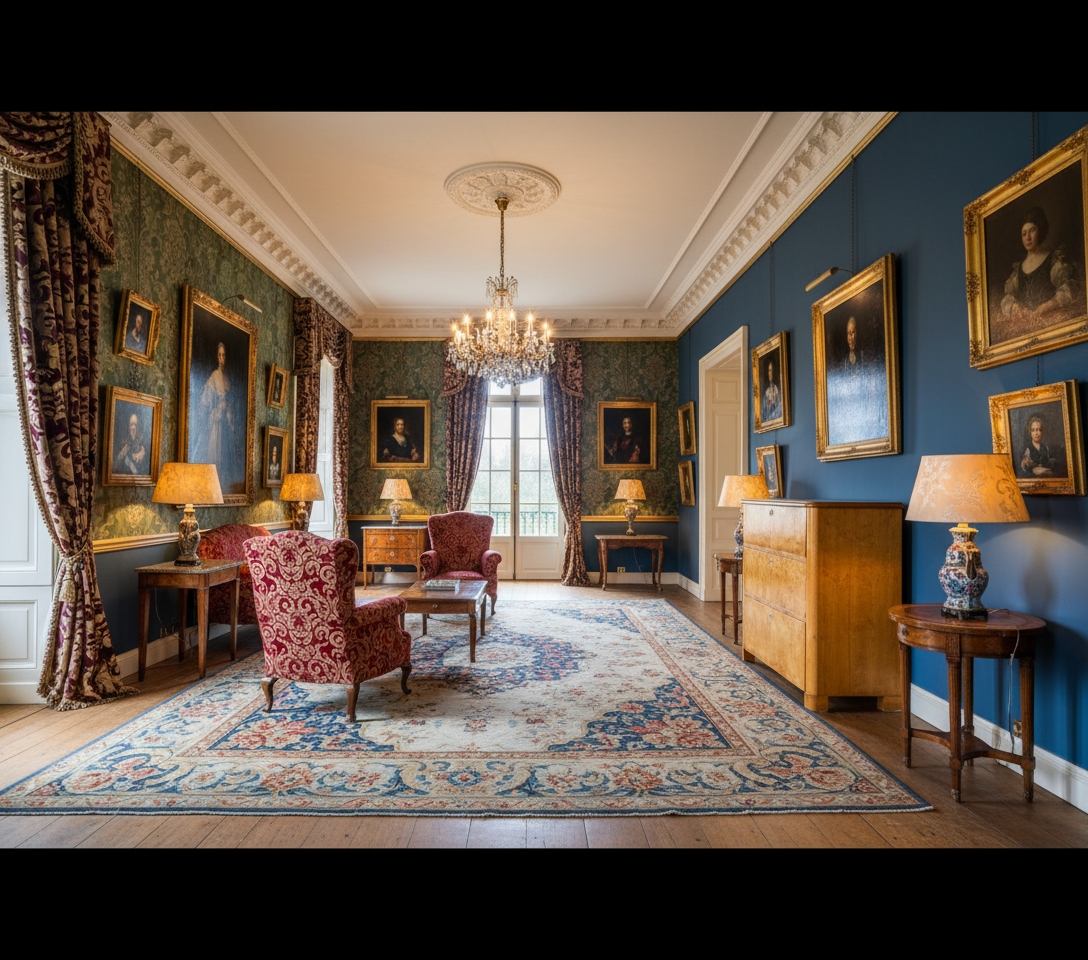
Scandinavian Commode
A Scandinavian antique commode takes the form of a chest of drawers, built across the eighteenth and nineteenth centuries in Sweden and the wider Scandinavian region. These pieces serve primarily as functional storage for linen or clothing while anchoring a hallway or bedroom with distinct regional neoclassical or rococo character.
The most common versions met on this page date from the nineteenth century, executed in birch or heavily painted finishes. Alongside formal commodes, the inventory includes Gustavian and Swedish Rococo examples, often featuring bombe silhouettes or clean geometric drawer arrangements.
The regional interpretation of continental styles yields distinctive storage furniture that departs from heavier British or French equivalents. These pieces rely on pale timbers and light palettes to brighten northern interiors, maintaining clean lines even within elaborate baroque or rococo frameworks.
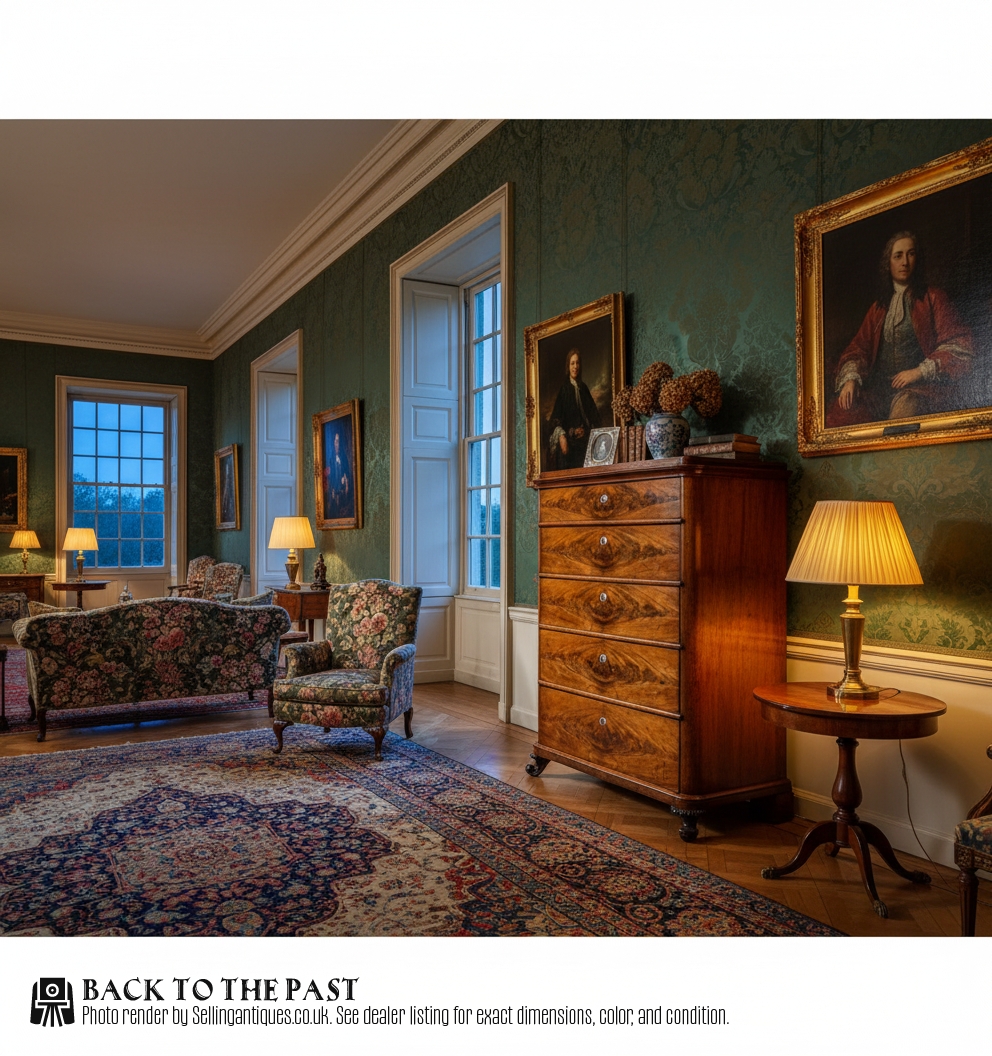
How they were made
Cabinetmakers constructed these commodes using native timbers including pine, birch, and fruitwood, frequently applying birch or mahogany veneers over denser primary woods. Structural carcasses often utilise solid pine for interior framing and drawer linings, ensuring stability across seasonal climate changes.
Surfaces receive traditional layered paint finishes or clear polish to accentuate the grain of figured birch and fruitwood. Brass hardware, including escutcheons and drop handles, secures to drawer fronts using period fastening techniques.
Scandinavian Commode Retail Price Guide 2026
Typical asking prices for scandinavian commode among the pieces listed under this phrase on Sellingantiques today, from the lower quarter to the upper quarter. They describe what is for sale here now, not the wider market.
Listings feature both eighteenth-century rococo forms and nineteenth-century birch or painted variations.
What varies in quality
Quality reveals itself in the handling of timber and the ambition of the silhouette, distinguishing simple country joinery from sophisticated urban cabinetwork. The crispness of carved rococo curves on a bombe chest or the subtle figure selected for a birch veneer dictates the standing of an individual commode.
Surface treatment defines the visual success of painted pieces, where the depth of layered historical pigment and the restraint of decorative motifs create a balanced whole. Superior examples maintain proportion across every drawer tier, integrating brass mounts harmoniously without crowding the composition.
The Scandinavian Commode Glossary
- Bombe
- A bulging, outward-curving chest profile that swells toward the base. This exuberant shape demands advanced woodworking skill to maintain structural integrity.
- Gustavian
- The Swedish neoclassical style spanning the late eighteenth century, characterised by restraint, symmetry, and pale painted finishes. It draws direct inspiration from French Louis XVI design.
- Biedermeier
- A central European and Scandinavian style spanning the nineteenth century that prioritises clean utility and warm wood grains over heavy ornamentation. Birch and mahogany veneers frequently feature in these pieces.
- Escutcheon
- A protective plate surrounding a keyhole, often cast in brass and shaped to complement the style of the drawer front. It protects the surrounding timber from wear.
- Veneer
- A thin slice of figured wood applied to a secondary timber base to create decorative surfaces. Skilled application ensures the grain patterns flow logically across multiple drawers.
Scandinavian Commode: Frequently Asked Questions
How do I clean a painted commode?
Dust surfaces regularly with a soft, dry cloth to prevent particulate buildup on historical paint layers. Avoid commercial chemical sprays that can soften or strip traditional oil and distemper finishes.
Maintain stable indoor humidity levels to prevent timber movement beneath the paint layer. Gentle care preserves the original surface patination accumulated over centuries.
What is the difference between a commode and a chest of drawers?
In regional European terminology, a commode typically denotes a low, ornate chest of drawers standing on legs. These pieces often feature more decorative hardware and shaped fronts than standard utility chests.
British usage sometimes treats the terms interchangeably, but Scandinavian examples retain specific stylistic lineages. A commode frequently serves a decorative focal point in a reception room rather than a purely utilitarian bedroom role.
How do I identify a Gustavian piece?
Look for restrained neoclassical geometry, straight fluted legs, and pale monochrome or muted painted finishes. Carving remains disciplined, referencing ancient Greek and Roman motifs.
Gustavian pieces project an airy elegance distinct from the heavier baroque styles that preceded them. The palette relies on soft greys, cream, and pale blues to reflect natural light.
Are these drawers suitable for daily use?
Solid timber construction and traditional dovetail joints allow these pieces to function reliably in modern homes. Drawers slide within historic channels that benefit from occasional waxing with neutral beeswax.
Distribute weight evenly within the drawers to protect historical bottom boards and runners. Careful daily handling ensures centuries-old joinery continues to perform smoothly.