

Painted Pine Drawers
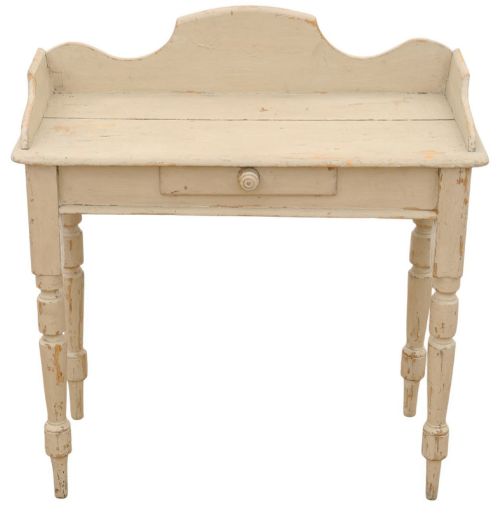
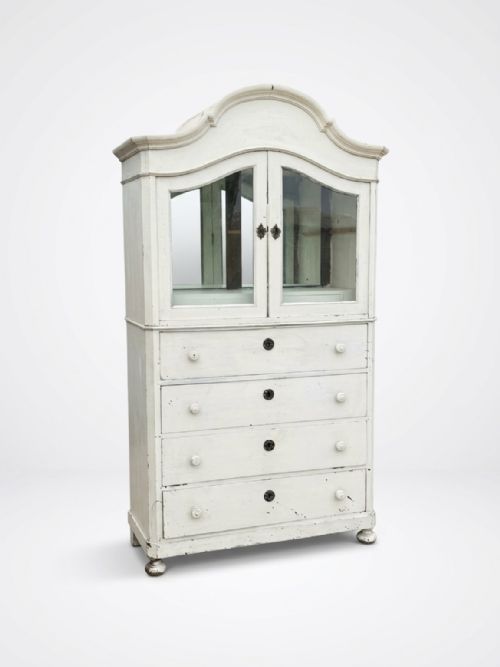
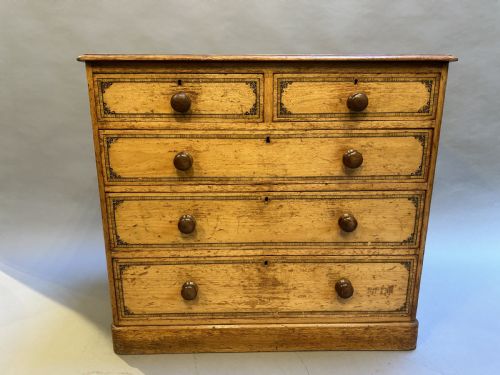
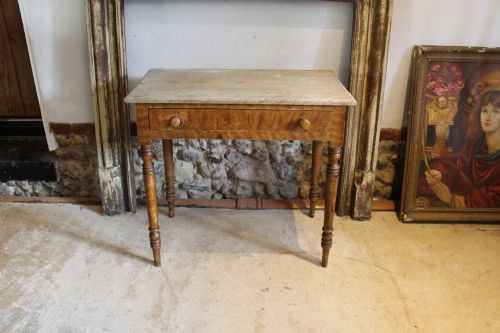
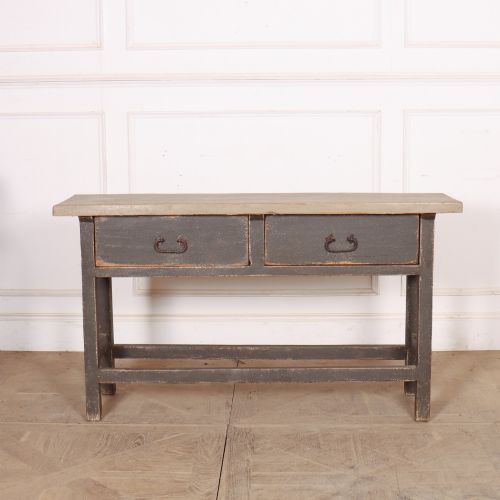
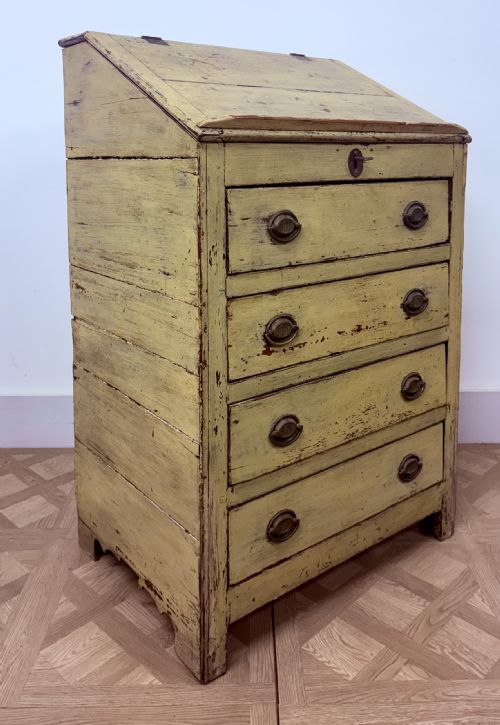
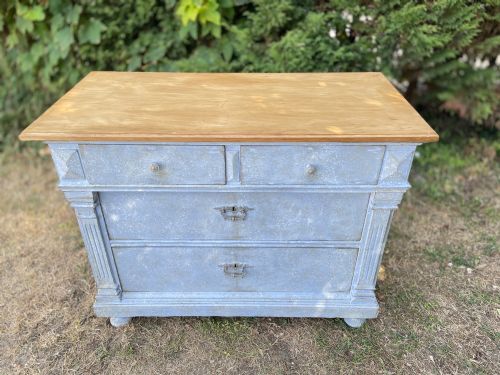
These painted pine drawers bring vernacular utility and colour into a room, offering robust storage finished in historic pigments.
Defining painted pine drawers
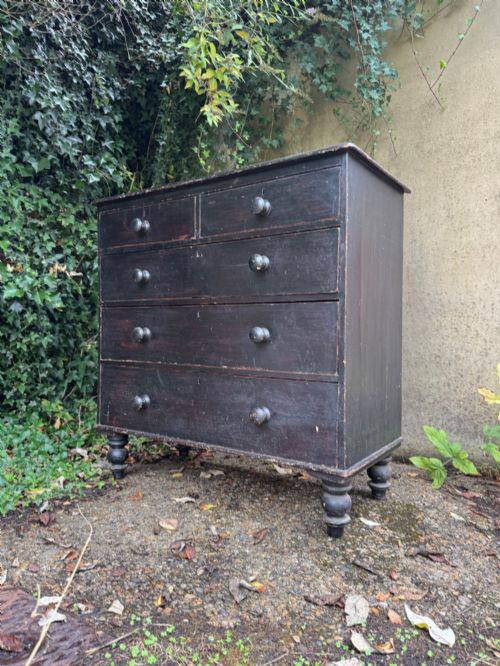
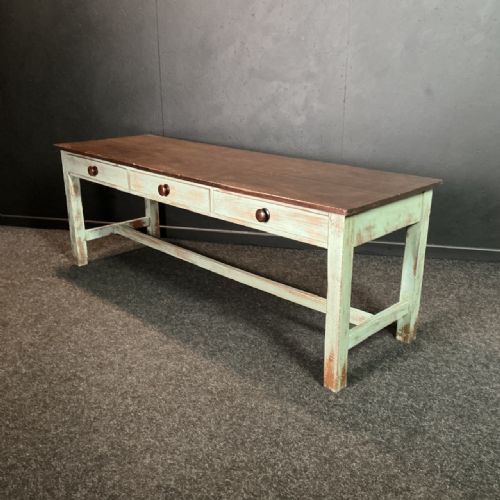
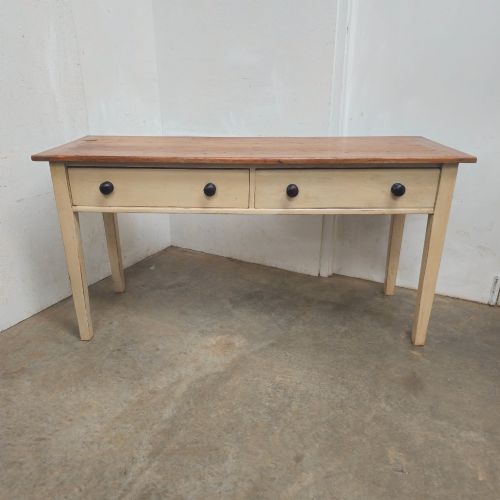
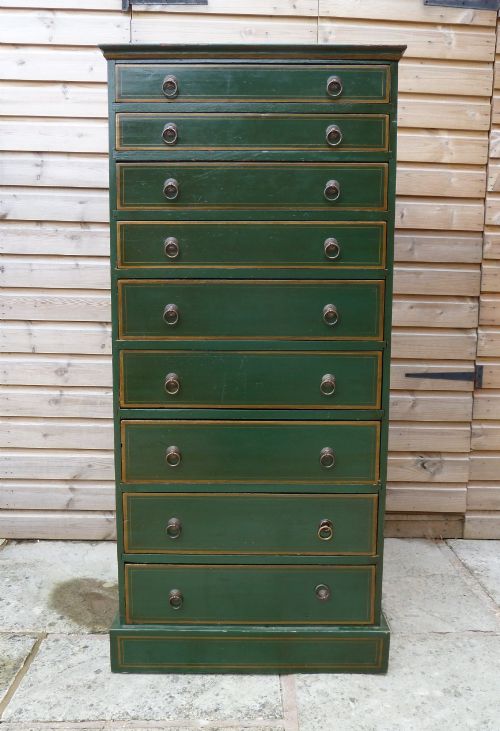
Painted pine drawers encompass utilitarian chests, commodes, and banks of drawers constructed from softwood and finished with applied colour. Pieces span from the eighteenth century through to the early twentieth century, originating from English, Welsh, and continental workshops including Swedish and Hungarian sources.
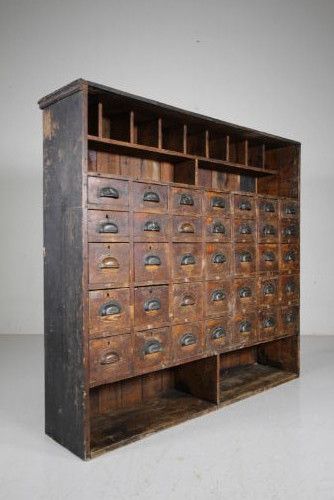
The form typically follows standard domestic configurations, such as chest of drawers arrangements with two short over three long drawers, alongside specialist pieces like apothecary banks, commodes, and Wellington chests. Regional variations range from simple English country items to decorative European folk art styles and Gustavian pieces.
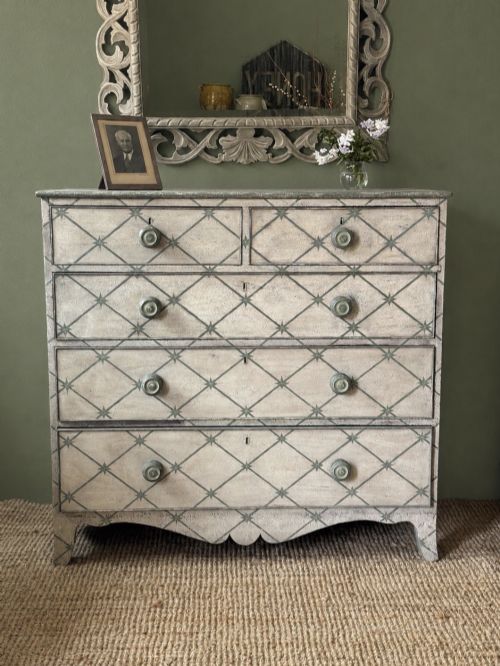
Surviving examples display various surface treatments, from original untouched pigment to later decorative coats, incorporating details like stencilling, simulated bamboo, and distinct regional palettes in shades of blue, grey, cream, and white.
Materials and construction
Carpenters utilised pine as a primary timber for its accessibility and workability, assembling carcases and drawer boxes with traditional joinery. Surfaces received layers of paint, functioning both to protect the softwood underneath and to provide decorative finish.
Hardware elements incorporate brass, iron, and metal for drawer pulls, escutcheons, and hinges, occasionally complemented by ceramic or glass details on handles. Secondary materials include wood for internal linings and mirror components where paired items survive.
Retail Price Guide 2026
Typical UK retail prices for painted pine drawers, calculated from the Sellingantiques database of over a million retail prices indexed since 2003. This retail price guide relies exclusively on Sellingantiques data; no external sources or auction records are used, so the figures do not describe the wider market.
One cheerful Swedish commode decided it had not travelled enough and promptly packed its drawers for an unexpected journey across borders.
Distinctions in quality
Quality rests upon the preservation of the original surface, distinguishing pieces retaining untouched historic paint from those with later or overpainted coats. The character of the brushwork and the harmony of the colour palette also define the visual standing of each piece.
Construction integrity separates standard utility items from finer vernacular cabinet-making, evident in the snugness of drawer fits and the retention of original brass, iron, or ceramic hardware. Regional distinctiveness, such as detailed stencilling or specific folk art traditions, elevates particular examples above plain domestic furniture.
The Painted Pine Drawers Glossary
- Commode
- A low cabinet or chest of drawers, often applied to continental pieces with decorative painted surfaces.
- Wellington chest
- A tall, narrow chest of drawers secured by a hinged vertical locking sidebar on one side.
- Bank of drawers
- A multiple-drawer unit designed for storage of small items, seen in apothecary and workshop contexts.
- Bow front
- A cabinet front featuring a convex, curved contour across the width of the drawers.
- Faux bamboo
- Wood turned and painted to imitate the segmented stalks of natural bamboo.
Frequently Asked Questions
How do I clean painted pine drawers?
Dust surfaces regularly with a soft, dry cloth to prevent accumulation of dirt on the historic pigment. Avoid modern chemical solvents or abrasive cleaners that might strip or soften the original paint layers.
Maintain stable indoor humidity levels to protect both the pine timber and the fragile surface finish from warping or flaking. Professional conservation advice should be sought before attempting any active restoration of the painted exterior.
Where were these chests made?
Production spans various domestic and regional workshops across England, Wales, and continental Europe. English and Welsh country pieces reflect local vernacular traditions, while continental examples include Swedish Gustavian pieces and Hungarian folk art chests.
Each region developed distinct preferences for proportions, drawer configurations, and colour palettes, allowing collectors to trace the geographical origins of individual items through construction details and decorative styles.
Are the paint finishes original?
Surviving examples vary between surfaces retaining their untouched historic paint and pieces that received later decorative coats over time. Close examination of the pigment layers reveals whether the colour dates to the initial construction period or represents subsequent redecoration.
Both original and later painted finishes hold historical interest, though pieces retaining their earliest pigment layers are particularly valued by collectors of vernacular furniture.