




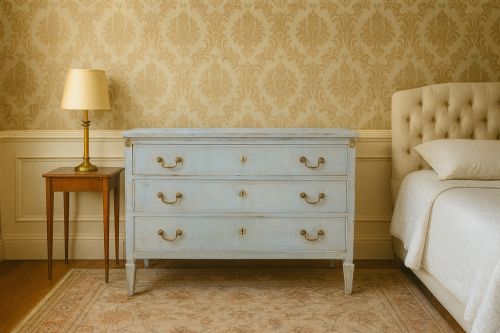


Gustavian Painted Commode
A gustavian painted commode brings restrained Nordic elegance into a room through pale surfaces and classical proportions.
Gustavian Painted Commode
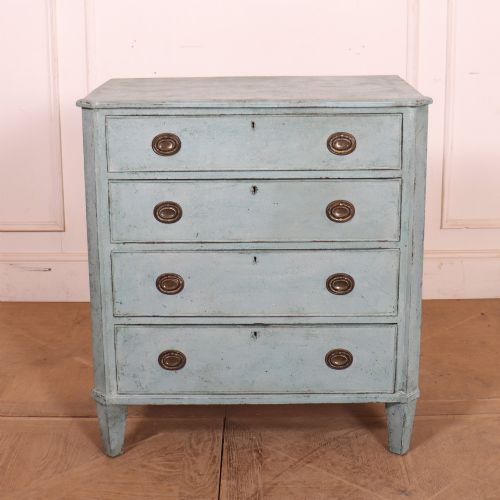
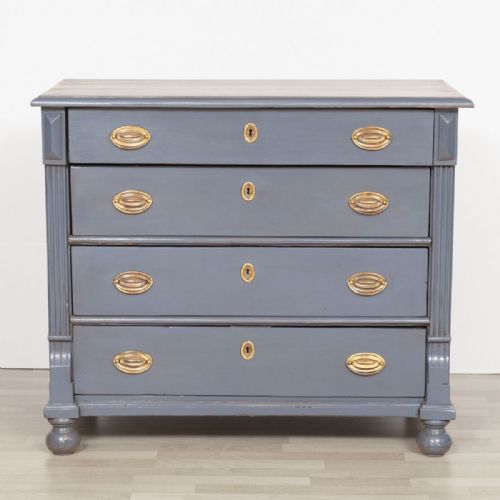
A gustavian painted commode is a storage chest designed with neoclassical symmetry, originating largely from Scandinavian and Dutch traditions across the eighteenth and nineteenth centuries. These pieces appear principally as chests of drawers, alongside occasional cupboards and cabinets sharing the same characteristic painted finishes.
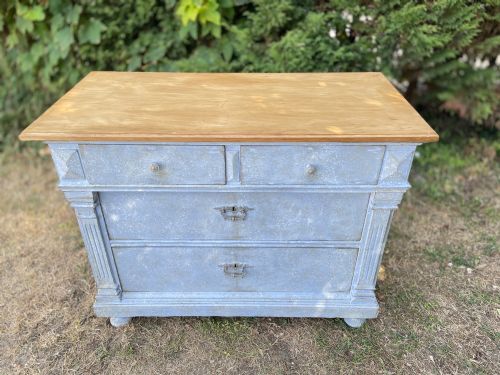
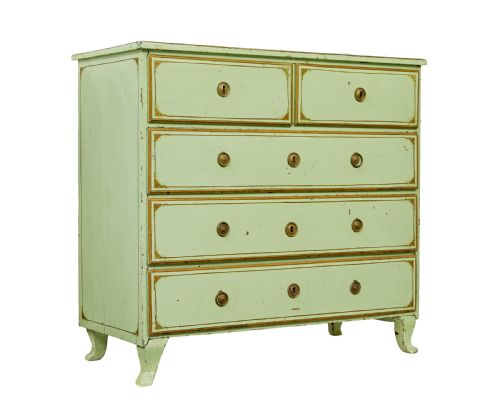
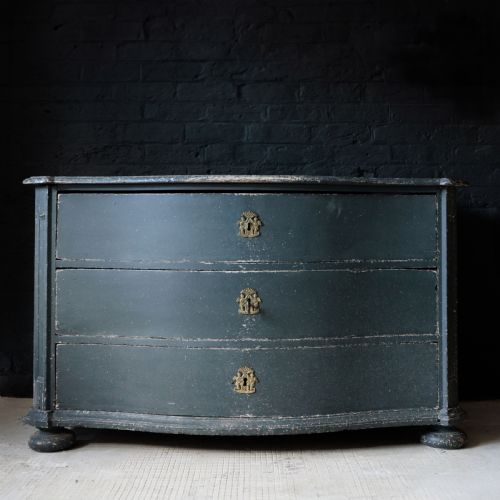
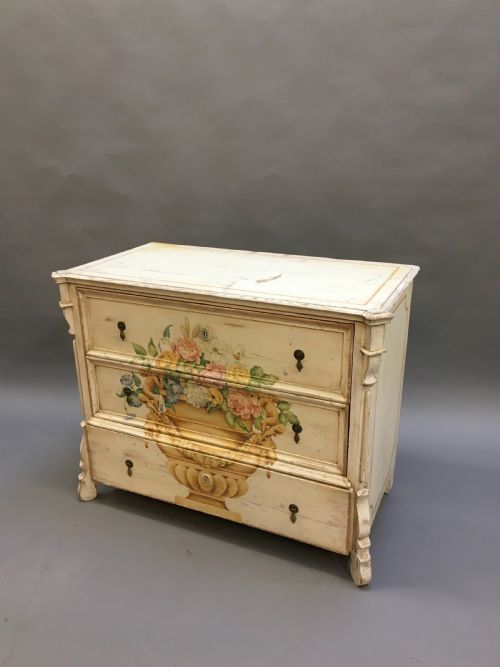
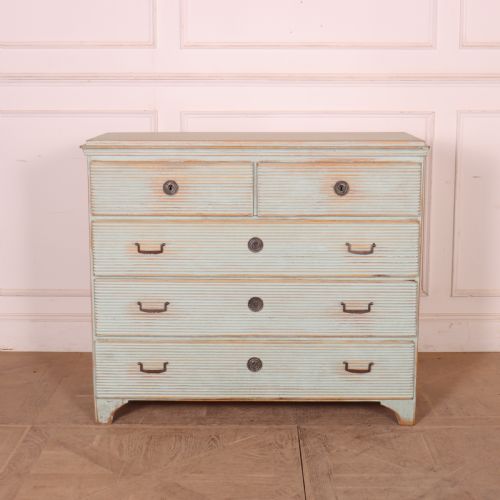
Most examples encountered here date from the nineteenth century, drawing heavily on Swedish taste, with occasional eighteenth-century precursors and later revival pieces. Forms range from straight-fronted pine chests to serpentine shapes and pieces featuring fluted drawer fronts or faux marble tops.
How they were made
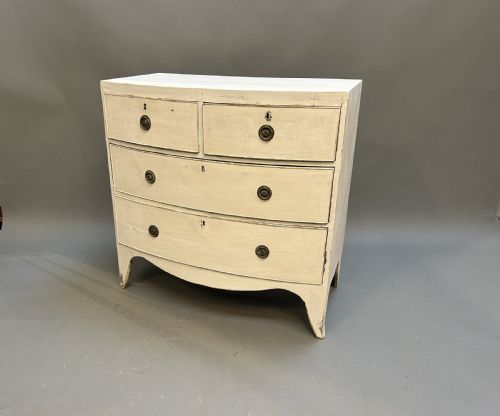
Construction relies primarily on pine and oak timbers, assembled into sturdy carcases fitted with multiple drawers and supported by bracket or tapered legs. Joinery methods of the period prioritized durability, utilising traditional dovetail joints for drawer construction.
Surfaces received layers of paint, often applied in muted tones or scraped back to reveal earlier layers, sometimes accompanied by hand-decoration. Metal hardware such as brass handles and iron fittings completed the functional design of each commode.
The inventory encompasses pieces utilising pine, oak, and ash, finished with paint, brass, iron, and metal hardware.
What varies in quality
Quality rests upon the integrity of the original timber frame and the sophistication of the painted surface, where scraped or layered historic finishes command particular attention. The crispness of carved details, such as fluted drawer fronts or diamond-point panels, distinguishes finer examples from simpler provincial work.
Proportions and structural balance dictate the visual success of a piece, with well-executed serpentine or bow fronts demonstrating greater joinery skill than standard straight-fronted variants.
The Gustavian Painted Commode Glossary
- Gustavian
- The Swedish neoclassical style spanning the late eighteenth and early nineteenth centuries, characterised by restrained classical ornamentation and light-coloured paintwork.
- Serpentine
- A furniture front curving inward centrally and outward at the ends in a gentle 'S' shape. This shape requires advanced woodworking skill.
- Faux marble
- A painted surface technique imitating the veining and coloration of natural stone. It frequently appears on the top surfaces of Scandinavian chests.
- Fluting
- Vertical parallel grooves carved into wood surfaces such as drawer fronts or pilasters. This detail reflects classical architectural columns.
Gustavian Painted Commode: Frequently Asked Questions
Where should I place a painted commode?
These chests suit bedrooms, hallways, and living rooms alike, providing generous drawer storage while introducing light decorative colour to a wall.
Their balanced proportions allow them to sit comfortably beneath mirrors or paintings without overwhelming smaller interior spaces.
How do I care for painted wood surfaces?
Dust surfaces regularly with a soft, dry cloth to prevent dirt accumulation on the historic paint layers.
Avoid placing the chest in direct sunlight or near heat sources to protect the wood and finish from drying out or cracking.
What is the difference between Swedish and Dutch commodes?
Swedish pieces typically display the pale, restrained palette of the Gustavian and Scandinavian country traditions with understated classical carving.
Dutch commodes often feature bolder breakfront or serpentine forms rooted in provincial baroque or neoclassical styles.
Are these chests suitable for daily storage?
The deep drawers of these nineteenth-century pieces offer practical capacity for clothing, linens, or household items.
Smooth-running drawer construction ensures they function reliably as everyday furniture while retaining their decorative presence.