




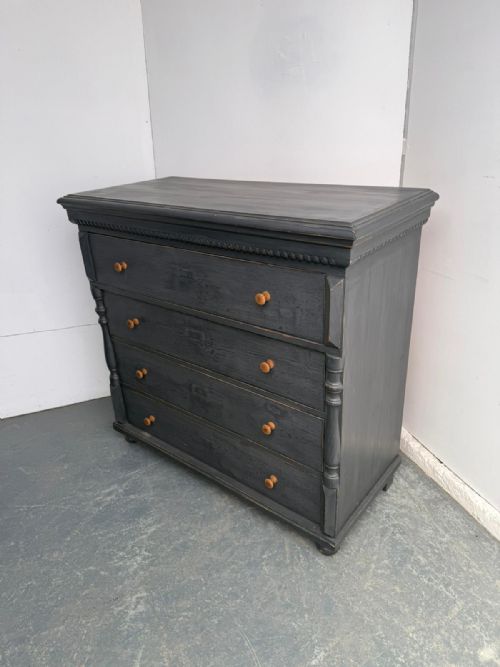
Grey Painted Chest of Drawers
A grey painted chest of drawers brings muted tone and practical storage, drawing on centuries of European and British cabinet-making traditions.
Grey Painted Chest of Drawers
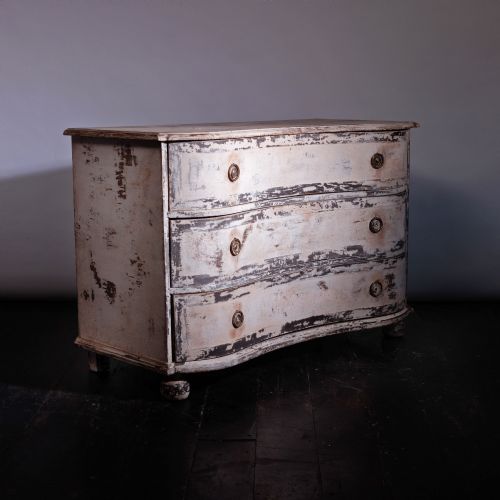
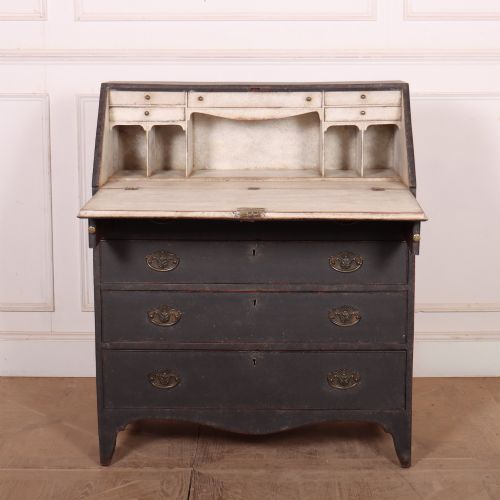
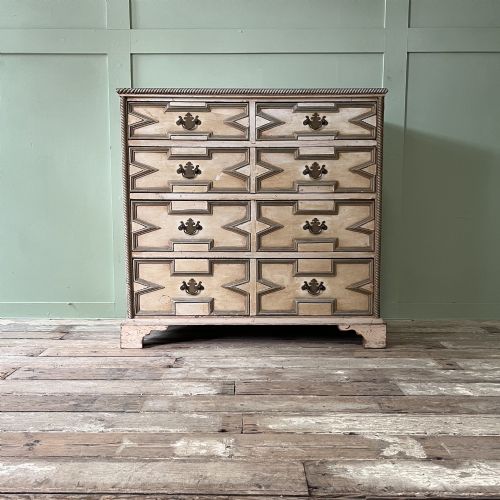
When someone searches for a grey painted chest of drawers, they encounter a range of forms spanning several centuries, including Victorian pine pieces, French commodes, and Swedish Gustavian designs. These items function primarily as domestic storage, taking the shape of upright chests, commodes, dresser bases, and banks of drawers.
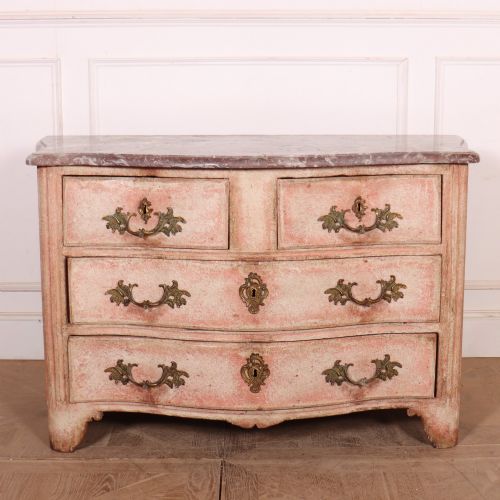
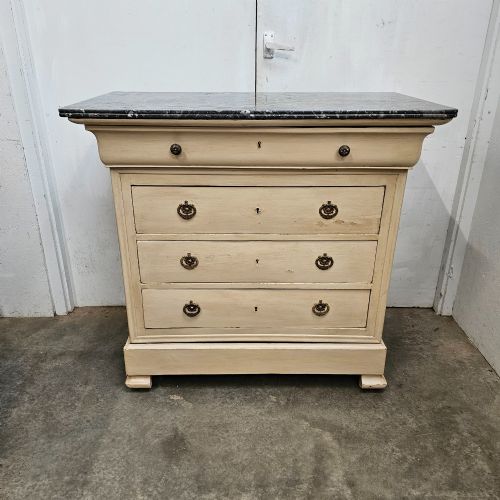
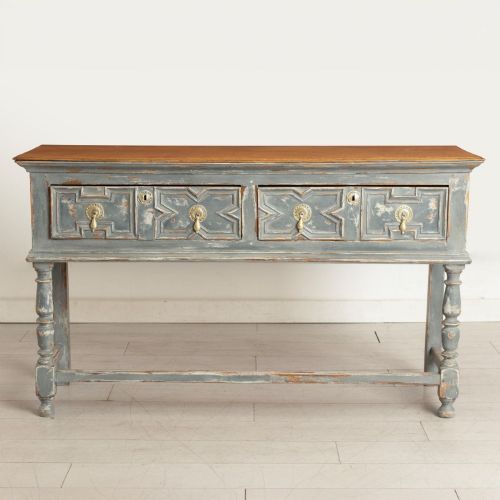
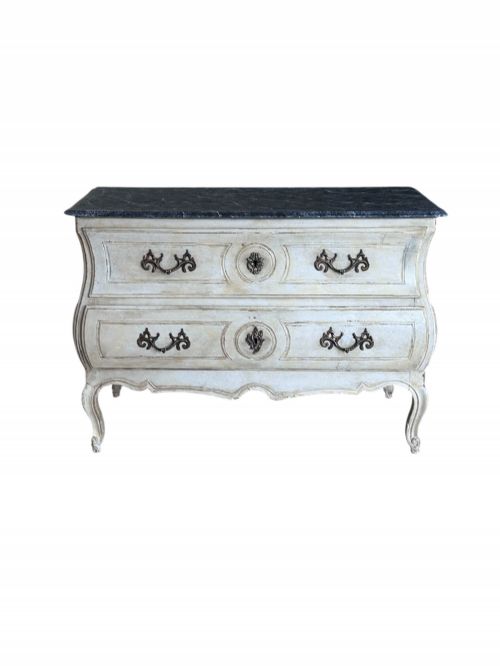
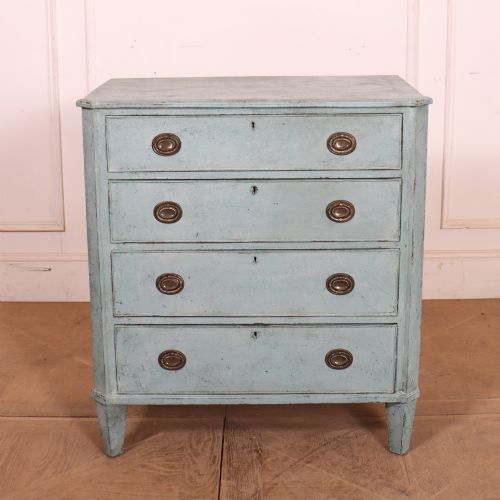
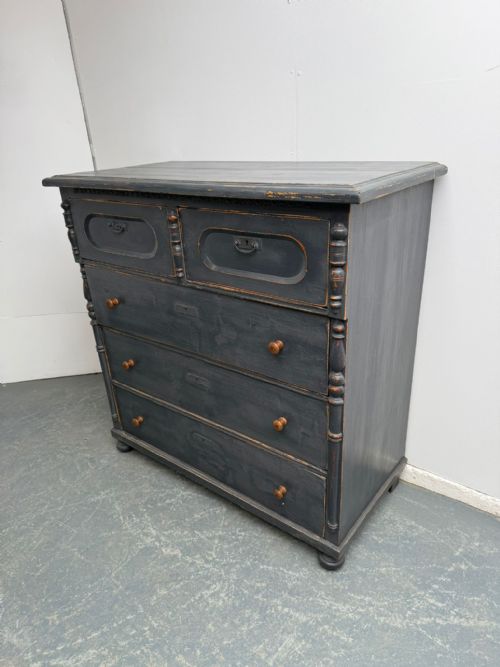
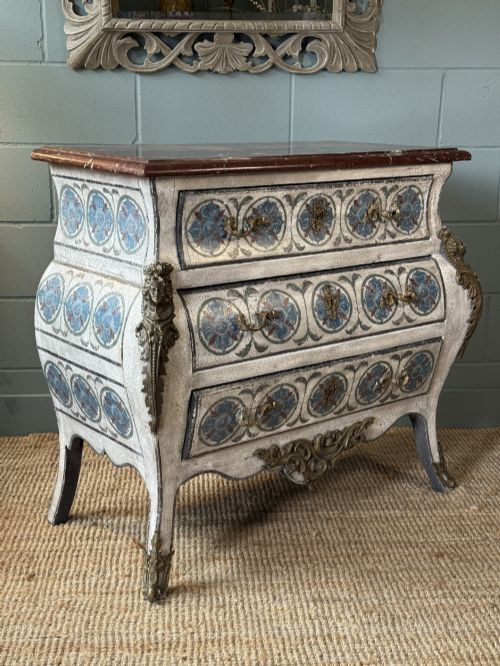
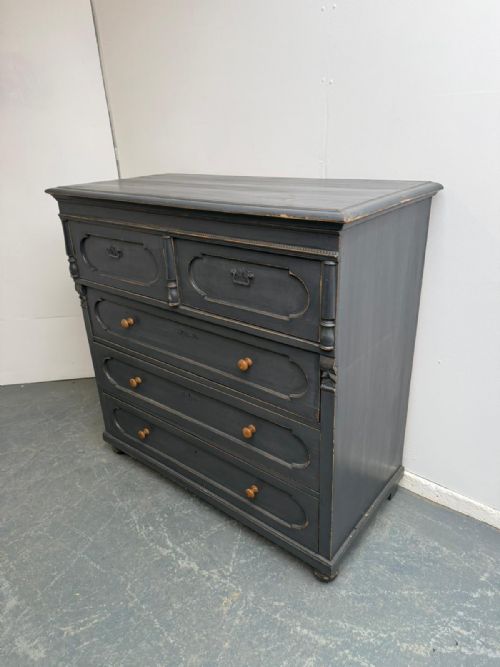
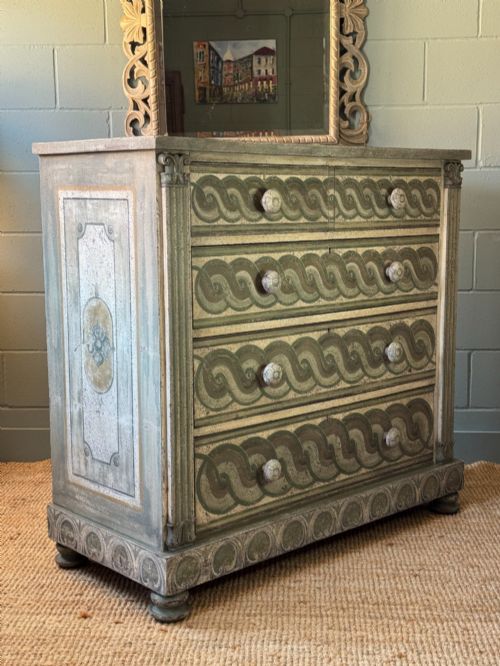
The version most frequently met on this page is the nineteenth-century pine or oak chest finished in shades of grey, often reflecting later decorative updates or regional European aesthetics. Pieces range from modest country furniture to more ornate serpentine and bombe shapes originating from France, Sweden, and the Netherlands.
Beyond standard drawer configurations, variations include marble tops, faux bamboo detailing, and gilt accents that elevate utilitarian storage into decorative focal points. The underlying structure frequently utilises solid hardwoods like oak and ash, or softer conifers such as Baltic pine.
Materials and Construction
Cabinet makers built these carcasses using traditional joinery methods, selecting pine, oak, and ash for structural integrity. Drawer construction typically relied on hand-cut dovetail joints to ensure durability under daily use.
Surface finishes involve layers of paint applied to wood, sometimes combined with later decorative painting or hand-brushing in grey tones. Certain continental pieces incorporate shaped marble tops fitted directly to the wooden carcass.
Hardware details consist principally of brass pulls and handles, which contrast against the painted wooden drawer fronts. Metal fittings and decorative mounts secure the structural corners and drawer surrounds on continental commodes.
Grey Painted Chest of Drawers Retail Price Guide 2026
Typical asking prices for grey painted chest of drawers among the pieces listed under this phrase on Sellingantiques today, from the lower quarter to the upper quarter. They describe what is for sale here now, not the wider market.
One nineteenth-century piece combines faux bamboo moulding with traditional drawer storage.
Evaluating Quality and Origin
Quality in these pieces rests upon the integrity of the original woodwork and the proportion of the carcass. Superior examples exhibit balanced proportions, well-executed joinery, and timber selection that resists warping over time.
The application of the paint finish contributes significantly to the visual weight of the furniture. Skillful layering and surface texture distinguish intentional decorative schemes from heavy-handed modern recoating.
Provenance and regional style also define the tier of a piece, with documented maker attributions or specific continental neoclassical traits commanding greater interest among collectors.
Edwards and Roberts·Sir Clough Williams-Ellis
The Grey Painted Chest of Drawers Glossary
- Commode
- A low chest of drawers or cabinet originating in France, often featuring decorative hardware and shaped fronts. These pieces frequently serve as bedside or living room storage.
- Gustavian
- The Swedish neoclassical style spanning the late eighteenth and early nineteenth centuries. It is characterised by restrained classical ornamentation and pale painted finishes.
- Bombe
- A swollen or bulging convex shape found on the front and sides of continental drawer units. This technique requires advanced woodworking skill to construct curved drawer fronts.
- Dovetail
- A joint formed by interlocking wedge-shaped fingers, used extensively in drawer construction. Hand-cut variations indicate older craftsmanship.
- Serpentine
- A furniture front shaped with a concave central section flanked by two convex curves. This undulating line appears frequently on eighteenth and nineteenth-century commodes.
Grey Painted Chest of Drawers: Frequently Asked Questions
How do I date a painted chest?
Dating relies on examining construction techniques, timber types, and the method of drawer assembly. Hand-cut dovetails and older pine or oak framing generally point towards eighteenth or nineteenth-century origins.
Paint layers can sometimes be analyzed to separate original decorative schemes from later surface updates. Hardware styles and secondary woods inside the drawers also offer clues to the period of manufacture.
Are these pieces original or later painted?
The inventory contains a mixture of period pieces with historic paint surfaces and older furniture that has been redecorated by hand in grey tones. Listings specify whether a finish is original to the period or applied later.
Buyers focused on regional styles often look for historic paint layers on Gustavian or French provincial items. Those seeking a specific interior colour scheme frequently choose items updated with modern hand-painted finishes.
How should I care for painted wood?
Painted furniture requires gentle cleaning with a soft, dry cloth to remove dust without abrasive action. Avoiding excess moisture protects both the wooden substrate and the painted surface from lifting or bubbling.
Keeping pieces away from direct heat sources and strong sunlight prevents the wood from drying out and cracking. Natural wax polishes can be applied sparingly to unpainted wooden interior elements.