



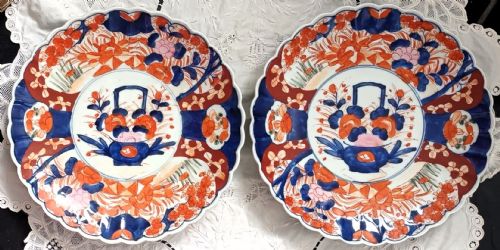
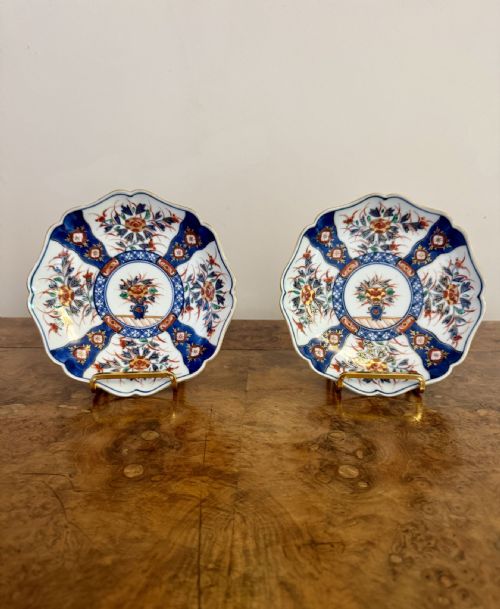
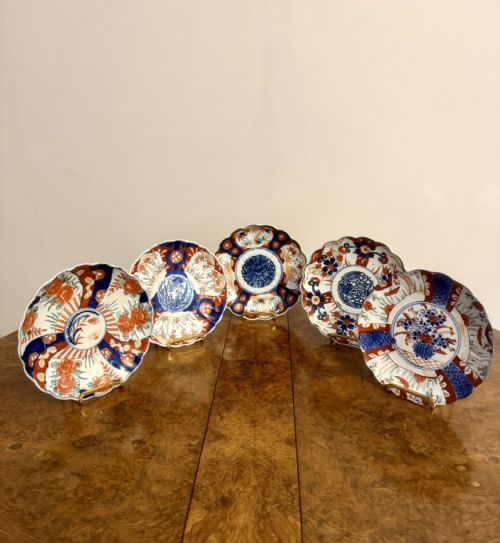
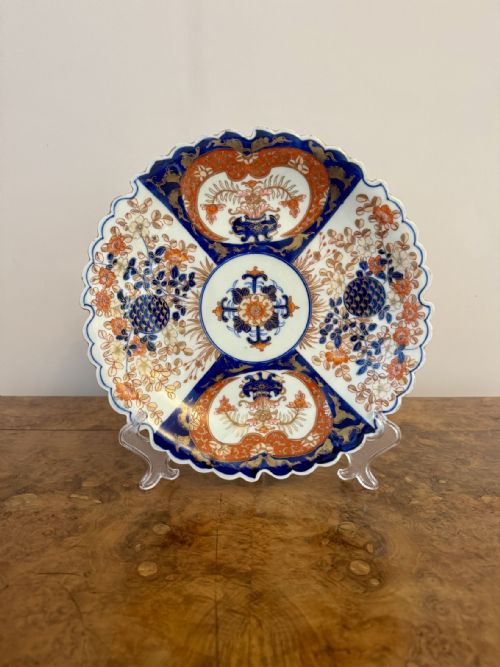
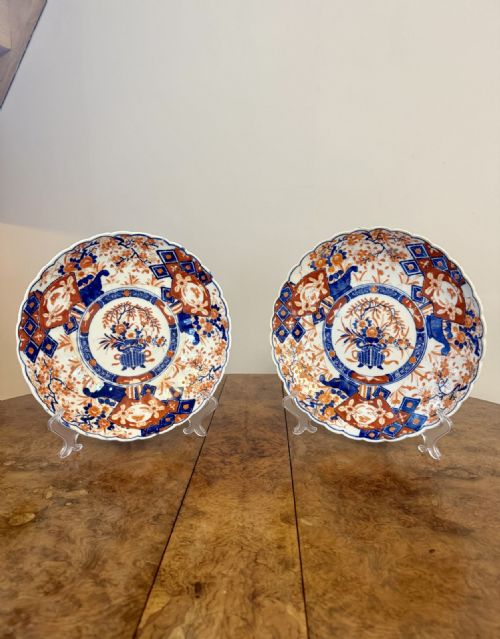


Scalloped Imari Display Plates
These scalloped imari display plates bring together bold underglaze cobalt and rich enamel palettes for decorative walls and tables.
Scalloped Imari Display Plates
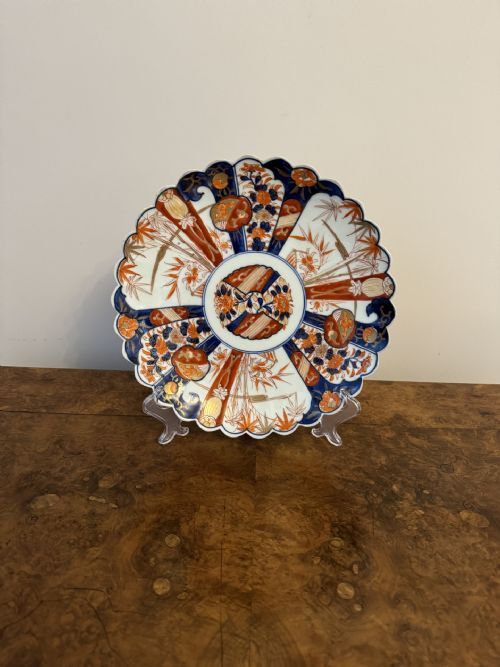
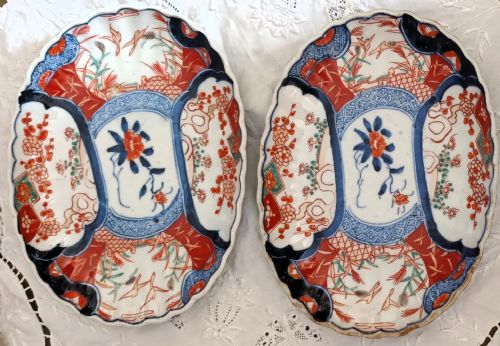
Scalloped imari display plates combine traditional Japanese aesthetics with decorative forms intended for visual impact. Most pieces originate from the Meiji period and the nineteenth century, reflecting robust trade and export patterns of those eras. Buyers encounter individual display dishes alongside matched pairs and larger charger formats.
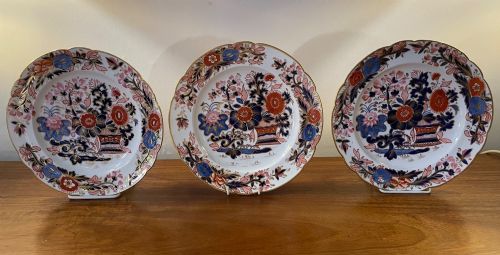
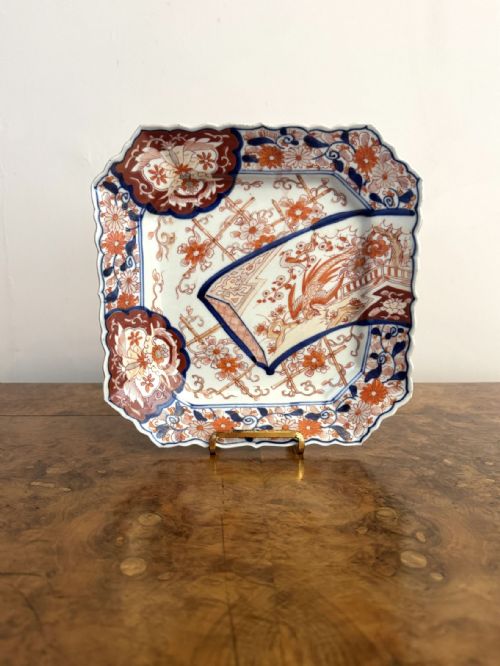
The inventory on this page also includes occasional British interpretations, such as early nineteenth-century Staffordshire and Derby porcelain made in the imari palette. Forms vary from traditional round scalloped edges to square profiles and shell shapes. These variations provide diverse options for wall mounting and cabinet display.
How They Were Made
Potters built these items using porcelain clay bodies fired at high temperatures to achieve a dense and durable base. Cobalt underglaze was applied before the initial glaze firing to create deep blue outlines and details. Overglaze enamels in iron red and other colours were then added in subsequent firings.
Many examples incorporate gold leaf or gilding to highlight specific motifs within the painted design. The combination of glaze, enamel, and gold creates a textured surface that catches ambient light. Artisans painted floral motifs, exotic birds, and figurative scenes by hand.
Several plates depict exotic birds holding conversations in mid-air.
What Varies in Quality
The precision and detail of the hand-painted brushwork set superior pieces apart from standard production. Imari plates featuring complex pictorial narratives, such as depictions of the Seven Lucky Gods, demand greater skill than repeating geometric borders. The crispness of the cobalt underglaze and the vibrancy of the enamel glaze determine overall visual balance.
Surface preservation affects the desirability of individual items, particularly regarding the retention of delicate gilding and gold leaf. The accuracy of the moulding in shaped edges, whether square, shell, or scalloped, indicates the care taken during manufacture. Consistency in the glaze finish without excessive firing blemishes marks the upper tier of production.
The Scalloped Imari Display Plates Glossary
- Imari
- A style of Japanese porcelain originating from the port of Arita, characterised by a palette of cobalt blue, iron red, and gold. This decorative scheme became immensely popular in European export markets.
- Charger
- A large decorative plate intended for display on a sideboard or wall rather than for practical dining use. These substantial pieces often showcase the most elaborate hand-painted designs.
- Cobalt Underglaze
- A pigment applied to the raw clay body before glazing and firing, which produces a stable blue colour beneath a glossy protective layer. It forms the structural foundation of traditional imari decoration.
- Meiji Period
- The era of Japanese history lasting from 1868 to 1912, marked by significant openness to international trade. Much of the export porcelain found today dates from this dynamic period of production.
Scalloped Imari Display Plates: Frequently Asked Questions
How were these plates used?
Scalloped imari display plates served primarily as decorative objects for domestic interiors rather than utilitarian tableware. Owners placed them on sideboards or mounted them on walls to showcase their vibrant colours and metallic accents.
Larger chargers occupied central positions in formal rooms, reflecting the owners' taste for imported Asian aesthetics. Pairs and sets allowed for symmetrical arrangements across mantelpieces and cabinetry.
How do I date an imari plate?
Dating relies on stylistic indicators, clay body characteristics, and the specific tones of the underglaze cobalt and enamel colours. Nineteenth-century examples often display denser, more varied hand-painted motifs compared to later Meiji production.
British interpretations from Staffordshire or Derby exhibit distinct paste types and firing techniques that differ from Japanese porcelain. Examining the foot ring and glaze pooling provides further clues regarding the manufacturing era.
Can I hang these plates on the wall?
Wall mounting is a traditional method for displaying decorative plates and chargers securely in domestic settings. Suitable hanging hardware should distribute the weight evenly across the rim and base without causing structural stress.
Ensuring the wall fixings are secure is essential due to the substantial weight of large porcelain chargers. Professional framing or specialised spring hangers help protect the scalloped edges from accidental damage.
What is the difference between a plate and a charger?
Chargers are significantly larger in diameter than standard plates, typically measuring twelve inches or more across. This increased surface area provided artisans with a broader canvas for complex pictorial compositions.
Plates were produced in standard dimensions suited for smaller groupings and symmetrical cabinet displays. Both forms share the characteristic cobalt and enamel palette associated with imari wares.