


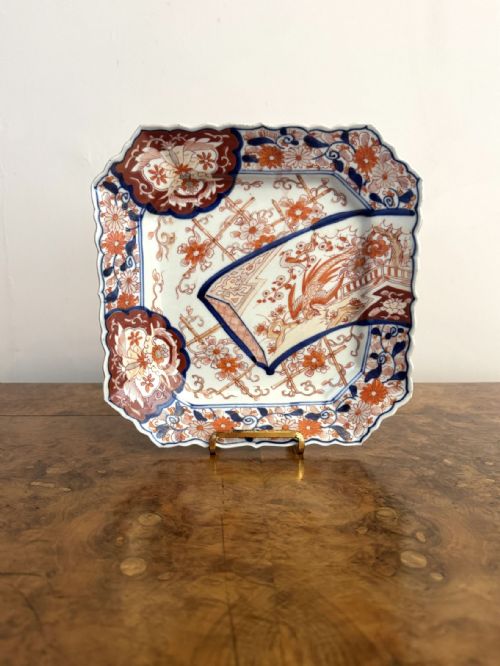
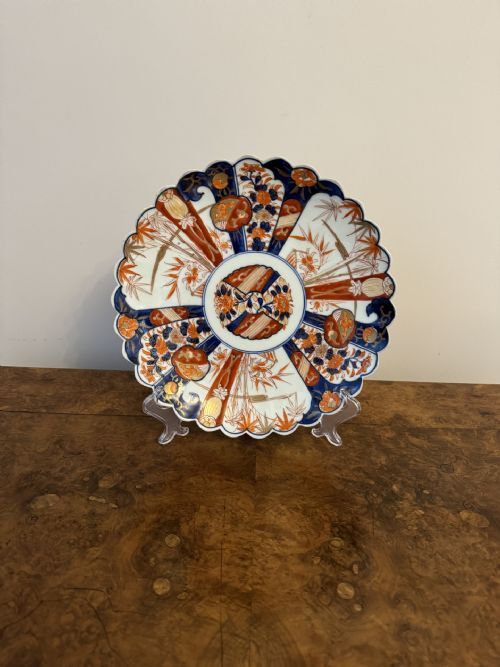
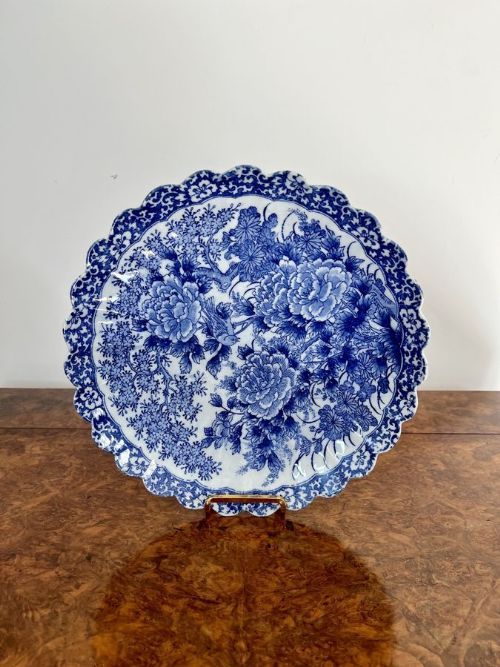


Scalloped Edge Platter
A scalloped edge platter brings fluid contour and intricate pattern to the table, uniting practicality with the decorative traditions of the nineteenth and twentieth centuries.
Scalloped Edge Platter
When you search for a scalloped edge platter, you encounter a varied selection of serving vessels, chargers, and trays spanning the Victorian and Edwardian eras. These pieces demonstrate how makers shaped utilitarian objects into ornamental centerpieces through curved rims and moulded borders.
The assortment on this page leans heavily toward Japanese Imari porcelain chargers and plates from around nineteen hundred alongside British wooden trays and European earthenware. You will find items ranging from large meat platters to decorative dishes featuring blue and white designs or polychrome enamels.
The forms adapt to various materials, encompassing walnut, mahogany, silver plate, and ceramic bodies. Each item reflects the domestic routines and decorative tastes of the nineteenth century and the early twentieth century.
What Varies in Quality
The standard of a ceramic piece rests upon the crispness of the moulded edge and the precision of the hand-painted decoration. Finer examples display vivid enamel work and balanced compositions, whereas simpler items show more repetitive or restrained ornamentation.
In wooden trays, quality emerges through the selection of veneer, the joinery of the gallery, and the preservation of the polished surface. Well-executed handles and sturdy construction separate everyday utility pieces from finer decorative serving ware.
Current listings feature porcelain, earthenware, walnut, and mahogany across Victorian and Edwardian periods.
The Scalloped Edge Platter Glossary
- Imari
- A style of Japanese porcelain featuring distinctive underglaze blue and overglaze iron red, gold, and secondary colours. This aesthetic heavily influenced European tastes during the Victorian period.
- Charger
- A large decorative plate used historically for ceremonial display rather than direct service of food. These items often showcase the finest hand-painted details.
- Veneer
- A thin layer of superior wood applied to a commoner timber base to create decorative grain patterns. Tray makers utilised this technique on serving surfaces.
- Faience
- European tin-glazed earthenware, often associated with French regional potteries. It provides an opaque white ground for colourful painted designs.
- Scalloped edging
- A decorative border composed of curved segments resembling the edge of a scallop shell. This shaping softens the perimeter of plates and trays.
Scalloped Edge Platter: Frequently Asked Questions
What is a scalloped edge platter used for?
These pieces served both decorative display and practical table service in nineteenth-century homes. Chargers often stood on sideboards, while meat platters and trays carried food.
Today, they function as striking wall plates, centrepieces, or serving dishes for special occasions.
How do I care for antique ceramic platters?
Wash ceramic and porcelain pieces gently by hand using mild soap and warm water. Avoid soaking items with exposed earthenware bodies or antique gilding.
Keep wooden trays conditioned with appropriate furniture wax and protect them from excessive moisture and direct sunlight.
How do I date a wooden serving tray?
Examine the timber species, construction methods, and the style of the gallery edge. Walnut and mahogany were favoured across the Victorian and Edwardian periods.
Tool marks and the type of veneer backing can also help narrow down the manufacturing decade.
What is the difference between a plate and a charger?
Chargers are significantly larger than standard dining plates and were traditionally placed beneath smaller courses. They prioritise decorative impact over utility.
Plates and serving dishes are deeper and scaled for holding food portions during family meals.