

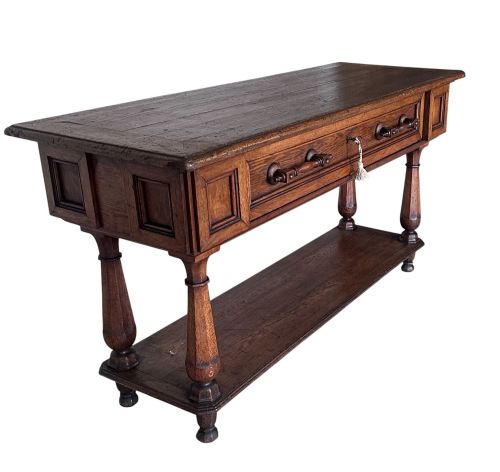
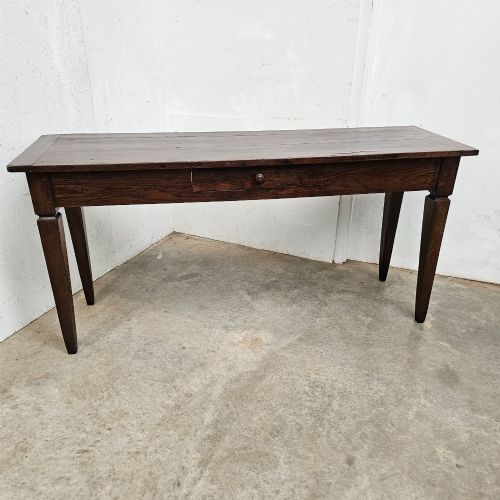
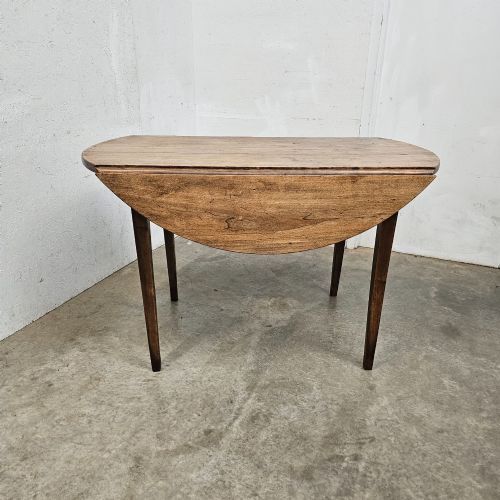
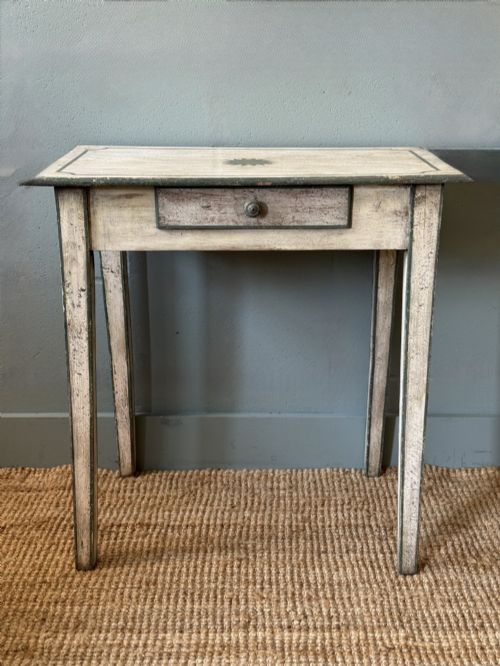
Rustic French Side Table
A rustic french side table brings domestic history into a room through honest timber and utility.
Rustic French Side Table
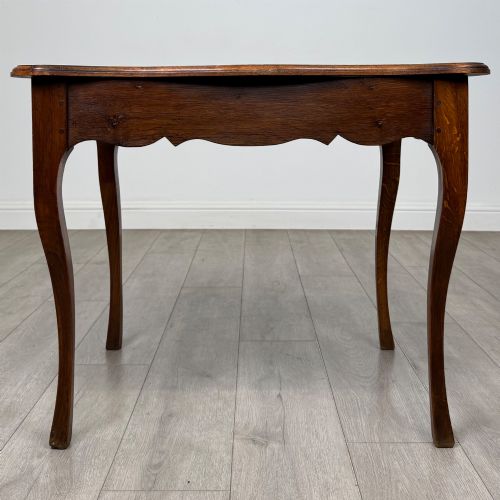
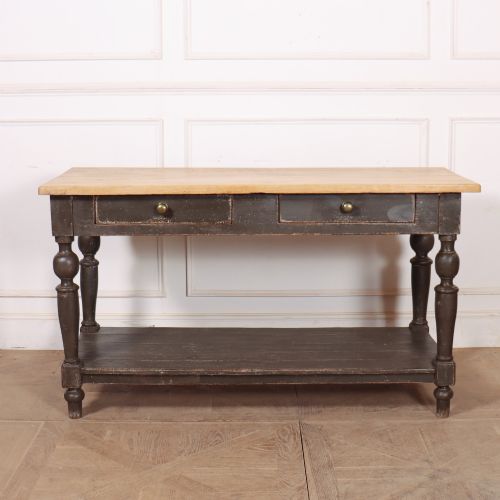
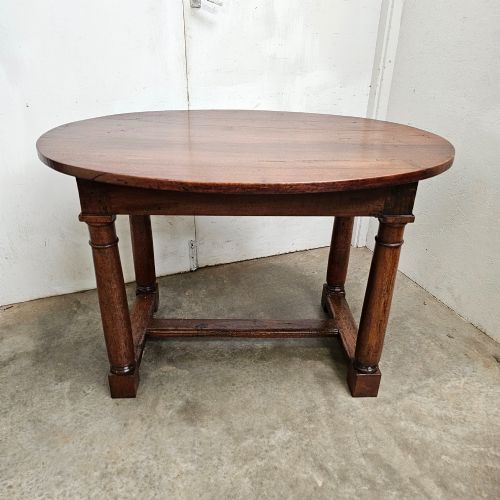
A rustic french side table draws upon provincial domestic and work traditions, encompassing forms such as consoles, work tables, and serving pieces. These items serve everyday utility while displaying the unpretentious character valued by collectors of rural antiquities.
The pieces appearing here span centuries from the eighteenth to the twentieth, reflecting vernacular rural, provincial, and country styles. Oak, pine, walnut, fruitwood, and cherry predominate among the timbers utilised by regional makers.
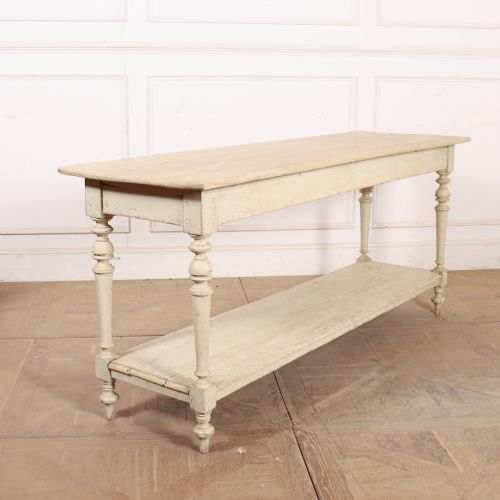
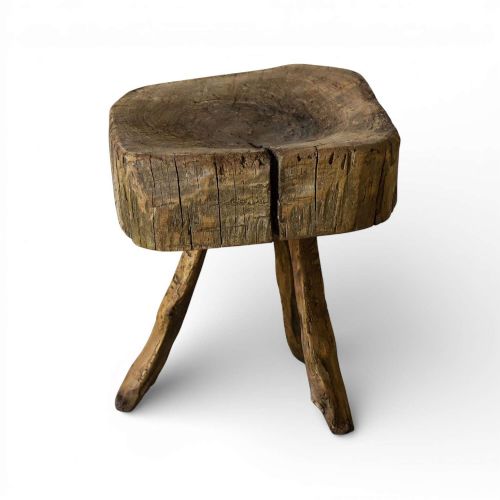
Buyers meet forms ranging from small lamp tables and drop-leaf designs to grand drapers tables and chopping blocks. Each item carries the marks of practical domestic or commercial use in French provinces.
Materials and construction
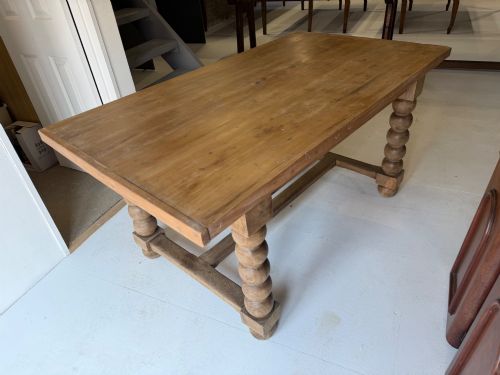
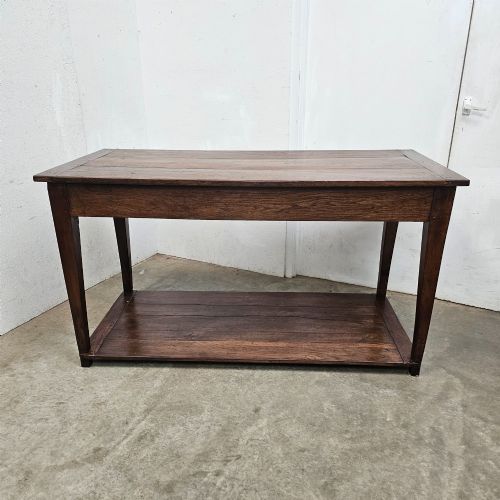
Makers utilised regional hardwoods and softwoods such as oak, elm, cherry, walnut, fruitwood, and pine for structural frames and tops. Tables frequently combine solid timber tops with turned, bobbin, or gnarled legs tailored to local workshop traditions.
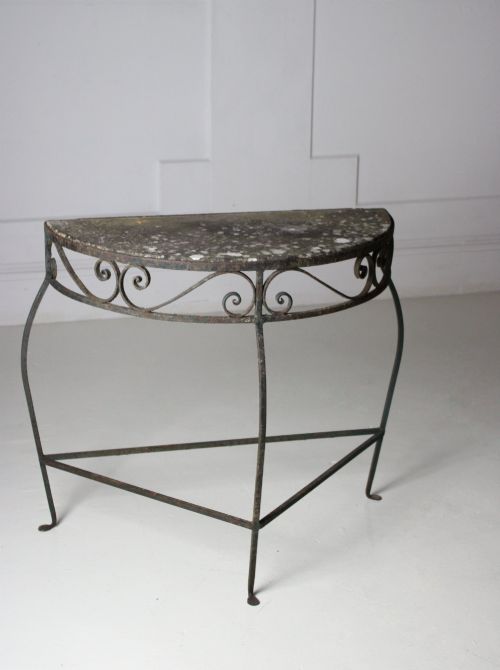
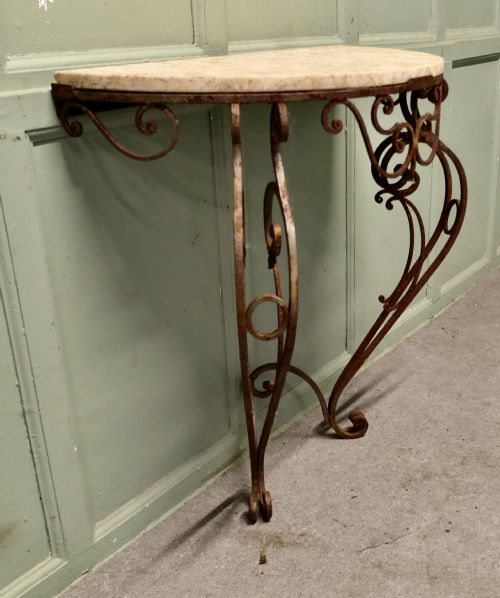
Functional hardware incorporates iron, wrought iron, and brass details alongside marble inserts found on patisserie and console surfaces. Painted finishes, scrubbed surfaces, and natural waxed timbers demonstrate the traditional surface treatments applied across the periods.
Listings feature eighteenth to twentieth century pieces in oak, pine, fruitwood, walnut, and elm, alongside wrought iron and marble.
Assessing quality in provincial tables
Quality rests in the integrity of the timber, the honesty of the construction, and the preservation of original surfaces. Tables retaining genuine patina, original gnarled legs, or authentic stamps display superior heritage value.
Proportion and utility dictate distinction, where utilitarian items like drapers tables, chopping blocks, and work tables demonstrate robust regional joinery. Retaining original paint or untouched scrubbed tops elevates an example above altered or overly restored counterparts.
The Rustic French Side Table Glossary
- Drapers table
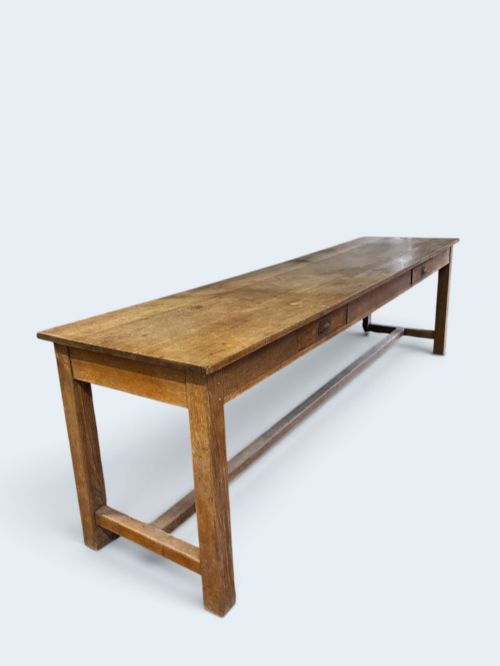
- A long utility table traditionally utilised in textile shops for folding cloth. These pieces feature deep proportions and sturdy timber construction.
- Gueridon
- A small round table supported by a central pillar or legs. These examples often incorporate cast iron bases and marble tops.
- Patisserie display table
- A specialised commercial table featuring a marble top designed for pastry work. Such pieces originate from French bakeries and shops.
- Bobbin legs
- Turned furniture legs shaped like a series of spools or bobbins. This decorative turning appears on nineteenth-century oak and beech pieces.
- Pot-shelf
- A lower storage shelf built beneath a table or serving board. This practical addition held kitchen pots and utensils in provincial homes.
Rustic French Side Table: Frequently Asked Questions
How were these tables originally used?
Many examples served utilitarian roles in French kitchens, shops, and workrooms as prep tables, drapers tables, or chopping blocks. Others functioned as serving tables or bedside cabinets.
Over time, their sturdy construction and modest dimensions made them suitable for everyday placement in modern reception rooms and hallways.
How do I distinguish nineteenth century pieces?
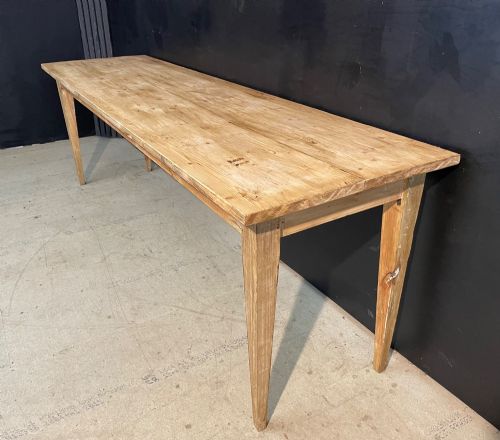
Nineteenth-century examples often exhibit regional characteristics such as turned bobbin legs, scrubbed pine tops, or heavy oak frames. Construction details like hand-cut joints and patinated timber surfaces help date the work.
Reference to specific provincial origins, such as Alsace, further aids in identifying the period and workshop style.
Are marble tops original on these tables?
Marble tops appear frequently on patisserie display tables, console tables, and wash tables. These stone surfaces provided durable, hygienic work areas for food preparation or washing.
They are integral to the specific commercial or domestic function of the table in question.