


French Fruitwood Side Table
A french fruitwood side table brings warmth and rustic utility to a room through honest provincial craftsmanship.
French Fruitwood Side Table
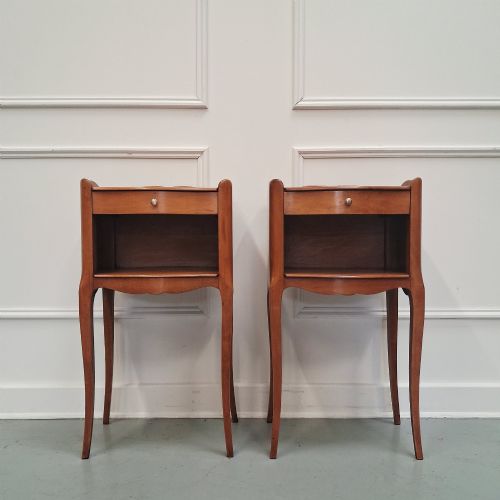
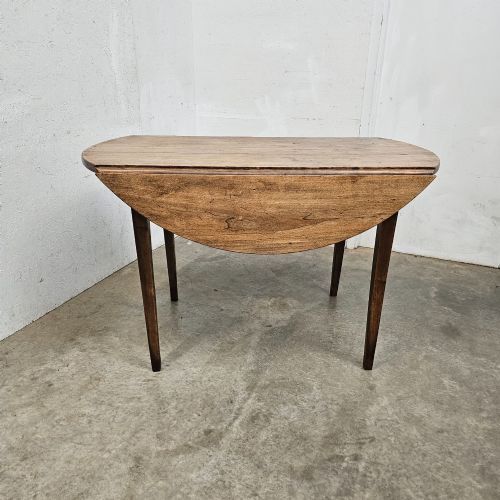
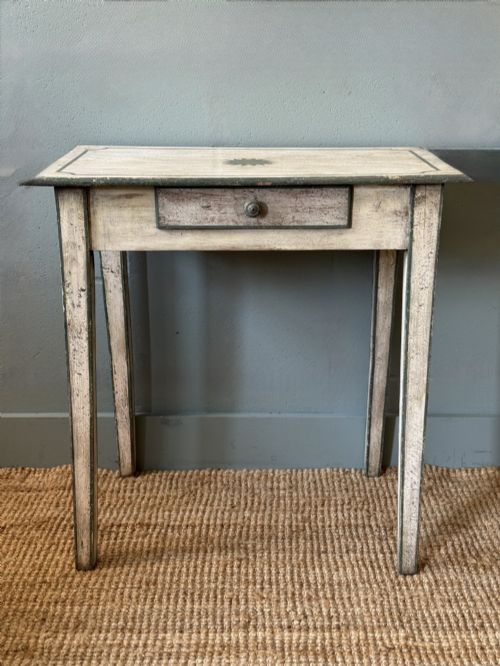
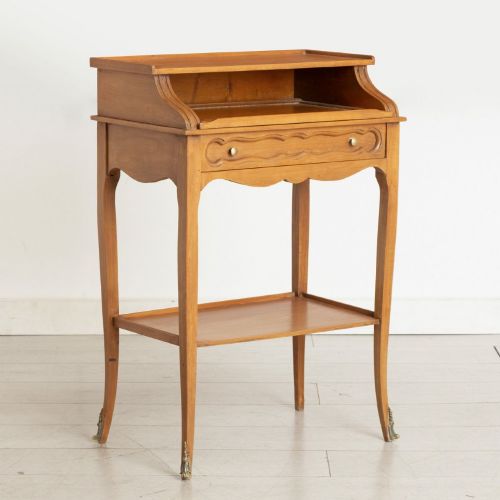
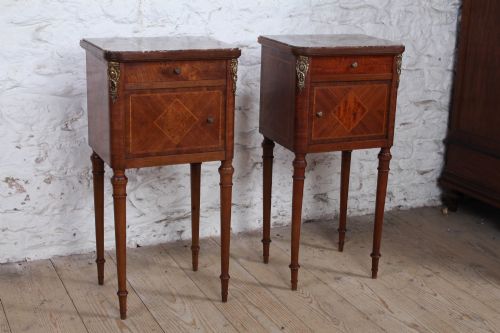
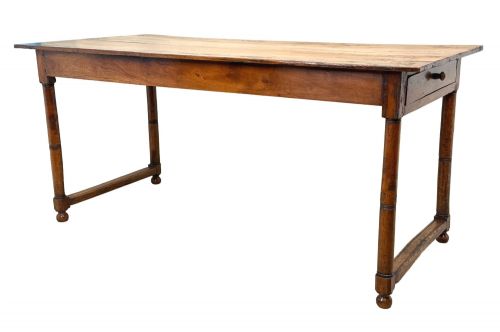
A french fruitwood side table encompasses a diverse group of domestic furnishings originating from various regional workshops across France. These pieces span multiple centuries, appearing in forms such as compact bedside cabinets, serving tables, writing desks, and occasional tables.
The versions most commonly met on this page belong to the nineteenth century and the provincial or rustic country traditions. Buyers encounter items featuring turned legs, single drawers, marble tops, and drop-leaf mechanisms designed for practical daily use.
Materials and construction
The primary material is fruitwood, supplemented by cherrywood, oak, burr wood, elm, alder, and occasional painted surfaces or brass fittings. Cabinetmakers selected these dense native hardwoods for their fine grain and warm natural tones.
Joinery techniques reflect traditional regional carpentry, incorporating turned legs, fitted drawers, and in some instances marble surfaces set into the wooden frame. Burr wood veneer also appears on select decorative panels.
Several tables arrive with their original marble tops intact, ready for centuries of spilled morning coffee.
Assessing quality
Quality in these tables rests upon the selection of timber and the integrity of the original construction. Superior examples display carefully matched fruitwood or burr veneers, robust framing, and well-executed turning on the legs.
The presence of integrated marble tops, inlaid details, or original brass hardware elevates a piece above standard utilitarian furniture. Condition and period authenticity further distinguish finer examples from simpler provincial work.
The French Fruitwood Side Table Glossary
- Fruitwood
- Timber derived from fruit-bearing trees such as cherry, pear, or apple. It is prized for its fine texture and mellow colour.
- Provincial
- Denoting items made in the regions outside Paris. These pieces often exhibit simpler, robust designs tailored to local domestic needs.
- Louis XVI Style
- A neoclassical design vocabulary characterised by straight tapered legs and restrained classical ornamentation. It often influences later provincial furniture.
- Occasional table
- A small, versatile table intended to be moved about a room as needed. These serve various secondary functions in domestic interiors.
- Burr wood
- Wood with a distorted grain pattern resulting from a tree growth. It provides highly decorative veneer panels for cabinet fronts.
French Fruitwood Side Table: Frequently Asked Questions
How are these tables used today?
These tables function well as bedside stands, lamp tables, or small writing desks in modern interiors. Their compact proportions allow them to fit easily beside seating or in hallways.
Their sturdy construction ensures they handle everyday use while adding warmth to a room through natural timber tones.
What periods do these tables represent?
The pieces span from the eighteenth century through the nineteenth century and into the early twentieth century. Provincial styles often persisted long after initial Parisian trends.
Construction details and wood selection help connect individual items to these broader historical periods.
Are marble tops original?
Marble tops frequently accompany bedside cabinets and serving tables from the nineteenth century onwards. They provided a durable, wipe-clean surface for washing accessories and drinks.
Examining the rebate and fit within the wooden frame helps confirm whether the stone belongs to the piece.
How do I care for fruitwood?
Fruitwood responds best to regular dusting with a soft cloth and occasional treatment with traditional beeswax. Avoiding direct sunlight and excessive heat protects the timber from drying out.
Preserving the natural finish maintains the mellow patina developed over centuries of use.