
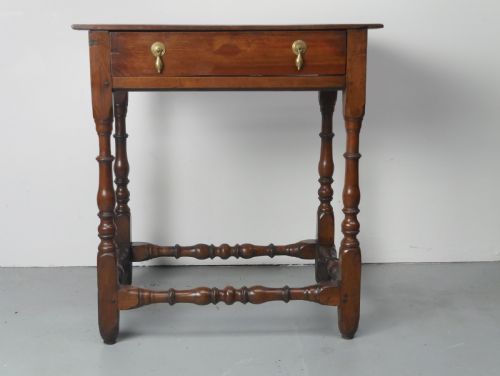


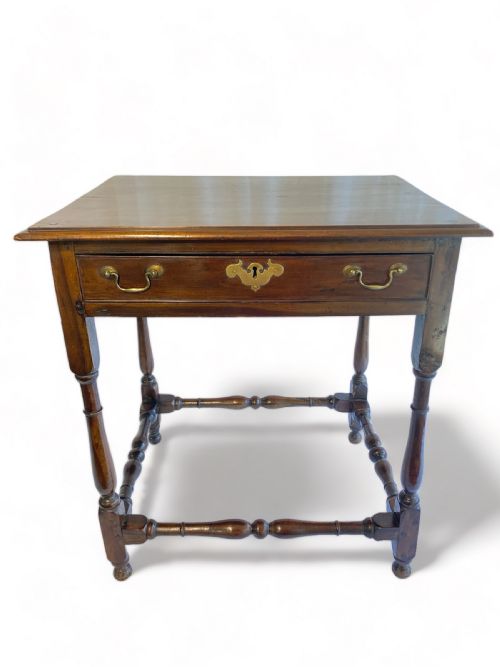

Fruitwood Accent Table
These fruitwood accent table examples provide practical surfaces in rich timbers, built to last centuries.
Fruitwood Accent Table
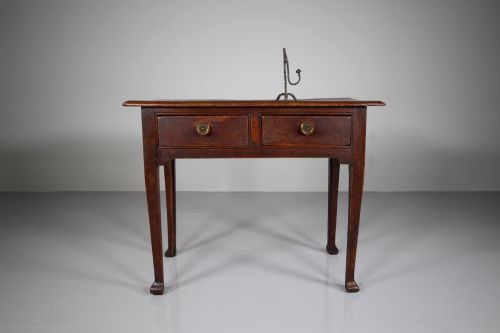
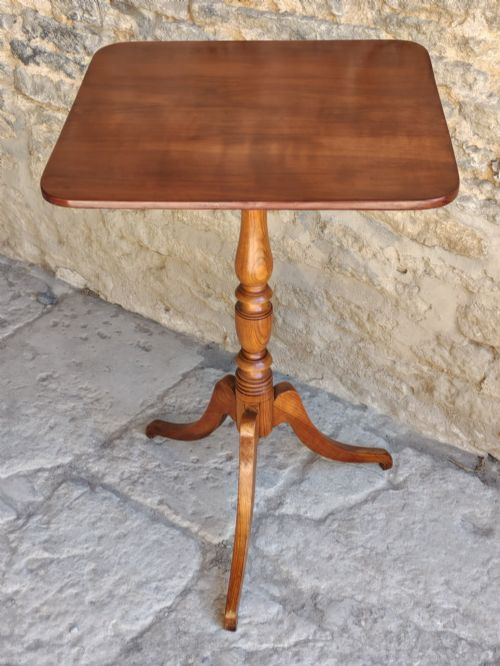
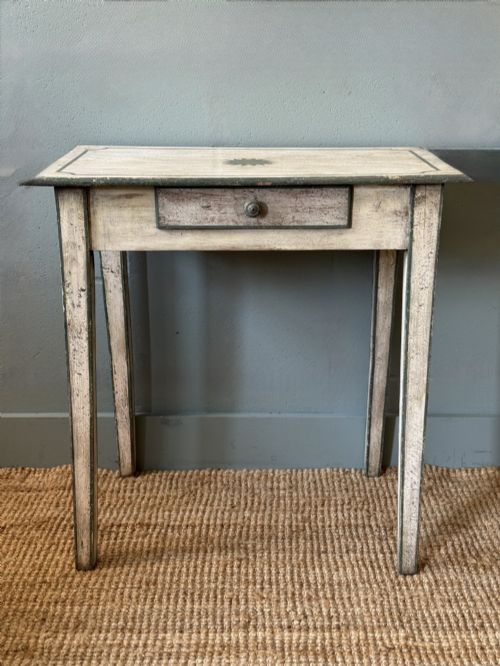
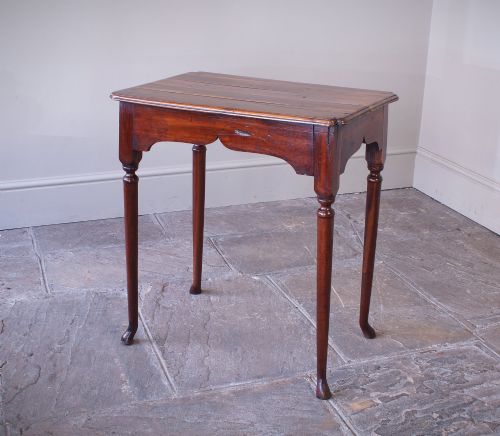
A fruitwood accent table serves as a versatile piece of furniture designed for everyday utility in domestic spaces. These pieces appear as side tables, wine tables, centre tables, and occasional tables.
The selection on this page spans several eras, including the Georgian period, the eighteenth century, the nineteenth century, and the early twentieth century. English and French provincial origins dominate the available inventory.
Buyers most frequently encounter side tables and wine tables featuring timber tops and sturdy legs. These compact forms suit smaller spaces while retaining period character.
How they were made
Cabinet makers utilised local timbers such as fruitwood, elm, cherry, cherrywood, alder, and oak to construct these tables. These woods were chosen for their workability and warm grain patterns.
Construction techniques often involved wood-turned legs and stretchers to provide structural stability. Some examples incorporate drawers with functional timber framing and brass hardware.
These humble tables survived centuries of spilled claret and enthusiastic dining simply because the wood was too tough to throw away.
What varies in quality
The refinement of the turning on the legs and stretchers distinguishes simpler provincial items from more considered examples. Superior pieces display harmonious proportions between the timber top and the supporting base.
The choice and figuring of the timber stock influence the overall visual impact of the table. Natural patination developed through age adds depth to the surface finish.
The Fruitwood Accent Table Glossary
- Fruitwood
- Timber sourced from fruit-bearing trees such as pear, apple, or cherry. It yields a dense grain and warms significantly with age and polishing.
- Stretchers
- Horizontal support members connecting the legs of a table. They add rigidity to the frame and frequently feature decorative wood turnings.
- Side Table
- A small table designed to stand against a wall or beside seating. These pieces offer convenient surface space for lamps or decorative objects.
- Wine Table
- A small freestanding table traditionally used for holding glassware or bottles. They often feature a circular top supported by a central pillar or slender legs.
- Centre Table
- A freestanding table finished on all sides for placement in the middle of a room. These pieces function as focal points in period interiors.
Fruitwood Accent Table: Frequently Asked Questions
How were these tables used originally?
Originally, these tables served specific domestic duties like holding candles, wine glasses, or writing materials near seating areas. Their portability allowed servants to move them about the house as needed.
Over time, their roles expanded into general display surfaces for lamps and decorative objects within living spaces.
How do I live with an antique fruitwood table?
Living with these tables involves placing them away from direct heat sources and harsh sunlight to protect the timber. Regular dusting and occasional waxing help preserve the natural patination.
Their compact size makes them adaptable companions beside armchairs or in hallways where surface space is limited.
How can I tell the period of a table?
Dating relies on observing construction methods, leg turning styles, and overall proportions characteristic of periods like the Georgian era or the eighteenth century. Regional traits from English or French workshops also offer strong chronological clues.
Comparing the timber species and hardware details against documented examples helps confirm the likely era of manufacture.