
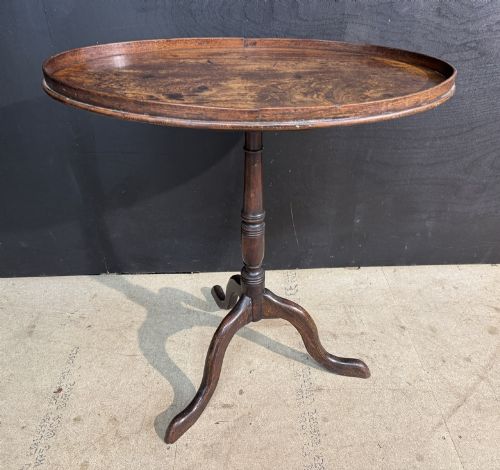
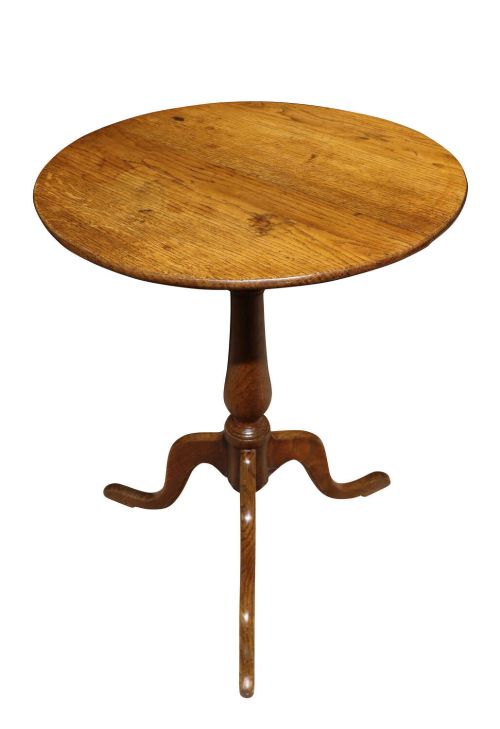
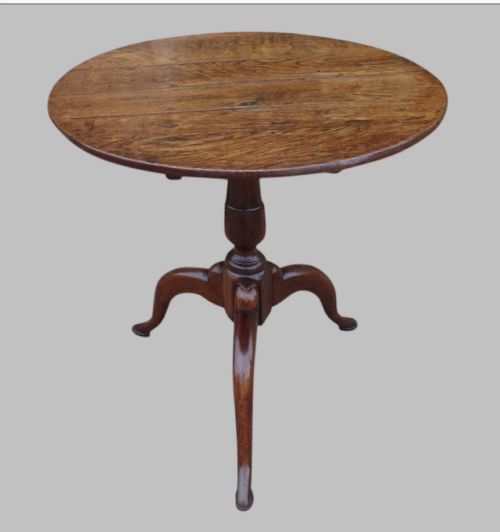
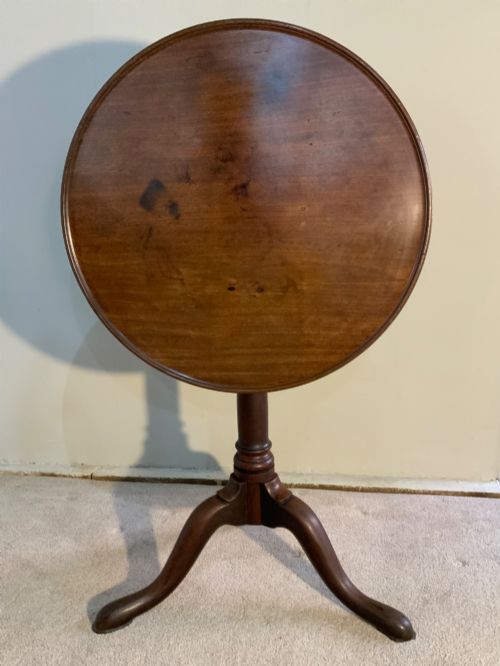
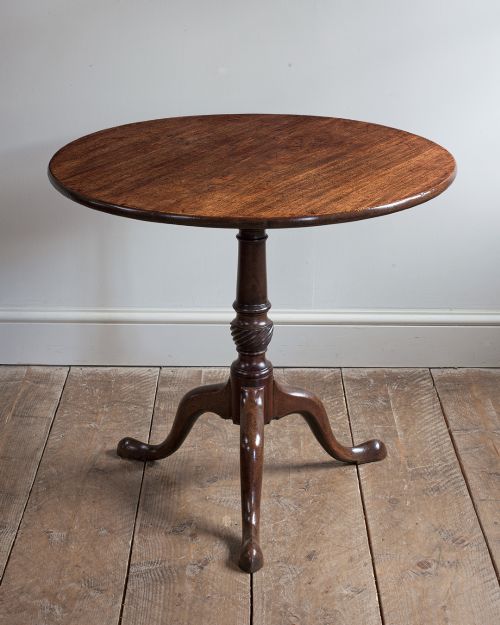
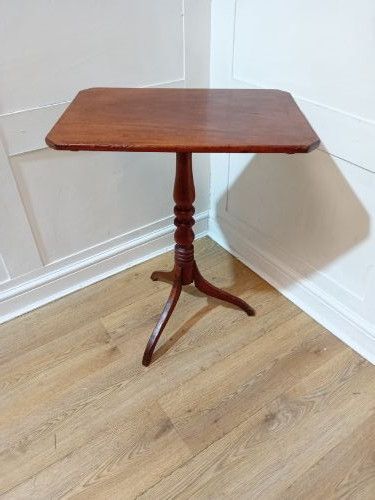
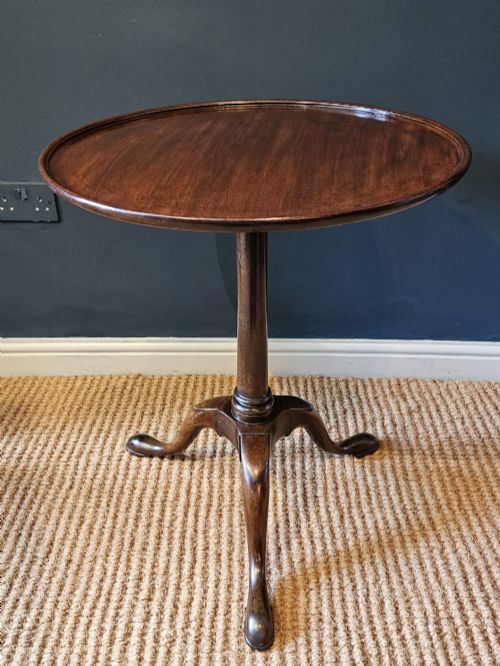
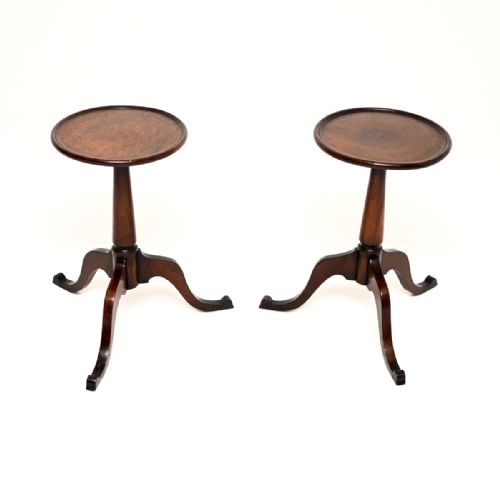
18th Century Tripod Stand
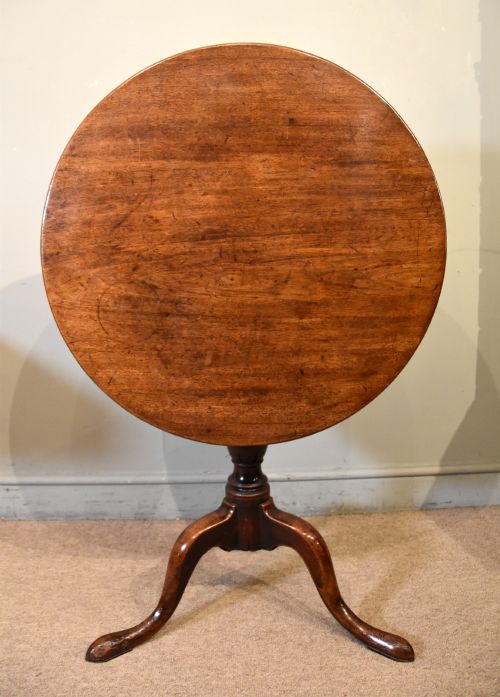
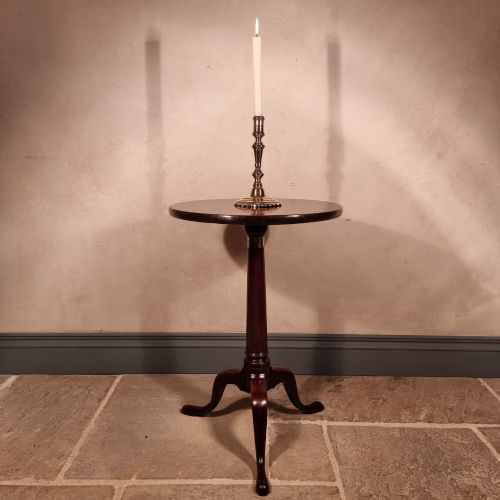
An 18th century tripod stand brings compact, portable table service and candle lighting to a room with the classic pillar and three-leg form.
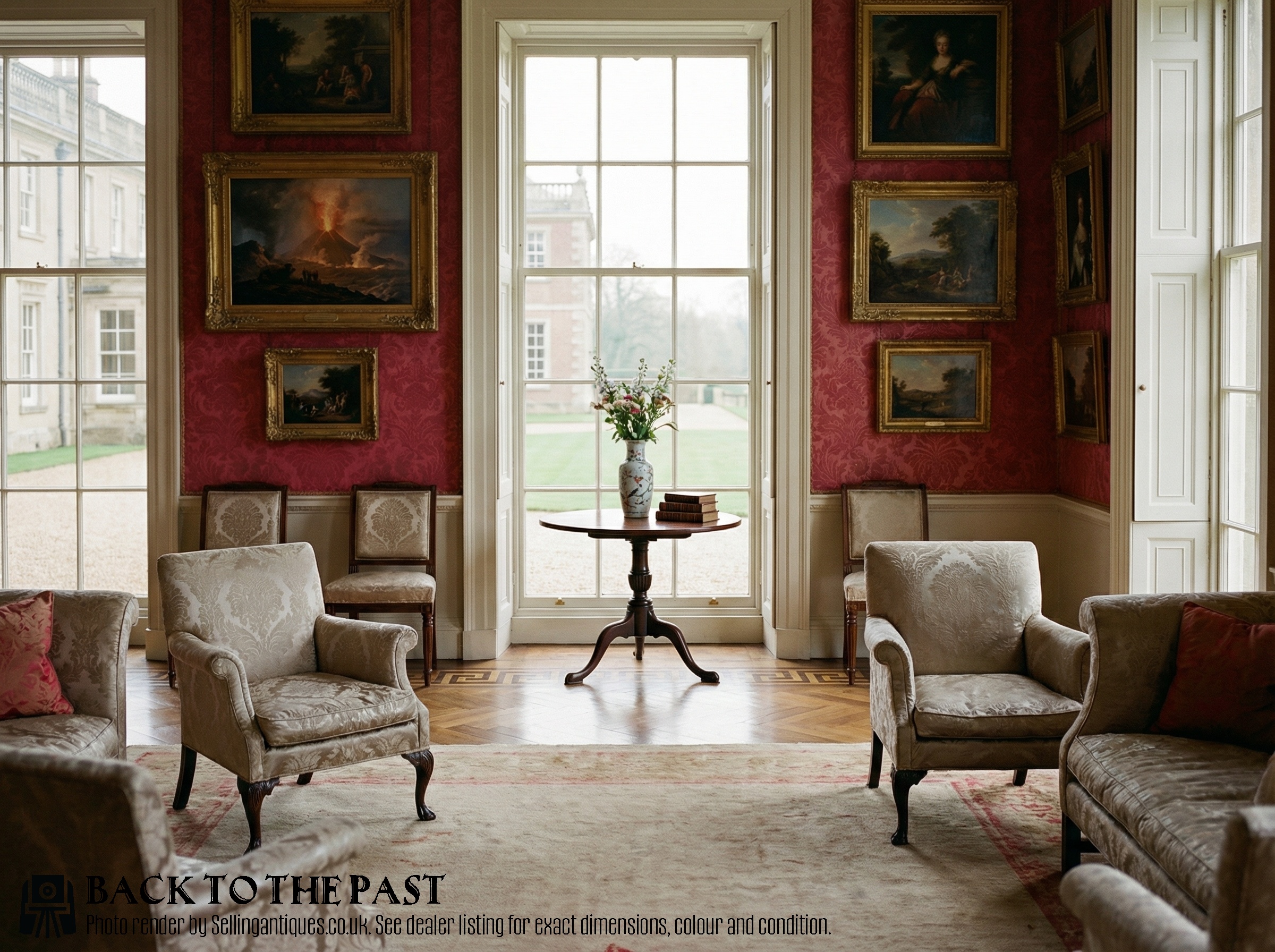
18th Century Tripod Stand
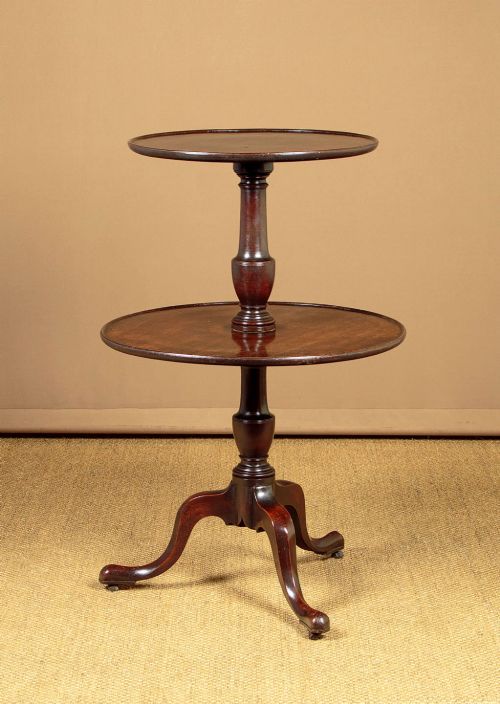
Makers produced these stands in timber such as mahogany, oak, walnut, and fruitwood to serve specific domestic tasks like holding a candle, supporting a tea service, or displaying a dish. Many examples feature tilt-top mechanisms or birdcage actions to save floor space when not in use.
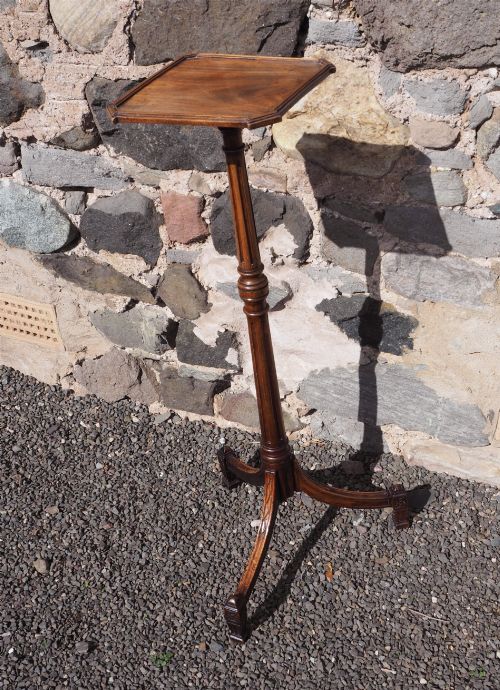
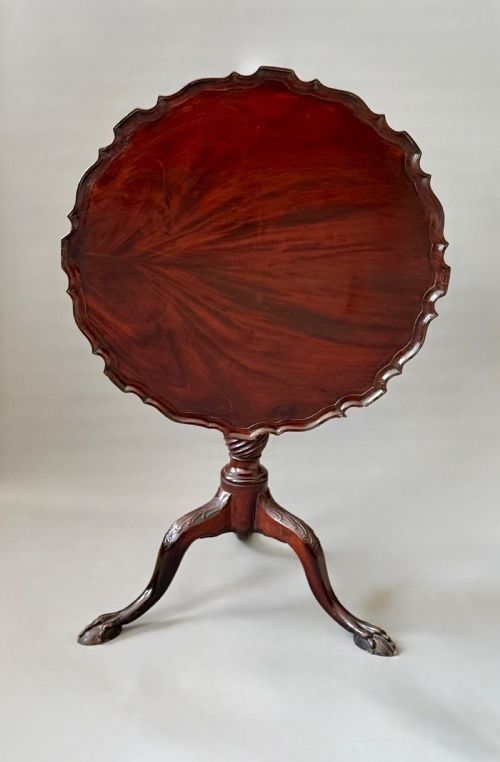
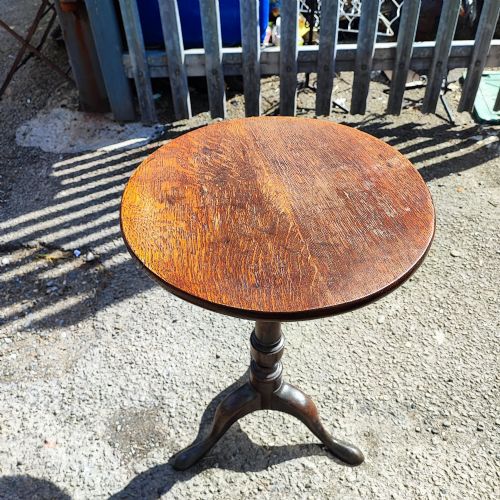
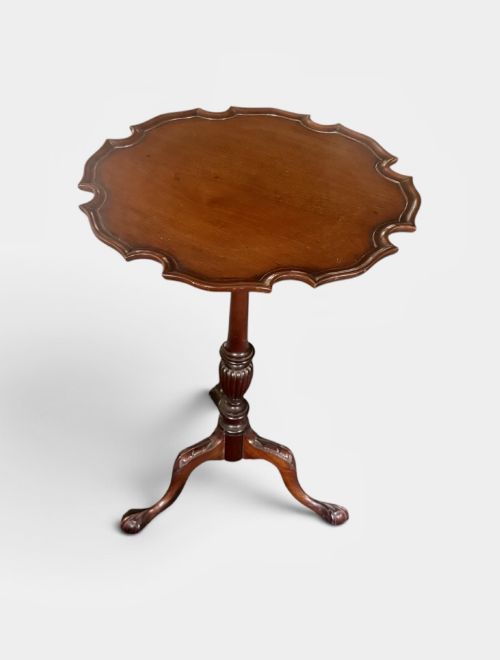
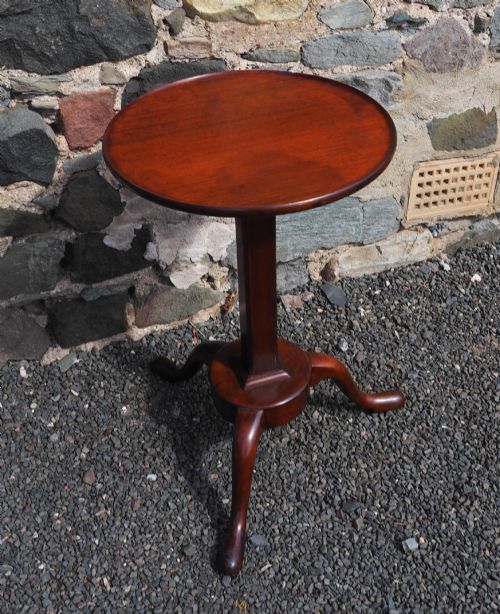
The form relies on a central turned column rising from three splayed legs, providing stability on uneven floors. While the core form remains consistent, top shapes vary from circular plain panels to shaped pie crust rims and octagonal boards.
How they were made
Cabinetmakers fashioned these tables primarily from dense hardwoods like mahogany and oak, alongside regional timbers including elm, fruitwood, and burr oak. They turned central columns on lathes and shaped tripod legs to curve outward in graceful cabriole or straight profiles.
Joinery methods included dovetailing, pegging, and specialised mechanisms like birdcage turning blocks that allowed the table top to rotate and tilt. Brass fixings occasionally appeared on adjustable candlestands, trivets, and folding telescope stands.
Edges received careful hand-carving, evident in moulded dish tops, scalloped borders, and raised pie crust rims. Finishers applied wax or polish to highlight the natural grain patterns of red walnut, mahogany, and figured oak.
18th Century Tripod Stand Retail Price Guide 2026
Typical asking prices for 18th century tripod stand among the pieces listed under this phrase on Sellingantiques today, from the lower quarter to the upper quarter. They describe what is for sale here now, not the wider market.
Listings feature timbers including mahogany, oak, walnut, elm, red walnut, burr oak, and fruitwood across forms such as wine tables, torcheres, and dumb waiters.
What varies in quality
Quality rests upon the selection of timber and the precision of the turning work on the central column. Superior examples display dense, well-figured mahogany or richly grained burr oak paired with crisp carving on the knees of the tripod legs.
The mechanical ingenuity of the piece also dictates its standing, particularly the smooth operation of birdcage actions, snap-top catches, and brass adjustment screws. Fine tables maintain tight joints in the spider block beneath the top where the legs intersect with the pillar.
The 18th Century Tripod Stand Glossary
- Tilt-top
- A tabletop mechanism allowing the surface to swivel upright on a catch when not in use. This clever design enabled tables to stand flat against walls to clear floor space.
- Birdcage
- A timber framework beneath the tabletop that permits the surface to both rotate and tilt. It uses small turned wooden columns resembling a cage structure.
- Pie crust
- A raised, scalloped edge carved directly from the solid timber of the tabletop. This decorative detail demanded high skill from the cabinetmaker.
- Torchere
- A tall, slender stand designed to elevate a candle or lamp to illuminate a room. They often feature ornate turned columns and compact circular tops.
- Snap top
- A spring-loaded catch mechanism that locks a tilting tabletop securely into the horizontal position for use. It prevents the surface from tipping unexpectedly during service.
18th Century Tripod Stand: Frequently Asked Questions
What is a tripod wine table used for?
These small tables served primarily to hold glasses, decanters, or tea equipment near seating areas during the Georgian period. Their compact footprint made them easy to move about a room as needed.
Today, they function well as bedside tables, lamp stands, or accent pieces beside an armchair. Their portability remains as practical now as it was centuries ago.
What is a birdcage action?
The birdcage is an intermediate frame situated between the tabletop and the central pillar, constructed with four small turned spindles. It allows the top to rotate independently of the base.
Tables with this feature often command attention for the extra carpentry involved in creating the revolving mechanism.
Are these stands suitable for daily use?
Antique tripod stands handle normal modern placement for lamps, drinks, and decorative objects without issue. Their sturdy three-legged design naturally accommodates uneven floorboards.
Care should be taken with moisture and direct heat to protect the historical polished timber surfaces from rings and warping.