


Turned Leg Fruitwood Table
A turned leg fruitwood table brings warmth and tactile grain to a room through solid timber and lathe-turned supports.
Turned Leg Fruitwood Table
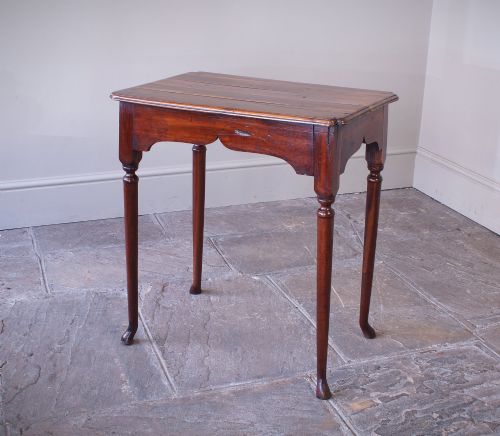
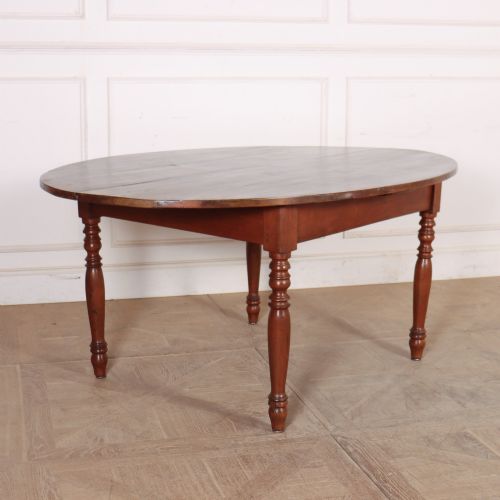
A turned leg fruitwood table brings together domestic utility and provincial craftsmanship, frequently appearing in forms designed for daily dining or kitchen work. You will most commonly encounter farmhouse tables and smaller side or centre tables dating across the eighteenth and nineteenth centuries.
The materials span regional fruitwoods alongside cherry and timber, often paired with pine or oak in structural frames. Styles range from French provincial and rustic farmhouse to Queen Anne and Louis XVI interpretations.
Origins stretch across English and French provincial workshops, reflecting local timber availability and vernacular design traditions. These pieces served practical roles in kitchens and dining spaces, bearing the marks of active domestic service.
How they were made
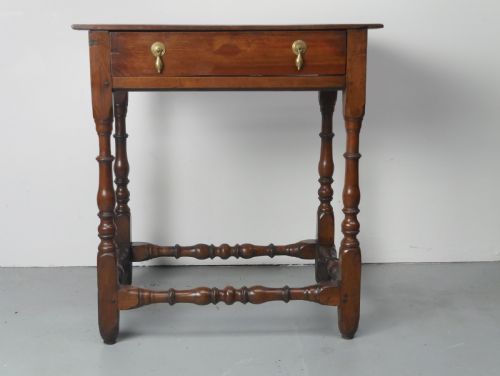
Construction relies on solid fruitwood, cherry, and mixed timbers shaped by hand and lathe. Wood-turned legs and stretchers provide both structural stability and decorative profiling beneath plank tops.
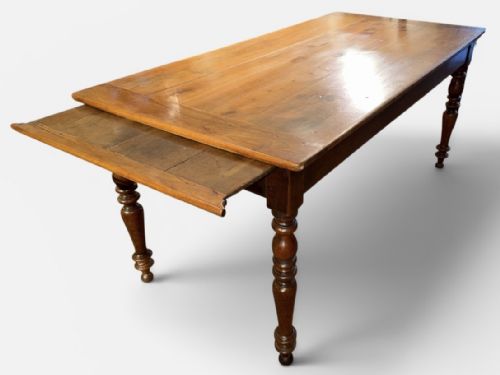
Joinery techniques prioritize durability, utilising pegged joints and breadboard ends where appropriate to accommodate seasonal timber movement. Additional utility often appears in integrated drawers and sliding bread boards.
Several examples include a bread slide, reminding us that these tables spent their lives dusted with flour and close to the oven.
What varies in quality
Quality rests in the selection of timber and the precision of the turning on the legs and stretchers. Richness of grain and depth of patina across the fruitwood surface distinguish finer examples from simpler utility pieces.
Proportion and scale dictate the visual weight of the table, with well-balanced frames maintaining elegance despite heavy daily use. The integration of functional elements like drawers and drop leaves further separates standard farmhouse tables from more refined provincial forms.
The Turned Leg Fruitwood Table Glossary
- Fruitwood
- Timber sourced from fruit-bearing trees such as pear, apple, or cherry. It yields a dense grain and warm coloration that darkens gracefully over time.
- Stretchers
- Horizontal wooden bars connecting the legs of a table near the base. They add rigidity to the frame and frequently feature turned detailing.
- Breadboard ends
- Transverse pieces of wood attached to the ends of a tabletop. This technique conceals end-grain and helps keep the main boards flat.
- Drop leaf
- A hinged flap on the side of a table that can be folded down to save space or raised on swing legs to expand the surface.
- Vernacular
- Architecture and furniture design created by local makers using traditional regional methods and materials rather than high academic styles.
Turned Leg Fruitwood Table: Frequently Asked Questions
What is a fruitwood table?
A fruitwood table is a piece of furniture constructed from timber gathered from orchard trees, valued for its fine grain and natural warmth. These tables were traditionally built by regional makers for everyday domestic use.
Over centuries of use, the wood develops a distinct surface character and rich tone that distinguishes it from standard oak or pine furniture.
Where were these tables made?
These pieces originated primarily in provincial workshops across England and France. Local craftsmen utilised whatever suitable fruit trees and native timber grew nearby.
Regional differences in leg turning and apron design often point to the specific countryside tradition from which the table emerged.
How do I care for a fruitwood table?
Maintenance requires simple dusting with a soft cloth and avoiding excessive moisture or direct heat sources. Natural wax can be applied periodically to nourish the timber and protect the patina.
Allowing the wood to breathe and adapting to stable indoor humidity levels will preserve the structure and surface finish for years.
How can I tell the age of the table?
Dating relies on examining the construction methods, tool marks on the underside, and the type of timber used in the frame. Hand-turned legs and early joinery techniques point toward eighteenth and nineteenth-century origins.
The natural wear and colour variation acquired through generations of daily service also provide reliable clues to the period.