




18th Century Fruitwood Desk
An 18th century fruitwood desk brings warmth and character to a room through honeyed timbers and traditional cabinet-making.
18th Century Fruitwood Desk
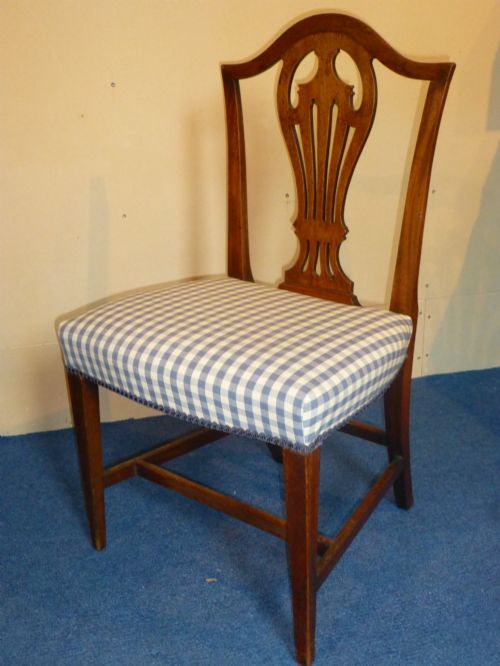
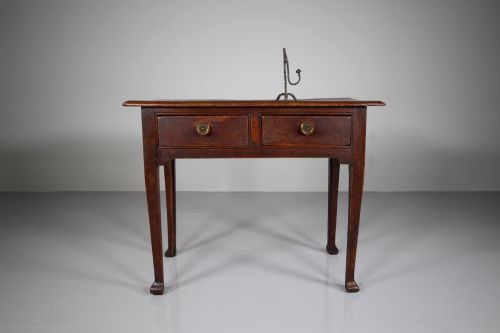
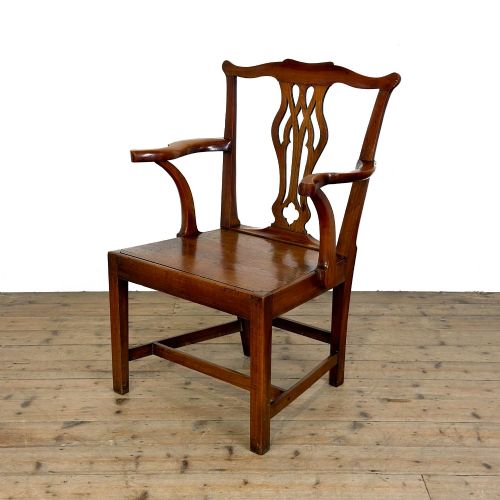
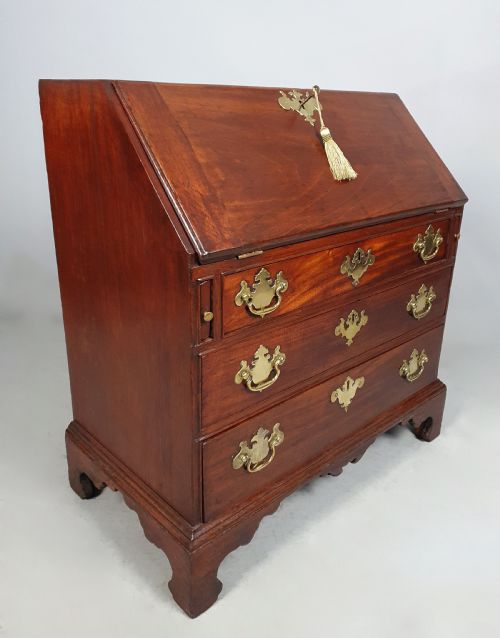
An 18th century fruitwood desk encompasses writing bureaux, lowboys, and occasional tables fashioned from dense timbers during the Georgian era. Buyers exploring this search phrase encounter compact writing furniture alongside related forms like side tables, chairs, and bureaus.
Bureau tables and lowboys dominate the category, offering fitted interiors or single drawers supported by cabriole or wood-turned legs. These domestic items served practical writing and storage needs in Georgian bedchambers and halls.
How they were made
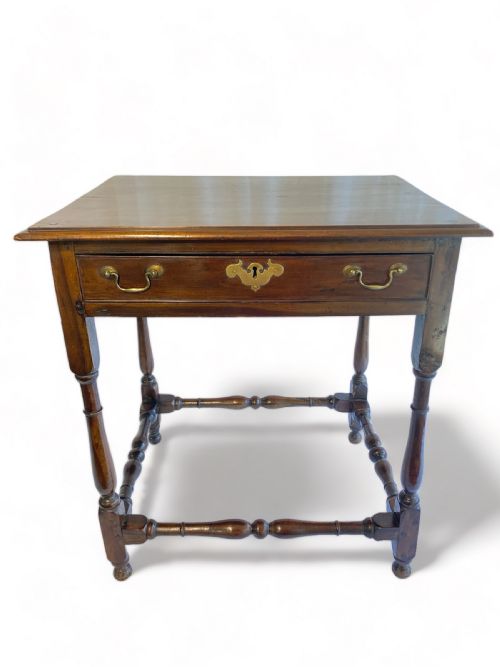
Joiners built these items using dense native timbers such as fruitwood, elm, oak, and walnut, frequently combining secondary woods like cedarwood for internal drawer linings. Turnery and carved cabriole legs provided structural support for tables and chairs.
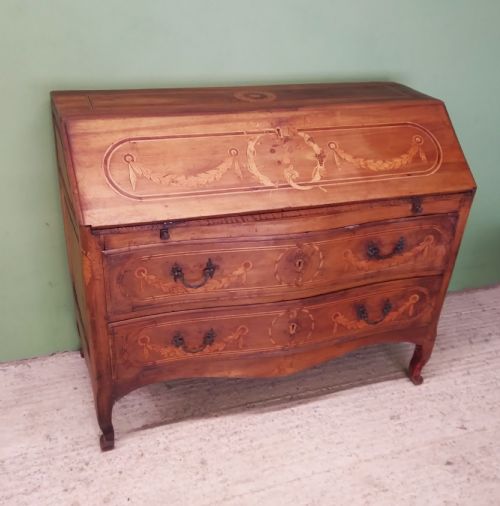
Surface decoration relies on natural timber grain, patination, and occasional marquetry inlay rather than heavy gilding. Brass handles and escutcheons secured drawer fronts on bureaus and lowboys.
Listings combine 18th Century and 19th Century items, featuring materials such as fruitwood, oak, elm, walnut, cedarwood, and cherrywood.
What varies in quality
The depth of timber patination and surface colour distinguishes superior examples from plain ones. Richly grained fruitwood surfaces display natural warmth developed through centuries of use.
Proportion and refinement in leg carving, such as detailed cabriole shaping or precise wood-turning, mark the difference between standard provincial work and finer cabinet-making.
The 18th Century Fruitwood Desk Glossary
- Fruitwood
- Timber harvested from fruit-bearing trees such as apple, pear, or cherry, prized for its tight grain and warm tone. It was widely used by provincial cabinet-makers during the eighteenth century.
- Lowboy
- A small side table with one or more rows of drawers, commonly supported on tall legs. These pieces functioned as dressing tables or writing surfaces in Georgian homes.
- Bureau
- A desk featuring a sloping hinged writing flap that opens to reveal internal compartments and pigeonholes. Eighteenth-century examples often sit upon bracket feet or cabriole legs.
- Cabriole leg
- A furniture leg that curves out in a convex arc and tapers inward in a concave arc, ending in a pad or foot. This stylistic feature is common on Georgian seating and lowboys.
- Marquetry
- Decorative veneer work arranged in geometric or floral patterns across a surface. Maltese and continental pieces frequently employ this technique on bureau falls and drawer fronts.
18th Century Fruitwood Desk: Frequently Asked Questions
What is an 18th century fruitwood desk?
An 18th century fruitwood desk refers to compact writing furniture, bureau tables, and lowboys constructed from dense fruitwoods during the Georgian period.
These pieces combine practical writing surfaces with fitted drawers and warm, patinated timber surfaces.
How do I care for fruitwood furniture?
Fruitwood requires gentle cleaning with a soft, dry cloth to preserve its historic surface patination and natural grain.
Keep these pieces away from direct heat sources and strong sunlight to prevent the timber from drying out or fading.
Where were these desks made?
The listings show pieces originating from English provincial workshops as well as continental European centres.
Regional cabinet-makers utilised locally available timbers such as fruitwood, oak, elm, and cherrywood for domestic furniture.