
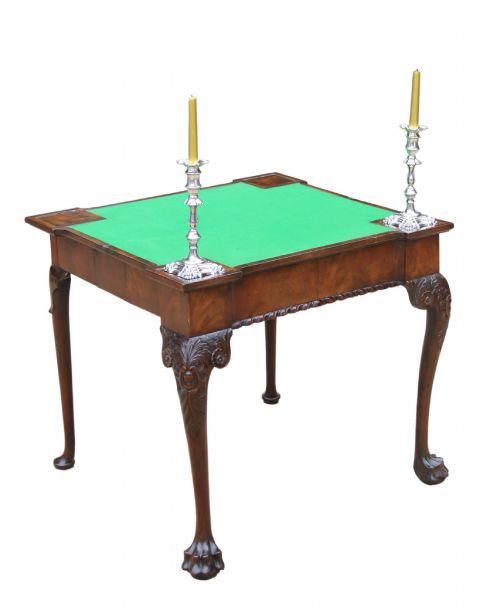
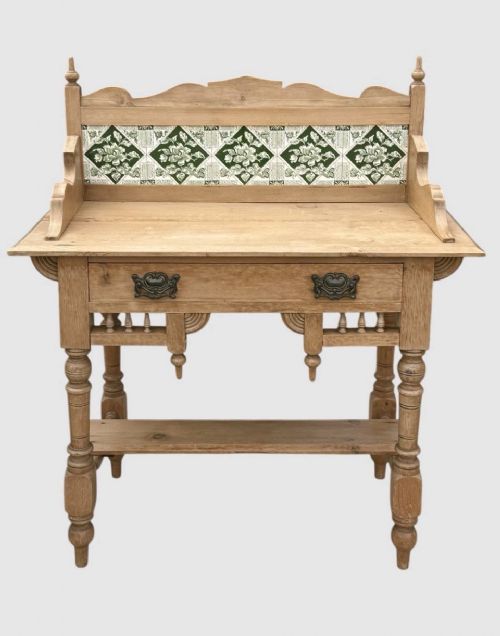
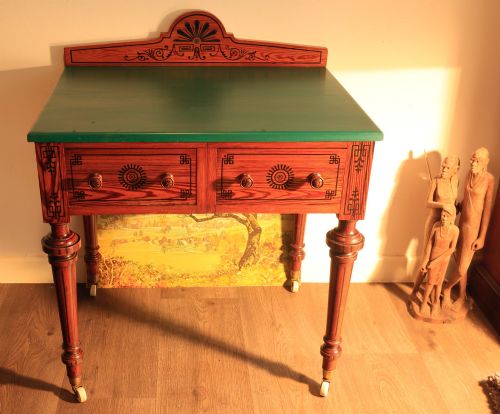


Carved Green Console Table
A carved green console table brings heavy timber, rich pigment and classical poise to an interior.
Carved Green Console Table
A carved green console table combines structural timber and painted surfaces, appearing primarily across the eighteenth and nineteenth centuries with Victorian revivals. These pieces function as wall-mounted or freestanding surfaces for hallways, drawing rooms and reception spaces.
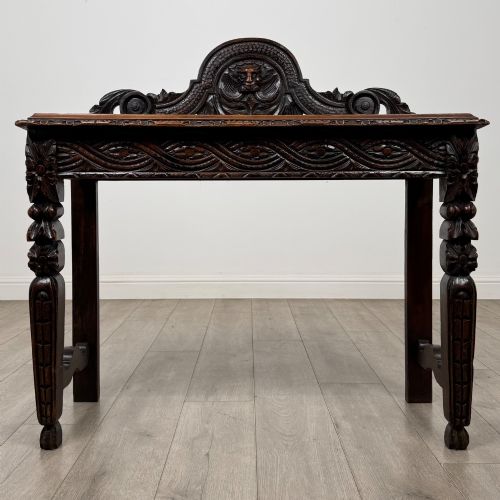
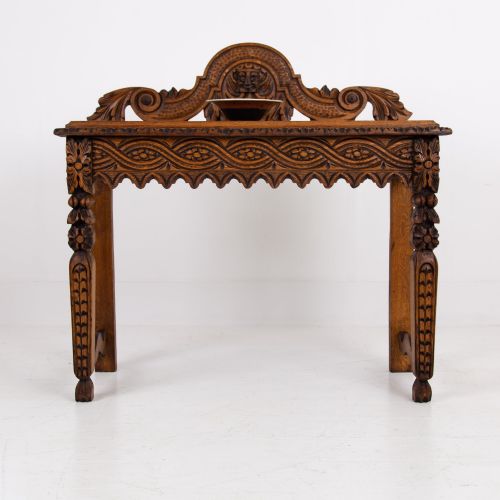
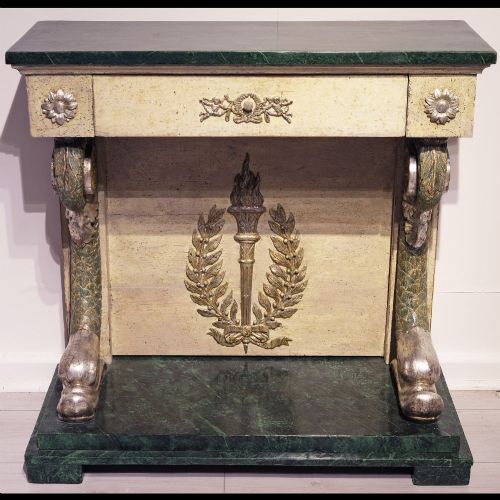
The selection ranges from robust oak examples bearing deep figural carvings to lighter French and Italian painted designs. Alongside dedicated console tables, the evidence includes related side, card, hall and centre tables sharing similar proportions and decorative schemes.
Materials and construction
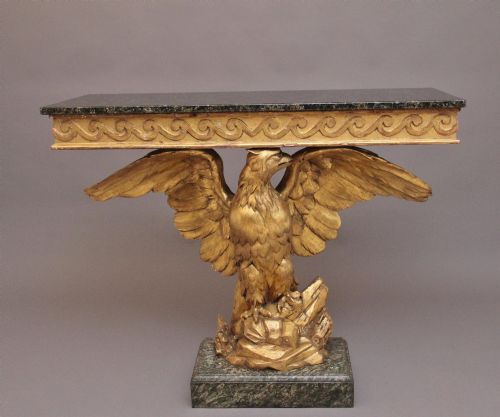
Makers built these tables using solid hardwoods such as oak and mahogany, often applying layers of paint, gesso and gilding over the timber. Heavy stone surfaces appear frequently, with marble slabs fitted directly to the tops of giltwood and painted frames.
Carving serves as the primary decorative technique, executed directly into the wood to form foliage, scrolls and masks. Joinery methods range from straightforward pin-jointed frames to complex concertina actions found on folding card tables.
Listings feature oak, mahogany, pine and gesso alongside applied paint finishes and heavy marble slabs.
Design execution and finish
Quality depends upon the crispness of the hand-carving and the depth of the relief work, particularly on figural elements like Green Man masks or lion paws. Finer examples display meticulous detailing in the painted or gilded surfaces rather than flat, uniform finishes.
The choice of secondary materials marks distinct tiers of craftsmanship, such as thick slab marble versus simpler timber tops. The integration of structural joints and the weight of the timber dictate the overall stability of the frame.
Edwards & Roberts·Pauly et Cie
The Carved Green Console Table Glossary
- Console table
- A table designed to stand against a wall, traditionally fixed with brackets or supported by front legs.
- Gesso
- A plaster-like mixture applied to wood surfaces as a smooth base for gilding and paint.
- Giltwood
- Timber that has been coated with a thin layer of gold leaf or gold paint.
- Green Man
- A sculptural motif showing a human face surrounded by or sprouting from foliage.
- Concertina action
- An expanding frame mechanism that stretches out to support a folding table top.
Carved Green Console Table: Frequently Asked Questions
How were marble top tables used?
Marble top tables provided durable, heat-resistant surfaces for serving food, displaying ornaments or managing entrance hall items. The heavy stone slab rests on top of carved wooden frames without permanent fixings in many designs.
These pieces suited grand reception rooms and hallways where the cool stone contrasted against giltwood or painted wooden bases.
Are these tables freestanding?
Many console tables require partial attachment to a wall for complete stability, while others stand independently on four legs. The distinction depends on whether the piece was originally designed as a true wall console or a side table.
Buyers should examine the rear legs and structure to determine if wall brackets were part of the original mounting design.
How do I identify eighteenth century pieces?
Eighteenth-century pieces often display proportions, joinery and carving styles distinct from later Victorian revivals. Makers of this era utilised specific timbers like Irish mahogany and employed fluid lines associated with Neoclassical and Rococo movements.
Examining the underside, tool marks and timber shrinkage provides physical clues to age that separate original period items from later copies.