

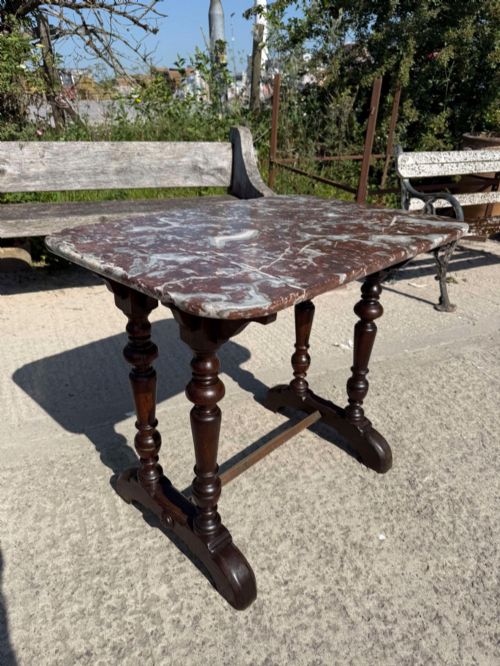
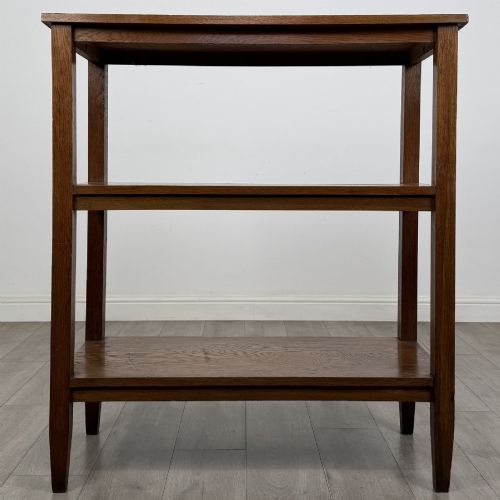

Carved Oak Console Tables
Carved oak console tables bring solid timber and deep relief work into a hallway or living space.
Carved Oak Console Tables
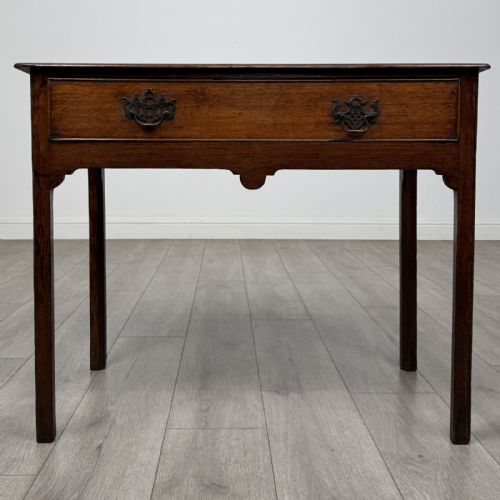
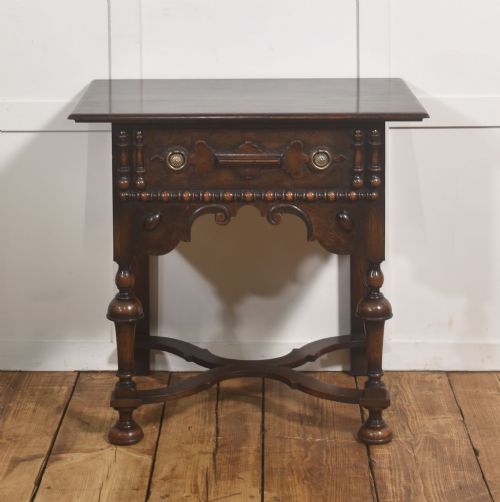
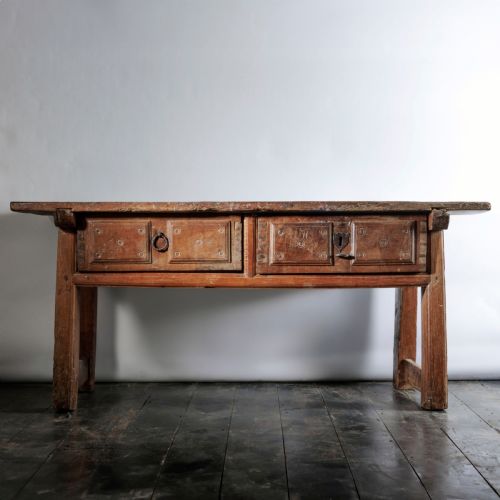
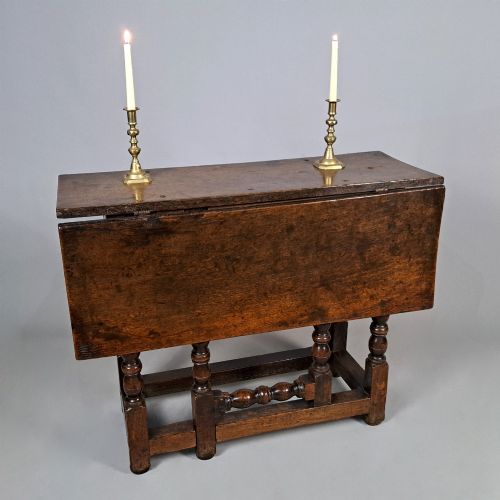
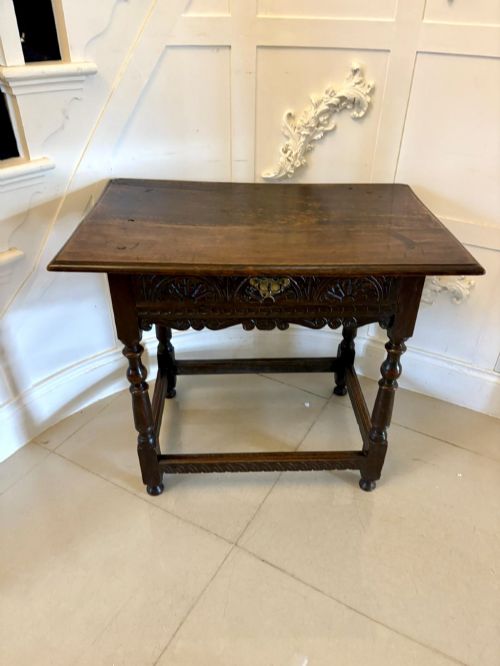
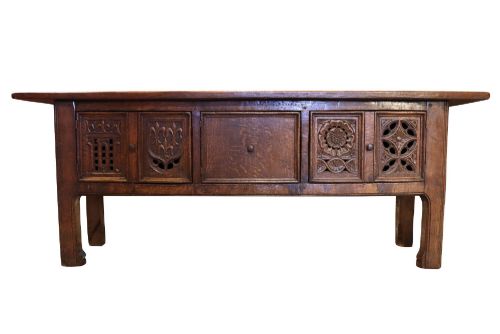
Carved oak console tables span several centuries of British and continental furniture making, appearing alongside related forms such as side tables, lowboys, and dresser bases. Buyers seeking this phrase often encounter Victorian and Edwardian interpretations alongside earlier seventeenth and eighteenth-century examples.
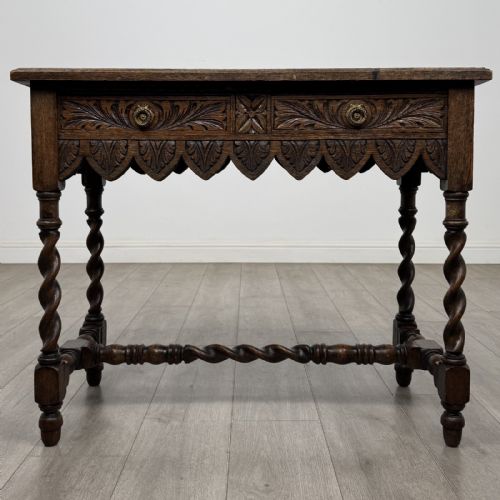
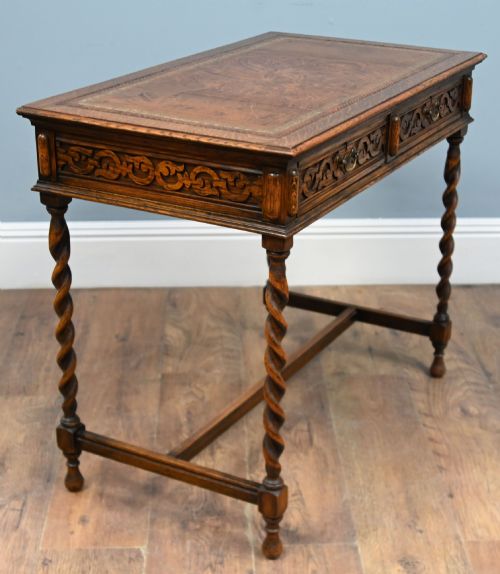
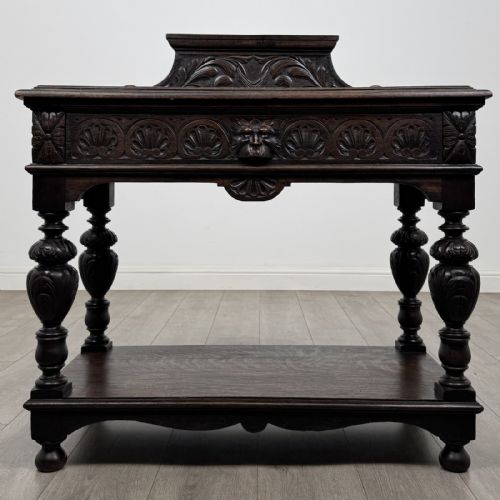
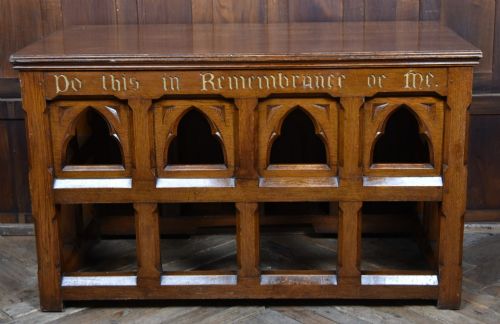
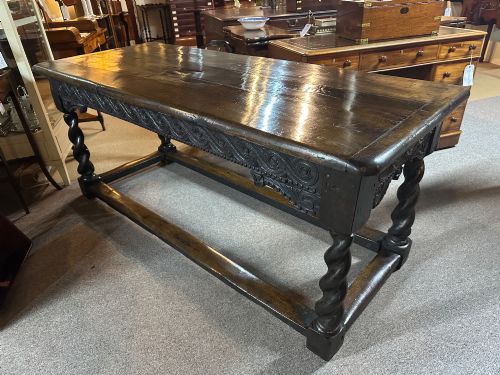
The materials and styles recorded in these pieces range from austere Georgian designs to heavily decorated Victorian and Gothic Revival interpretations. Tables with barley twist legs, Green Man masks, and deep panel carving appear frequently across the periods represented.
How they were made
Makers relied on solid oak timber for the structural framework and tops, often complemented by secondary woods and fitted with brass or iron hardware. Surfaces were treated with traditional finishes, and in some instances, paint or wax to protect the grain.
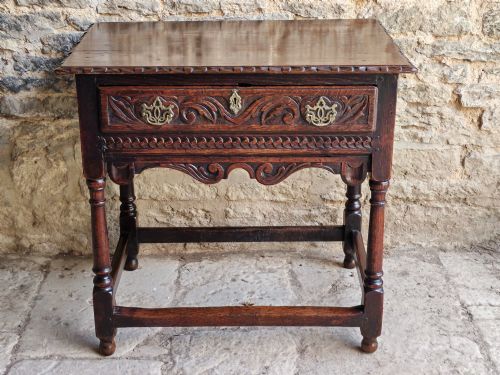
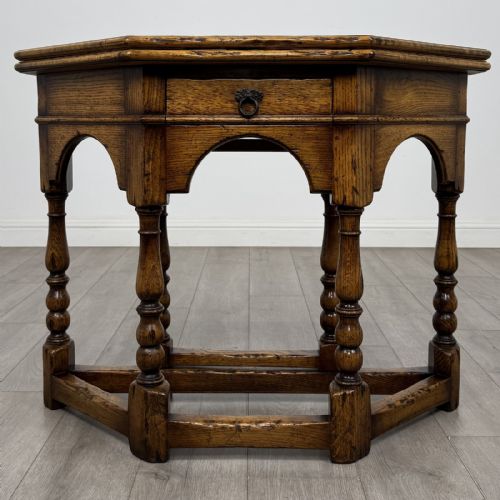
Joinery techniques included pegged mortise and tenon joints for stability, while ornamentation relied on hand-carved relief work, turned elements like barley twists, and applied mouldings executed by skilled artisans.
Carved Oak Console Tables Retail Price Guide 2026
Typical asking prices for carved oak console tables among the pieces listed under this phrase on Sellingantiques today, from the lower quarter to the upper quarter. They describe what is for sale here now, not the wider market.
Green Man masks peer out from drawer fronts, watching silently over centuries of hallway post.
What varies in quality
The depth and crispness of the carving distinguish finer pieces from plainer production, particularly where masks, foliage, or geometric patterns adorn the frieze and legs. Earlier seventeenth-century examples display robust proportions and hand-tooled surfaces that differ markedly from later revival pieces.
Proportion and timber selection also drive distinction, with closely figured grain and harmonious scale commanding greater presence. Alterations over time, such as replaced tops or later carved decoration applied to plain antique carcases, change the character and integrity of the piece.
Beresford and Hicks London
The Carved Oak Console Tables Glossary
- Console table
- A table designed to stand against a wall, traditionally fixed with brackets or supported by front legs. These tables serve narrow hallways and reception rooms.
- Lowboy
- A small oak table with one or more drawers, originating in the eighteenth century and commonly used as a dressing or side table. They typically feature cabriole or straight legs.
- Barley twist
- A turned wooden furniture leg resembling the spiral shape of a barley sugar stick. This decorative turning is prevalent on seventeenth-century and Victorian revival furniture.
- Dresser base
- A lower sideboard unit featuring drawers and sometimes cupboards beneath a long top surface. They provide substantial storage alongside display space.
- Green Man mask
- A sculptural architectural ornament depicting a human face emerging from or entwined with foliage. This motif appears frequently in carved Victorian oak furniture.
Carved Oak Console Tables: Frequently Asked Questions
What is a console table?
A console table is a narrow surface designed to stand flat against a wall, frequently placed in hallways or reception rooms where floor space is limited. They often hold decorative objects, lamps, or everyday items.
Historically, some console tables required wall fixings for stability, though freestanding versions with four legs became common. The form adapts well to various interior layouts.
How old are these tables?
The pieces span from the seventeenth century through the Georgian and Victorian eras up to the early twentieth century. Revival styles from the Edwardian period and the 1920s also replicate earlier aesthetics.
Construction details, timber patination, and tool marks help determine the approximate age of each individual piece. Earlier examples display hand-cut joinery specific to their period.
How do I style a console table?
Place the table against a prominent hallway wall or beneath a mirror to anchor an entranceway. Balancing the surface with a lamp, ceramics, or books creates a functional focal point.
Consider the proportions of the room and the height of surrounding furniture when positioning the table. Rugs and wall colours can complement the dark tones of the oak timber.
How do I care for antique oak?
Dust the timber regularly with a dry cloth and apply a quality beeswax periodically to nourish the wood grain. Avoid placing oak furniture in direct sunlight or near heat sources.
Keeping environmental humidity stable prevents the timber from drying out or splitting. Gentle maintenance preserves the natural patination built up over centuries.