


Round Gilt Wall Mirror
A round gilt wall mirror brings warmth and a sense of depth to a room through curved glass and gilded surfaces.
Round Gilt Wall Mirror
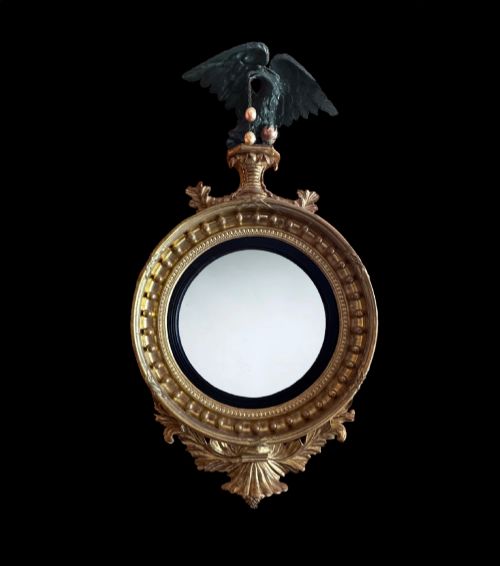
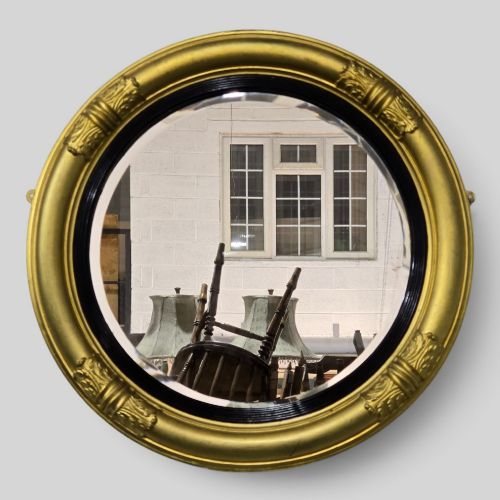
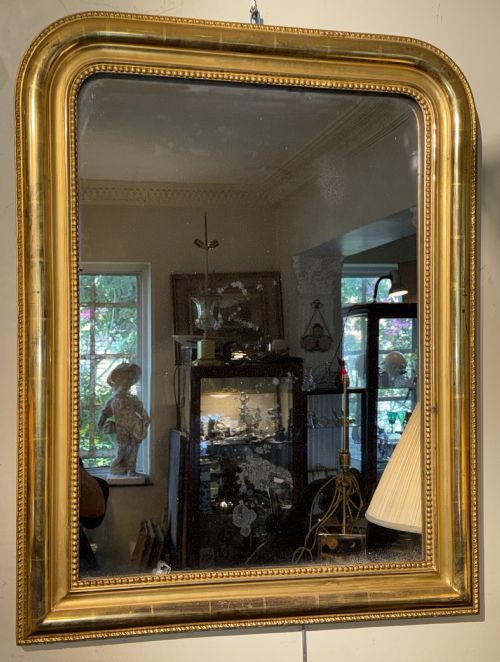
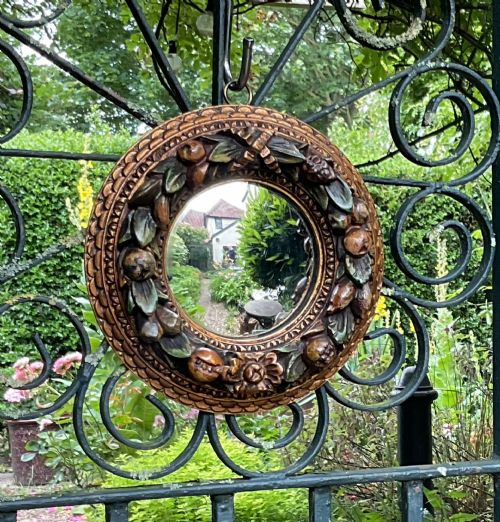
A round gilt wall mirror is a circular looking glass framed in gilded wood, gesso, or brass, designed to hang on a wall and reflect light across an interior space. The selection spans several centuries of design, with particular emphasis on Regency, Victorian, and later revival periods.
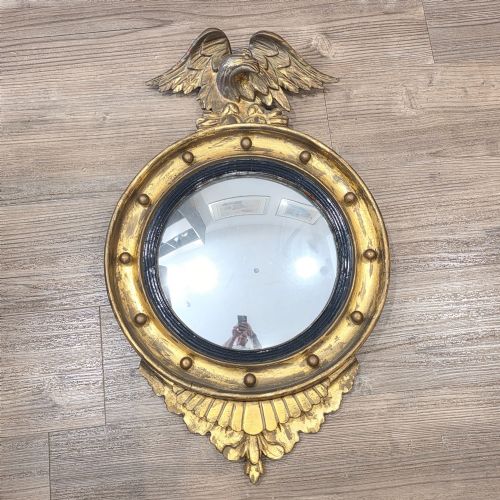
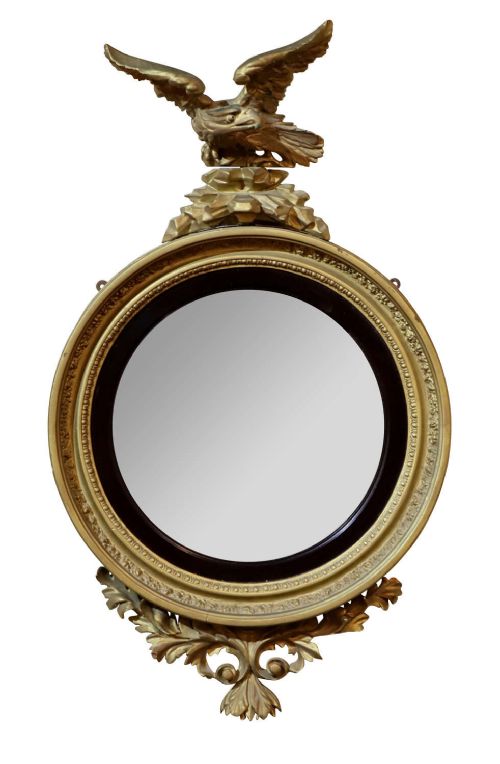
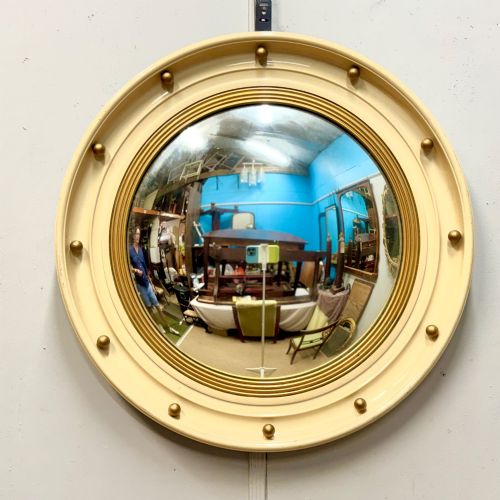
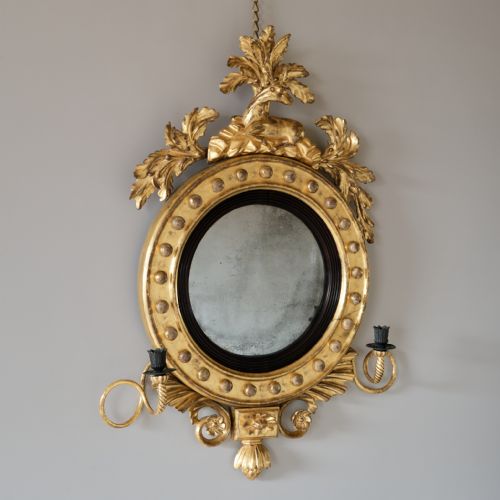
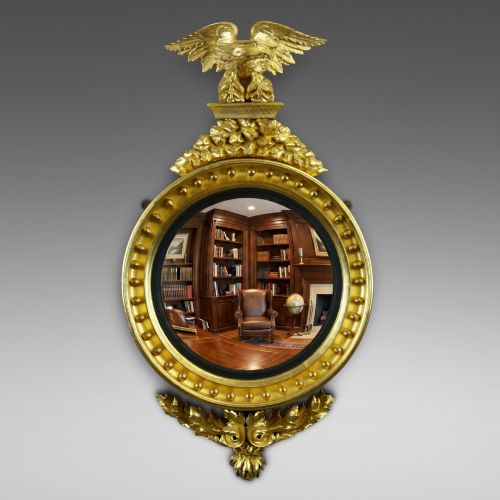
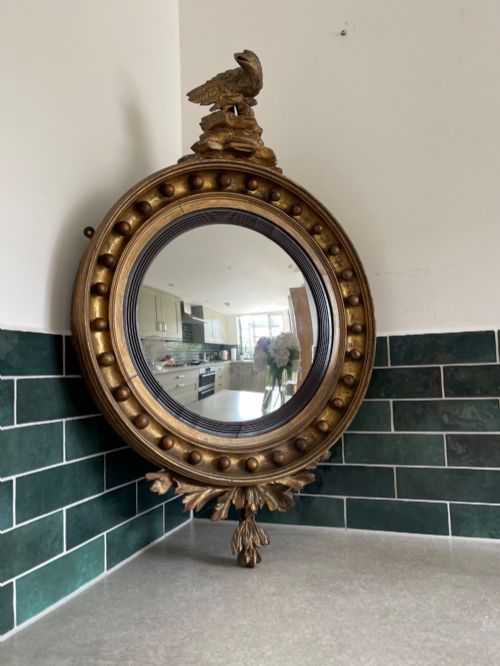
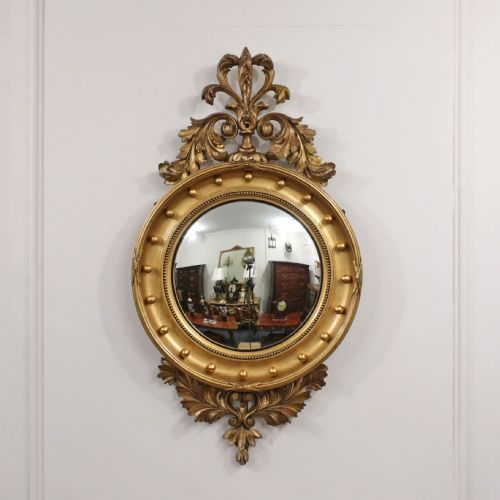
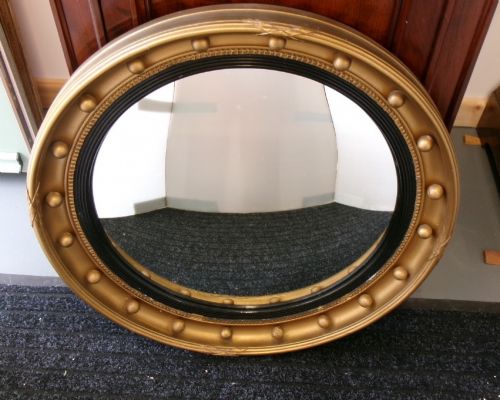
Convex formats dominate the selection, often referred to as butler's mirrors or bullseye mirrors, which capture a wide-angle view of the room in a single circular reflection. These pieces frequently appear with carved frames, sometimes featuring eagle crests or ebonised inner slips.
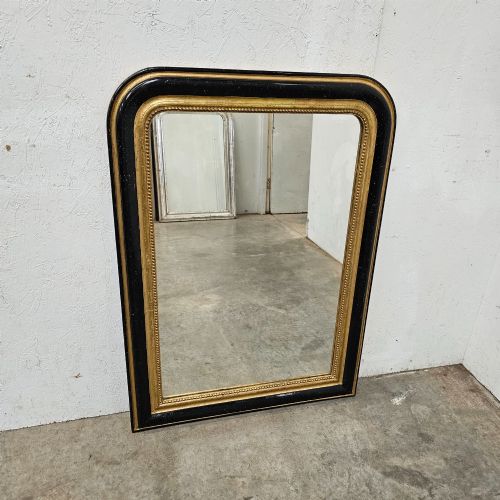
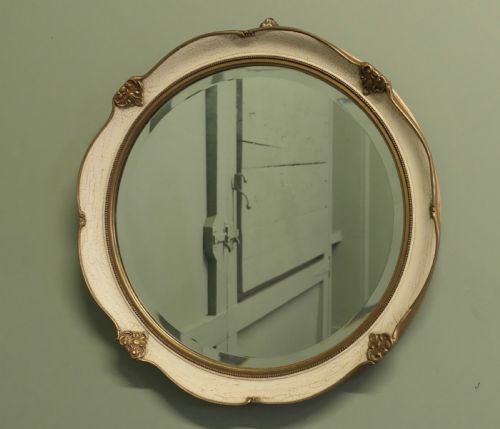
Origin and period vary from Georgian and Regency originals to late nineteenth-century examples and twentieth-century French or English interpretations. Buyers meet both grander architectural pieces and smaller, simpler circular frames suited to domestic spaces.
Materials and Technique
Makers constructed the circular frames from carved wood or moulded gesso applied over a wooden base, providing a stable foundation for the decorative elements. Artisans then applied gold leaf or liquid gilding to the prepared surface to achieve a metallic sheen.
The mirror plates themselves are typically convex glass, which required specialised blowing and forming techniques to produce the characteristic curved reflection. Ebonised wood slips were frequently inserted near the glass to create a dark contrasting border inside the bright gilt frame.
Listings span the Georgian, Regency, Victorian, and Edwardian periods, alongside later twentieth-century French styles.
Assessing Quality
Quality rests upon the crispness of the carved detail and the depth of the gilding, where hand-applied gold leaf displays a richer texture than later painted surfaces. The integration of original components, such as carved eagles or decorative crests, defines the distinction between standard production and finer examples.
The clarity and condition of the convex glass plate also determine the character of the piece, with period glass showing subtle distortions that distinguish older plates from modern replacements. The integrity of the underlying gesso and wood construction governs the longevity and stability of the frame.
The Round Gilt Wall Mirror Glossary
- Convex glass
- Curved mirror glass that bulges outward to reflect a wide-angle view of the surrounding room. It is commonly found in nineteenth-century circular wall mirrors.
- Giltwood
- Wood that has been coated with gold leaf or metallic powder. This material forms the primary structure of many traditional frames.
- Gesso
- A plaster-like mixture applied to wooden frame bases to create a smooth surface for carving and gilding. It allows for intricate moulded ornament around the mirror border.
- Ebonised slip
- A thin dark inner moulding placed next to the mirror glass. It provides a visual boundary between the reflective surface and the bright gilt frame.
- Overmantel mirror
- A large wall mirror traditionally hung above a fireplace mantel. These pieces are often wider or taller than standard wall mirrors.
Round Gilt Wall Mirror: Frequently Asked Questions
Where should I hang a convex mirror?
Convex mirrors work best in hallways, dining rooms, or living spaces where they can capture light and reflect a broad view of the interior. Placing them opposite a window maximises the dispersion of natural light.
Because of their curved glass, they function effectively as focal points on smaller wall spaces where flat mirrors might appear too plain.
How do I clean a gilt frame?
Dust the gilded surface gently with a soft, dry brush to remove particles without disturbing the delicate gold leaf or gesso. Avoid using water, liquid cleaners, or abrasive cloths that can strip the metallic finish.
For the glass plate, apply a standard glass cleaner to a cloth rather than spraying directly onto the mirror, preventing moisture from seeping behind the frame.
What is a butler's mirror?
A butler's mirror is a traditional round convex wall mirror, historically used by domestic staff to monitor activity across a large room. The curved glass provides a panoramic perspective of the space.
These pieces often feature simple circular frames and remain popular for their decorative presence and historical associations.
How do I date an antique mirror?
Dating relies on examining the construction of the wooden frame, the composition of the gesso, and the characteristics of the glass plate. Period pieces often show hand-carved details and subtle imperfections in the silvering or glass.
Stylistic markers such as Regency eagle mounts or Louis Philippe framing help narrow the period of origin when compared against documented examples.