



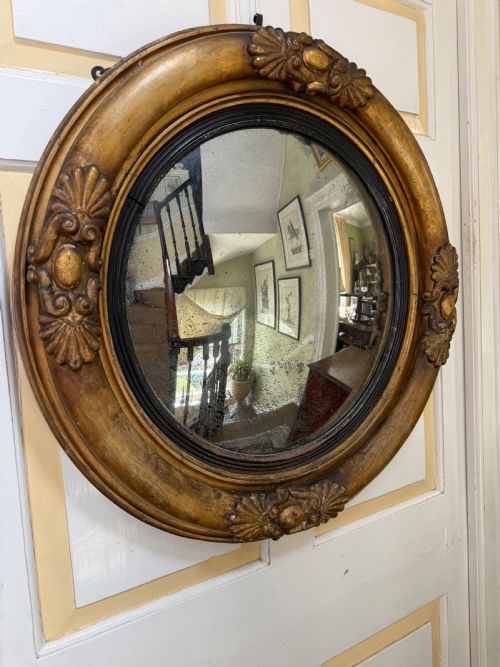
Gold Circular Mirror
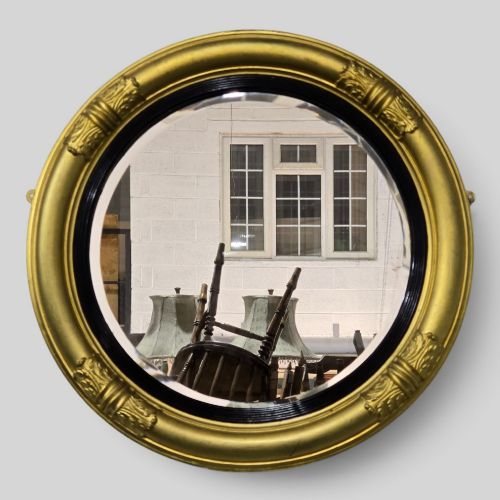
A gold circular mirror brings depth and curved reflection to a room, most commonly found as a convex wall glass from the Regency and Victorian periods.
Gold Circular Mirror
When you search for a gold circular mirror, you encounter pieces designed to reflect an entire room in miniature through a curved glass plate. The selection spans Georgian, Regency, Victorian, Edwardian, and Art Deco periods, drawing on styles such as Regency Revival, Florentine Rococo, and French Art Deco.
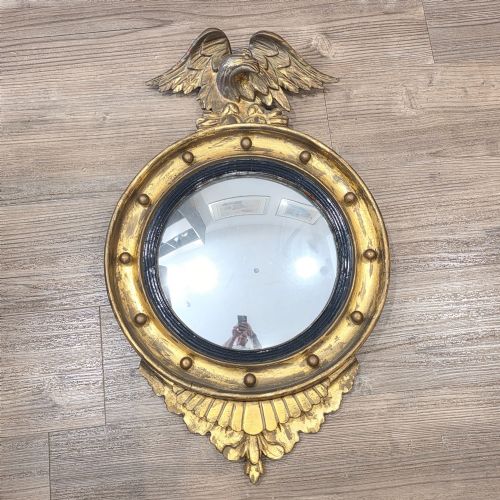
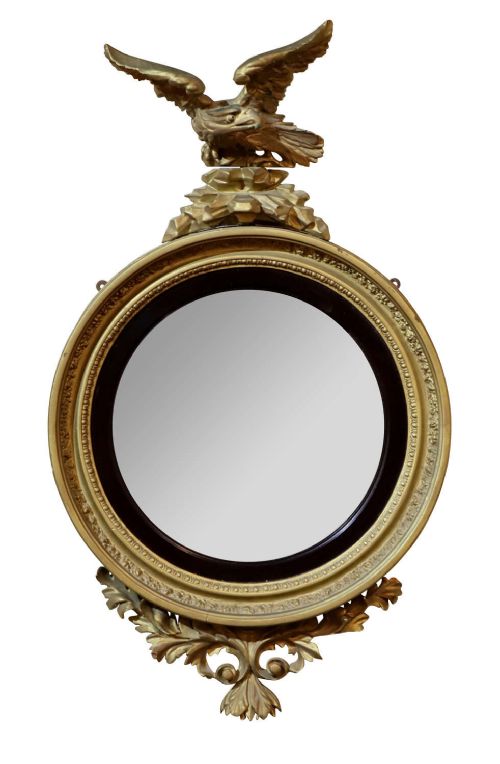
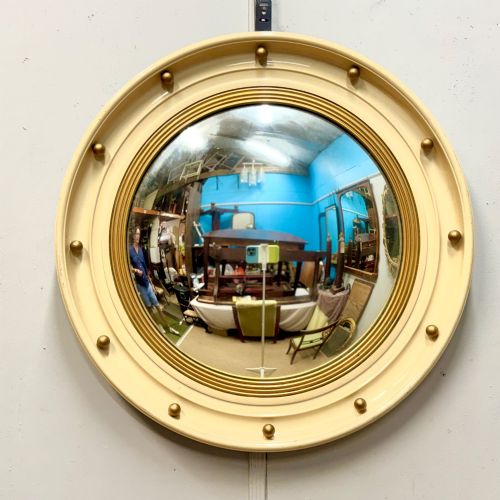
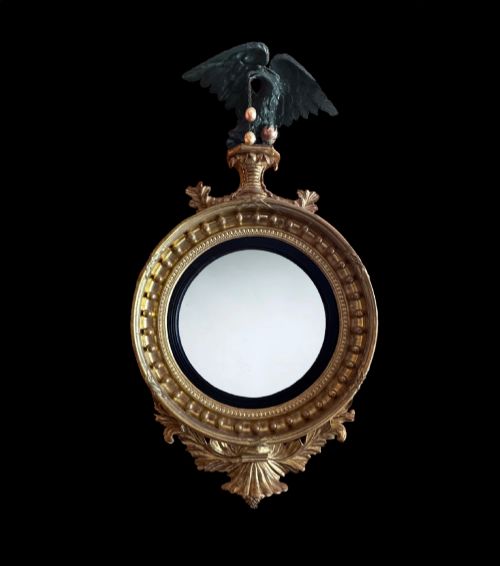
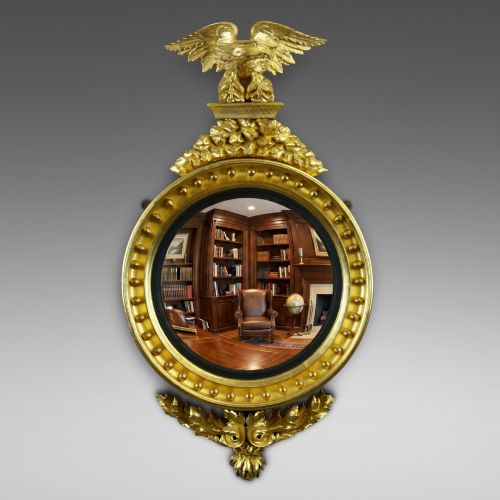
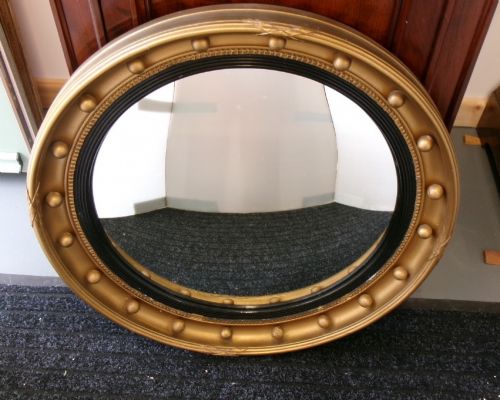
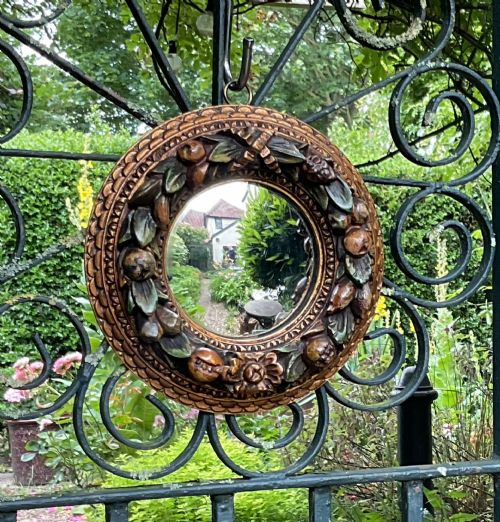
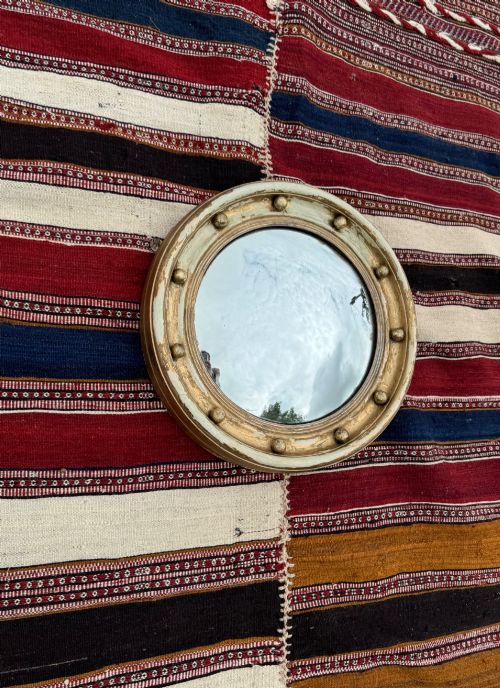
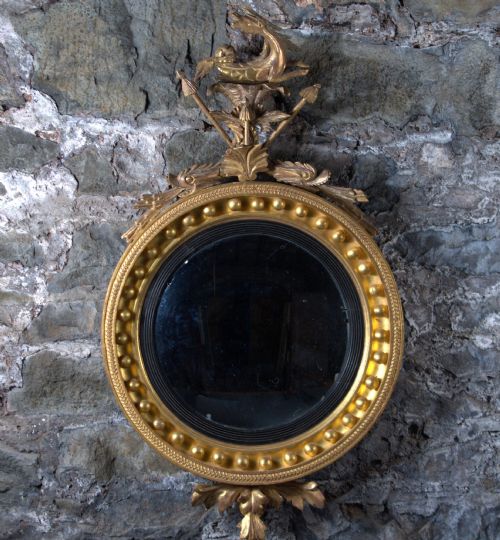
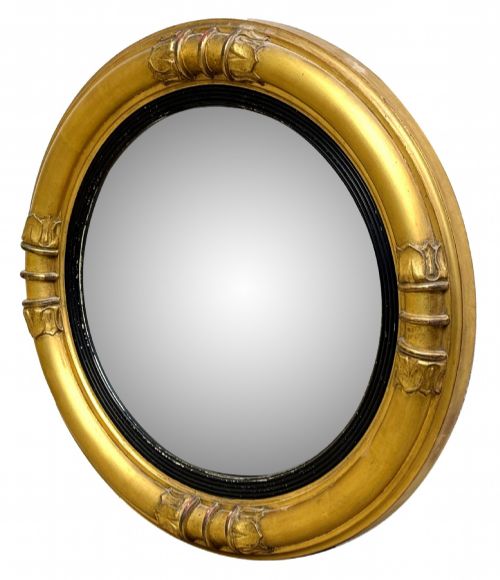
The most common form on this page is the convex mirror, often referred to as a butler's mirror or porthole mirror. These pieces frequently feature circular frames moulded with giltwood, gesso, and gold leaf, occasionally topped with carved ornaments like eagles or dragons.
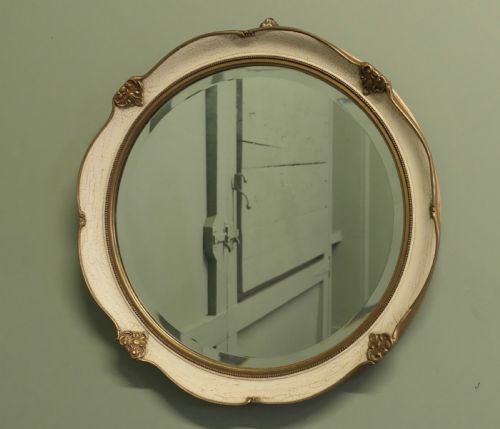
Origins range from English workshops to continental makers, taking the shape of small wall pieces or grand scale frames spanning several feet in diameter. Alongside traditional giltwood, variations include ebonised wood, cast iron, brass, and painted frames.
Materials and construction
Frames are constructed from carved wood, gesso, and giltwood, applying gold leaf or gilt finishes over a prepared base. Cast iron and brass also appear in the material record for framing and structural support.
Glass plates are cast with a convex curve to achieve the wide-angle reflection characteristic of these mirrors. Traditional methods involve applying gesso to carved wood before gilding to create crisp surface detail for ornaments and moulded borders.
Several mirrors include carved eagles keeping watch from the top of the frame.
Assessing quality and craftsmanship
Quality rests in the crispness of the carved wood and gesso ornamentation, particularly on complex mounts like spread eagles or dragon heads. Fine work shows deep, manual carving beneath the gold leaf rather than heavy, uniform moulding.
The clarity and depth of the convex glass plate separate standard examples from finer ones. The application of the original gold leaf and the preservation of the gilt surface over the wood determine the enduring character of the piece.
The Gold Circular Mirror Glossary
- Convex mirror
- A round mirror with an outward-curving glass plate that produces a wide-angle, panoramic reflection of the interior space.
- Giltwood
- Timber that has been coated with a thin layer of gold leaf or gilt paint.
- Gesso
- A plaster-like mixture applied to wood frames to create a smooth surface for carving and gilding.
- Butler's mirror
- A convex mirror traditionally hung to allow servants to monitor activity across a dining room.
- Ebonised wood
- Timber treated to resemble ebony, providing a dark, contrasting border to the gilt elements.
Gold Circular Mirror: Frequently Asked Questions
Where should I hang a convex mirror?
Convex mirrors project a wide view of a room, making them effective centred on a main living room wall or above a fireplace mantel.
Because they gather light from across the space, placing them opposite a window maximises their brightness and visual impact.
How do I identify a Regency period mirror?
Regency mirrors frequently feature convex glass set within a circular giltwood frame, often surmounted by a carved eagle or decorated with balls along the inner moulding.
Construction details on the reverse and the ageing of the gesso help distinguish early nineteenth-century pieces from later revivals.
What is a butler's mirror?
A butler's mirror is a circular convex wall glass originally utilised in grand dining rooms to observe guests and service needs from a distance.
They are characterised by their round frames and deep, curved plates that capture the entire room in miniature.
How do I clean a giltwood frame?
Giltwood frames require gentle dusting with a soft, dry brush to protect the delicate gold leaf and underlying gesso layers from damage.
Avoid moisture and chemical cleaners entirely, as liquids strip the historic gilt surface and degrade the wood beneath.