

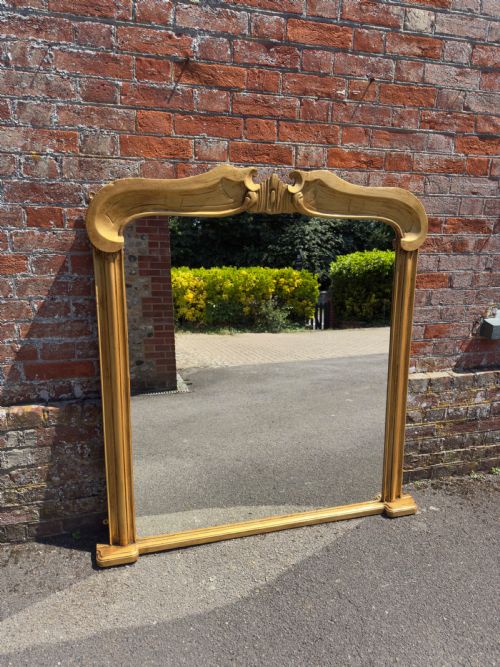
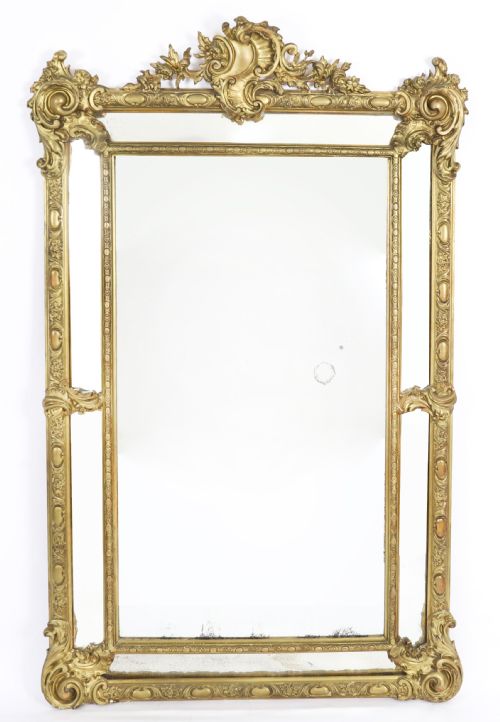



Rococo Revival Gilt Mirror
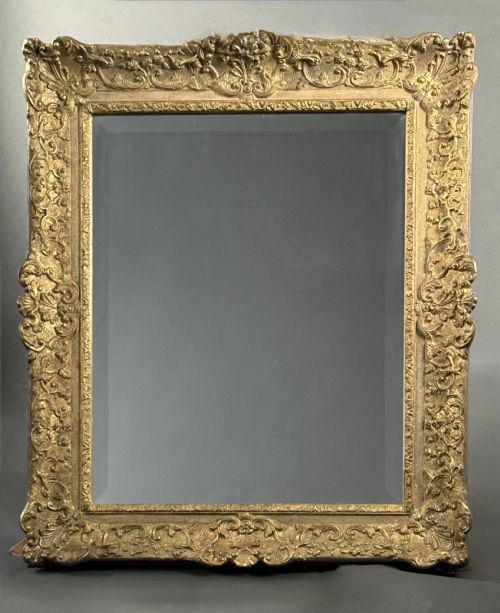
A rococo revival gilt mirror brings sweeping asymmetry, shell motifs and lavish surface gleam into a room.
What these pieces are
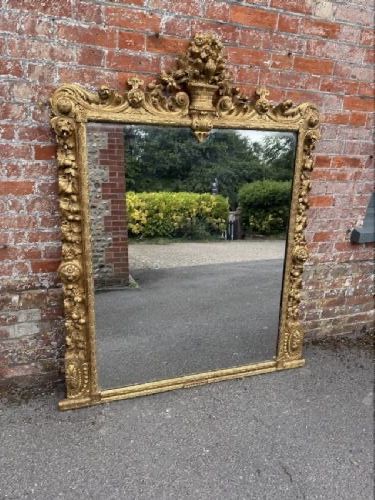
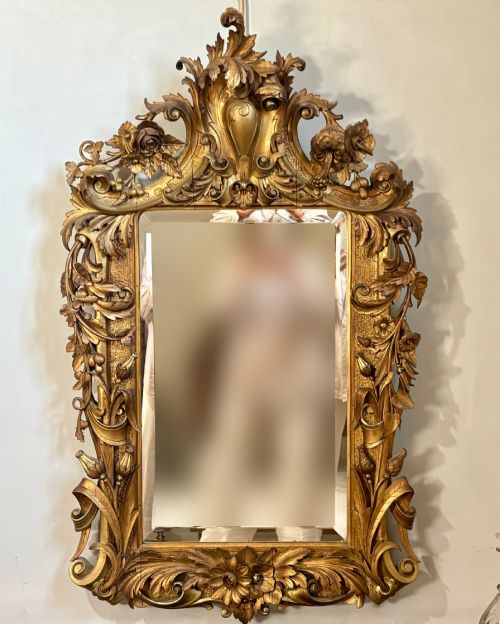
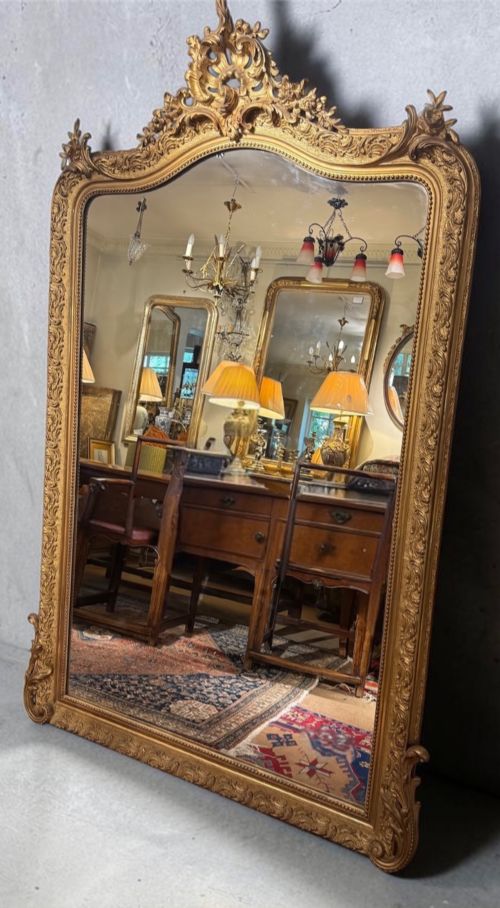
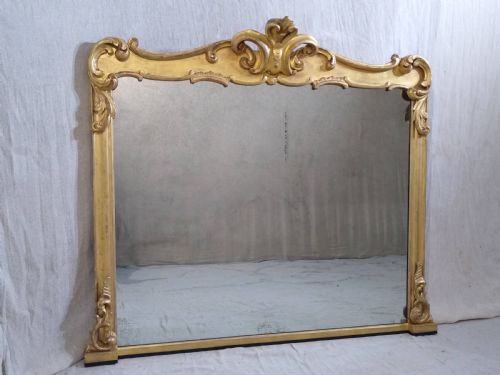
A rococo revival gilt mirror draws heavily on eighteenth-century French design, reappearing in nineteenth-century English, French and Italian interiors. The search phrase covers both grand overmantels designed to command a chimney breast and smaller wall mirrors intended for hallways or living spaces.
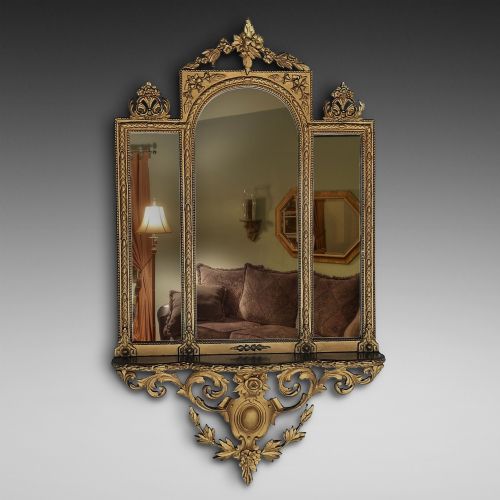
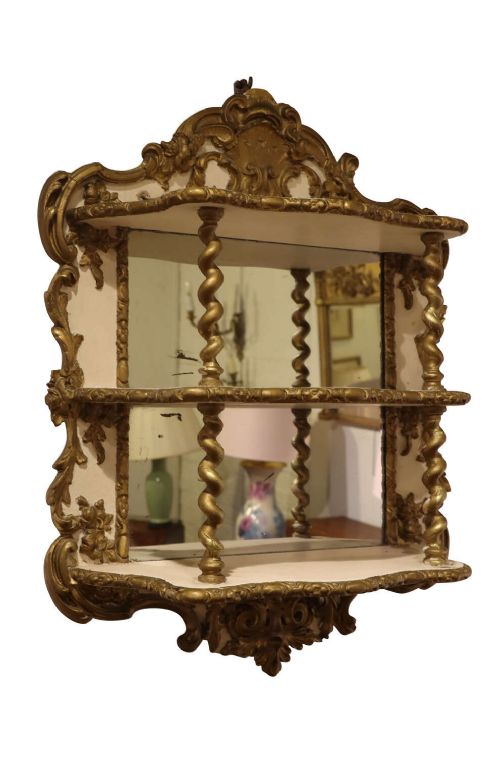
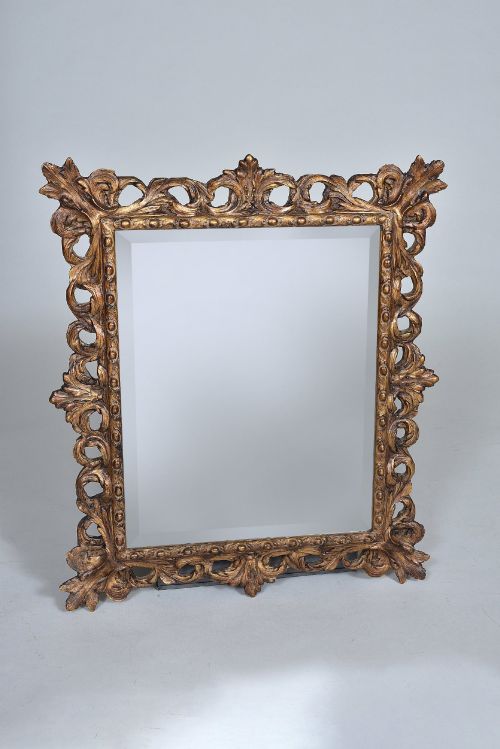
The pieces appearing on this page span the Victorian era, the late nineteenth century and into the early twentieth century. Common formats include rectangular wall mirrors, sweeping overmantels and vertical oval frames bearing characteristic C-scrolls and foliage.
Origins vary across English, French and Florentine workshops, reflecting a broad European appetite for ornate revivalism. Forms range from compact vanity mirrors to large architectural pier and console mirrors.
How they were made
Makers built the foundational framework primarily using pine or carved wood, providing a sturdy base for elaborate ornamentation. Artisans applied layers of gesso and composition over the timber to model the intricate relief work.
Gilding involved applying gold leaf or liquid gilt to the prepared surfaces, creating a rich and reflective exterior. Glass plates, often bevelled in later examples, were set securely into the rebated frames.
Retail Price Guide 2026
Typical UK retail prices for rococo revival gilt mirror, calculated from the Sellingantiques database of over a million retail prices indexed since 2003. This retail price guide relies exclusively on Sellingantiques data; no external sources or auction records are used, so the figures do not describe the wider market.
Listings feature pieces spanning the nineteenth and early twentieth centuries, constructed from pine, gesso and giltwood in English, French and Florentine styles.
What varies in quality
The depth and hand-carving of the wooden elements separate superior examples from those relying entirely on moulded composition ornament. Crispness in the shell motifs and scrollwork indicates skilled craftsmanship during the production process.
The integrity of the original gilding and the preservation of the underlying gesso layers determine the visual authority of the piece. Subtlety in the patination and the clarity of the antique glass complete the distinction between standard and exceptional examples.
The Rococo Revival Gilt Mirror Glossary
- Giltwood
- Timber that has been coated with gold leaf. This material provides the primary metallic sheen seen across nineteenth-century revival frames.
- Gesso
- A plaster-like mixture applied to wood frames. Artisans carve and mould this substance to create high-relief ornamentation before gilding.
- Composition
- A durable mixture of whiting, resin and oil pressed into moulds. It forms repetitive decorative details on revival frames more quickly than hand carving.
- Overmantel
- A large mirror designed specifically to hang above a fireplace mantelpiece. These pieces often anchor the decorative scheme of a nineteenth-century drawing room.
- C-scroll
- A prominent curved ornamental motif resembling the letter C. It defines the asymmetrical and fluid lines typical of rococo design.
Frequently Asked Questions
Where should I hang an overmantel mirror?
An overmantel mirror traditionally sits directly above a fireplace mantelpiece, where its generous proportions reflect light and anchor the room.
Positioning it at eye level ensures it balances the vertical space of the chimney breast and interacts well with surrounding furniture.
How do I clean a giltwood frame?
Dust the frame gently using a soft, dry brush to remove settled particles without disturbing the delicate metallic surface.
Avoid using liquid cleaners, water or harsh chemicals, as these can strip away the historic gold leaf and underlying gesso.
Are these mirrors heavy?
These frames carry substantial weight due to their dense timber foundations, layered gesso and heavy glass plates.
Proper wall fixings and professional installation into structural studs or masonry are essential for secure hanging.
What is the difference between carved wood and composition?
Carved wood involves an artisan physically cutting and shaping the timber frame by hand to create unique, flowing lines.
Composition uses a moulded paste pressed onto a simpler wooden base to achieve ornate relief details with greater speed.