



Rococo Porcelain Sculpture
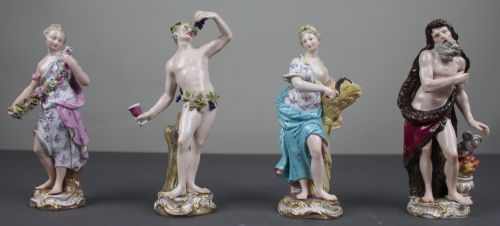
These rococo porcelain sculpture pieces capture theatrical figures and allegorical groups from the eighteenth and nineteenth centuries.
Rococo Porcelain Sculpture
A rococo porcelain sculpture depicts pastoral characters, allegorical figures like the seasons or elements, and dramatic narrative groups. Buyers encountering this selection will find both eighteenth-century originals and nineteenth-century revival pieces modelled with characteristic scrollwork and asymmetrical charm.
The forms range from single figures such as shepherdesses and street traders to complex multi-figure groups engaged in music-making or mythology. European factories across Germany, France and England shaped these decorative objects to adorn dining tables and salon mantelpieces.
Materials and production
Potters shaped these objects using hard-paste or soft-paste porcelain, alongside unglazed biscuit porcelain and Parian ware. Artisans applied vibrant enamels and gold leaf highlights to accentuate the sculptural details and garments.
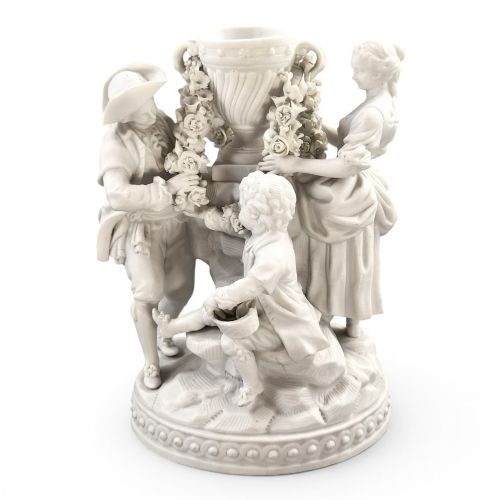
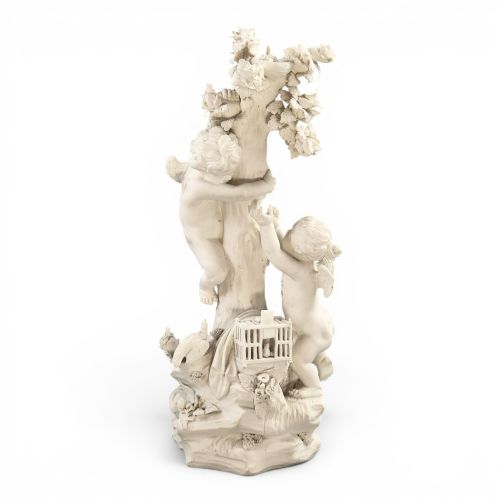
Many elaborate eighteenth-century and nineteenth-century compositions incorporated delicate applied elements such as floral garlands and bocage foliage. Kiln workers fired the modelled clay before painters hand-decorated the surfaces with coloured oxides and gilding.
Watch for Father Time clipping Cupid's wings, proving that even mythological immortals endured domestic interruptions.
Distinctions in quality
Quality rests in the crispness of the modelling and the delicacy of the hand-painted details. Superior pieces retain sharp facial expressions and intricate lace or foliage without heavy distortion from the kiln firing.
The finesse of the original design by master modellers dictates the artistic success of the group. Later revival castings from the nineteenth century vary depending on whether the factory maintained the high standards of the earlier manufactories.
Meissen·Derby Porcelain·Samson·Volkstedt·Ernst Bohne Söhne
The Rococo Porcelain Sculpture Glossary
- Bocage
- Foliage background. This leafy arbour framing ceramic figures became popular in English porcelain factories during the mid-eighteenth century.
- Biscuit porcelain
- Unglazed ceramic body. Fired without a glossy finish, this material reveals fine sculptural details with a matte texture.
- Hard-paste porcelain
- True porcelain mixture. Composed of kaolin and petuntse, this durable ceramic body was perfected in Europe at Meissen.
- Soft-paste porcelain
- Artificial porcelain compound. Early French and English factories used fritted glass and white clay mixtures before discovering hard-paste formulas.
- Ormolu
- Gilt bronze mount. Metalworkers cast and gilded these decorative stands to support porcelain figures and centrepieces.
Rococo Porcelain Sculpture: Frequently Asked Questions
How do I clean porcelain sculptures?
Dust these delicate objects gently with a soft, dry brush to prevent accumulating grime within the intricate folds and applied floral elements. Avoid using water or chemical cleaners, particularly on pieces with exposed enamels and gold leaf.
Keep the sculptures away from direct sunlight to protect the painted enamels from fading over time. Secure stability by placing them on level surfaces away from heavy foot traffic.
Were these figures meant for display?
Eighteenth-century patrons placed these sculptural groups on dining tables as dramatic centrepieces during elaborate dessert courses. Later generations moved them to cabinets and mantelpieces as refined salon ornaments.
Their narrative subjects served as conversation pieces for educated guests who recognised the classical and allegorical themes.
How do I date a porcelain figure?
Examine the base for factory marks, paste consistency and the style of the modelling to establish an approximate period. Eighteenth-century pieces often display underglaze blue swords or anchor stamps, while nineteenth-century revival items show different factory ciphers.
Compare the crispness of the glaze and the palette of the enamel colours against known factory output from specific decades.
What is biscuit porcelain?
Biscuit porcelain is fired ceramic material left unglazed to produce a matte surface resembling marble. This technique highlights the fine incisions made by the sculptor during the modelling process.
It gained favour in French and English factories for neoclassical and allegorical figures where smooth skin tones mattered.