
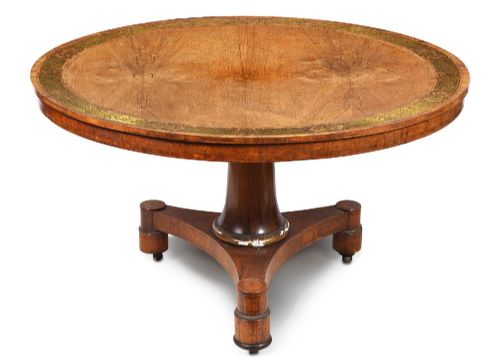
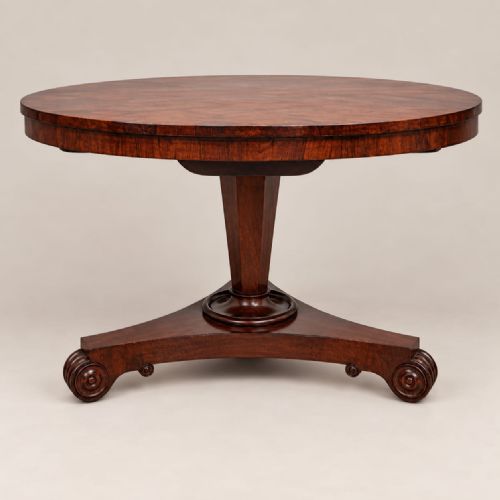
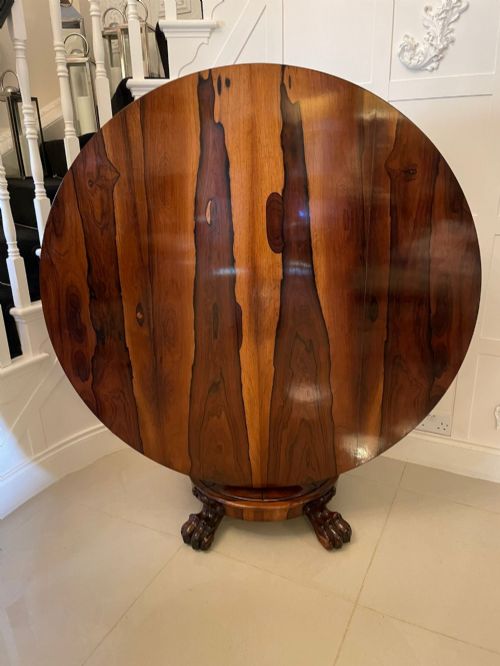

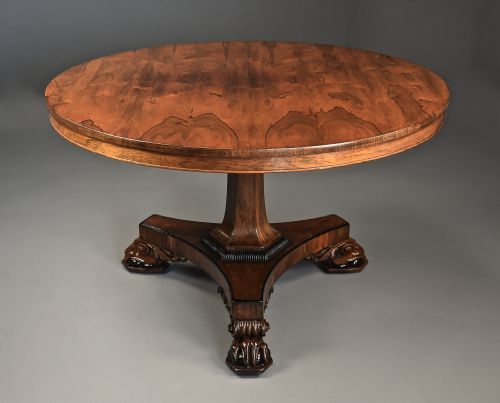
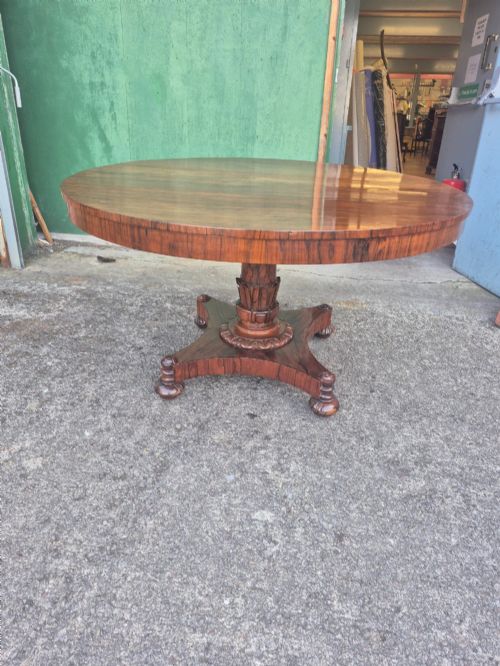
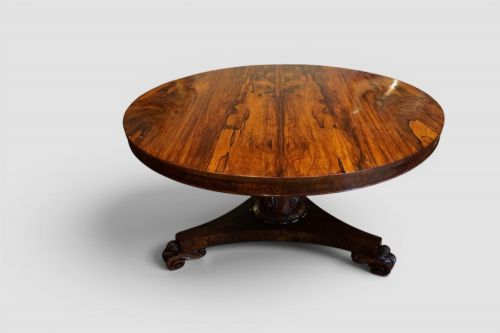
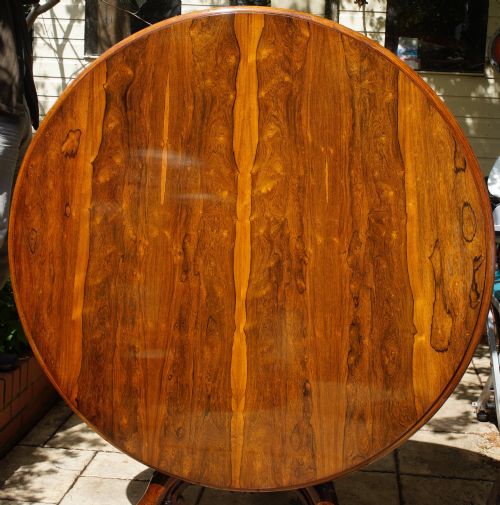
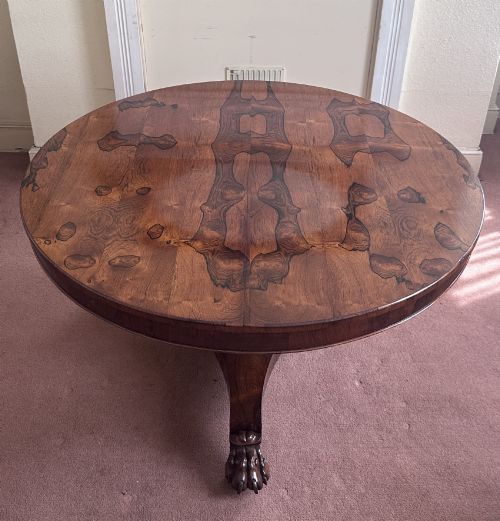


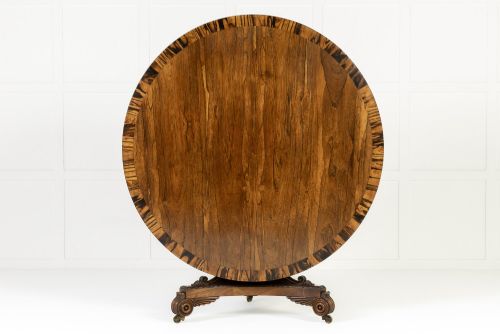


Regency Rosewood Breakfast Table
A regency rosewood breakfast table brings nineteenth-century warmth and bold grain patterns into a modern interior.
Regency Rosewood Breakfast Table
A regency rosewood breakfast table stands as a primary focal point for dining or central placement in a nineteenth-century interior. These tables span several related periods including Regency, George IV, and William IV, reflecting the evolving tastes of the early eighteen-hundreds.
Most examples found here present circular or ovular tops supported by sturdy pedestals, often featuring a tilt-top mechanism designed for convenient storage against a wall when not in use. Variations extend to rectangular and oval formats, sometimes catalogued interchangeably as centre tables or loo tables.
Originating predominantly from English workshops, pieces occasionally display regional variations such as Scottish Regency or Anglo-Indian influences. The form bridges functional dining utility with decorative display, utilising generous proportions suited to larger spaces.
What varies in quality
The sophistication of the timber selection dictates the visual appeal, where symmetrical grain matching and rich natural patina distinguish superior examples. Finer pieces demonstrate meticulous attention to secondary details such as precise brass inlay and robust pedestal carving.
Structural integrity of the tilt mechanism and the stability of the central column influence the practical standing of each table. Workshop pedigree also plays a role, with documented makers commanding greater recognition for refined proportions and execution.
Tilt mechanisms let these grand tables double as impromptu room dividers.
James Winter of Wardour Street·Gillows
The Regency Rosewood Breakfast Table Glossary
- Tilt-top
- A hinged table top that rotates to a vertical position for storage. This mechanical feature allowed large circular tables to save domestic space when meals concluded.
- Triform base
- A three-sided pedestal support resting on feet. It provides balanced weight distribution for heavy circular tables.
- Veneer
- A thin layer of figured wood applied over a secondary timber base. This technique allowed cabinet makers to display decorative rosewood grain without utilising solid expensive stock.
- Goncalo Alves
- A dense exotic timber prized for its contrasting dark figuring. Makers occasionally paired this wood with rosewood for decorative impact.
Regency Rosewood Breakfast Table: Frequently Asked Questions
How do I use a tilt-top table?
Release the brass catch underneath the top to pivot the surface from horizontal to vertical. This allows the piece to rest flat against a wall when floor space is needed.
Ensure the safety lock is engaged whenever the table returns to the horizontal position for dining or display use.
Can I seat six people around these tables?
Many circular breakfast tables measure around four feet across, accommodating four to six diners comfortably depending on the chair widths used.
Larger ovular and rectangular variants provide extended surface area for seating more guests during formal meals.
How do I tell Regency from William IV?
Regency pieces often display lighter proportions, delicate brass inlay, and classical restraint dating from the early nineteenth century. William IV examples typically feature heavier pedestals, bolder carved details, and robust circular tops.
Both styles overlap heavily in nineteenth-century rosewood production, sharing similar structural forms and tilt-top mechanisms.
Where should I place a centre table?
Centre tables function best in the middle of a room where the circular top and pedestal base can be viewed from all angles. They serve effectively in large entryways or principal living spaces as decorative display surfaces.
Keep the table away from direct sunlight and heat sources to protect the delicate rosewood veneer and polished finish.