





Regency Carved Column Table
These pieces for a regency carved column table bring classical proportion and rich timber into a room, offering sturdy utility with a refined silhouette.
Regency Carved Column Table
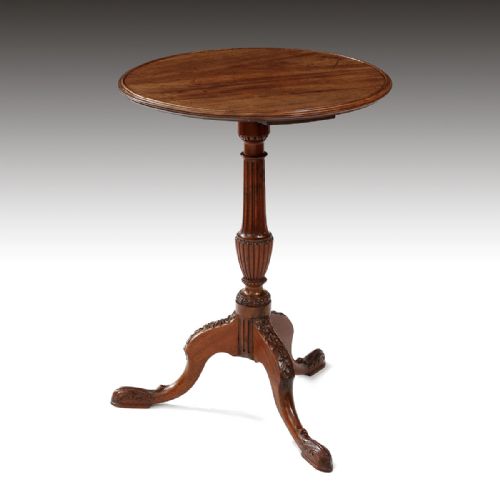
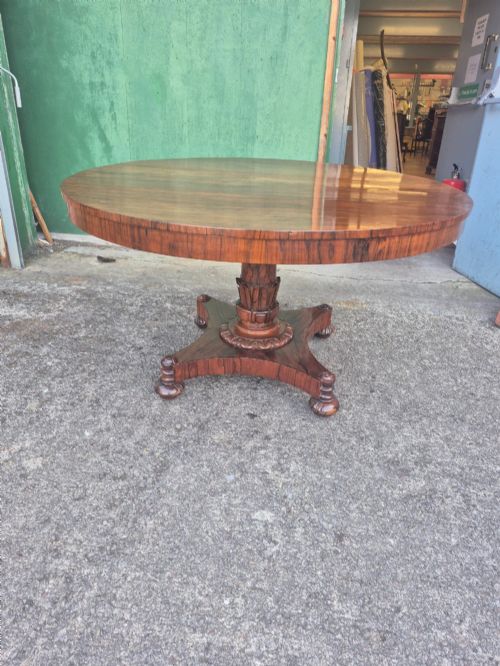
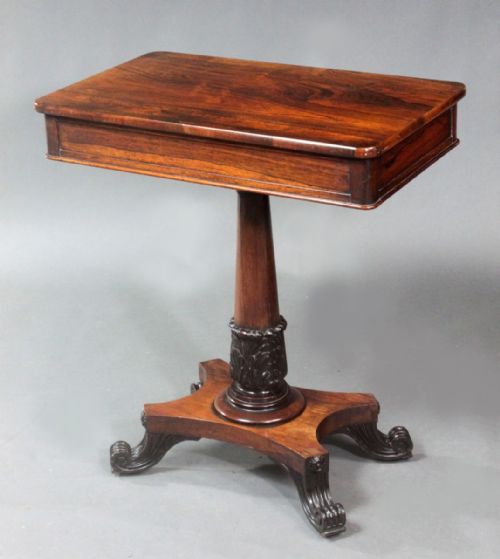
A regency carved column table encompasses a range of domestic timber furniture designed during the early nineteenth century and the subsequent William IV period. Buyers browsing this selection encounter side tables, occasional tables, console tables, dining tables, teapoys, plant stands, serving tables, and card tables.
The objects stem from the Georgian, Regency, Late Regency, and George IV eras, demonstrating the classical revival styles popular across nineteenth century British households. Most examples rely on rich timbers like mahogany and rosewood, often enhanced with boxwood stringing, flame mahogany veneer, or gilt and brass details.
Tripod tables and pedestal forms dominate the configuration of these pieces, featuring distinct central columns that support circular or rectangular tops. Makers of the period applied architectural detailing and turned supports to create stable yet elegant items for the parlour, dining room, and drawing room.
How they were made
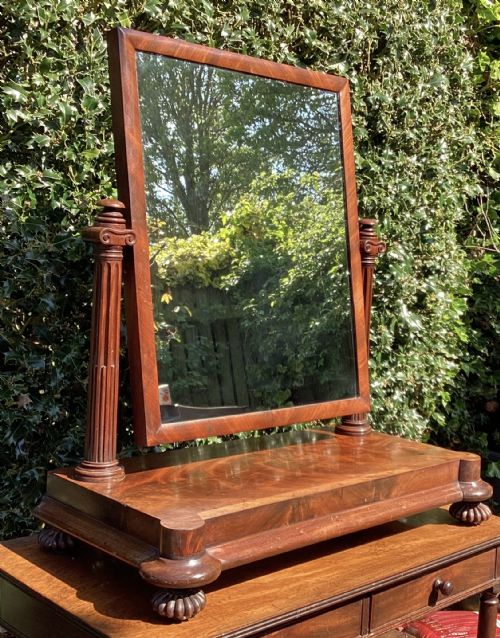
Cabinet makers constructed these pieces primarily from solid mahogany and rosewood, frequently applying flame mahogany veneer to large flat surfaces to highlight natural timber grain. Workshops incorporated contrasting boxwood stringing for delicate linear decoration along table edges and aprons.
Central columns were turned on lathes and joined to sturdy tripod bases or platform plinths using traditional mortise and tenon joinery. Metal elements such as brass castors and glass components appeared on specific functional forms like teapoys and serving tables.
Listings for this phrase feature pieces from the 19th Century, Georgian, and Regency periods, utilising mahogany, rosewood, burr maple, and walnut.
What varies in quality
The standard of timber selection largely dictates the quality of a piece, with figured flame mahogany and rich rosewood marking out superior examples. Craftsmanship is evident in the crispness of the column carving and the precision of the boxwood stringing inlay.
Structural integrity depends on the original joinery within the central column and the stability of the base tripod or platform. Subtle details such as original brass fittings and well-matched veneer panels separate workshop production from mass furniture output.
Gillow·Gillows
The Regency Carved Column Table Glossary
- Tripod base
- A three-legged support structure commonly found beneath nineteenth century pillars and occasional tables.
- Flame mahogany veneer
- A thin slice of timber cut from mahogany wood forks to produce a distinctive flickering flame pattern across tabletops.
- Boxwood stringing
- Thin lines of pale boxwood inlaid into darker surfaces to create decorative borders and geometric outlines.
- Teapoy
- A small pedestal table fitted with internal compartments specifically designed for storing loose tea leaves and caddies.
- Torchiere
- A tall, slender stand or column traditionally utilised for holding a candle or decorative lamp.
Regency Carved Column Table: Frequently Asked Questions
What is a regency carved column table used for?
These tables served various domestic functions depending on their specific form, ranging from serving afternoon tea to displaying decorative items in a hallway.
Card tables provided a surface for evening entertainment, while console and serving tables sat against walls in formal dining spaces.
How do I identify a Regency table?
Look for classical architectural motifs, bold turned columns, and dark dense timbers such as mahogany and rosewood.
Details like brass castors and boxwood stringing help distinguish pieces originating from the early nineteenth century.
Are these tables suitable for daily use?
Solid timber construction and sturdy central pillars make these items robust enough for regular placement in modern living areas.
Care should be taken to protect polished veneer surfaces from excessive moisture and direct heat sources.
What is the difference between Regency and William IV styles?
Regency pieces often display refined classical restraint with leaner proportions and delicate brass or inlay details.
William IV furniture tends to feature heavier architectural forms, bolder column carving, and sturdier platform bases.