
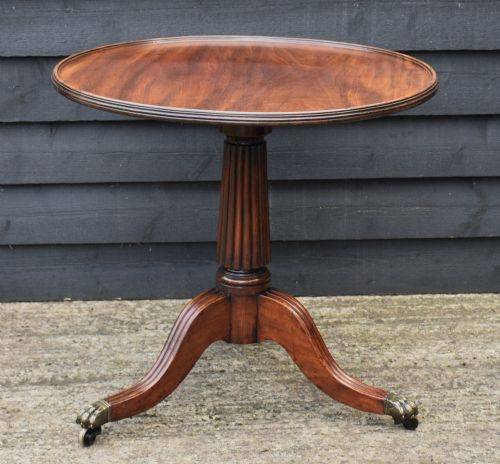
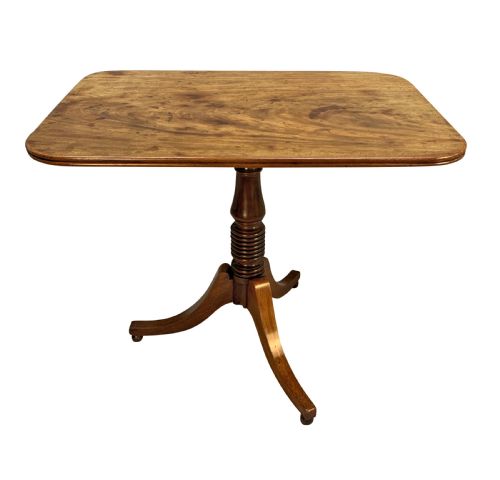
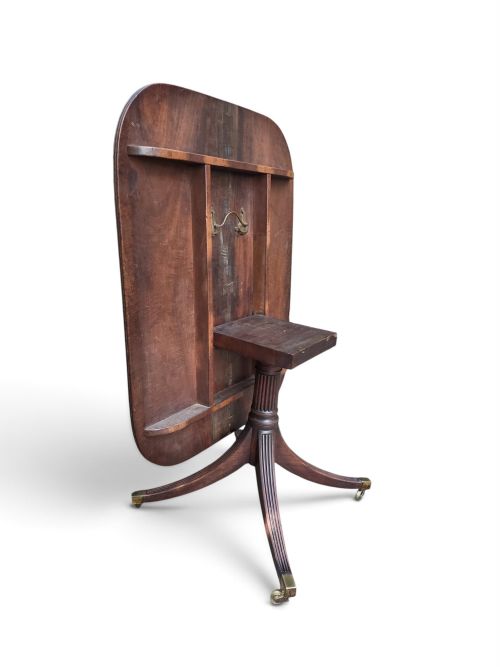
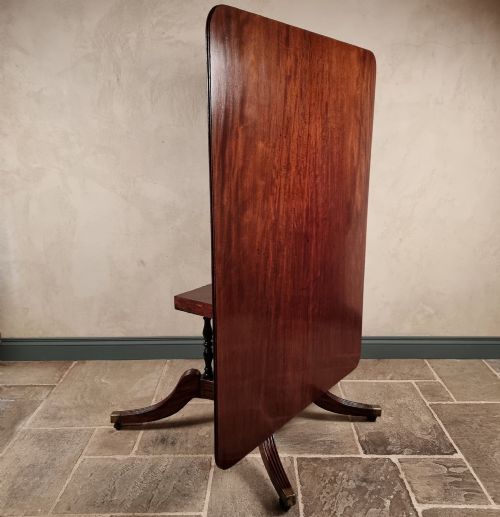
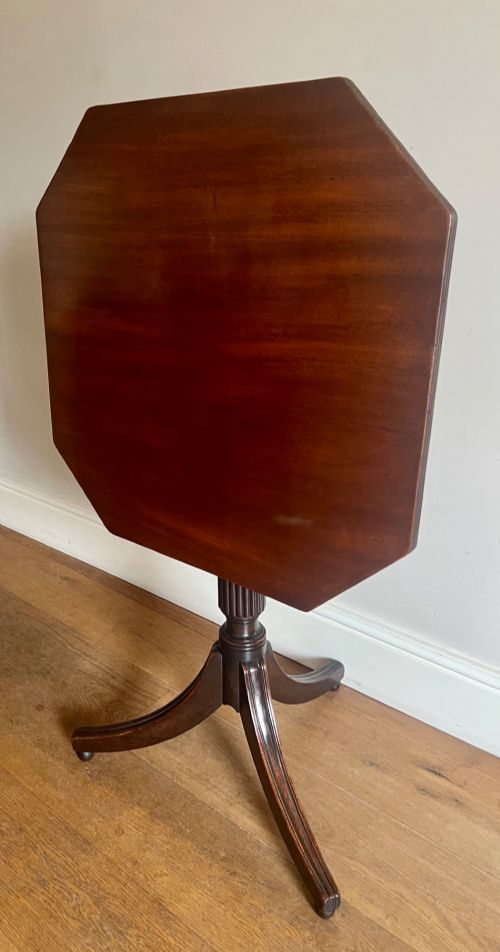


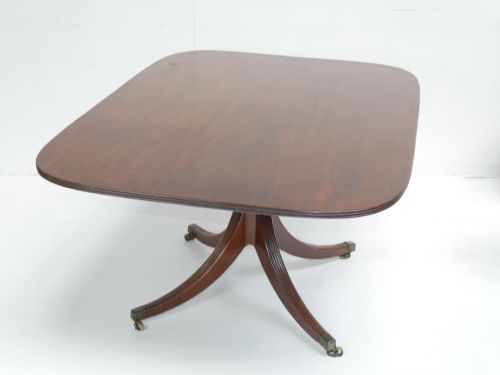


Reeded Leg Tilt Top
A reeded leg tilt top table combines practical storage with formal elegance, offering a pivoting surface supported by reeded uprights.
Reeded Leg Tilt Top
A reeded leg tilt top table serves primarily as a dining or occasional surface that drops flat when needed and tilts upright to save space against a wall. The examples listed on this page appear across several periods, including Georgian, Regency, and Victorian, with the Regency and George III eras particularly well represented.
Forms range from small wine tables and tripod tables to large breakfast and dining tables designed to seat several people. These pieces typically originate from the eighteenth and nineteenth centuries, taking the shape of pedestal dining tables, centre tables, and side tables.
Buyers will encounter various timbers and formats, from circular wine tables to large oval pedestal tables designed for dining rooms. The mechanism allows the top to hinge vertically, a useful feature for rooms requiring flexible use of floor space.
What varies in quality
The distinction between standard examples and finer pieces lies in the choice of timber figure, such as plum pudding mahogany or highly figured grains, and the crispness of the hand-carved reeding. Superior execution shows in the precision of the tilt mechanism and the stability of the pedestal base.
Proportion and the handling of secondary timbers also determine the standing of a piece, with attribution to known workshops or makers elevating the status of certain tables. Original brass fittings and good surface colour further separate accomplished cabinet work from ordinary production.
Listings on this page span the Georgian, Regency, and Victorian periods, featuring mahogany, rosewood, and brass materials.
James Mein·Gillows
The Reeded Leg Tilt Top Glossary
- Reeded
- Decorated with parallel convex mouldings carved directly into the wood. This treatment frequently appears on the legs of Regency and Georgian tables.
- Tilt top
- A tabletop mounted on a hinge mechanism that allows the surface to rotate into a vertical position. This design enabled tables to be stored against walls when not in use.
- Crossbanding
- A border of veneer laid around the perimeter of a tabletop with the grain running at right angles to the centre. It provides a decorative frame to mahogany surfaces.
- Tripod base
- A pedestal support terminating in three legs spreading outward from a central pillar. This form offers stability for smaller occasional and wine tables.
Reeded Leg Tilt Top: Frequently Asked Questions
What is a reeded leg tilt top table used for?
These tables served multiple functions in historic homes, acting as breakfast tables, dining surfaces, or centre tables for sitting rooms. The tilting mechanism allowed the surface to stand upright against a perimeter wall, freeing up floor space for other daily activities.
In modern rooms, they retain this versatility as occasional or dining furniture. Owners often place them in living spaces or libraries where flexibility of layout matters.
How do you operate the tilt top mechanism?
A traditional tilt top relies on a wooden block catch or a brass release mechanism located beneath the surface. Releasing this catch allows the tabletop to pivot on its pivot block into a vertical plane.
To lower the table back into position, gently guide the surface down until the catch engages securely with the pedestal block. Care should be taken to support the weight of the top during this movement.
Which woods were used to make these tables?
Cabinet makers predominantly used mahogany, including Cuban mahogany which is known for its density and deep colour. Secondary or decorative highlights occasionally feature rosewood, goncalo alves, and satinwood.
The choice of timber reflected the period and the intended status of the piece, with figured grain patterns reserved for finer dining and breakfast tables.
How can you tell a Regency table from a Georgian one?
Georgian pieces, particularly those from the George III period, often exhibit classic proportions with straight or carved pillar supports and simpler tripod bases. Regency examples frequently incorporate classical revival motifs, such as sabre legs, brass paw feet, and bolder reeding.
Examining the construction details, secondary woods, and hardware helps clarify the period of manufacture. Workshops of the Regency era also favoured more pronounced architectural styling.