

Regency Marble Table
When you select a regency marble table, you bring home a piece that pairs classical stone with rich timber or gilt.
Regency Marble Table
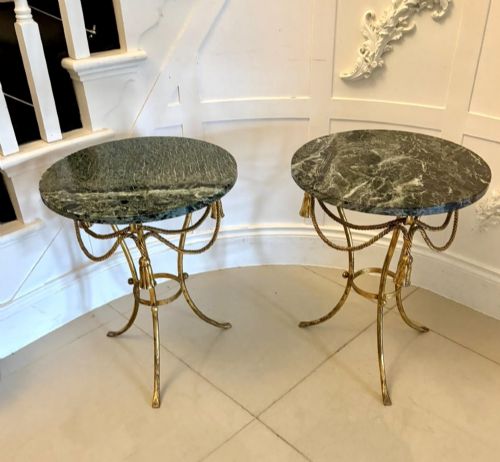
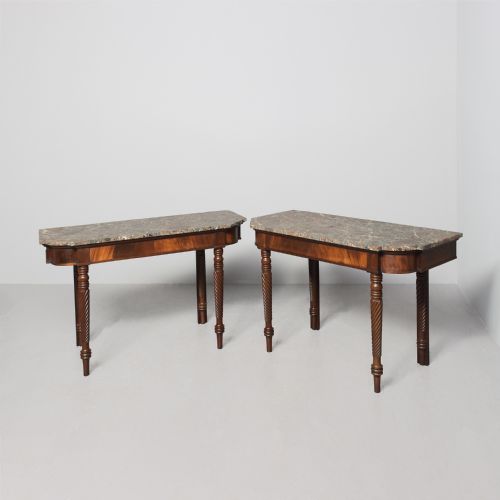
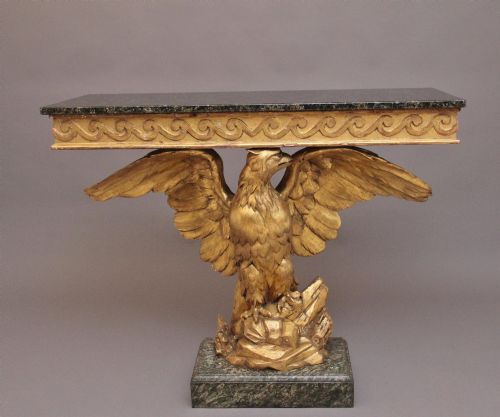
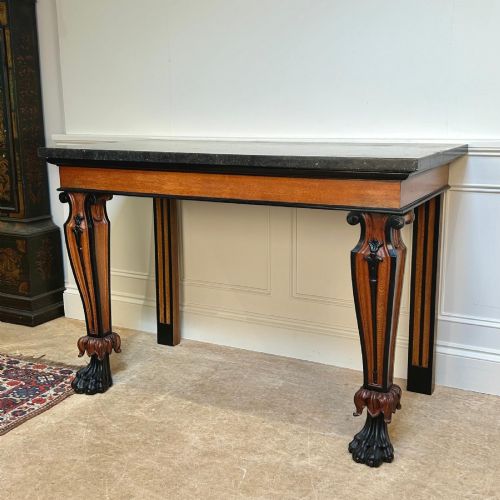
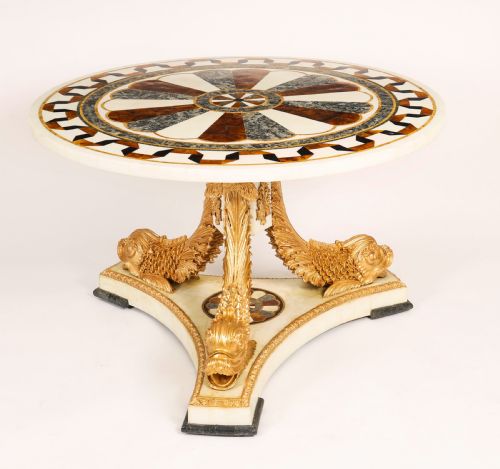
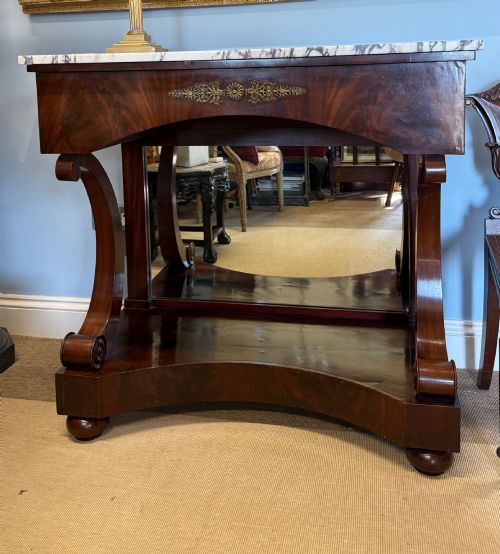
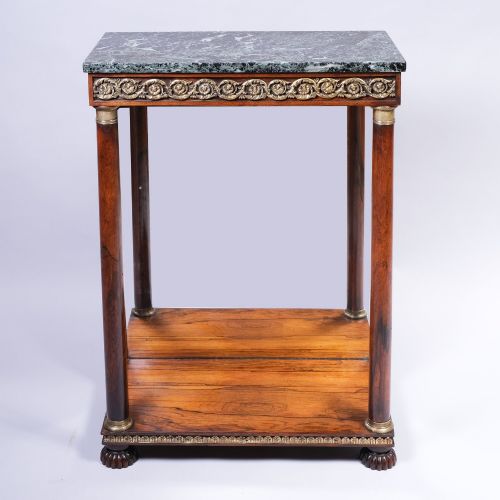
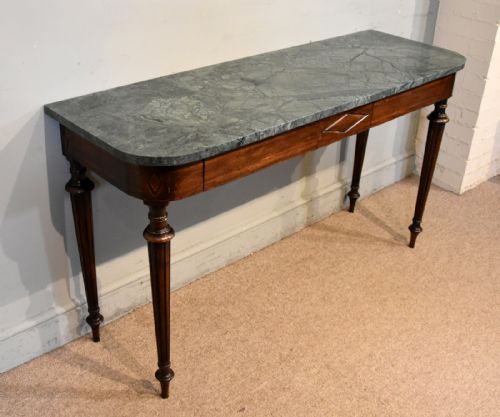
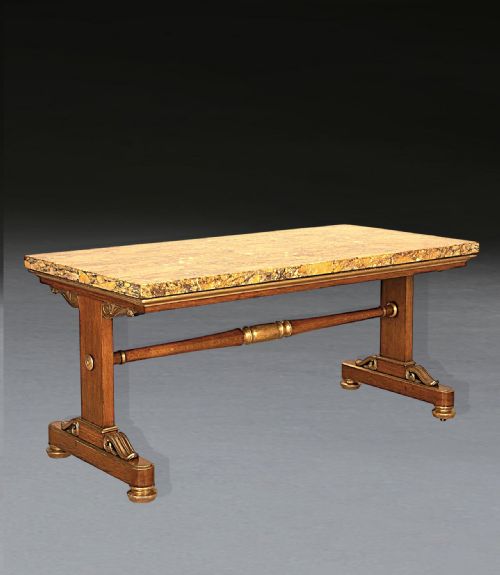
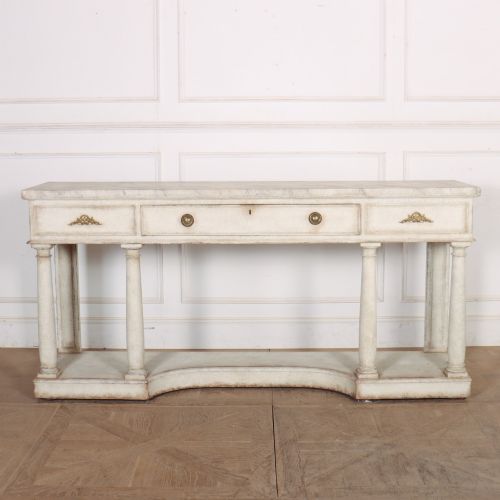
A regency marble table unites the clean geometry of the early nineteenth century with heavy stone slabs, appearing most frequently on this page as console, side, or centre forms.
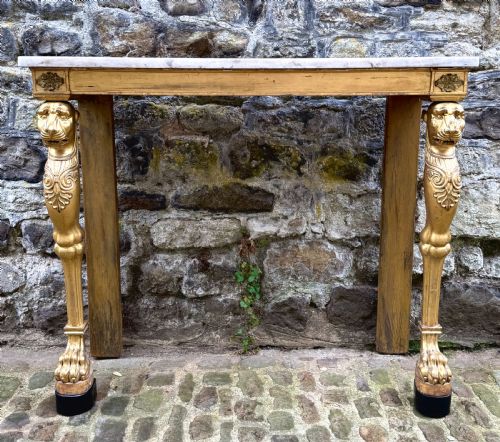
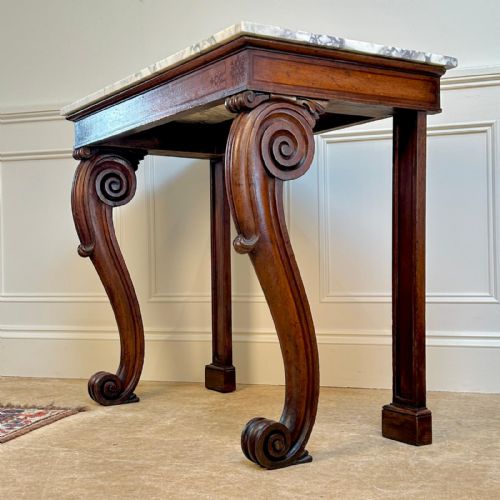
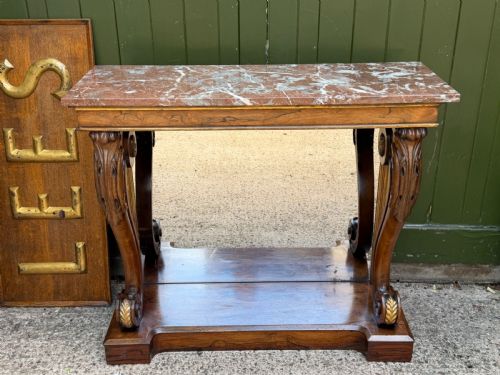
Makers of the period adapted classical architectural motifs for domestic interiors, resulting in console tables designed to stand against walls and circular centre tables that anchor principal rooms.
Survivors span genuine Regency manufacture through to later revival periods, utilising rosewood, mahogany, and giltwood to support heavy inset marble tops.
Materials and construction
Timbers such as rosewood and flame mahogany provide the structural frames, often polished to a deep lustre or accented with brass mounts, gilt bronze, and parcel-gilding.
Stone surfaces feature figured white statuary marble, richly coloured Siena marble, or intricate specimen mosaics set flush into wooden tops.
Joinery techniques combine robust carcase construction with carved details like dolphins, cornucopias, and classical pillars supporting the heavy upper slabs.
Several tables include chess boards inlaid directly into the marble top for impromptu parlour games.
Judging quality and execution
The distinction between tiers rests upon the choice of timber and the ambition of the carving, where dense rosewood and crisp hand-carved giltwood outrank simpler painted pine or later softwood substitutes.
Stone selection dictates grade, with multi-coloured specimen marbles, micro-mosaic work, and thick, deeply bevelled slabs marking out pieces made for principal rooms.
Proportion and structural integration determine success, as top-tier examples balance the immense weight of stone without sagging frames or clumsy joints.
The Regency Marble Table Glossary
- Console table
- A table designed to stand against a wall, frequently secured with brackets or resting on front legs.
- Gueridon
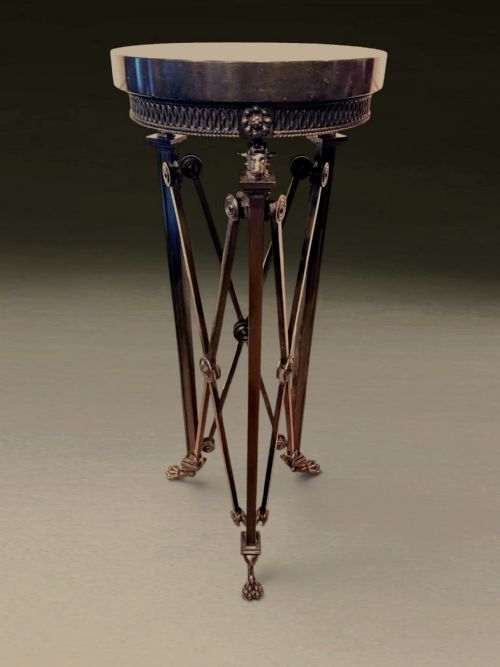
- A small circular table on a central pillar, often topped with marble for use as a lamp or centre stand.
- Specimen marble
- A surface composed of various coloured marbles arranged in geometric patterns or architectural compositions.
- Ormolu
- Gilded bronze mounts applied to furniture frames to highlight corners and friezes.
- Pietra dura
- An inlay technique utilising cut and fitted polished coloured stones to create pictorial designs.
Regency Marble Table: Frequently Asked Questions
How were these tables used?
Console variants stood against drawing room and hallway walls, serving as display surfaces for decorative objects and lighting.
Circular centre tables anchored principal rooms, holding books or lamps while allowing movement around the perimeter.
How do I care for the marble?
Clean stone surfaces using a soft cloth dampened with warm water, avoiding acidic household cleaners that etch polished finishes.
Protect the top from moisture rings by using coasters beneath glasses and heavy vessels.
Are these tables heavy?
The inclusion of solid stone slabs adds substantial weight to the overall structure.
Two people are typically required to lift and position them safely within a room.
How do I spot a revival piece?
Later nineteenth and early twentieth century copies often utilise machine-sawn timber framing and standardised brass casting methods.
Examine the underside and joints for tool marks that reveal the manufacturing era.