



Octagonal Marble Side Table
An octagonal marble side table brings a distinct geometry and cool stone surface to a room, offering both function and decorative presence.
Octagonal Marble Side Table
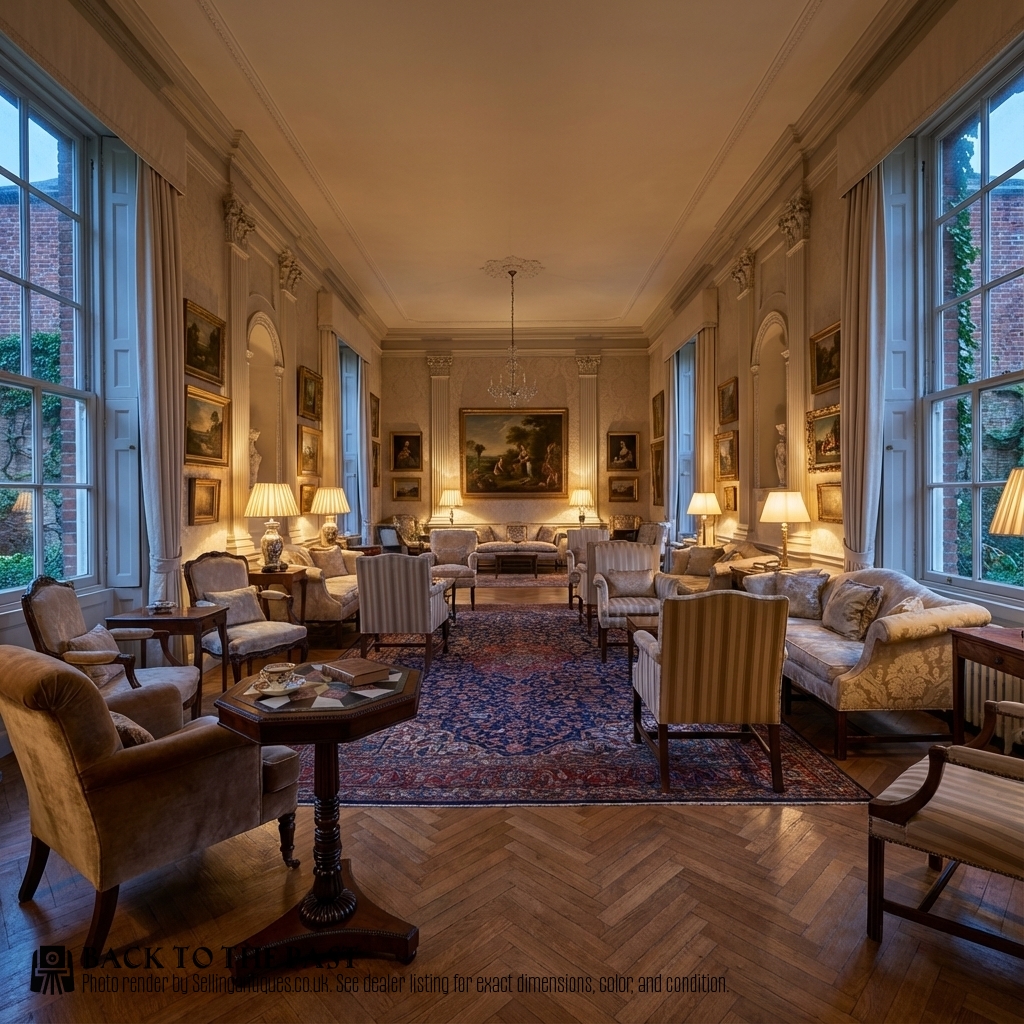
When you search for an octagonal marble side table, you encounter compact occasional furniture defined by eight-sided tops and stone surfaces. These pieces function as side tables, plant stands, and games tables, appearing across several distinct periods.
The examples documented here span the 19th century, Regency, Victorian, and later 1920 to 1930 eras. You are most likely to meet mahogany or hardwood frames paired with white, black, or specimen marble tops.
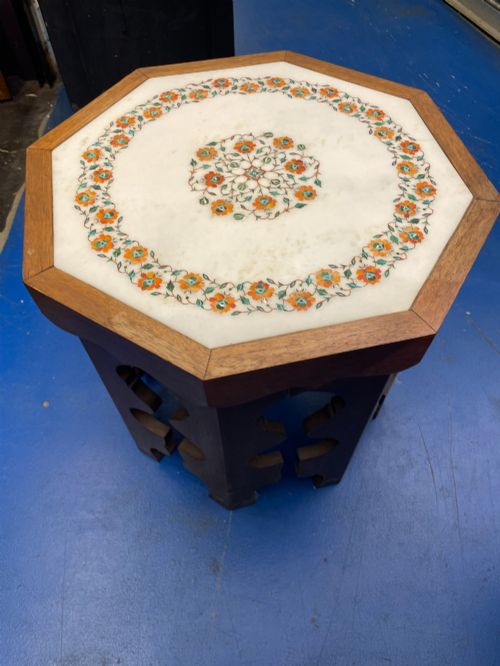
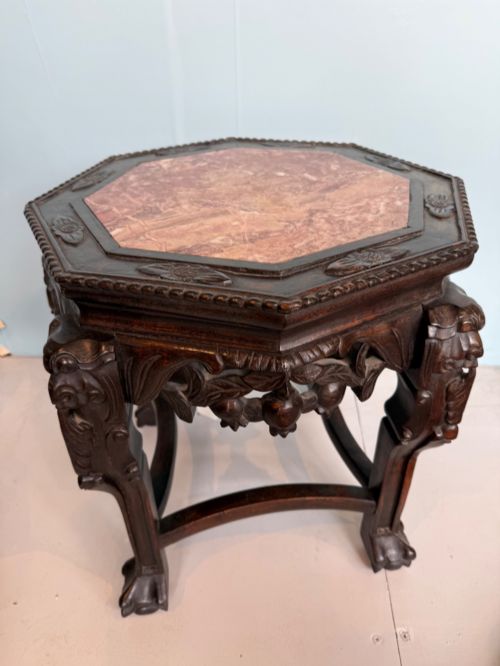
Origins and styles vary widely, encompassing Anglo-Indian, Chinese export, French chateau, and English designs. Each style brings specific decorative vocabulary to the basic eight-sided form, from intricate stone inlay to giltwood swans.
How They Were Made
Cabinetmakers utilised dense timbers such as mahogany, rosewood, and padouk to construct stable frames capable of supporting heavy stone. These timbers were shaped into pedestal stands, occasional tables, and games tables using traditional joinery.
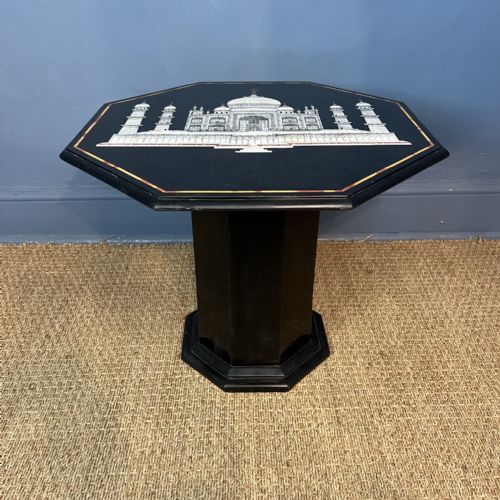
The stone elements incorporate white marble, black marble, and complex specimen marble or pietra dura work. Artisans inlaid semi-precious stones to create intricate geometric and floral patterns, notably seen in pieces like the Taj Mahal table.
Metal accents in brass and giltwood further augmented the timber and stone structures. French Empire and Regency pieces frequently integrated these gilded details alongside carved animal motifs to elevate the overall design.
Octagonal Marble Side Table Retail Price Guide 2026
Typical asking prices for octagonal marble side table among the pieces listed under this phrase on Sellingantiques today, from the lower quarter to the upper quarter. They describe what is for sale here now, not the wider market.
The listings combine 19th-century, Regency, and Victorian periods with later 1920 and 1930 examples.
What Varies in Quality
The refinement of the stone work sets finer examples apart, particularly where multi-coloured specimen marbles or meticulous pietra dura inlay demonstrate superior lapidary skill. Simpler monochrome marble slabs represent a more utilitarian approach to the form.
Timber selection and carving depth influence the distinction between standard production and exceptional workshop output. Crisply carved pedestals and finely figured mahogany or rosewood exhibit a higher degree of craftsmanship than plain structural frames.
The integration of diverse cultural styles, such as Anglo-Indian inlay or Chinese export carving, determines the decorative ambition of the piece. Cohesion between the eight-sided stone top and the supporting base governs the visual success of the design.
The Octagonal Marble Side Table Glossary
- Pietra dura
- An artistic technique using cut and fitted polished coloured stones to create dramatic images. This method appears on decorative table tops within the collection.
- Specimen marble
- A top assembled from various types of ornamental marble, often arranged in geometric patterns. Collectors prize these surfaces for their geological variety and visual complexity.
- Regency
- A British design period spanning the early 19th century, characterised by classical restraint and archaeological revival. Furniture from this era often employs dark timbers and gilt mounts.
- Occasional table
- A small, movable table designed for specific, intermittent use rather than central placement. These forms include plant stands and chess tables within our listings.
- Anglo-Indian
- A descriptive term for items produced in India under British rule, frequently combining local materials like black marble with traditional European furniture forms.
Octagonal Marble Side Table: Frequently Asked Questions
What is an octagonal marble side table used for?
These pieces primarily function as small surfaces for display, holding decorative items, lamps, or plants. Certain forms also serve specialised purposes, such as games tables fitted for chess.
Their compact eight-sided footprint allows them to fit easily beside seating or in corners where standard rectangular tables might prove too bulky.
How do I identify a Regency period table?
Regency pieces typically display neoclassical design influences, often utilising rosewood or mahogany with restrained decorative carving. Look for classical proportions and clean architectural lines.
Specimen marble tops are also frequently associated with this period, reflecting an era of grand travel and refined classical taste.
What is pietra dura?
Pietra dura is a meticulous mosaic technique involving the inlay of cut and polished semi-precious stones into a dark marble base. This creates smooth, durable pictorial or geometric surfaces.
Tables featuring this work represent high levels of lapidary skill and decorative ambition.
Where were these tables made?
The recorded pieces originate from diverse workshops in England, France, China, and India. Each region contributed distinct materials and decorative techniques to the eight-sided form.
French pieces often incorporate giltwood and carved animal motifs, while Anglo-Indian examples showcase intricate stone inlay.