

Regency Mahogany Wine Table
A regency mahogany wine table brings compact elegance to a corner, offering a sturdy pedestal base and a top designed for evening hospitality.
Regency Mahogany Wine Table
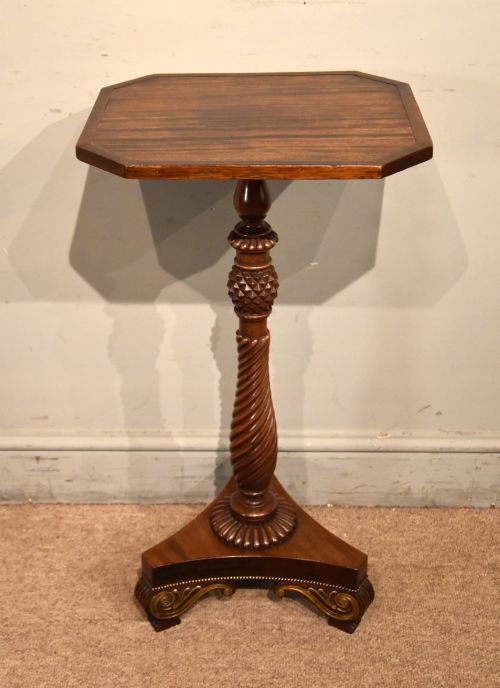
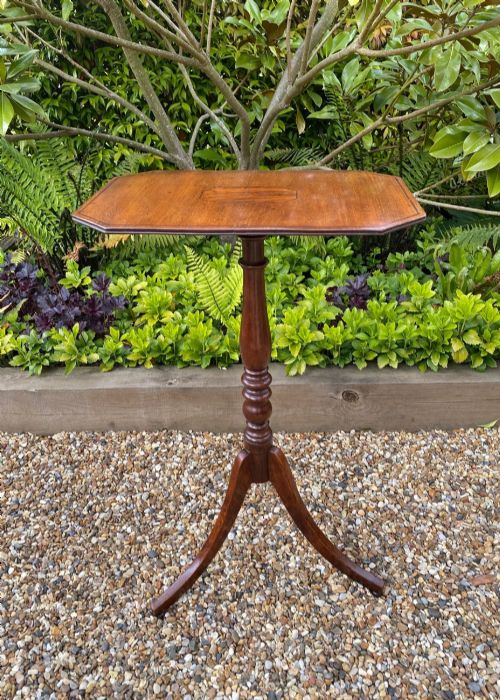
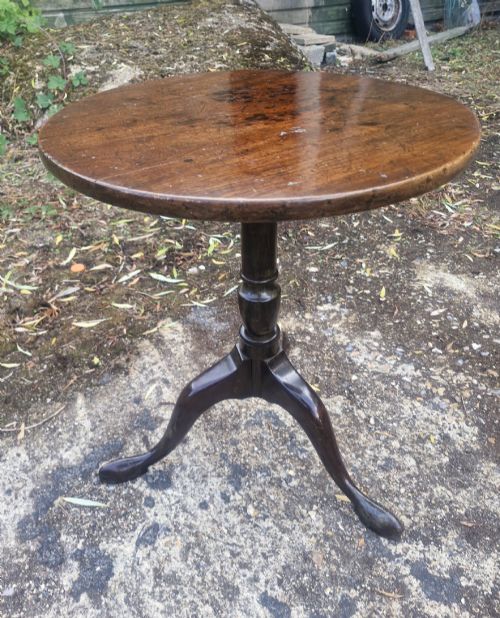
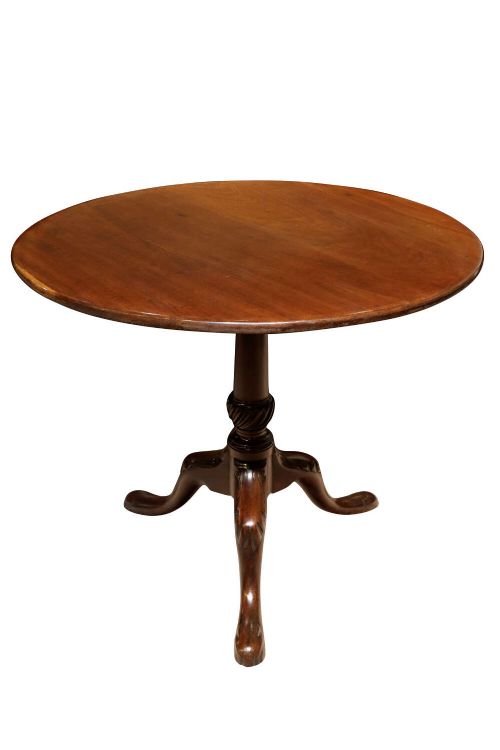
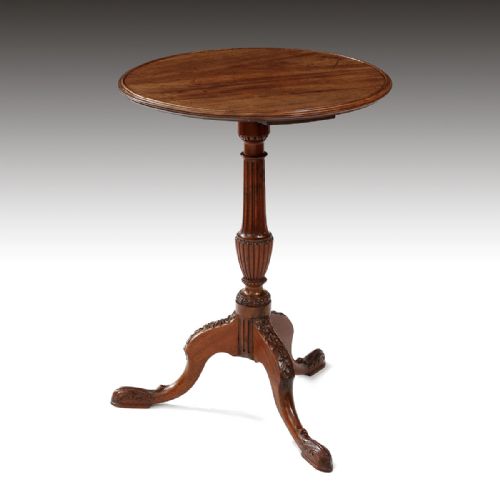
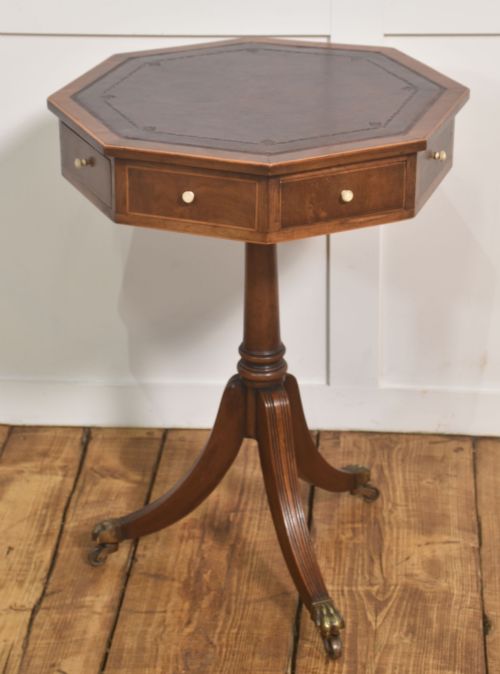
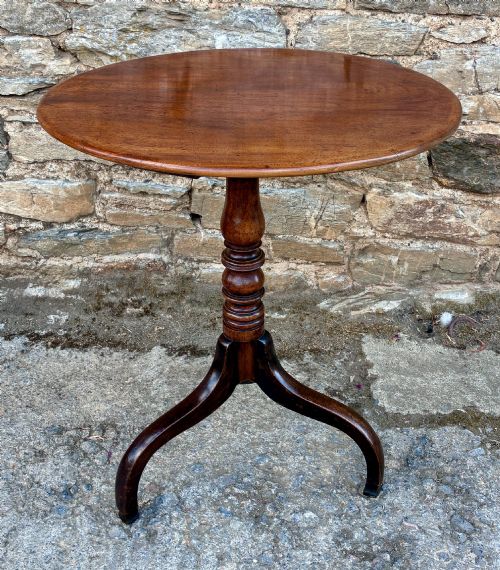
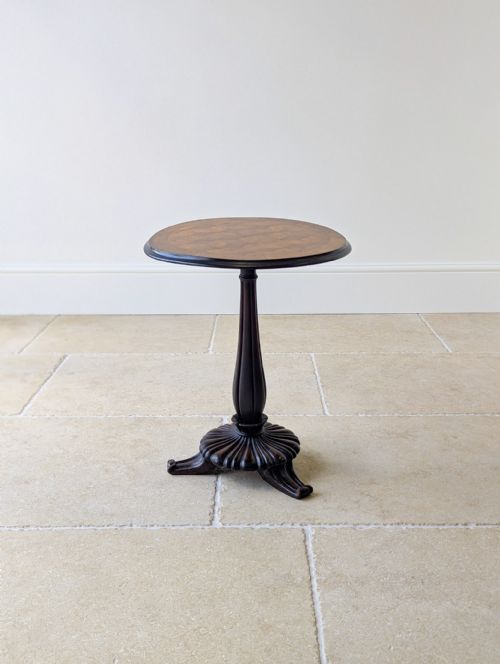
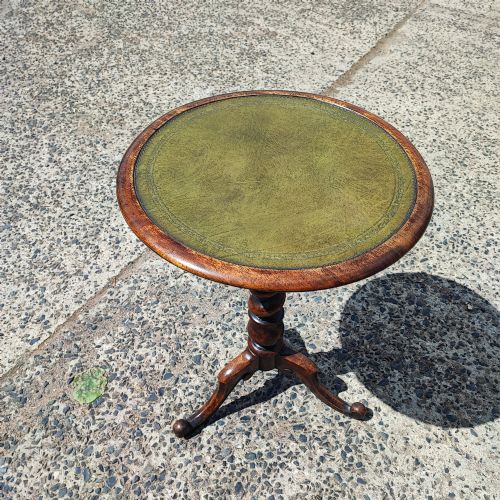
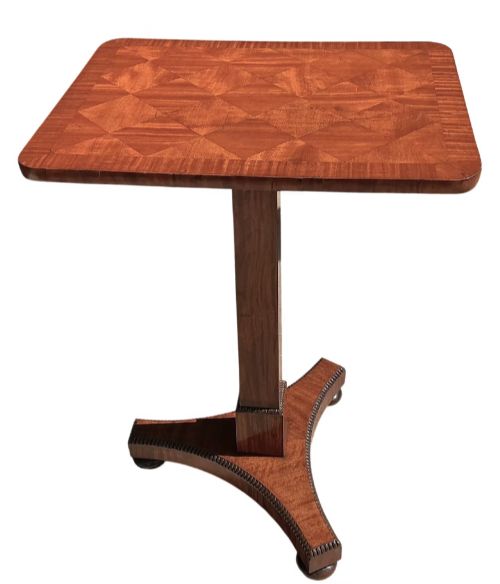
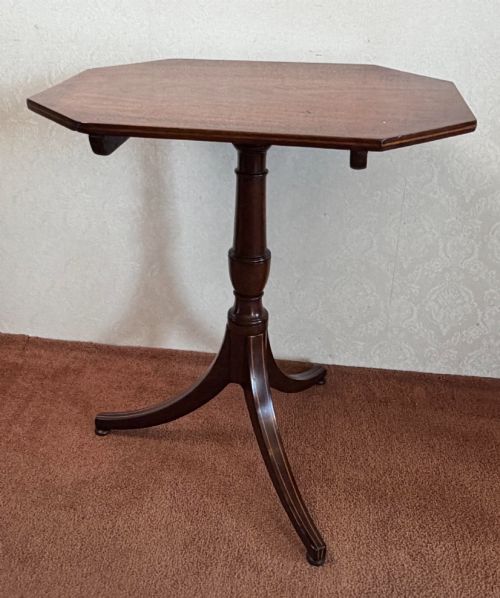
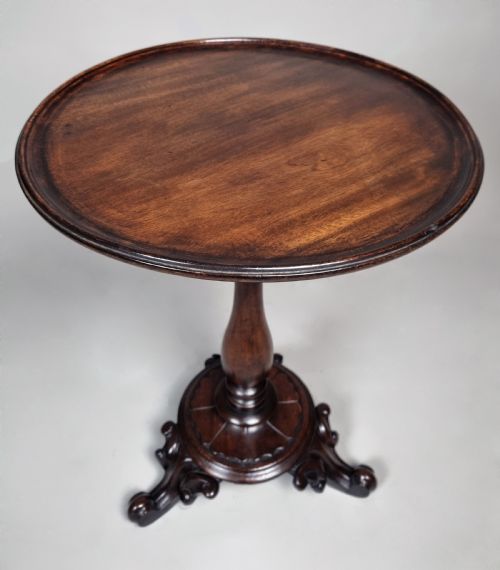
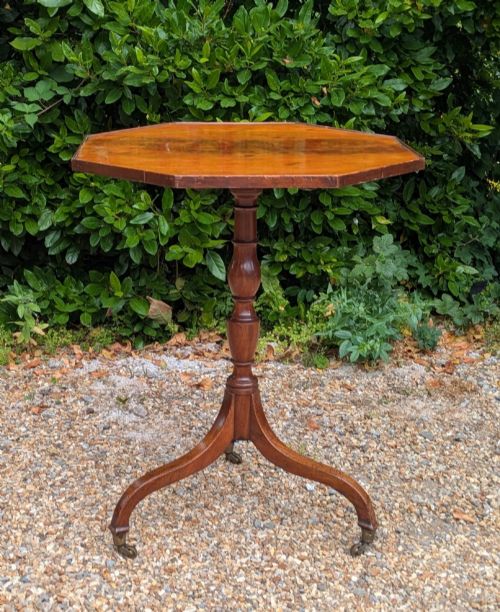
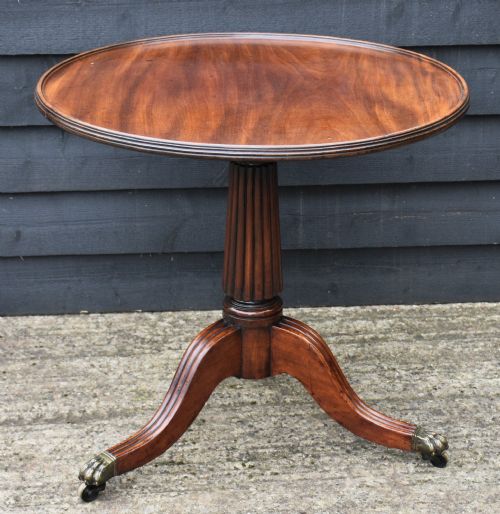
The version most commonly encountered on this page dates from the early nineteenth century, aligning with the Regency and William IV periods. They appear in circular, octagonal, and square forms, frequently equipped with tilting mechanisms for compact storage against a wall.
Makers of the period also produced variations incorporating rosewood, boxwood inlay, and brass casters. While some examples function purely as lamp stands or candle tables, their primary identity remains tied to portable hospitality.
What Varies in Quality
The distinction between standard utility pieces and finer examples rests on the selection of timber and the crispness of the turning. Selected flame mahogany and intricate boxwood inlay indicate a workshop paying closer attention to decorative appeal.
Proportion and stability define the upper tier of these pieces. A superior table stands level on its tripod base without excessive play in the tilt mechanism, maintaining balance even when fully loaded on the perimeter.
Regency Mahogany Wine Table Retail Price Guide 2026
Typical asking prices for regency mahogany wine table among the pieces listed under this phrase on Sellingantiques today, from the lower quarter to the upper quarter. They describe what is for sale here now, not the wider market.
Listings demonstrate that many tables from this era feature octagonal tops alongside the traditional circular format.
Gillow
The Regency Mahogany Wine Table Glossary
- Tilt-top
- A hinged tabletop mechanism allowing the surface to fold vertical when not in use. This clever design enabled tables to be stored flat against the perimeter of a morning room.
- Tripod base
- A three-legged support structure radiating from a central pillar. It provides steady contact on uneven floors common in older domestic interiors.
- Flame mahogany
- A highly figured veneer cut from the fork of the mahogany tree. The distinctive feather-like grain pattern was prized for principal display surfaces.
- Boxwood stringing
- Thin inlaid lines of pale boxwood set flush into darker mahogany surfaces. This delicate contrasting detail outlines octagonal or circular tops.
- Snap top
- A spring-loaded catch mechanism securing the tilting tabletop in a horizontal position. It prevents the surface from tipping unexpectedly during use.
Regency Mahogany Wine Table: Frequently Asked Questions
What is a regency mahogany wine table used for today?
These pieces serve effectively as compact lamp stands, bedside tables, or perches for a cup of tea in tight spaces. Their modest footprint allows them to fit easily beside armchairs or in unused corners.
Historically designed for serving beverages, they adapt well to modern living rooms as portable display surfaces for small decorative objects or books.
How do I identify a genuine period piece?
Examine the construction methods visible beneath the top and around the central pillar joint. Period pieces typically display hand-cut joinery, older fixings, and timber with a deep, natural patina developed over generations.
Check for consistency in the ageing of the mahogany and the wear patterns on the feet. Good examples show subtle signs of use that align with early nineteenth-century manufacture.
What does a tilt-top mechanism do?
The tilt-top mechanism allows the circular or octagonal surface to pivot upright on its pedestal. This practical feature enabled servants to clear floor space quickly after an evening gathering concluded.
In daily use, it permits the table to be stored flat against a wall when floor space is needed. The brass or wooden catch holds the surface securely horizontal when lowered.
How should I care for a mahogany surface?
Maintain the timber by keeping it away from direct heat sources and strong sunlight, which can dry out the polish and fade the rich colour. Regular dusting with a soft, dry cloth preserves the finish.
Apply a traditional beeswax polish sparingly when the wood appears dry, buffing gently to maintain a soft lustre. Avoid placing wet glasses directly on the antique polish.