


Regency Snap Top Table
A regency snap top table folds flat against its pedestal to save space when not in use, combining practical ingenuity with exceptional cabinetmaking.
Regency Snap Top Table
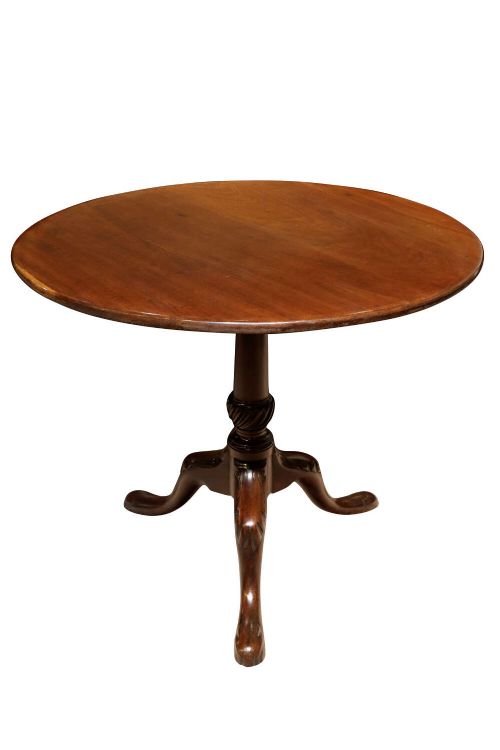
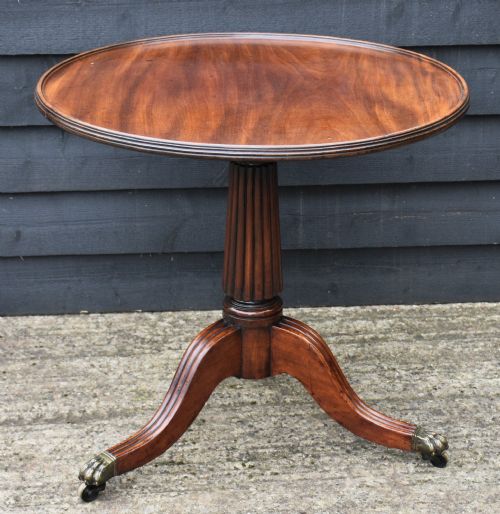
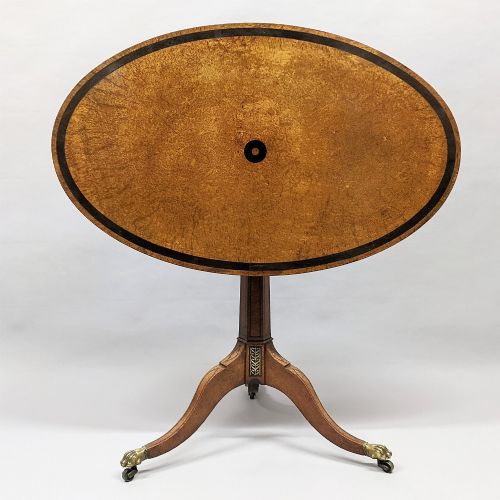
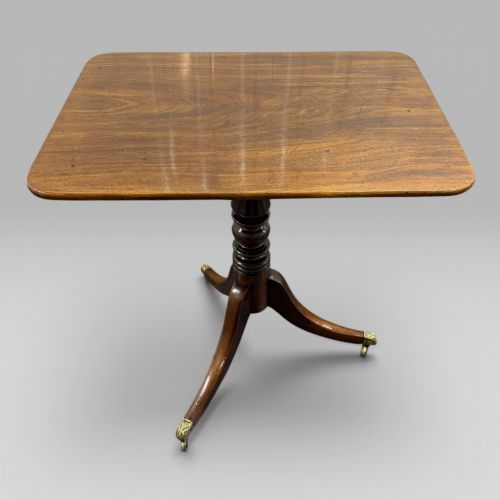
When you search for a regency snap top table, you encounter versatile circular or rectangular pieces designed to tilt vertically on a central column. These tables serve as occasional, breakfast, dining, or wine tables depending on their proportions and date from the Georgian, Regency, and William IV periods. Mahogany dominates the selection, frequently appearing alongside rosewood, amboyna, elm, and birch.
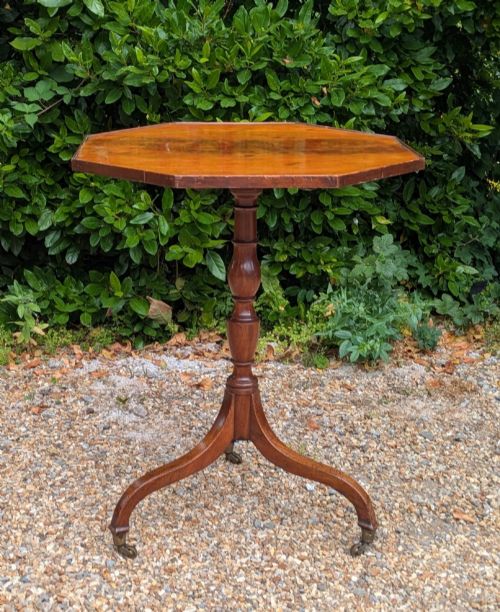
The format ranges from small tripod wine tables to larger pedestal breakfast and loo tables fitted with brass castors. Examples span the late 18th century through the 19th century, including later Regency revival pieces. They combine utility with decorative presence, functioning equally well as central display surfaces or dining furniture.
How they were made
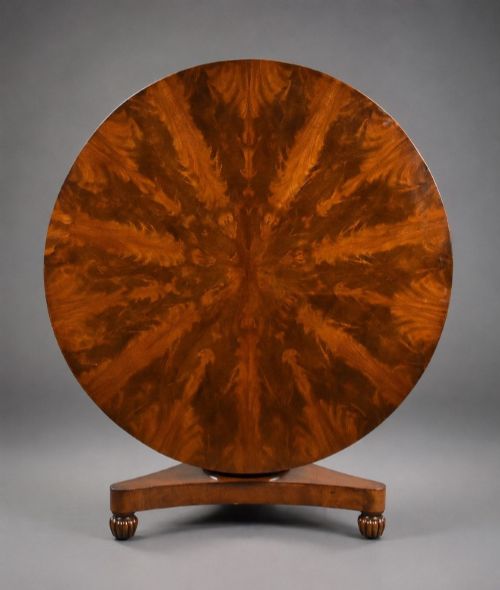
Cabinetmakers constructed these tables using solid timbers and decorative veneers such as flame mahogany, burr wood, satinwood, and amboyna. Tops feature pivoting mechanisms supported by turned pedestals, often resting on splayed tripod legs fitted with brass castors.
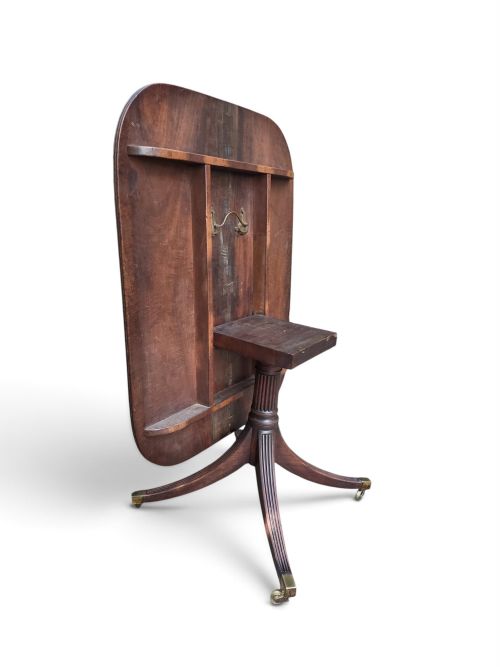
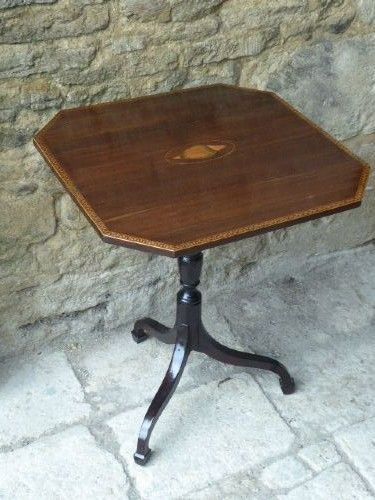
Inlay work utilising ebony and brass adds refined linear detail to the polished timber surfaces. The tilt action relies on a catch mechanism that secures the top horizontally when dropped into use.
Listings feature mahogany, rosewood, amboyna, and elm across Georgian, Regency, and Victorian periods.
What varies in quality
Quality rests upon the choice of timber figure, the crispness of the pedestal turnings, and the integrity of the pivoting mechanism. Higher grade examples display rich flame mahogany or exotic veneers matched with substantial brass hardware and stable tripod bases.
Proportion and balance dictate the success of the design, ensuring the table remains steady when loaded and drops smoothly into its vertical position.
The Regency Snap Top Table Glossary
- Snap-top
- A table top fitted with a catch and hinge allowing it to tilt upright when not in use. This clever mechanism enables the table to store flat against a wall.
- Tilt-top
- An alternative term for a snap-top table where the surface pivots on the central column. It shares the same space-saving vertical storage function.
- Tripod table
- A table supported by three splayed legs branching from a central pillar. This configuration ensures stability on uneven floors.
- Loo table
- A large round centre or dining table designed for card games like loo. These tables frequently feature tilt mechanisms.
- Flame mahogany
- A veneer cut from the fork of the mahogany tree to create a distinctive flickering flame pattern. Cabinetmakers reserved this timber for prominent surfaces.
Regency Snap Top Table: Frequently Asked Questions
How do I use a snap top table?
Release the brass or wooden catch beneath the surface to pivot the top into a vertical position for storage against a wall. Drop the surface back to the horizontal position and secure the latch when you need a functional table.
Their compact footprint makes them ideal for hallways, sitting rooms, or dining spaces where furniture needs to move easily.
What is the difference between a breakfast table and a wine table?
Breakfast tables provide a larger surface area supported by a substantial pedestal, often featuring a circular or rectangular top designed for dining. Wine tables are significantly smaller tripod pieces intended to hold glasses or lamps beside seating.
Both variants utilise the same tilting action but serve entirely different functions within a room.
Are these tables sturdy?
The three or four splayed legs provide a wide and stable base despite the central column design. Original brass castors allow the heavier breakfast and loo tables to roll smoothly across floors.
The catch mechanism locks the top firmly in place during use to prevent wobbling.
How do I identify the period?
Examine the timber, leg styling, and secondary woods to determine age, noting that Georgian examples tend toward restrained elegance while Regency and William IV pieces incorporate bolder pedestals. Brass inlay and amboyna point toward the refined taste of the early nineteenth century.
Later Victorian revival pieces often display heavier proportions and machine-cut construction details.