
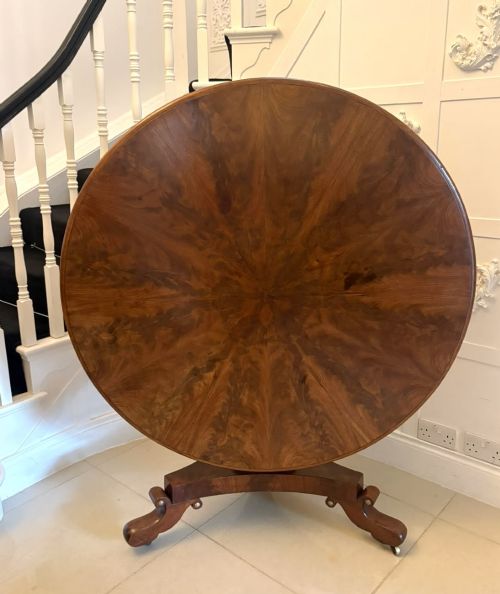
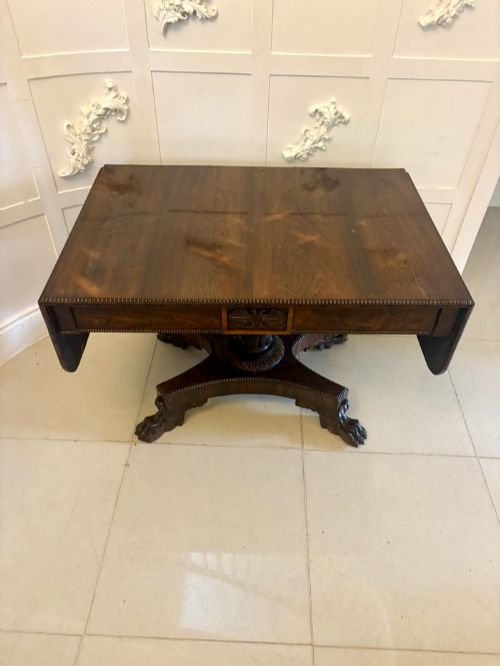
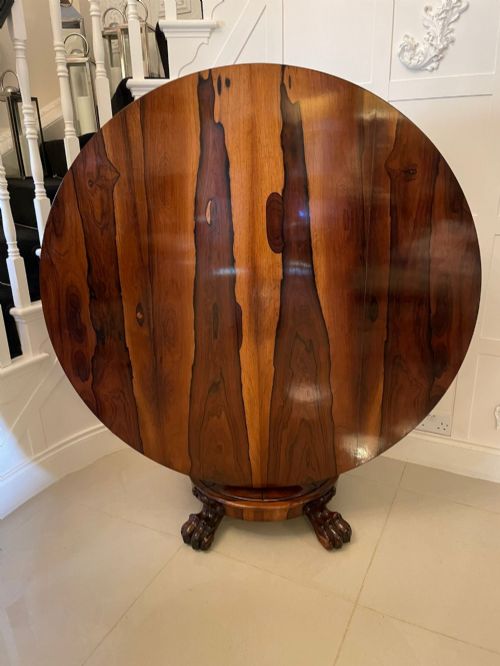


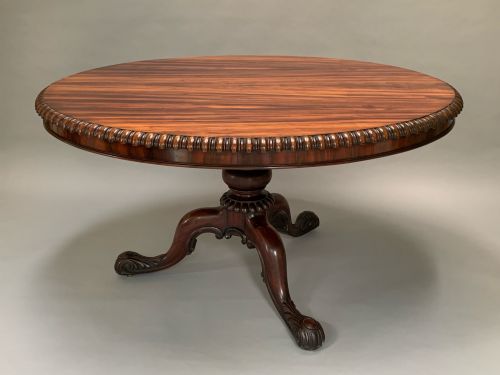
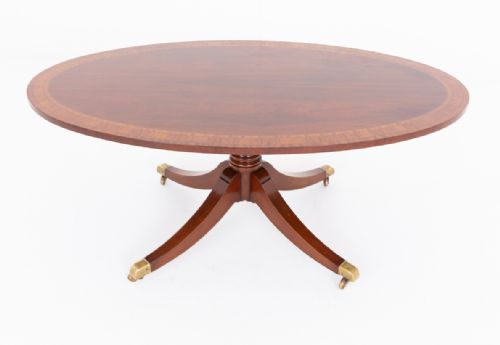
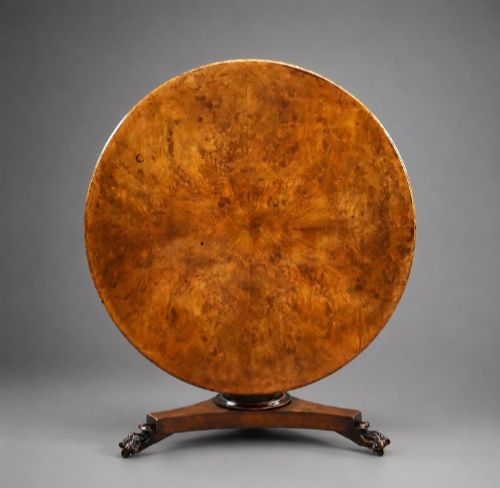
Regency Pedestal Centre Table
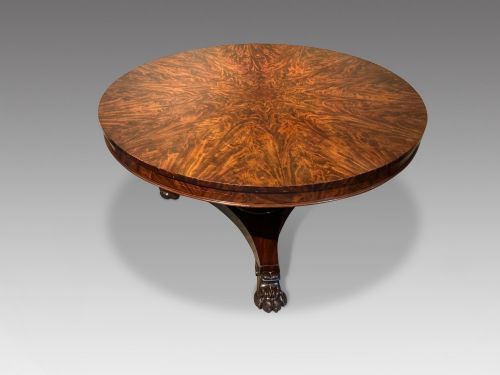
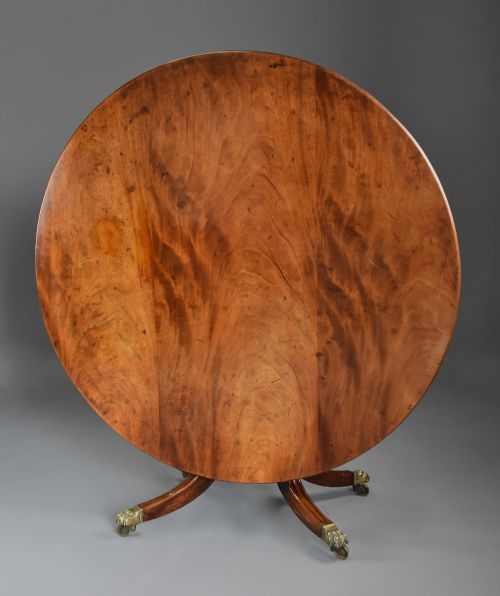
A regency pedestal centre table stands freestanding in a room, offering grand proportion and rich timber figure.
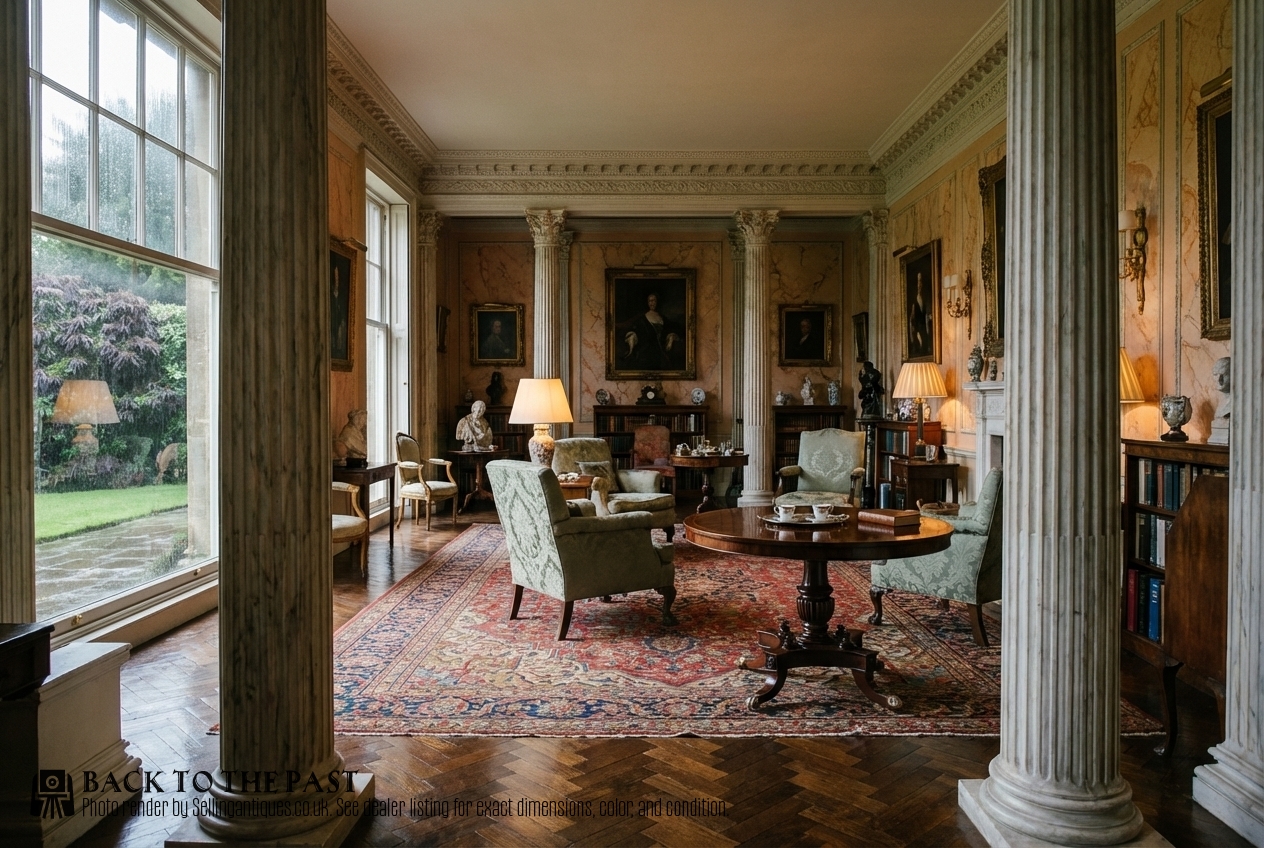
Regency Pedestal Centre Table
When you search for a regency pedestal centre table, you examine freestanding pieces designed to occupy the middle of a room rather than sit against a wall. The listings here present circular dining tables, breakfast tables, and library tables, alongside later revivals from the Victorian period and the early twentieth century.
Mahogany and rosewood dominate the material record, frequently constructed with circular tilt-tops, triform bases, or central columns. Alongside standard forms appear occasional tables, sofa tables, and drum tables, spanning origins from Regency workshops to Scandinavian and Irish makers.
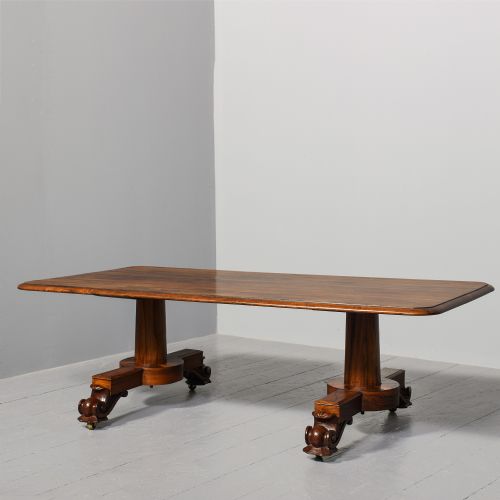
The heavier presence of William IV and nineteenth-century examples sits alongside earlier George III pieces and later revivals in satinwood, oak, and burr elm. Buyers encounter both utilitarian writing tables and highly decorative pedestal pieces featuring brass inlay or marble tops.
How they were made
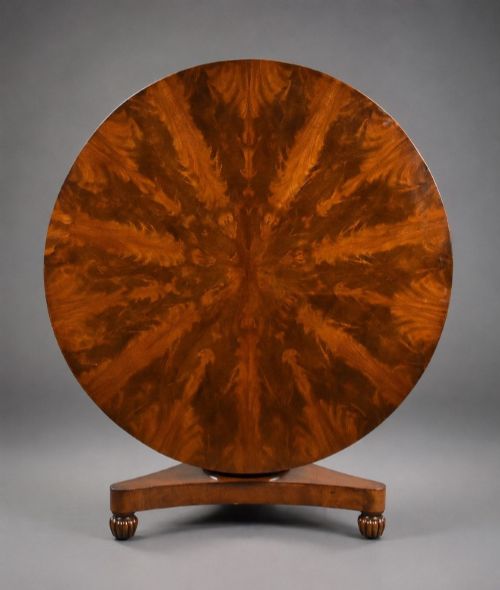
Cabinet makers utilised dense native and exotic hardwoods, applying flame mahogany and rosewood veneer over secondary timbers to create striking surface figures. Segmented tops and tilt mechanisms required precise joinery to ensure the circular boards remained stable.
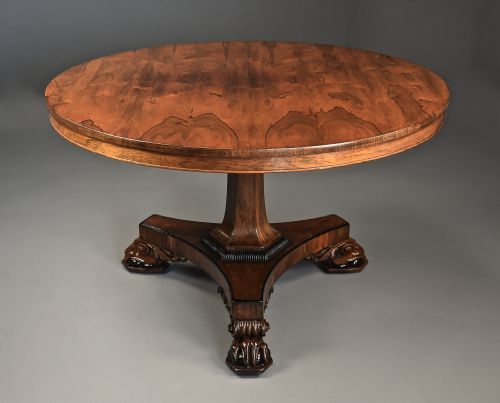
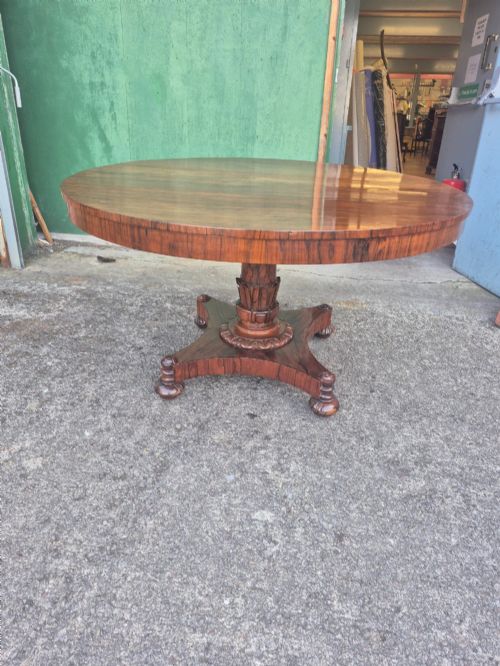
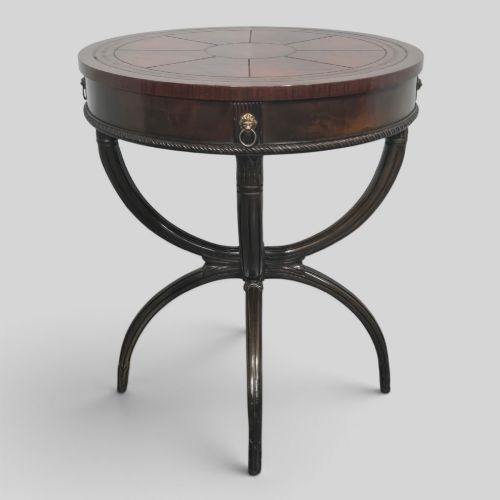
Brass inlay, amboyna, and ebony banding provide ornamental contrast on select surfaces, while pedestal bases often rest on carved triform supports or claw feet. Leather inserts appear on library and writing tables, bordered with gilt tooling.
Regency Pedestal Centre Table Retail Price Guide 2026
Typical asking prices for regency pedestal centre table among the pieces listed under this phrase on Sellingantiques today, from the lower quarter to the upper quarter. They describe what is for sale here now, not the wider market.
Listings span the nineteenth century, Victorian era, and nineteen-twenties, featuring mahogany, rosewood, oak, and satinwood.
What varies in quality
The selection of timber grain defines the visual weight of the piece, with matched flame mahogany and figured rosewood sitting at the upper end of the scale. Subtleties in pedestal carving and the crispness of brass inlay distinguish standard workshop production from finer cabinet work.
Structural integrity of the central column and the tightness of the tilt mechanism govern day-to-day utility. Faded patination developed over centuries adds depth to the wood, whereas unsympathetic repairs diminish the finish.
Gillows·Williams and Gibton·Peters of Genoa
The Regency Pedestal Centre Table Glossary
- Tilt-top
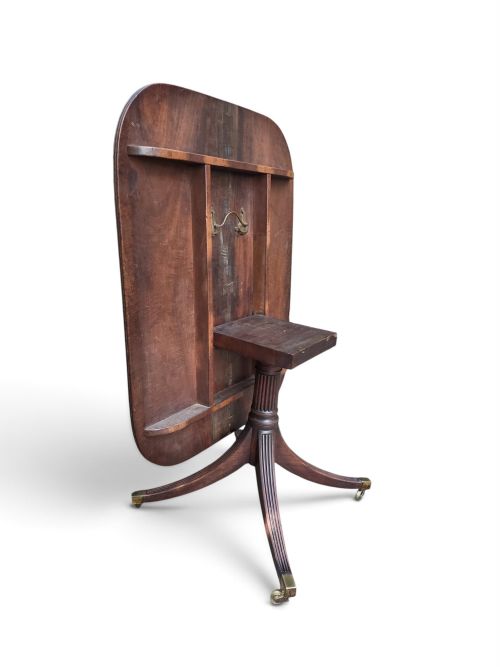
- A tabletop hinged to the pedestal column so it can be folded vertically when not in use. This mechanism saved floor space in period drawing rooms.
- Triform base
- A three-sided pedestal support resting on feet. It provides stable floor contact for heavy circular tables.
- Drum table
- A circular library table with a deep frieze containing drawers. The top is frequently lined with leather.
- Patina
- The surface sheen and colour acquired by wood over long periods of handling and exposure. It indicates age and depth of finish.
Regency Pedestal Centre Table: Frequently Asked Questions
What is a centre table?
A centre table is finished on all sides to stand freely in the middle of a room rather than against a wall.
These pieces served various functions, acting as dining surfaces, library desks, or decorative display points.
How do I use a tilt-top table?
The tilt mechanism allows the circular top to lock flat for use or fold upright against the pedestal base.
This original feature enabled easy storage and movement within historic domestic interiors.
What woods were used?
Cabinet makers relied heavily on richly figured mahogany and dark rosewood for primary surfaces.
Other examples incorporate oak, satinwood, amboyna, and burr walnut to achieve varied visual textures.
How do I spot a revival piece?
Revival pieces date from later periods such as the late nineteenth century or the nineteen-twenties while copying earlier Regency or Sheraton forms.
Examination of the secondary timbers, construction joints, and internal hardware helps clarify the true age of the table.