
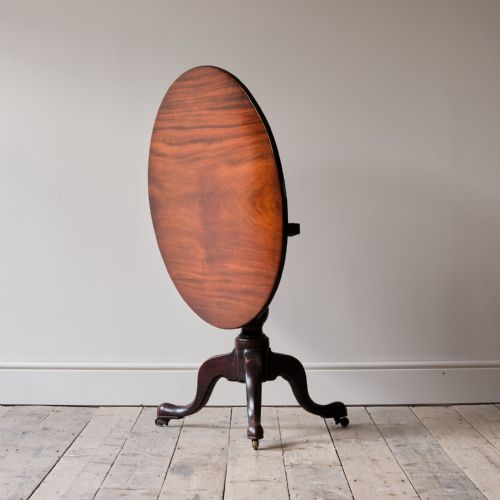
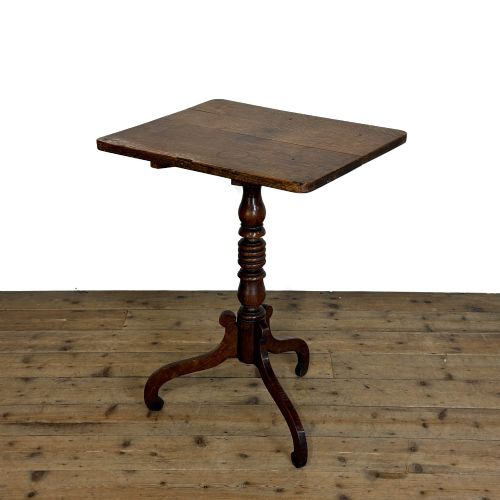
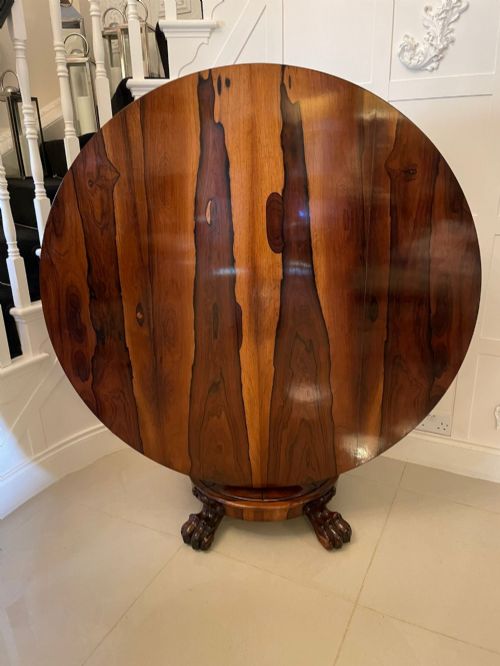
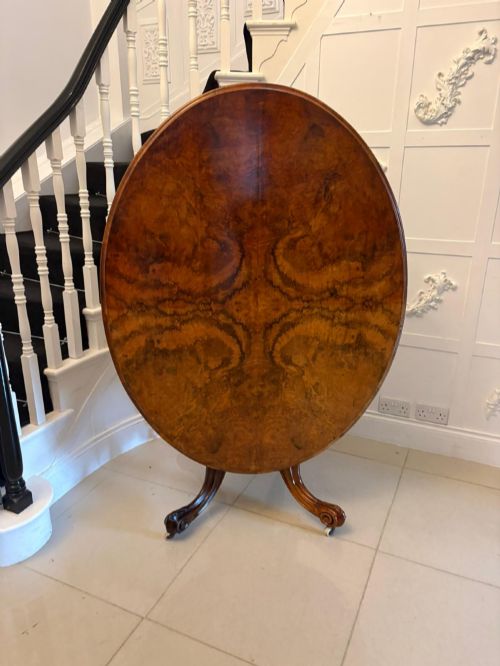


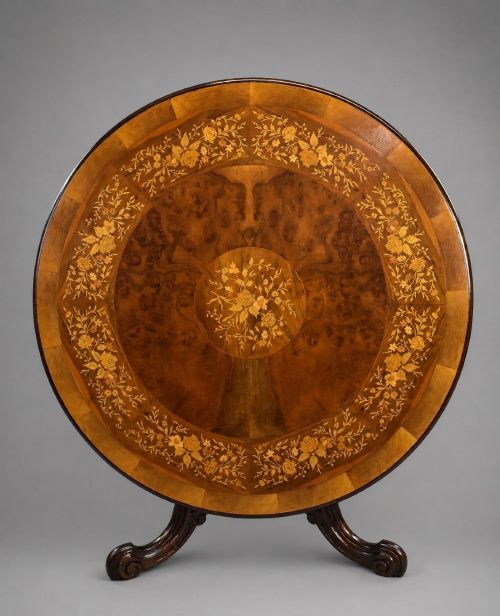
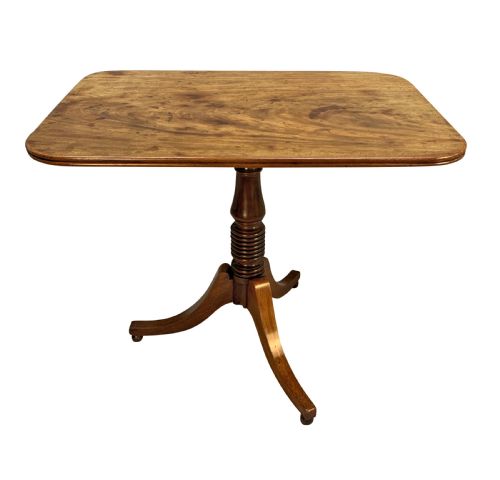
Pedestal Tilt Top Table
These pedestal tilt top tables combine a pivoting surface with a central pillar, offering practical space-saving versatility for both dining and display.
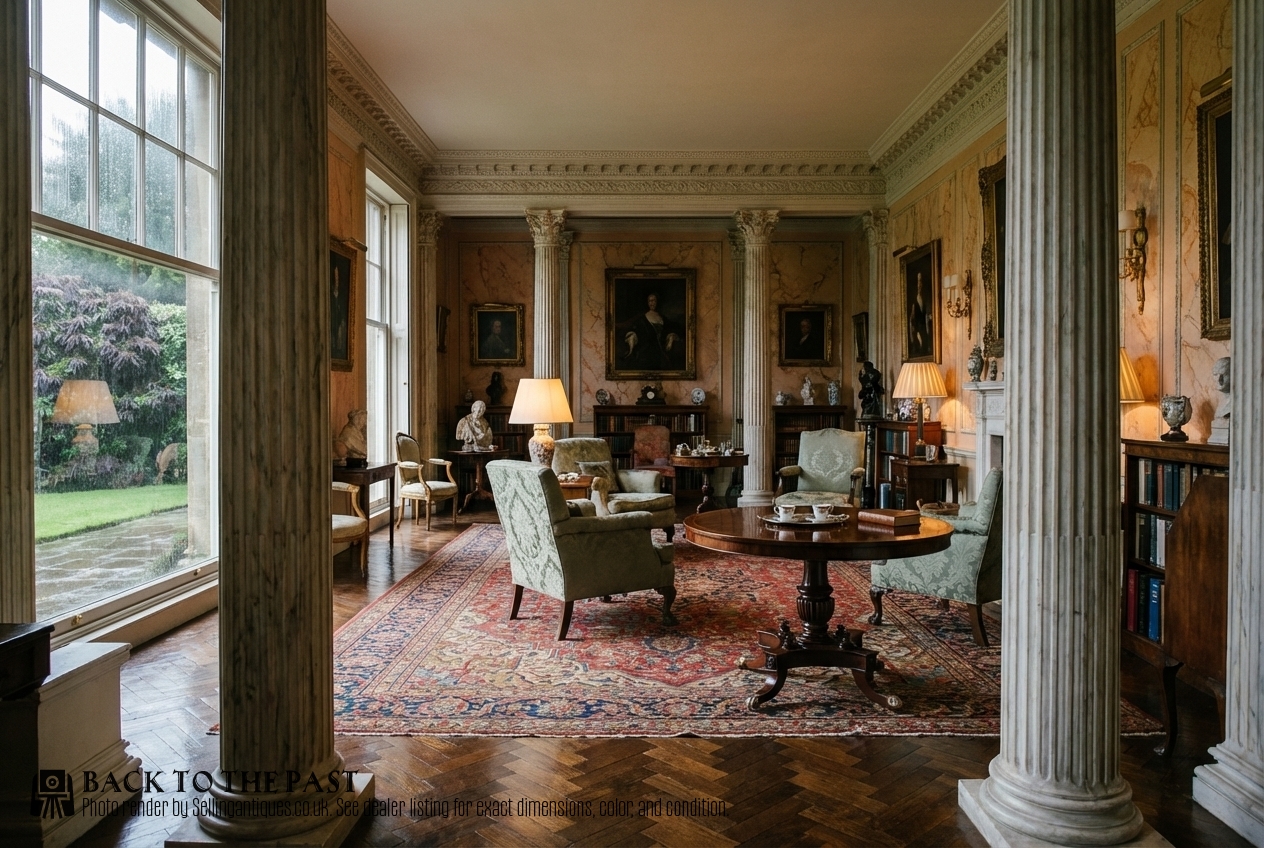
Understanding pedestal tilt top table forms
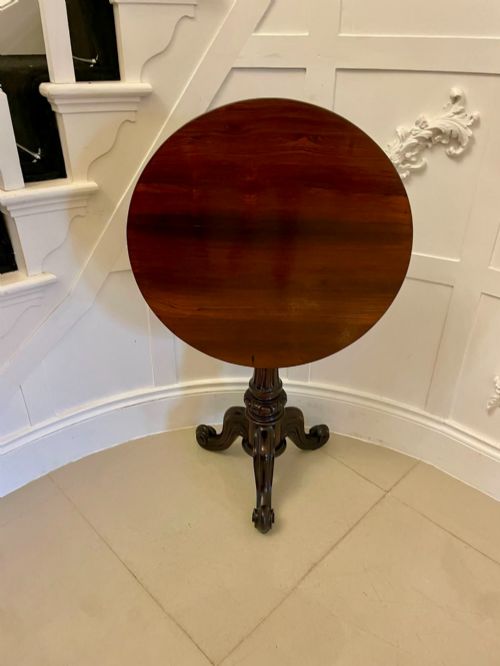
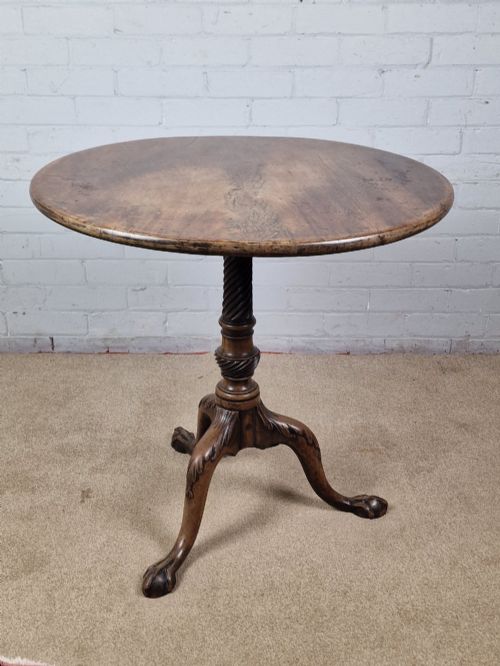
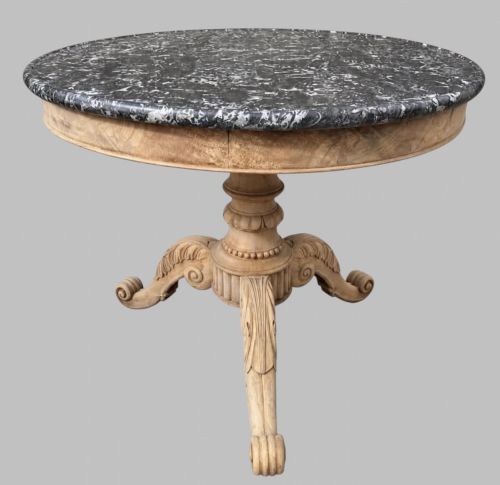
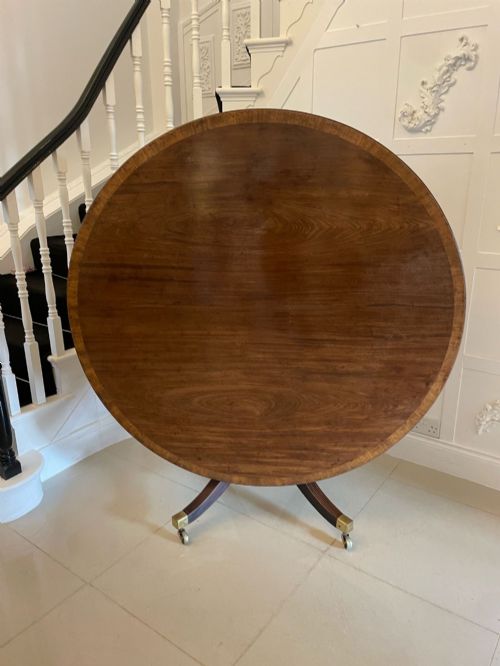
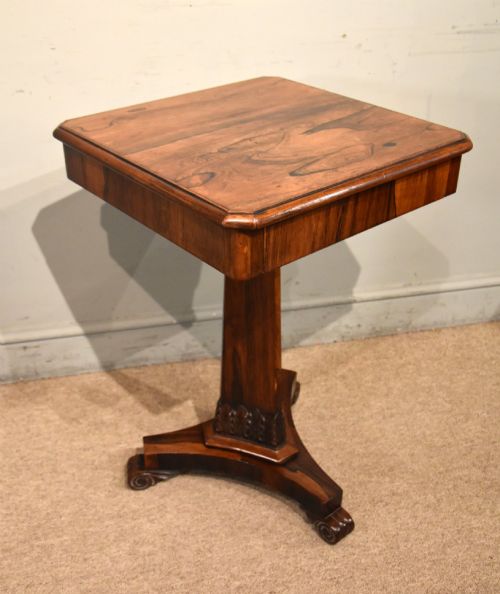
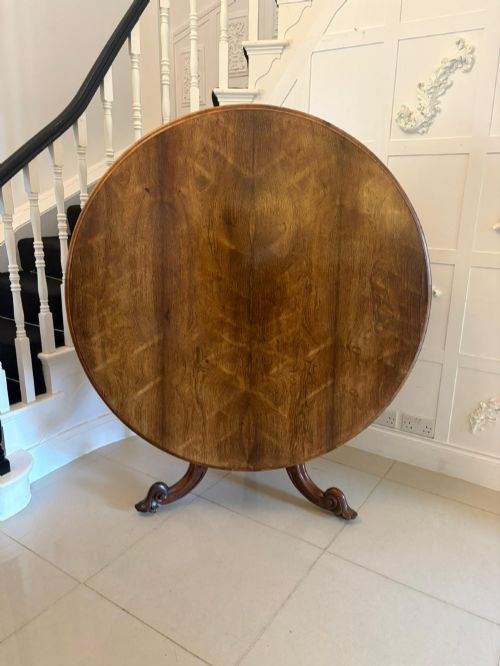
A pedestal tilt top table serves multiple functions around the home, appearing across the Georgian, Victorian, and Regency eras in various timber forms. The mechanism allows the top to fold flat when not in use, making these pieces straightforward to store against a wall.
Most examples encountered here are circular or occasional tables, spanning formats such as wine tables, breakfast tables, and larger centre tables. The evidence shows domestic uses ranging from supper and dining to parlour drinking.
Origins vary from English country houses to Swedish workshops, with woods like mahogany, oak, and rosewood appearing frequently across the centuries.
Materials and construction methods
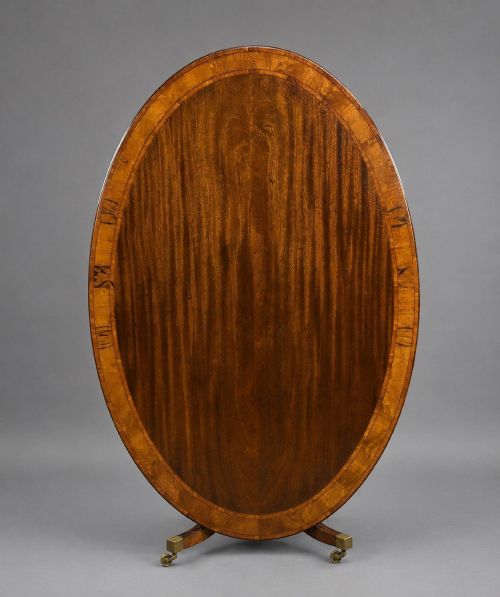
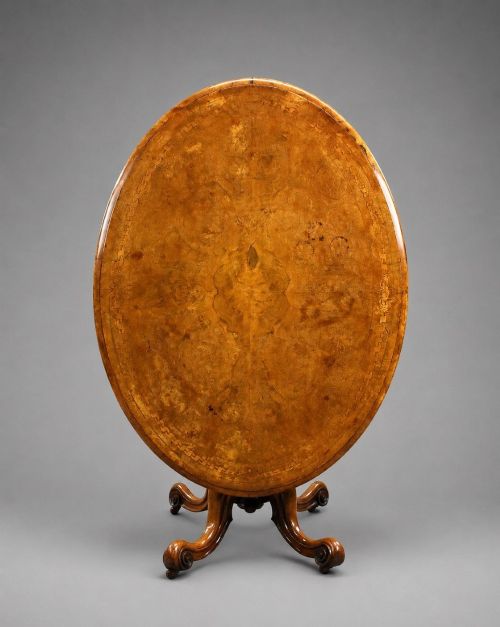
Cabinet makers utilised dense hardwoods such as mahogany, rosewood, walnut, and oak, often selecting figured timber or adding crossbanding for decorative effect. Some pieces incorporate brass castors or specific structural elements like bird-cage mechanisms.
Construction relies on a central turned or carved pillar rising from a tripod, quadruped, or platform base to support the pivoting top.
Retail Price Guide 2026
Typical UK retail prices for pedestal tilt top table, calculated from the Sellingantiques database of over a million retail prices indexed since 2003. This retail price guide relies exclusively on Sellingantiques data; no external sources or auction records are used, so the figures do not describe the wider market.
Early owners could fold the top vertical and slide the table neatly out of sight, proving that open-plan living was already well sorted centuries ago.
Distinguishing quality in construction
The degree of refinement in the timber figuring and the complexity of the pedestal carving distinguish standard examples from finer commissions. Cabinet-making finesse shows in the execution of the tilt mechanism and the stability of the central column.
Makers known from historical records, such as Gillows or Wilkinson and Sons, indicate workshop execution of higher status.
Gillows·Wilkinson and Sons
The Pedestal Tilt Top Table Glossary
- Tilt top
- A tabletop mounted on a pivot mechanism that allows the surface to rotate into a vertical position. This design saved space in period rooms when the furniture was not in use.
- Bird cage
- A timber framework beneath the tabletop that permits both rotation and tilting. It represents a more complex form of joinery found on finer examples.
- Crossbanding
- A border of veneer laid around the edge of a tabletop with the grain running perpendicular to the centre. This technique frames the primary wood.
- Tripod base
- A support structure featuring three legs radiating from a central pillar. It provides balanced footing on uneven historical floors.
Frequently Asked Questions
How do I operate the tilt mechanism safely?
Release the brass catch or wooden wedge underneath the top to allow the surface to pivot smoothly on its axis. Support the weight of the timber with one hand while adjusting the position.
Ensure the mechanism locks securely back into the horizontal position before placing any items on the surface.
Where were these tables used in a period home?
These pieces served flexibly in drawing rooms, libraries, and parlours for tea, dining, or reading. Their ability to fold flat meant servants could clear rooms rapidly.
By the nineteenth century, larger versions functioned as breakfast or centre tables in main living spaces.
What woods were commonly used?
Mahogany dominates the surviving record, alongside rosewood, walnut, and oak. Cabinet makers also utilised alder root and harewood for specific regional or decorative commissions.
Figured veneers and contrasting crossbanding frequently decorated the upper surfaces.
How do I tell a Georgian table from a Victorian one?
Georgian examples often display lighter proportions with tripod bases and simpler mahogany or oak construction. Victorian pieces tend to be heavier, incorporating rosewood or walnut with more elaborate carved pedestals.
Castors and base configurations also shift from delicate splay legs towards robust platform or lion-paw designs over time.