

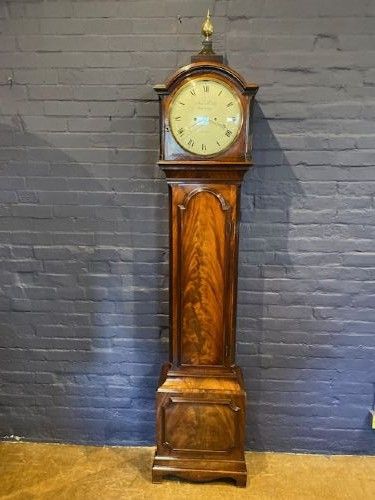
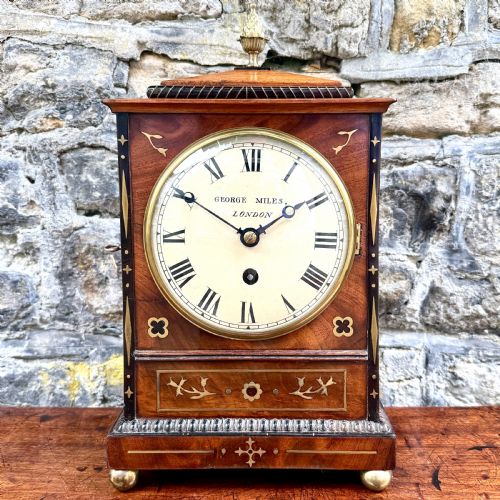
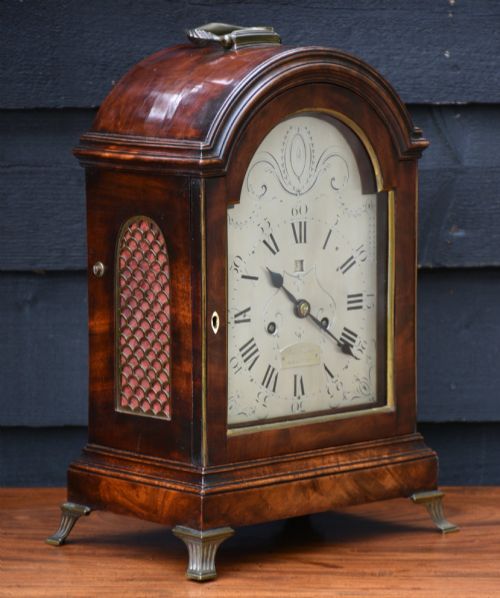
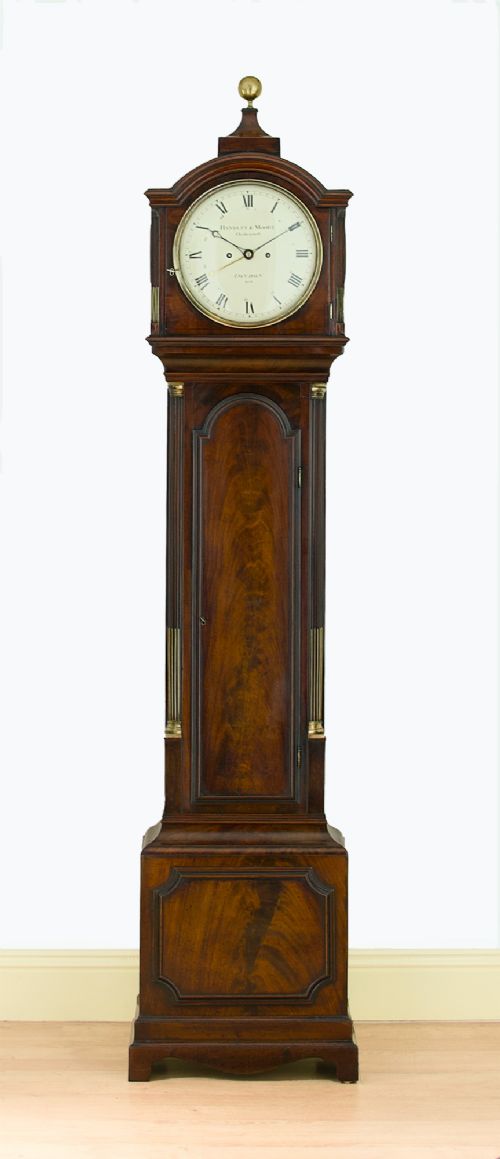
Regency Mahogany Clock
When you choose a regency mahogany clock, you invite precision engineering and rich cabinet timber into your room.
Regency Mahogany Clock
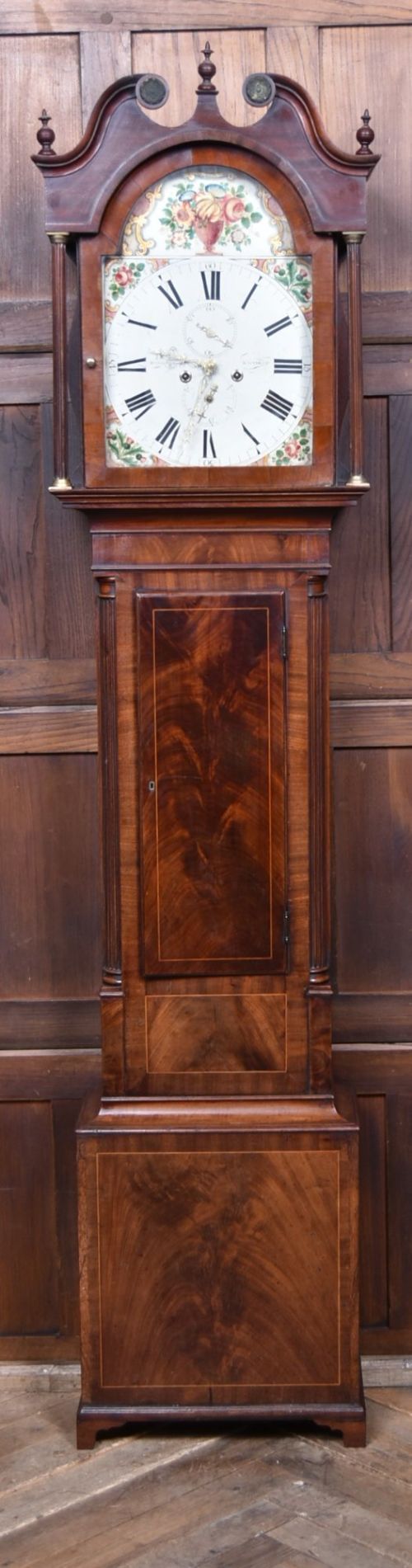
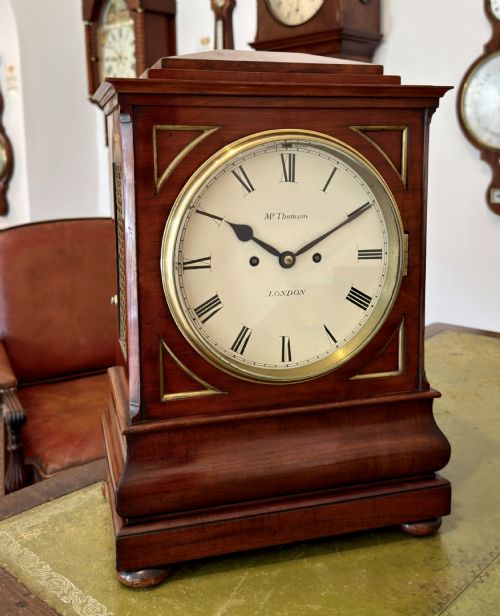
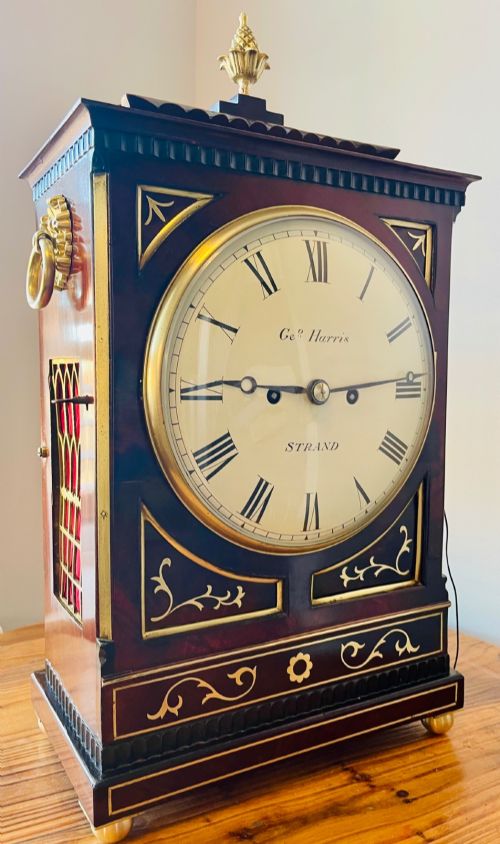
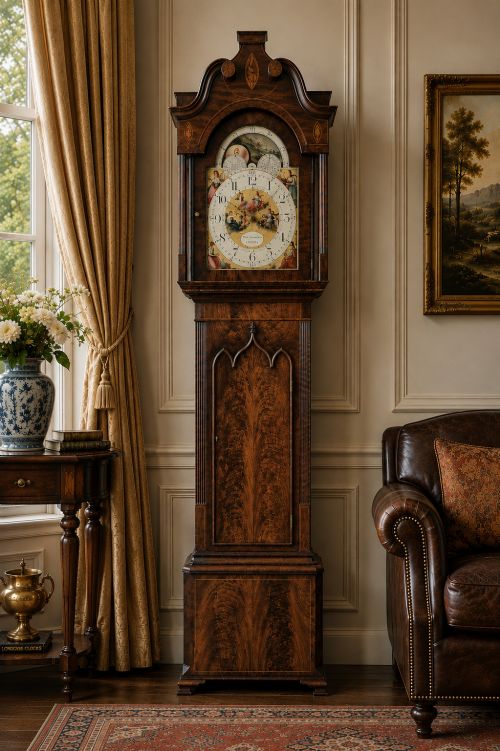
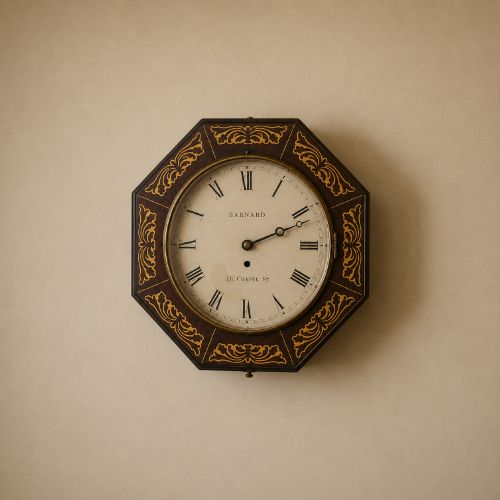
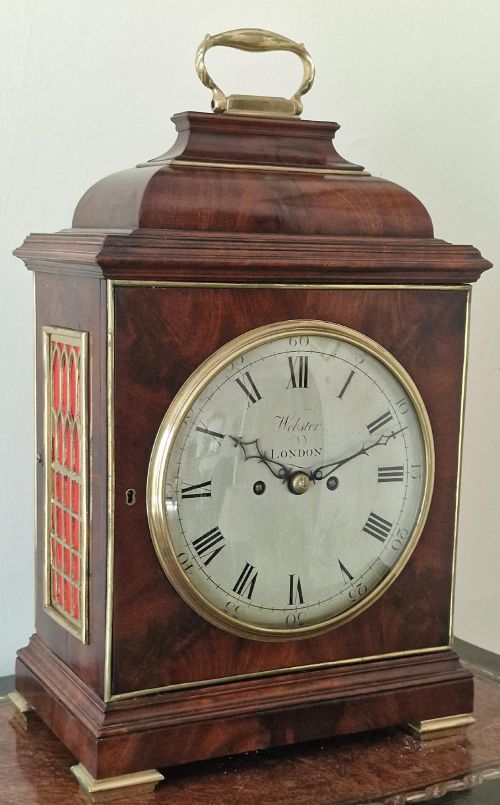
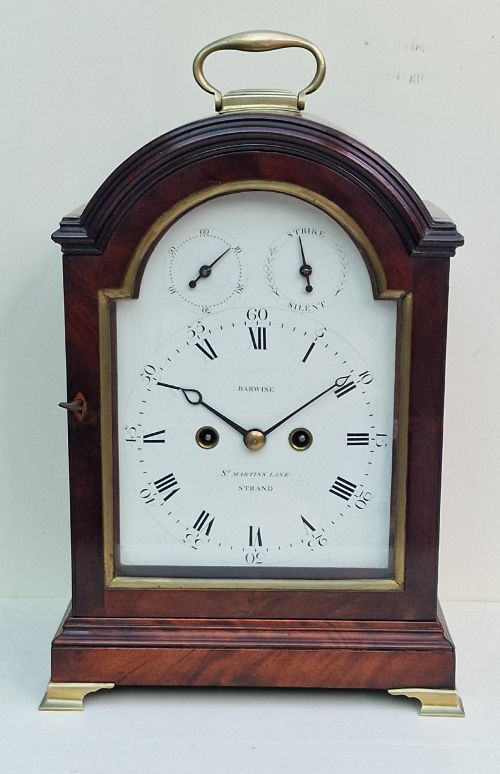
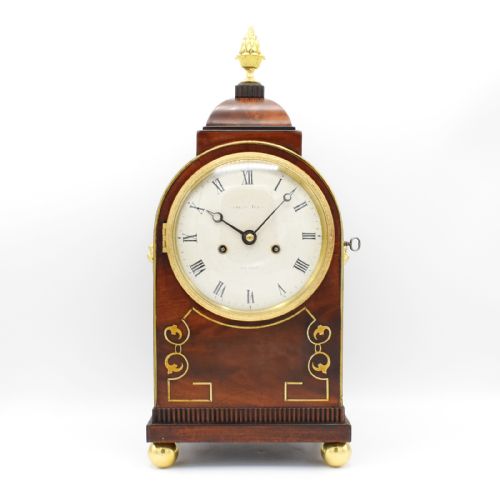
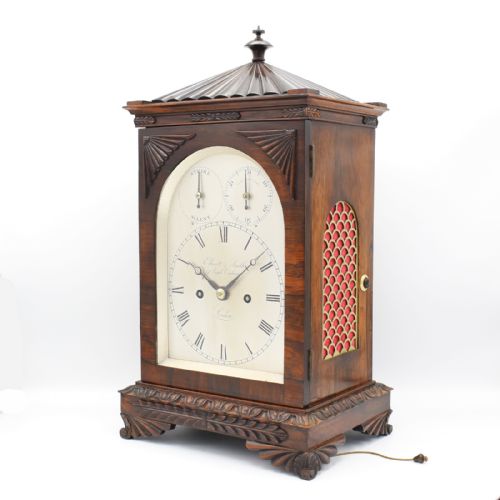
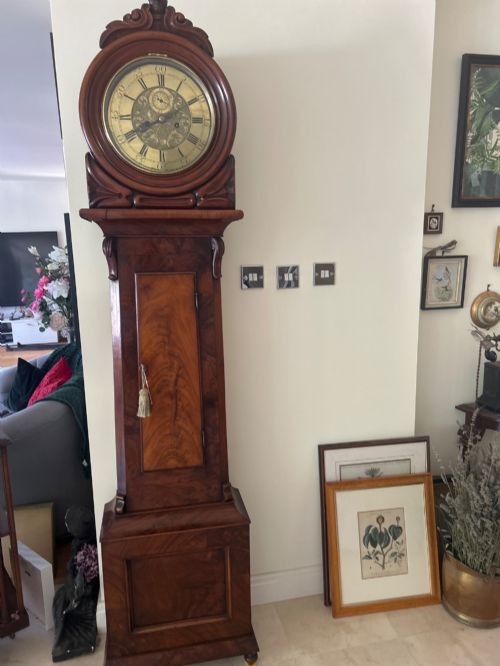
A regency mahogany clock brings together period timekeeping and dense, warm timber cabinets across several distinct domestic forms. Buyers searching for this phrase encounter wall clocks, mantel clocks, table clocks, bracket clocks, and tall grandfather or longcase clocks.
Most examples originate from London workshops or regional makers in Scotland and provincial English towns, spanning the Georgian, Regency, and early Victorian periods.
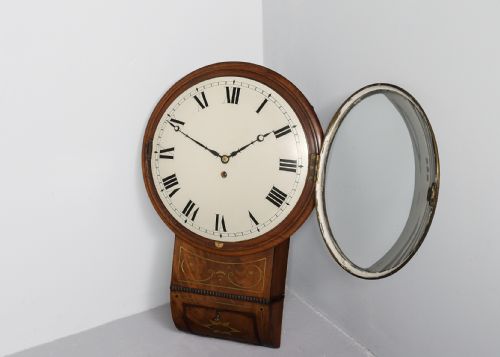
Mantel and bracket clocks designed for table or shelf placement appear frequently alongside drop-dial wall clocks featuring wooden or convex painted dials.
Materials and Construction
Cabinet makers utilised solid mahogany, often selecting figured or flame veneers for arched tops and dial surrounds, occasionally incorporating brass inlay, rosewood, or ebony banding.
Internal mechanisms rely on brass plates and gear trains, frequently driven by fusee movements powered by weighted lines or brass springs rather than standard hanging weights.
Regency Mahogany Clock Retail Price Guide 2026
Typical asking prices for regency mahogany clock among the pieces listed under this phrase on Sellingantiques today, from the lower quarter to the upper quarter. They describe what is for sale here now, not the wider market.
Some tall clocks include a moonphase dial to track lunar cycles alongside the hours.
Assessing Craftsmanship and Distinction
Quality rests in the architectural proportion of the mahogany case and the precision of the brass inlay, alongside the reputation of the dial signature.
London makers and noted Scottish horologists often produced movements with more complex striking trains, moonphases, or engraved backplates, elevating the piece beyond standard provincial timepieces.
James McCabe·Handley and Moore·Thwaites and Reed·Robert Molyneux·Desbois and Wheeler
The Regency Mahogany Clock Glossary
- Fusee
- A conical pulley used in spring-driven clocks to equalise the torque of the mainspring as it unwinds. This mechanism helps the clock maintain a consistent rate as power diminishes.
- Bracket Clock
- A portable clock originally designed to sit on a wall bracket or table surface. These pieces usually feature brass carrying handles and glazed side panels.
- Drop Dial
- A wall clock featuring a circular dial face above a short, glazed trunk or drop box. This design allows space for a swinging pendulum in a compact format.
- Silvered Metal
- A brass dial plate treated with a silver solution to create a matte, reflective finish for engraved numerals. It provides high contrast against dark cabinet timber.
- Grandfather Clock
- A tall floor-standing timekeeper also known as a longcase clock. The heavy weights and long pendulum hang protected inside the timber trunk.
Regency Mahogany Clock: Frequently Asked Questions
Where did people place bracket clocks?
Bracket clocks were designed for mobility between rooms, placed upon wooden wall brackets, tables, or mantelpieces.
Their brass carrying handles allowed owners to transport them safely throughout a large household.
How do fusee movements work?
A fusee movement uses a conical pulley connected to the mainspring via a fine chain or cord.
As the spring loses tension, the chain pulls higher up the cone's wider radius, maintaining steady power delivery to the gear train.
How do I identify a regional maker?
Makers inscribed their names and towns directly onto the painted or silvered metal dials, as well as the brass movement plates.
Signatures often reference provincial towns in Scotland or England alongside major London trade addresses.