





Regency Lacquered Furniture
Regency lacquered furniture brings sophisticated Chinoiserie ornament into the home through striking ebonised surfaces and gilt detail.
Regency Lacquered Furniture
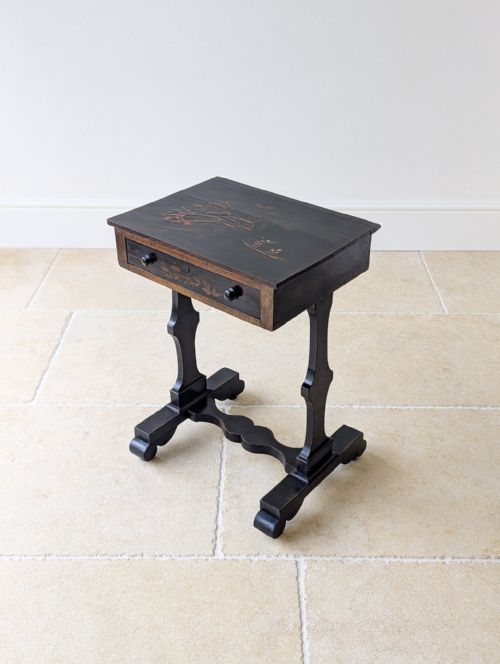
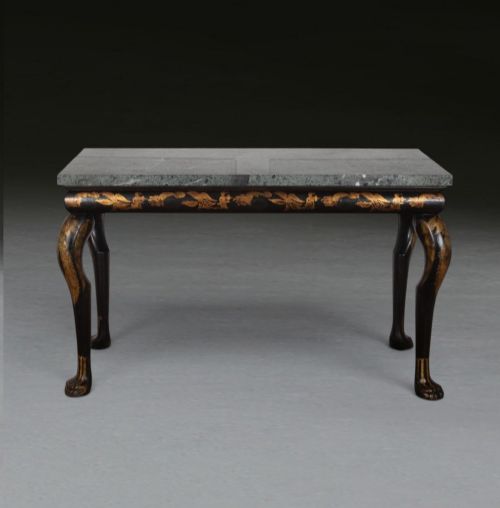
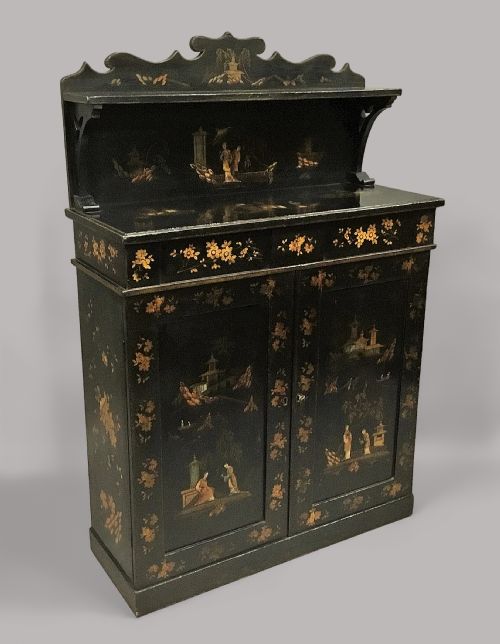
Regency lacquered furniture encompasses a distinctive group of tables, cabinets, and stands created during the Regency and nineteenth-century periods. These pieces frequently display Chinese Export influence and Chinoiserie decoration, merging classical British forms with oriental motifs. Buyers searching for regency lacquered furniture encounter sophisticated side cabinets, work tables, and console tables finished with intricate lacquer work.
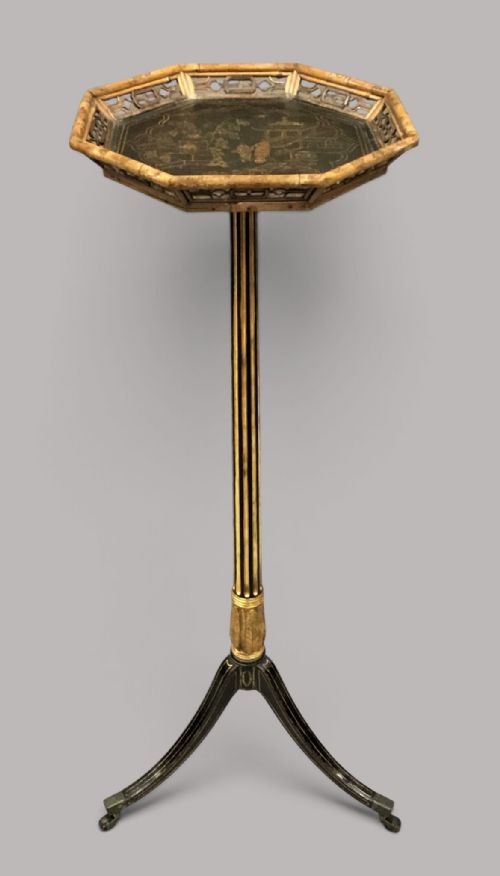
The selection on this page demonstrates the prominence of ebonised wood, lacquered wood, and detailed pen-work across various forms. Pieces range from nest of tables and chiffoniers to torchere stands and collectors cabinets on stand. Each item reflects the period fascination with oriental design translated through nineteenth-century British craftsmanship.
Materials and Construction
Maker construction relies heavily upon ebonised wood and lacquered surfaces as the primary structural and visual base. Artisans applied layers of lacquer, ink, and gold leaf to create deep dark finishes decorated with gilt figures and landscapes. Brass mounts and marble inserts occasionally supplement these wooden carcasses, particularly on console tables and side cabinets.
Pen-work technique appears on specialised pieces like work tables and collectors cabinets, using fine ink application to render elaborate architectural and figurative scenes. This meticulous surface work mimics imported oriental lacquer through patient European hand-drawn detail. Artisans balanced structural utility with decorative exterior skins across every form.
Regency Lacquered Furniture Retail Price Guide 2026
Typical asking prices for regency lacquered furniture among the pieces listed under this phrase on Sellingantiques today, from the lower quarter to the upper quarter. They describe what is for sale here now, not the wider market.
Listings span the Regency and Victorian periods, showcasing ebonised wood, brass, and gold leaf.
Assessing Quality and Execution
Quality in these pieces rests upon the precision of the surface decoration and the crispness of the Chinoiserie motifs. Finer examples display meticulous brushwork, consistent ebonised finishes, and well-preserved gold leaf that retains its luminosity. Lesser pieces show worn surface layers and simplified decoration with less attention to fine detail.
Structural integrity of the underlying timber and the stability of the lacquer skin dictate longevity. Superior cabinets and tables maintain tight joinery alongside detailed hardware like brass mounts and fitted interiors. The overall harmony between form and decorative ornament separates standard utility items from exceptional workshop output.
The Regency Lacquered Furniture Glossary
- Chinoiserie
- European interpretation and imitation of Chinese and East Asian artistic traditions, popular in furniture decoration. This style employs whimsical figures, pagodas, and landscapes rendered in gold and colour upon dark backgrounds.
- Ebonised
- Wood finished to resemble ebony through staining, painting, or chemical treatment. This dark surface provided the ideal contrasting background for gilt and lacquered ornament.
- Pen-work
- A decorative technique using fine ink lines on wood to create intricate miniature drawings. It often imitates oriental lacquer work through meticulous monochrome illustration.
- Japanned
- European imitation of Japanese and East Asian lacquer work using layered varnishes and metallic powders. Craftsmen baked and polished these coats to achieve a hard glossy finish.
- Torchere
- A tall decorative stand designed to support a candlestick or light fixture. These slender stands often feature prominent lacquered and Chinoiserie decoration.
Regency Lacquered Furniture: Frequently Asked Questions
What defines regency lacquered furniture?
These pieces combine classical British furniture forms from the early nineteenth century with oriental decoration. They utilise ebonised wood, lacquer, and gilt motifs to achieve a distinctive visual impact.
Craftsmen drew inspiration from Chinese Export goods and the exotic aesthetic of Brighton Pavilion to create cabinets, tables, and stands.
How do I care for lacquer surfaces?
Lacquered surfaces require gentle dusting with a soft, dry cloth to prevent scratching the delicate finish. Avoid exposure to direct sunlight and moisture, which can damage the varnish layers over time.
Maintaining stable room humidity protects the underlying timber from warping and keeps the decorative surface secure.
Where were these pieces used originally?
Wealthy homeowners placed these decorative tables and cabinets in reception rooms, drawing rooms, and private studies. They served both functional purposes, such as needlework or display, and aesthetic roles as conversation pieces.
Their striking dark finishes and gilded details were intended to catch candlelight and impress visitors.
How do pen-work and lacquer differ?
Lacquer involves building up layered varnishes and resin finishes, often incorporating gold leaf and raised details. Pen-work relies on fine ink drawing directly onto a prepared wooden surface to create intricate monochrome or tinted scenes.
Both techniques were employed to achieve oriental decorative effects during the Regency period.