3,209  PAGES BROWSED TODAY PAGES TODAY 0 ANTIQUES UPLOADED TODAYNEW ARRIVALS
LATEST STOCK
Sort Order
Items Per Page
Browse Categories
Sort order
Relevant Links
Items per page
ID #SA1121255
FOR SALE
£14,750
Email
Save
Important 19th Century Regency Period Japanned Side Cabinet
Lee Wright Antiques & Interiors Ltd
for sale €17,258     $18,733
£14,750
Lee Wright Antiques & Interiors Ltd

Lee Wright Antiques & Interiors Ltd

Sellingantiques Verified Since Nov 2018
View Dealers Stock Page
Id #SA1121255
PDF SHARE
SAVE

Important 19th Century Regency Period Japanned Side Cabinet

19th century
Description

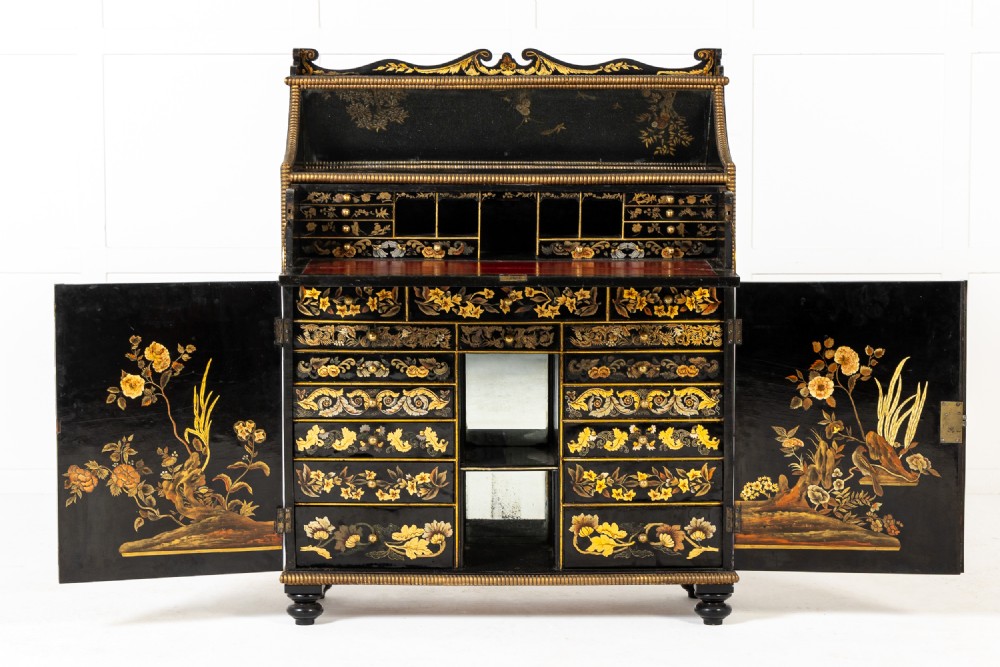
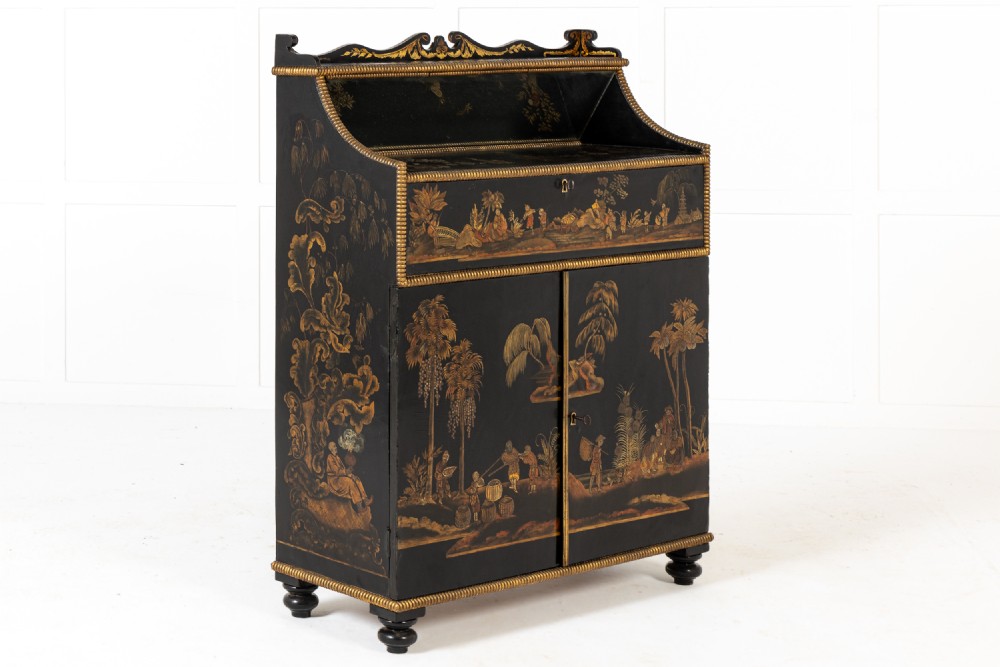
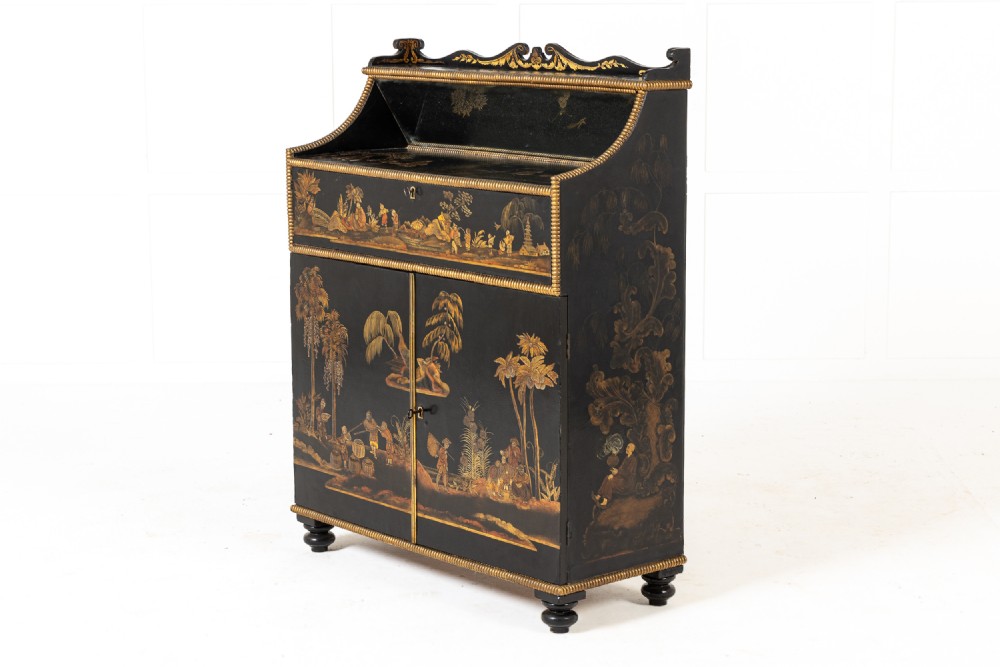
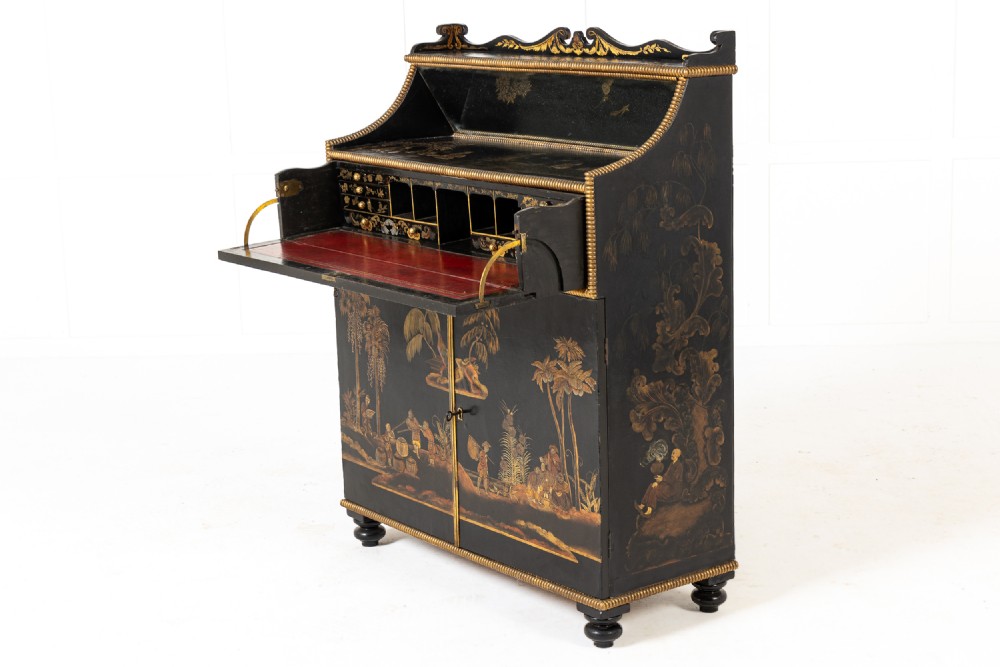
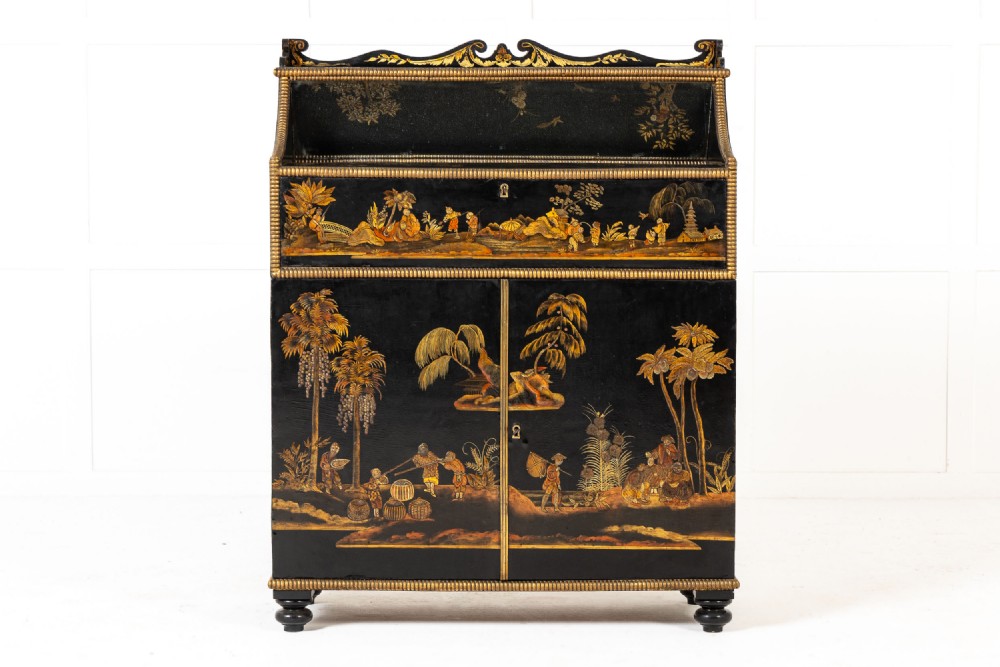
A Very Fine and Important Regency Period Japanned Papier Mache Secretaire Side Cabinet or Chiffonier.

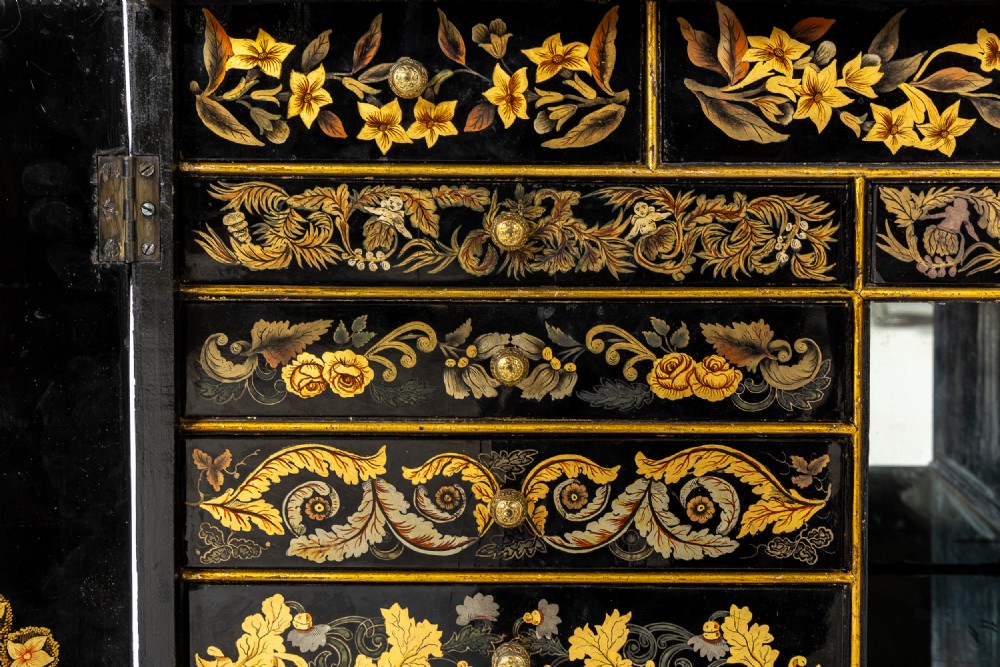
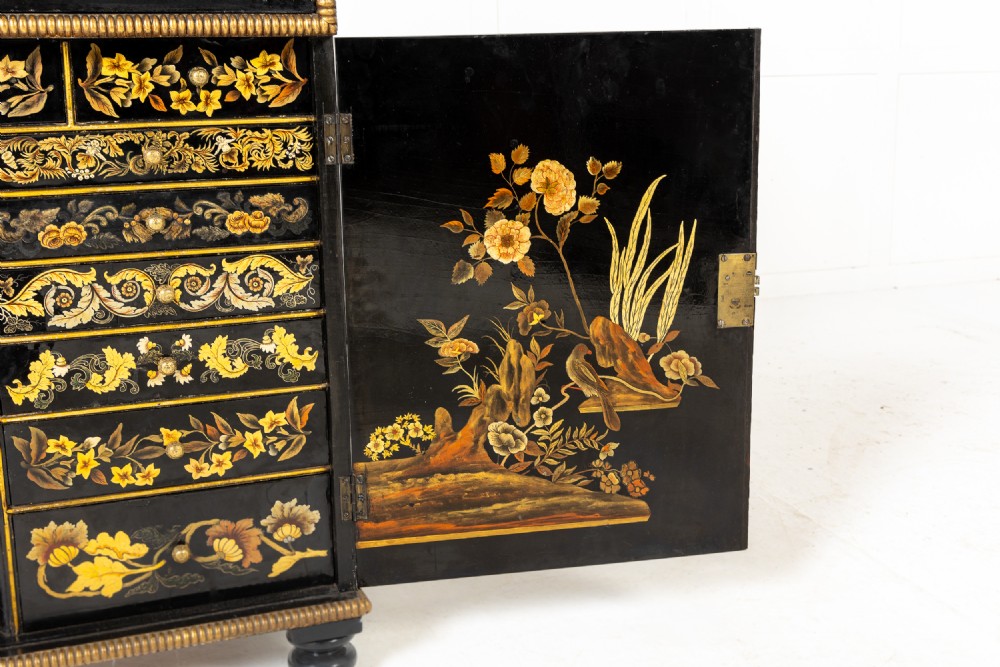
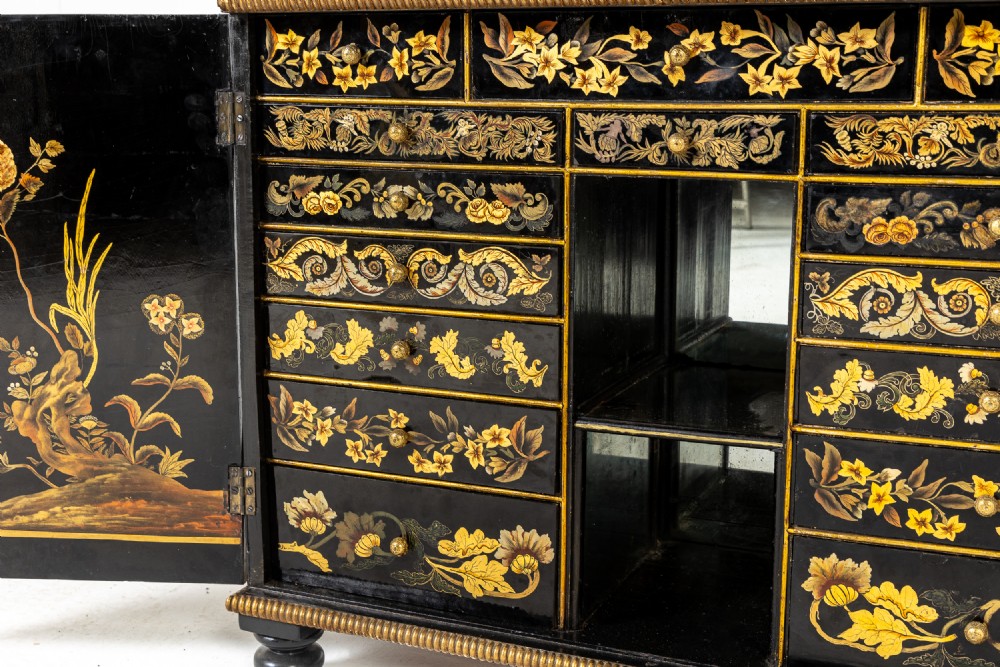
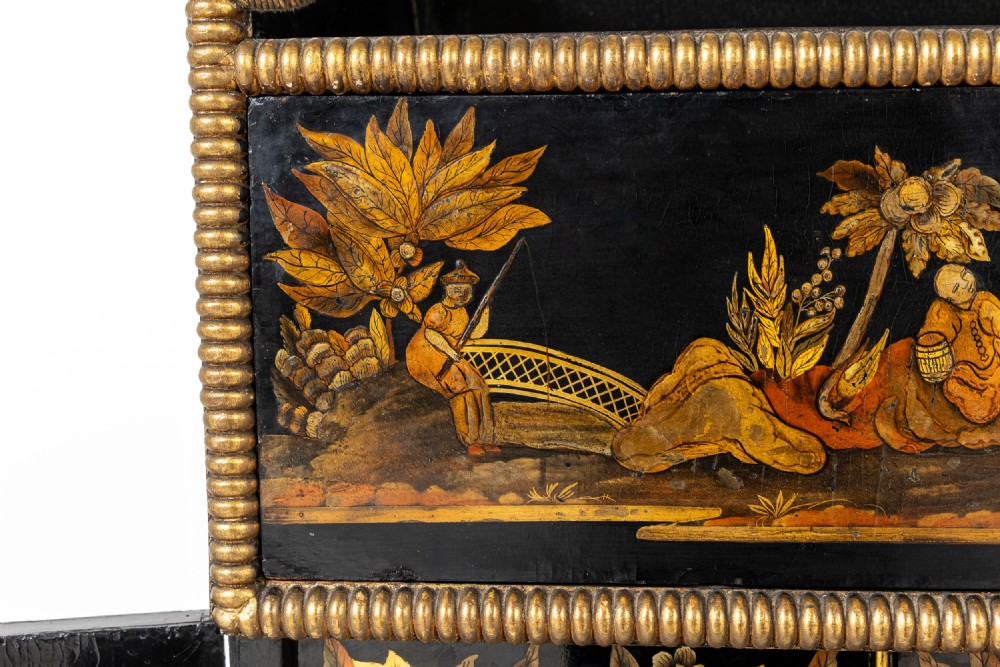
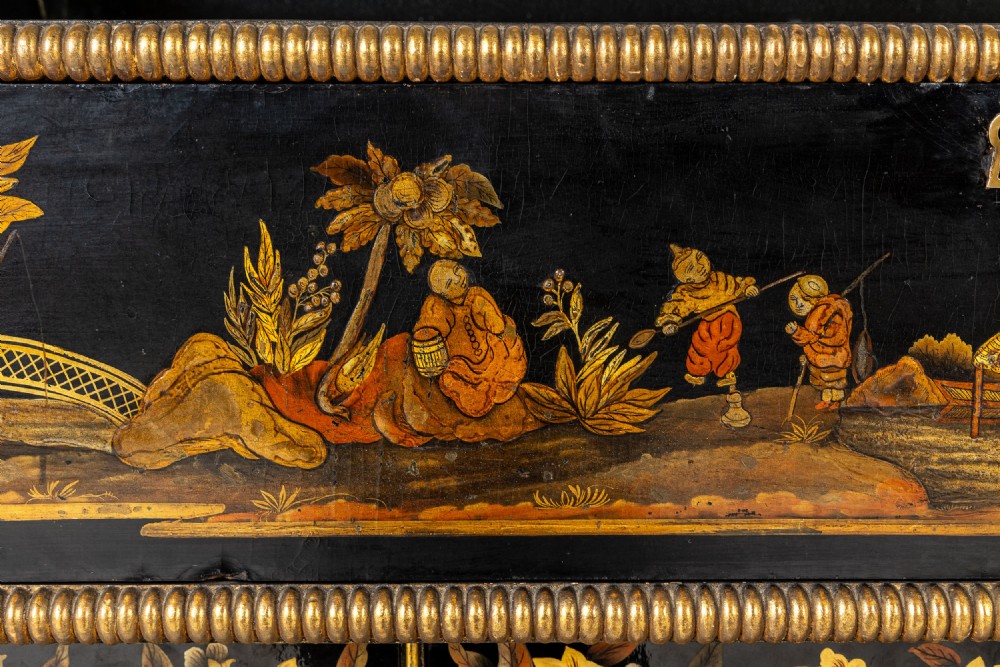
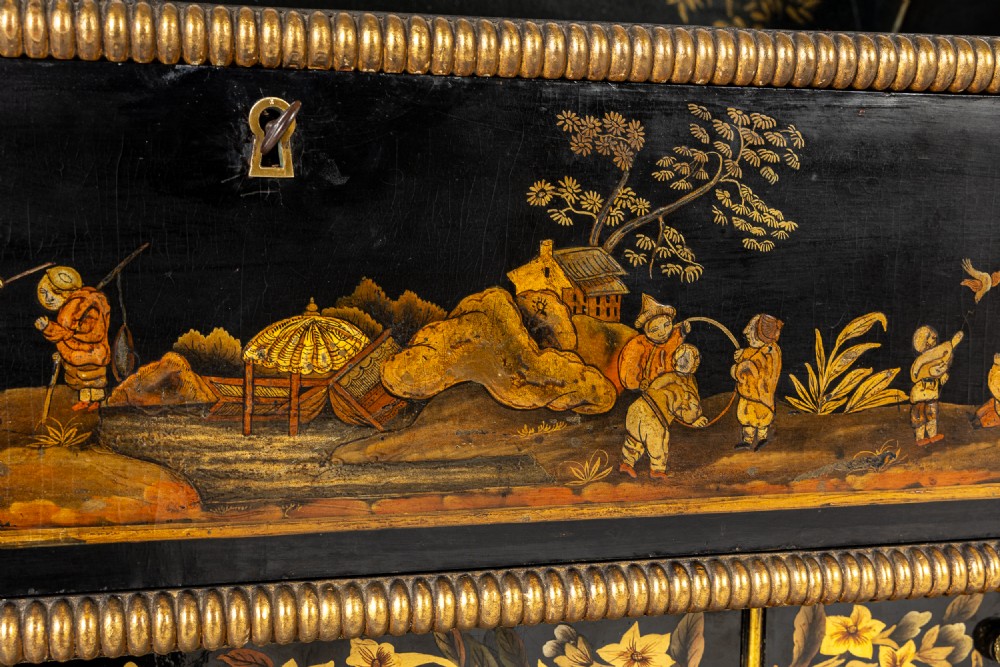
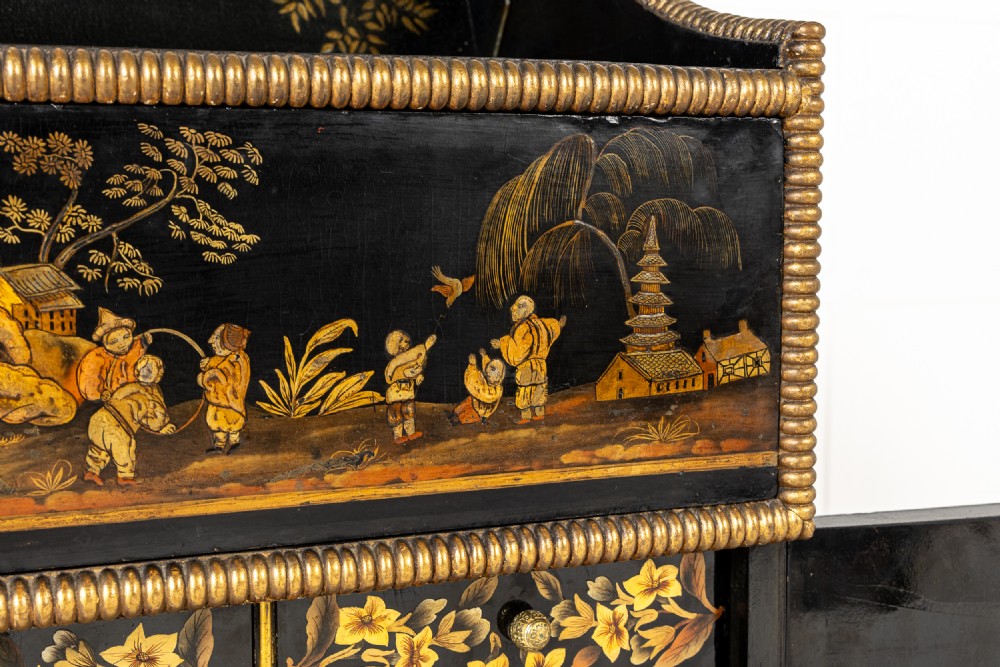
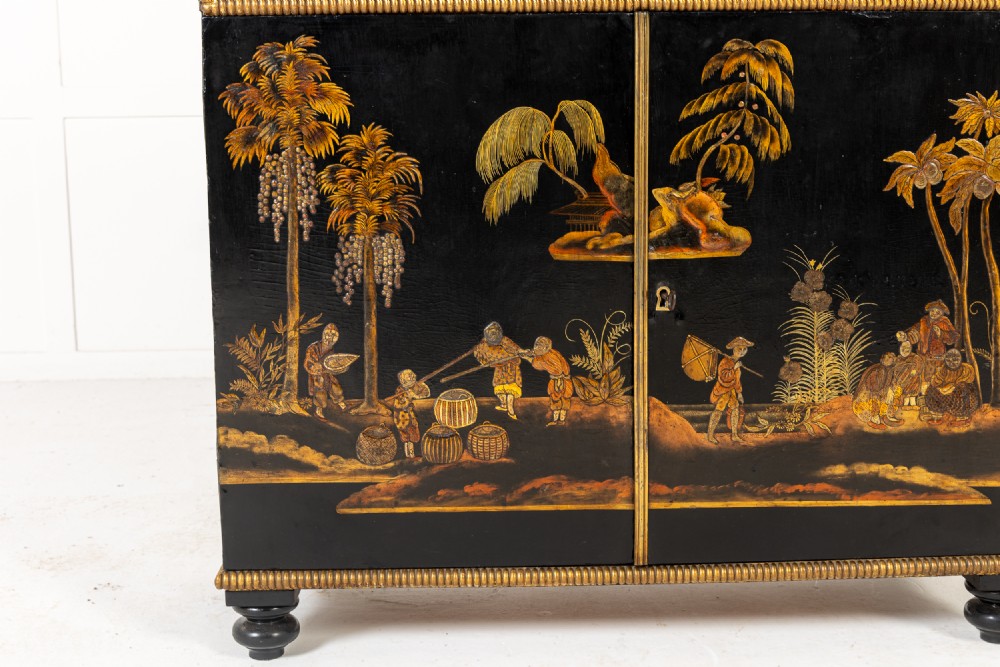
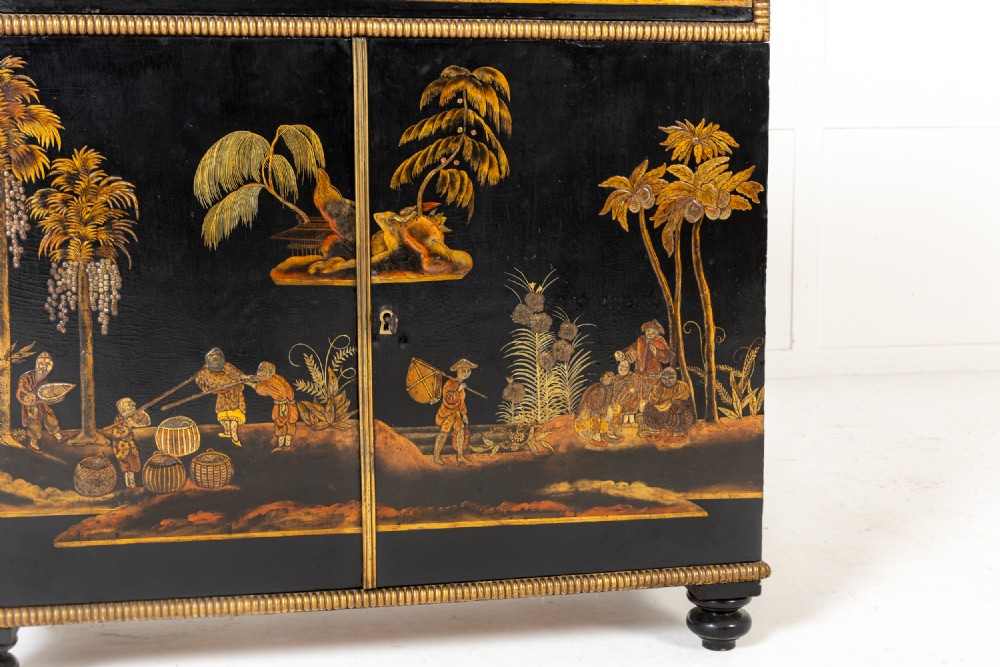
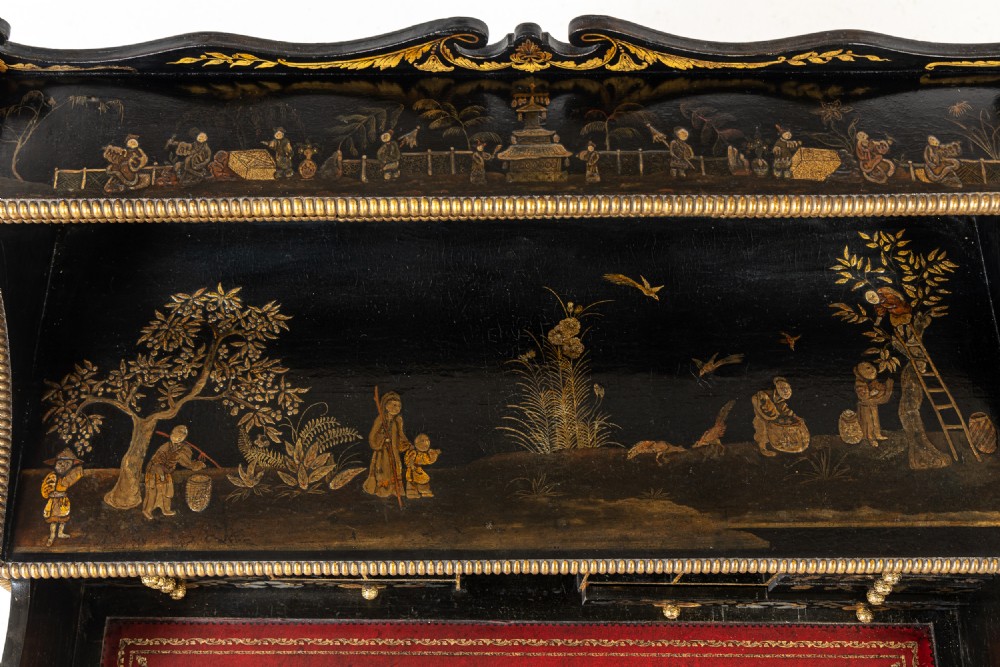
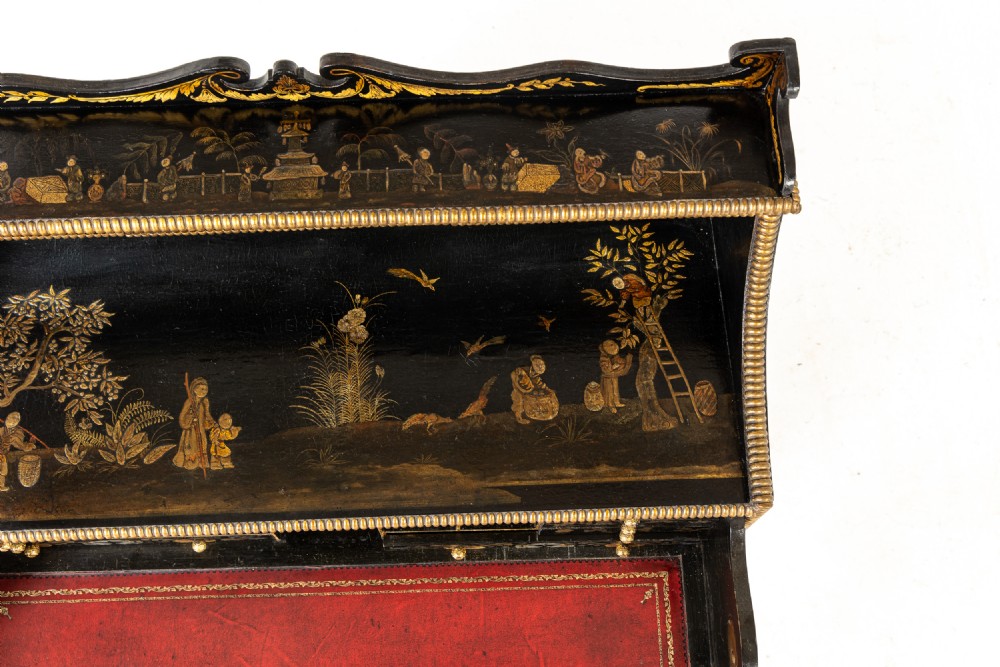
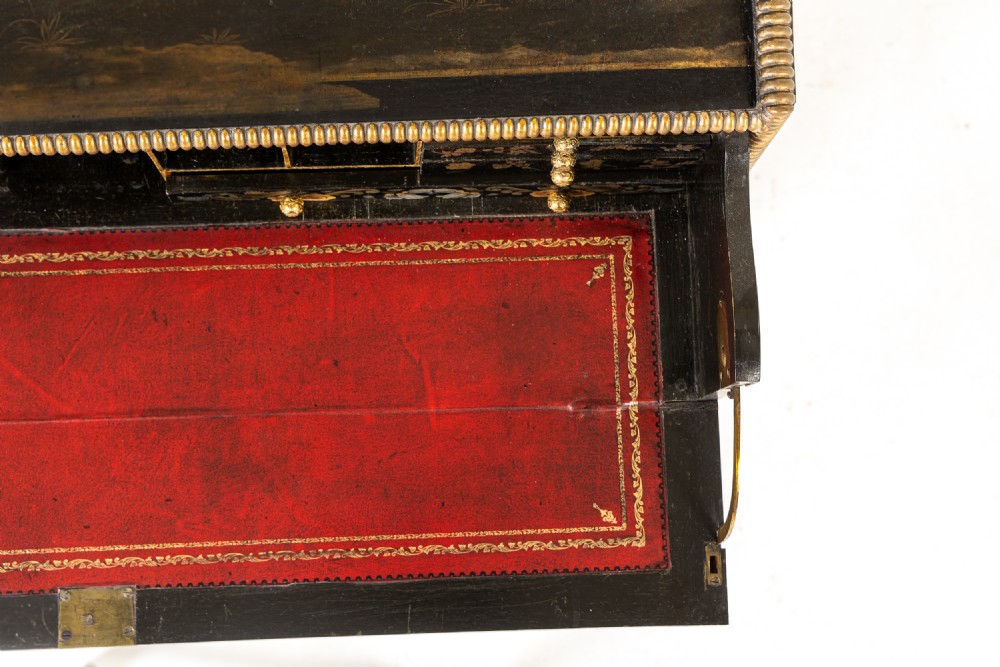
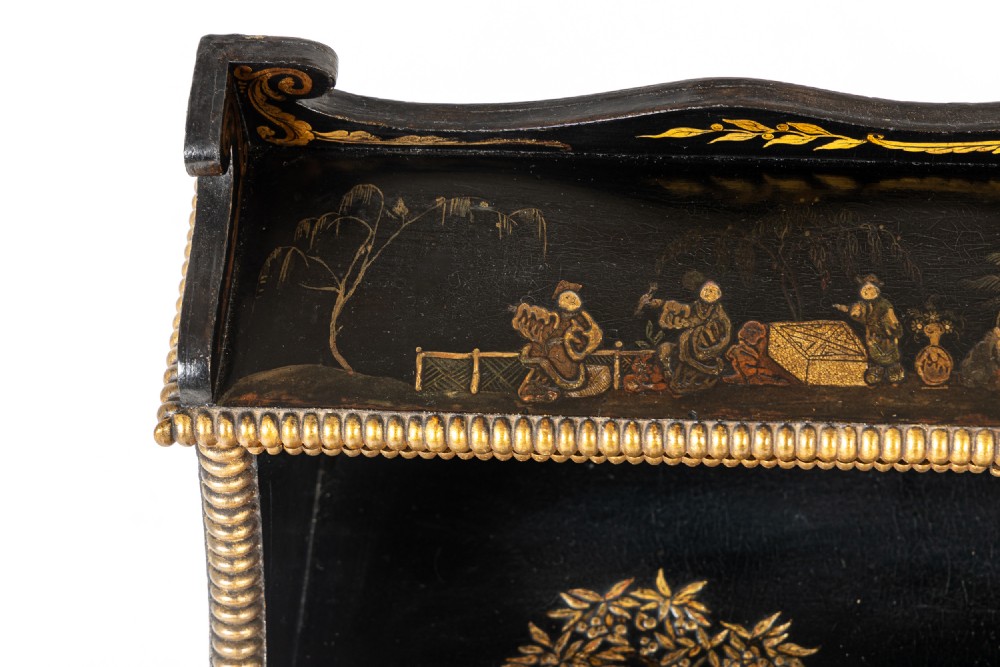
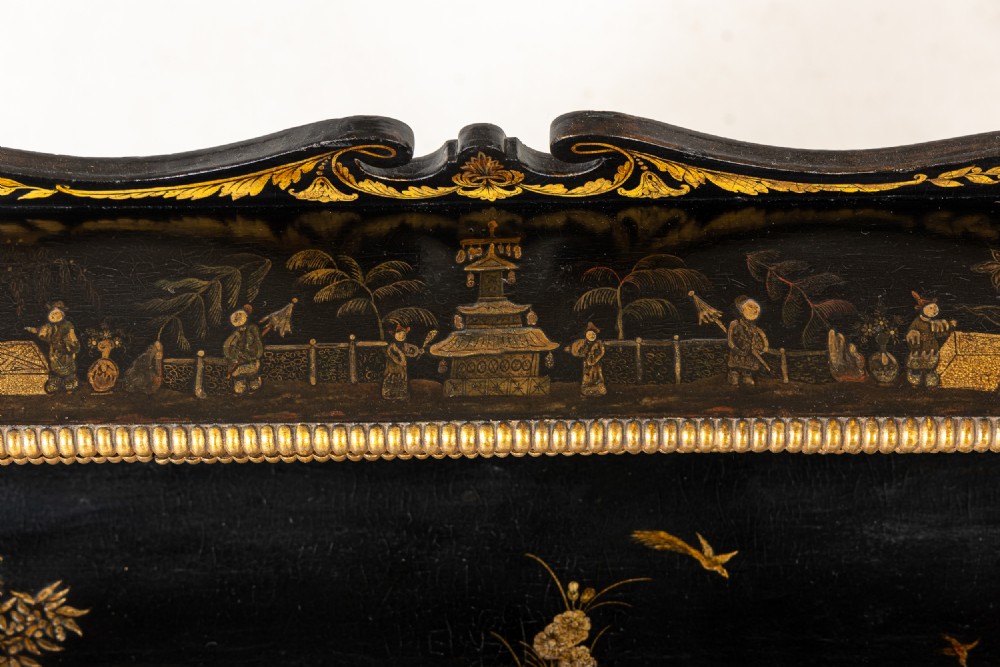
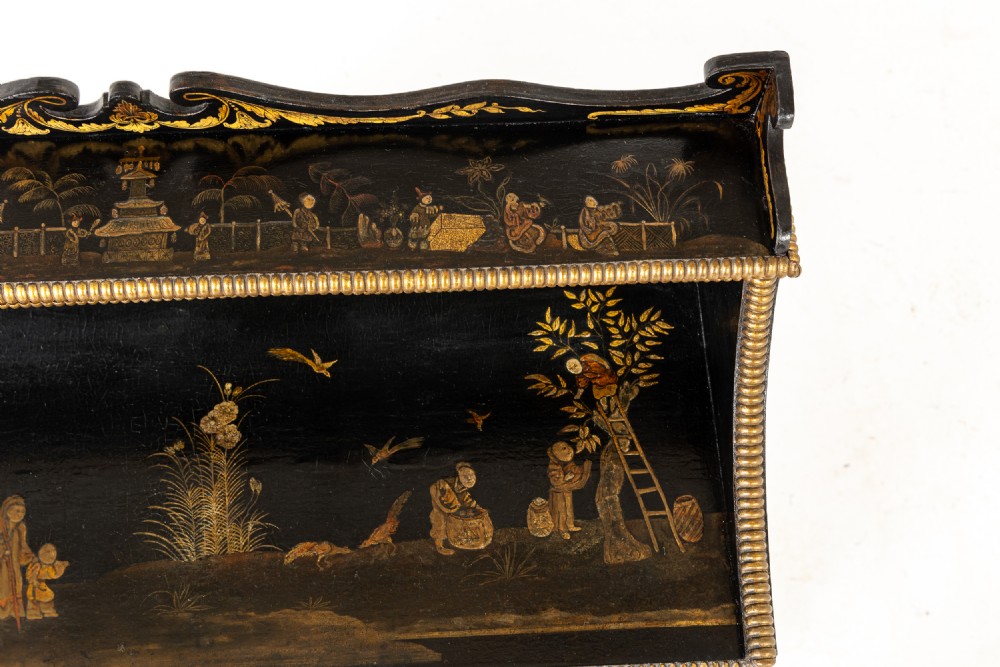
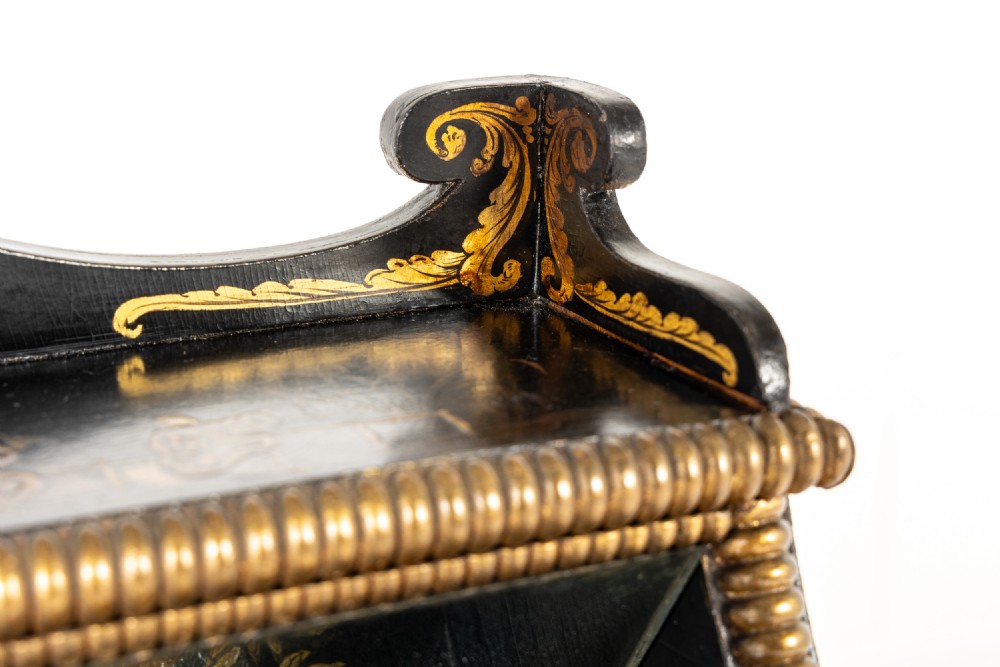
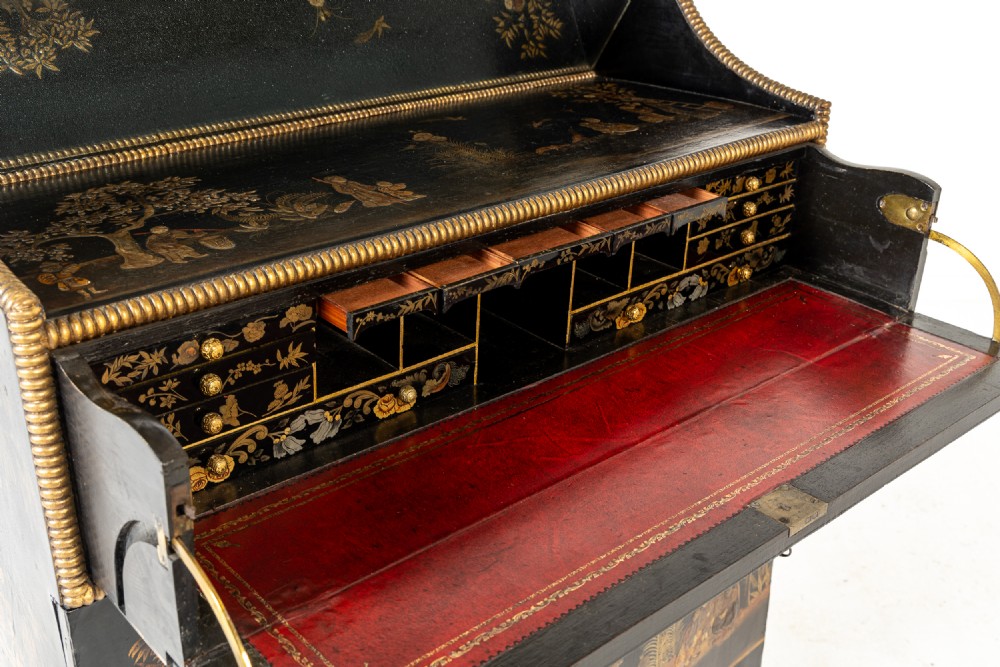
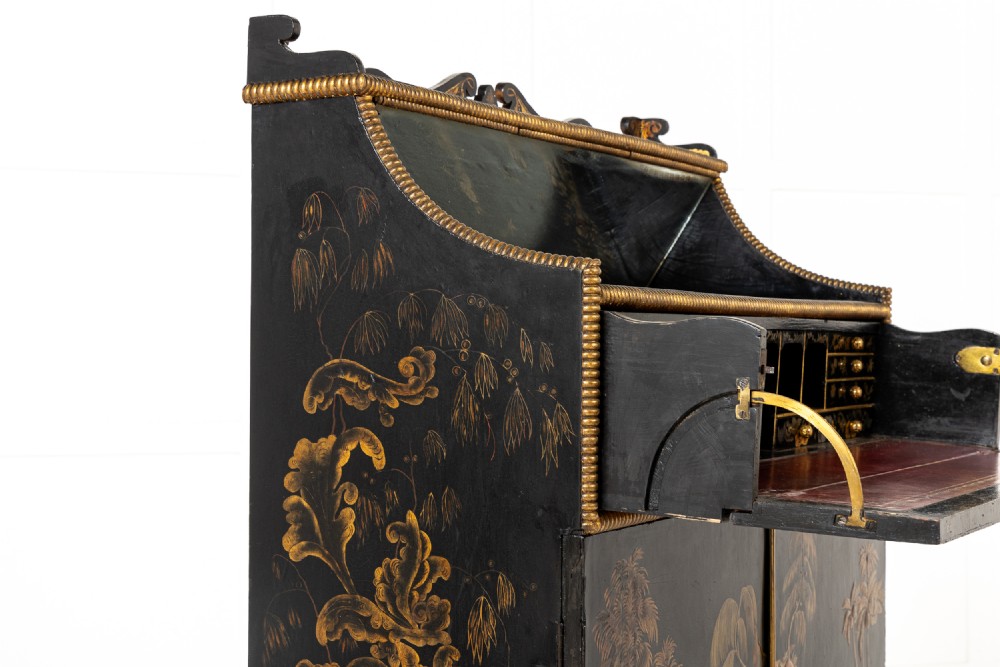
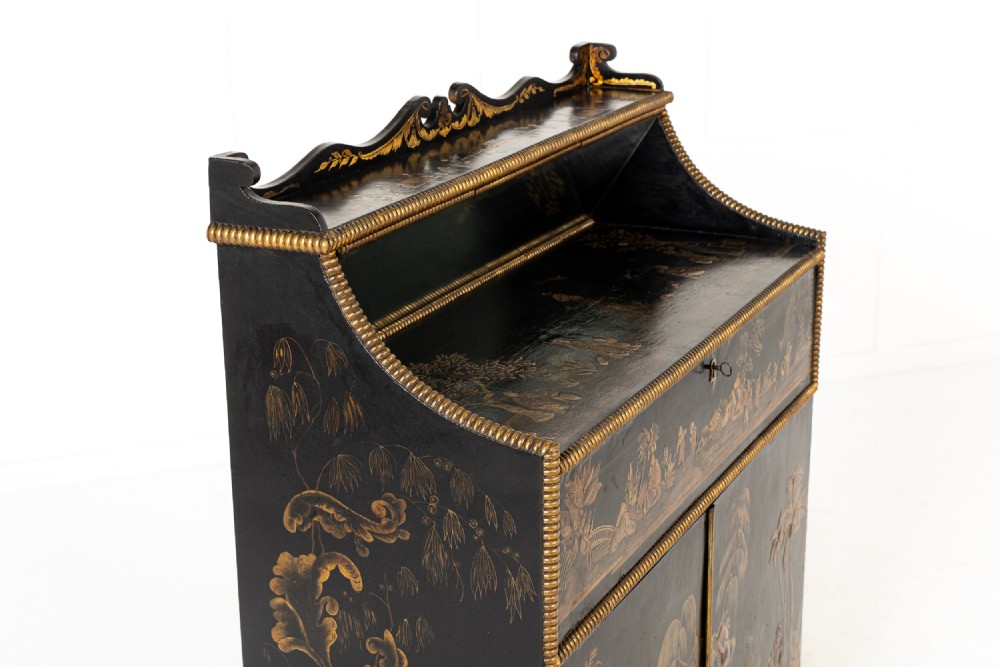
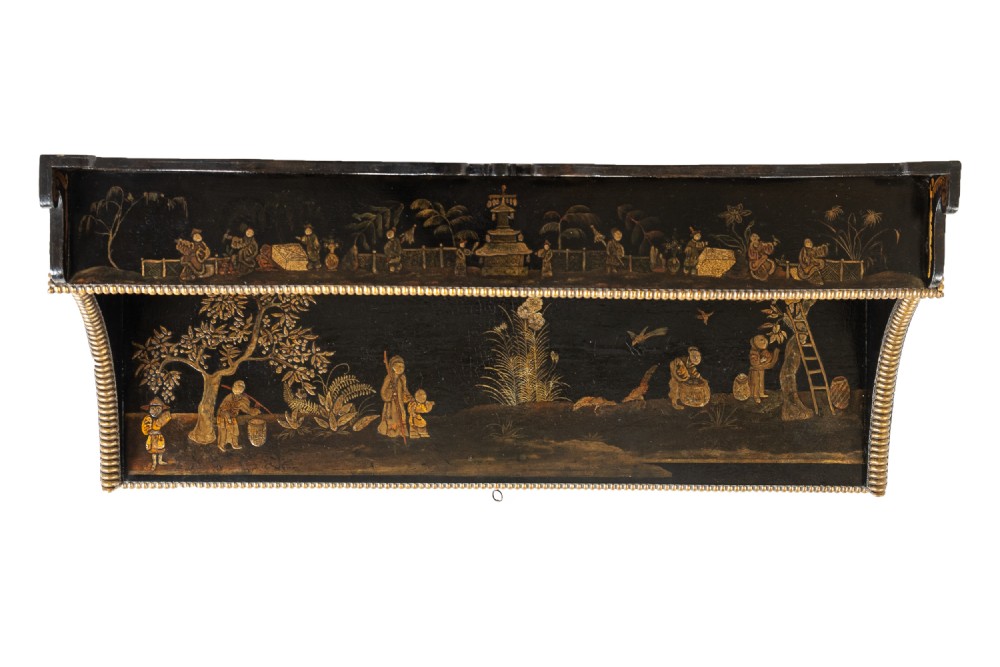
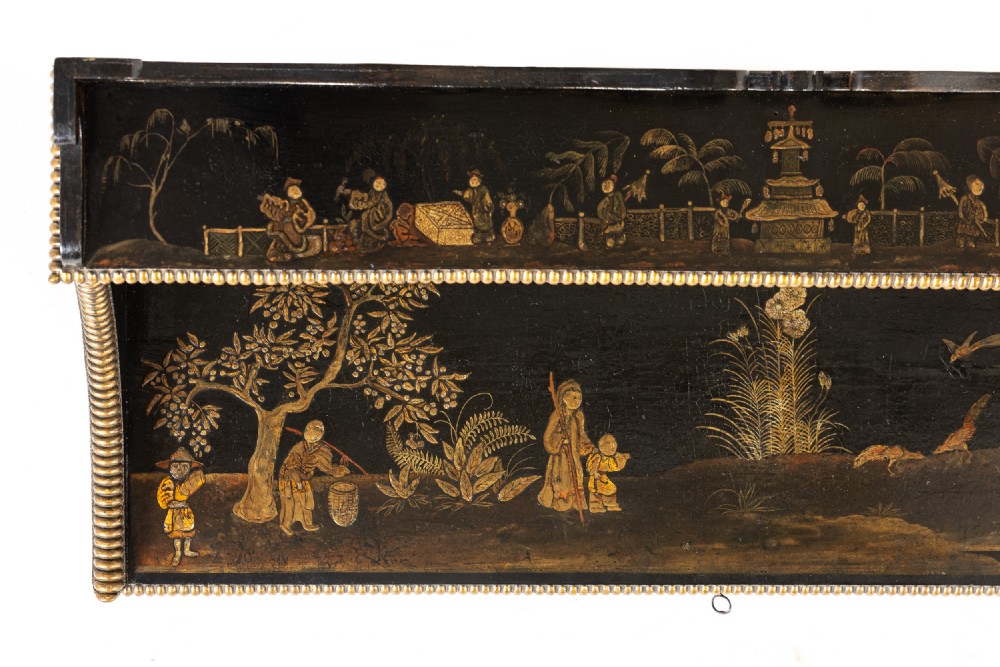
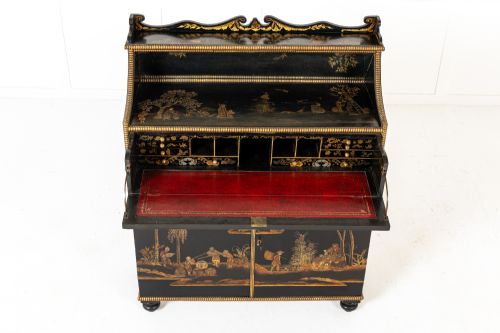
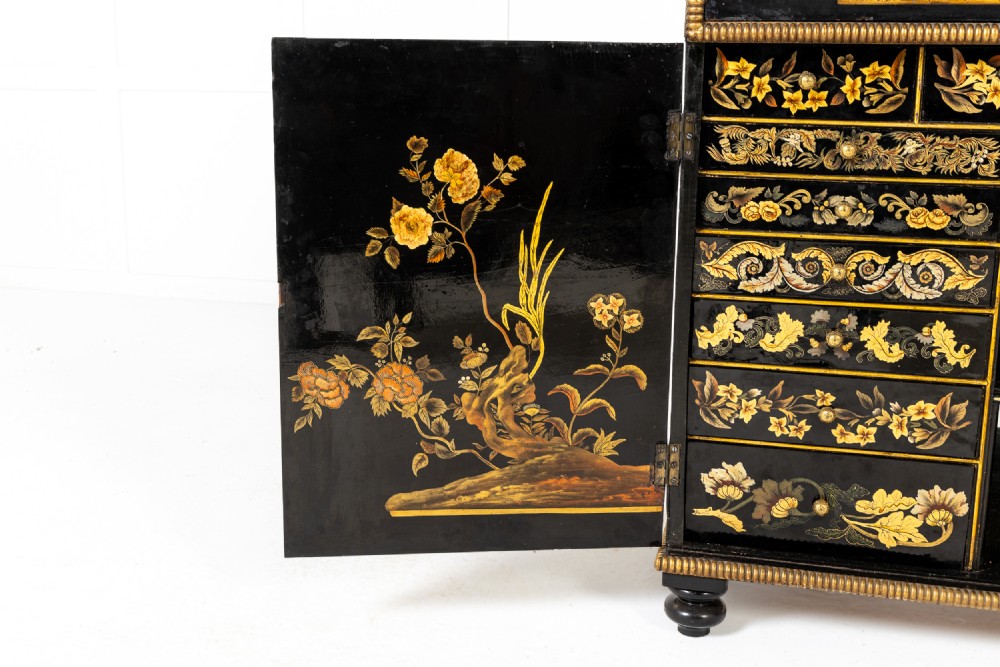
The cabinet veneered throughout with panels of japanned papier mache and penwork, the themes either chinoiserie or, on the internal drawer fronts and insides of the cupboard doors, floral in nature. Highly unusually, this piece incorporates a drop-down secretaire or writing drawer with inset leather and a series of small drawers and pigeon holes. Another intriguing piece of design is the sloping original mirror plate in the top section, underneath the top self, which reflects the detail below, giving the illusion of decoration on the back, we have not seen the likes of this before. In the lower cupboard section there are several larger drawers and two intriguing mirror backed compartments, probably intended for displaying small pieces of Chinese porcelain or the like. The japanning is of exceptional quality with a range of high and low relief sections, different colours and pigments and a wide variety of different subjects used. The decoration also survives in remarkable condition. Around the panels are some interesting half round giltwood mouldings and there is no doubt that this piece was produced by one of the leading suppliers of such furniture of the time.
This incredibly beautiful piece of furniture is a very rare survivor from the late regency/George IV period in England. The piece fuses the taste for all things oriental, which had seen a resurgence in popularity due to George IV's well-publicised work on the Brighton Pavilion, with the taste for penwork patterns which were printed in such publications as Ackermann's The Repository of Arts, Literature, Commerce, Manufactures, Fashions and Politics, a magazine for the most fashionable ladies and gentlemen of the period which played a very important role in spreading new trends in furniture and decoration.
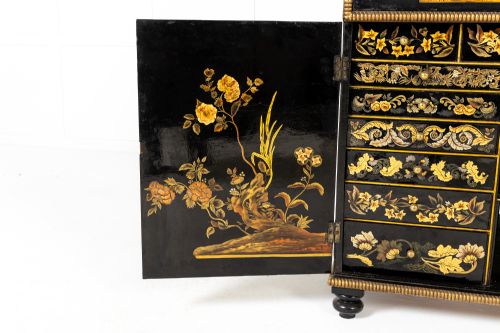
As early as 1772, the great papier mache pioneer in England Henry Clay had patented a process for layering the material and then japanning it and using oils to seal the structure. The japanned tin and papier mache industry in this country was predominantly centred around Wolverhampton and Birmingham, though Pontypool in Wales has a rich tradition of this sort and Clay himself also produced some of his pieces in London. At the height of the fascination with these materials there were very large numbers of workshops producing the more common wares such as tea trays and bottle coasters but few of those workshops would have had the technical know-how necessary to produce a cabinet like this one.
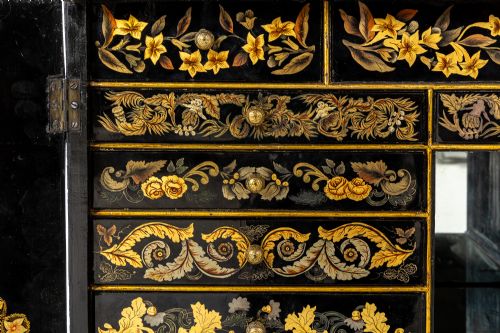
This cabinet and other fine examples of this period are often associated with the work of the designer Frederick Crace and, given the quality of our piece, it is certainly plausible that he might have been involved in supplying it to a client.

Physical Dimensions
Height
120cm (47.24")
Width
92cm (36.22")
Depth
38cm (14.96")
Declaration

Lee Wright Antiques & Interiors Ltd has dated this Regency Japanned Side Cabinet to the 19th Century.

Reference Numbers
Sellingantiques Reference
SA1121255
Dealers Internal Reference
3894
Description
A Very Fine and Important Regency Period Japanned Papier Mache Secretaire Side Cabinet or Chiffonier.
The cabinet veneered throughout with panels of japanned papier mache and penwork, the themes either chinoiserie or, on the internal drawer fronts and insides of the cupboard doors, floral in nature.
Lee Wright Antiques & Interiors Ltd

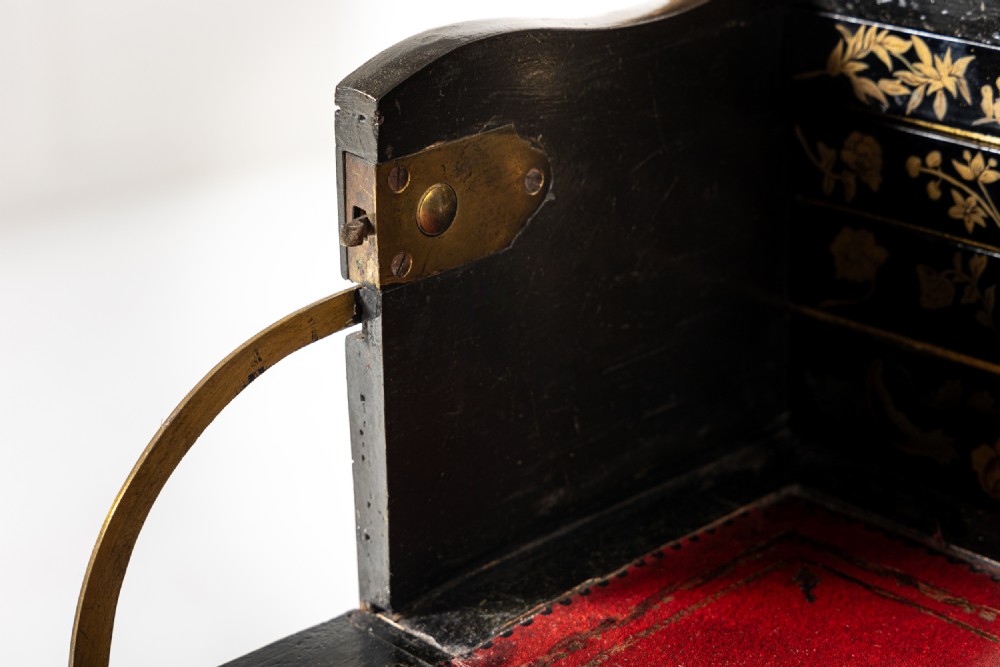
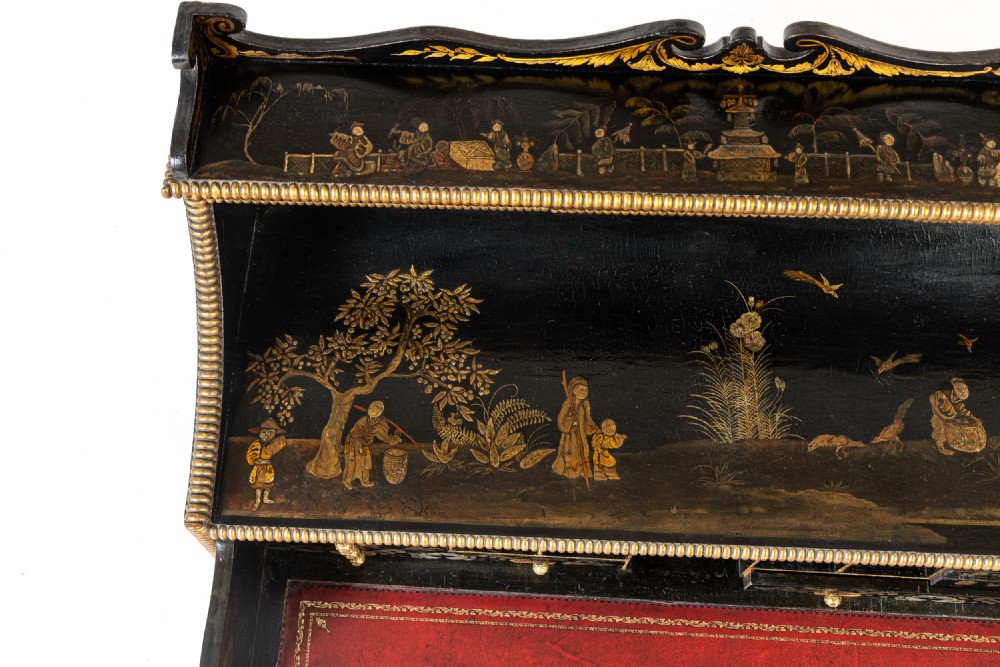
Highly unusually, this piece incorporates a drop-down secretaire or writing drawer with inset leather and a series of small drawers and pigeon holes. Another intriguing piece of design is the sloping original mirror plate in the top section, underneath the top self, which reflects the detail below, giving the illusion of decoration on the back, we have not seen the likes of this before. In the lower cupboard section there are several larger drawers and two intriguing mirror backed compartments, probably intended for displaying small pieces of Chinese porcelain or the like. The japanning is of exceptional quality with a range of high and low relief sections, different colours and pigments and a wide variety of different subjects used. The decoration also survives in remarkable condition. Around the panels are some interesting half round giltwood mouldings and there is no doubt that this piece was produced by one of the leading suppliers of such furniture of the time.

fig 1. A nineteenth-century Regency japanned side cabinet featuring black lacquer decorated with gilded Asian figures, palm trees, and architectural scenes set on turned feet.
fig 1. Important 19th Century Regency Period Japanned Side Cabinet

This incredibly beautiful piece of furniture is a very rare survivor from the late regency/George IV period in England. The piece fuses the taste for all things oriental, which had seen a resurgence in popularity due to George IV's well-publicised work on the Brighton Pavilion, with the taste for penwork patterns which were printed in such publications as Ackermann's The Repository of Arts, Literature, Commerce, Manufactures, Fashions and Politics, a magazine for the most fashionable ladies and gentlemen of the period which played a very important role in spreading new trends in furniture and decoration.

fig 2. A nineteenth-century Regency japanned side cabinet featuring black lacquer decorated with gilded Asian figures, palm trees, and architectural scenes set on turned feet.
fig 2. Important 19th Century Regency Period Japanned Side Cabinet

As early as 1772, the great papier mache pioneer in England Henry Clay had patented a process for layering the material and then japanning it and using oils to seal the structure. The japanned tin and papier mache industry in this country was predominantly centred around Wolverhampton and Birmingham, though Pontypool in Wales has a rich tradition of this sort and Clay himself also produced some of his pieces in London. At the height of the fascination with these materials there were very large numbers of workshops producing the more common wares such as tea trays and bottle coasters but few of those workshops would have had the technical know-how necessary to produce a cabinet like this one.

fig 3. A nineteenth-century Regency japanned side cabinet featuring black lacquer decorated with gilded Asian figures, palm trees, and architectural scenes set on turned feet.
fig 3. Important 19th Century Regency Period Japanned Side Cabinet

This cabinet and other fine examples of this period are often associated with the work of the designer Frederick Crace and, given the quality of our piece, it is certainly plausible that he might have been involved in supplying it to a client.

Height
120cm (47.24")
Width
92cm (36.22")
Depth
38cm (14.96")
Date of Manufacture

Lee Wright Antiques & Interiors Ltd has dated this Regency Japanned Side Cabinet to the 19th Century.

Reference Numbers
Sellingantiques Ref
SA1121255
Dealers Internal Ref
3894
Lee Wright Antiques & Interiors Ltd
Sellingantiques verified Since Nov 2018
Dealer Profile

You can view the stock and full dealer information on the Lee Wright Antiques & Interiors Ltd Profile Page
PDF SHARE
SAVE
A nineteenth-century Regency japanned side cabinet featuring black lacquer decorated with gilded Asian figures, palm trees, and architectural scenes set on turned feet.
1 / 30
Archive I A nineteenth-century Regency japanned side cabinet featuring black lacquer decorated with gilded Asian figures, palm trees, and architectural scenes set on turned feet.

Important 19th Century Regency Period Japanned Side Cabinet
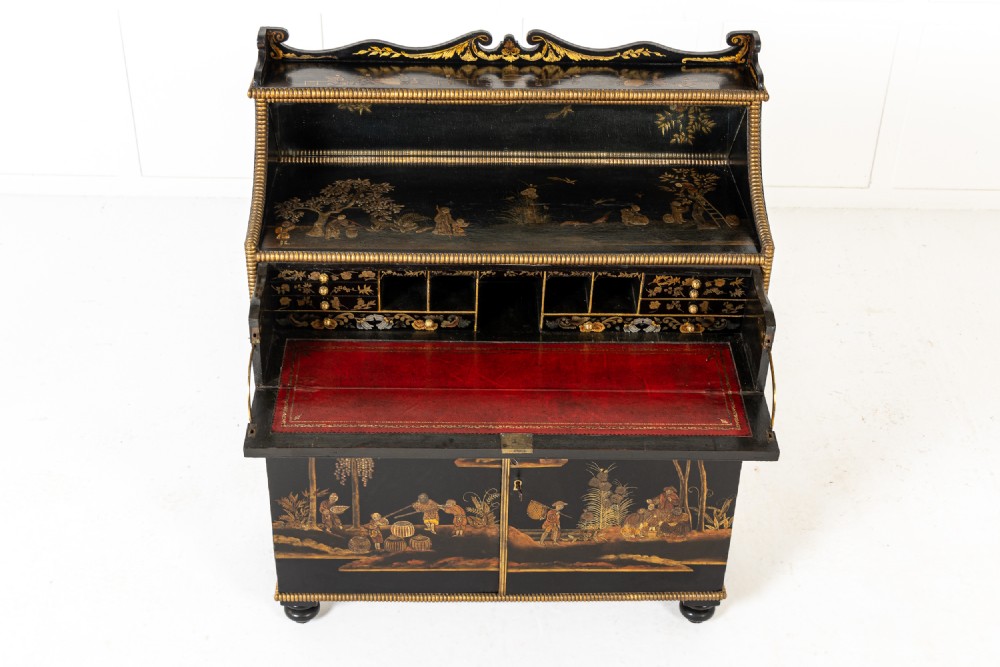
Archive II A nineteenth-century Regency japanned side cabinet featuring black lacquer decorated with gilded Asian figures, palm trees, and architectural scenes set on turned feet. View II
Archive III A nineteenth-century Regency japanned side cabinet featuring black lacquer decorated with gilded Asian figures, palm trees, and architectural scenes set on turned feet. View III
Archive IV A nineteenth-century Regency japanned side cabinet featuring black lacquer decorated with gilded Asian figures, palm trees, and architectural scenes set on turned feet. View IV
Archive V A nineteenth-century Regency japanned side cabinet featuring black lacquer decorated with gilded Asian figures, palm trees, and architectural scenes set on turned feet. View V
Archive VI A nineteenth-century Regency japanned side cabinet featuring black lacquer decorated with gilded Asian figures, palm trees, and architectural scenes set on turned feet. View VI
Archive VII A nineteenth-century Regency japanned side cabinet featuring black lacquer decorated with gilded Asian figures, palm trees, and architectural scenes set on turned feet. View VII
Archive VIII A nineteenth-century Regency japanned side cabinet featuring black lacquer decorated with gilded Asian figures, palm trees, and architectural scenes set on turned feet. View VIII
Archive IX A nineteenth-century Regency japanned side cabinet featuring black lacquer decorated with gilded Asian figures, palm trees, and architectural scenes set on turned feet. View IX
Archive X A nineteenth-century Regency japanned side cabinet featuring black lacquer decorated with gilded Asian figures, palm trees, and architectural scenes set on turned feet. View X
Archive XI A nineteenth-century Regency japanned side cabinet featuring black lacquer decorated with gilded Asian figures, palm trees, and architectural scenes set on turned feet. View XI
Archive XII A nineteenth-century Regency japanned side cabinet featuring black lacquer decorated with gilded Asian figures, palm trees, and architectural scenes set on turned feet. View XII
Archive XIII A nineteenth-century Regency japanned side cabinet featuring black lacquer decorated with gilded Asian figures, palm trees, and architectural scenes set on turned feet. View XIII
Archive XIV A nineteenth-century Regency japanned side cabinet featuring black lacquer decorated with gilded Asian figures, palm trees, and architectural scenes set on turned feet. View XIV
Archive XV A nineteenth-century Regency japanned side cabinet featuring black lacquer decorated with gilded Asian figures, palm trees, and architectural scenes set on turned feet. View XV
Archive XVI A nineteenth-century Regency japanned side cabinet featuring black lacquer decorated with gilded Asian figures, palm trees, and architectural scenes set on turned feet. View XVI
Archive XVII A nineteenth-century Regency japanned side cabinet featuring black lacquer decorated with gilded Asian figures, palm trees, and architectural scenes set on turned feet. View XVII
Archive XVIII A nineteenth-century Regency japanned side cabinet featuring black lacquer decorated with gilded Asian figures, palm trees, and architectural scenes set on turned feet. View XVIII
Archive XIX A nineteenth-century Regency japanned side cabinet featuring black lacquer decorated with gilded Asian figures, palm trees, and architectural scenes set on turned feet. View XIX
Archive XX A nineteenth-century Regency japanned side cabinet featuring black lacquer decorated with gilded Asian figures, palm trees, and architectural scenes set on turned feet. View XX
Archive XXI A nineteenth-century Regency japanned side cabinet featuring black lacquer decorated with gilded Asian figures, palm trees, and architectural scenes set on turned feet. View XXI
Archive XXII A nineteenth-century Regency japanned side cabinet featuring black lacquer decorated with gilded Asian figures, palm trees, and architectural scenes set on turned feet. View XXII
Archive XXIII A nineteenth-century Regency japanned side cabinet featuring black lacquer decorated with gilded Asian figures, palm trees, and architectural scenes set on turned feet. View XXIII
Archive XXIV A nineteenth-century Regency japanned side cabinet featuring black lacquer decorated with gilded Asian figures, palm trees, and architectural scenes set on turned feet. View XXIV
Archive XXV A nineteenth-century Regency japanned side cabinet featuring black lacquer decorated with gilded Asian figures, palm trees, and architectural scenes set on turned feet. View XXV
Archive XXVI A nineteenth-century Regency japanned side cabinet featuring black lacquer decorated with gilded Asian figures, palm trees, and architectural scenes set on turned feet. View XXVI
Archive XXVII A nineteenth-century Regency japanned side cabinet featuring black lacquer decorated with gilded Asian figures, palm trees, and architectural scenes set on turned feet. View XXVII
Archive XXVIII A nineteenth-century Regency japanned side cabinet featuring black lacquer decorated with gilded Asian figures, palm trees, and architectural scenes set on turned feet. View XXVIII
Archive XXIX A nineteenth-century Regency japanned side cabinet featuring black lacquer decorated with gilded Asian figures, palm trees, and architectural scenes set on turned feet. View XXIX
Archive XXX A nineteenth-century Regency japanned side cabinet featuring black lacquer decorated with gilded Asian figures, palm trees, and architectural scenes set on turned feet. View XXX
Enlarged Archival View
Location
Lodge Farm
Walton Lane
Husbands Bosworth
Leicestershire
LE17 6NN
United Kingdom

By appointment only
Verified Since Nov 2018
Items For Sale 141
Items Sold 1,006
Lee Wright Antiques & Interiors Ltd
Verified Since Nov 2018
View Dealer Info
Location: Lodge Farm, Walton Lane, Husbands Bosworth, Leicestershire, LE17 6NN, United Kingdom, , By appointment only
Verified
Nov 2018
For Sale
141
Sold
1,006
A nineteenth-century Regency japanned side cabinet featuring black lacquer decorated with gilded Asian figures, palm trees, and architectural scenes set on turned feet.
Important 19th Century Regency Period Japanned Side Cabinet
Ref: SA1121255
A nineteenth-century Regency japanned side cabinet featuring black lacquer decorated with gilded Asian figures, palm trees, and architectural scenes set on turned feet.
Detail View 1
Detail View 2
Detail View 3
Detail View 4
Detail View 5
Detail View 6
Detail View 7
Detail View 8
Detail View 9
Detail View 10
Detail View 11
Detail View 12
Detail View 13
Detail View 14
Detail View 15
Detail View 16
Detail View 17
Detail View 18
Detail View 19
Detail View 20
Detail View 21
Detail View 22
Detail View 23
Detail View 24
Detail View 25
Detail View 26
Detail View 27
Detail View 28
Detail View 29
Archival Detail
Every single antique dealer on our platform is individually approved by our internal team. We verify their professional trade history, ethical standards, and photographic quality to ensure a secure, high-standard buying environment. Upon joining, every dealer agrees to a strict 9-point code of conduct. While issues can occasionally arise, our dealers typically resolve them swiftly and directly with the buyer. In fact, since our founding in 2002, Sellingantiques has only had to step in to help resolve an issue on roughly five occasions—a true testament to the quality of our dealers and their dedication to your happiness.
Our dealers are highly experienced in packing and shipping fragile, high-value antiques. Because you are in direct contact with the dealer, you will be able to easily go through all available shipping and insurance options together to ensure your item arrives safely.
Antiques are the ultimate green purchase. By choosing historical pieces over newly manufactured goods, you completely eliminate the carbon footprint of modern mass production while preserving exceptional, timeless craftsmanship.

Japanning was a European decorative technique developed in the seventeenth and eighteenth centuries to imitate East Asian lacquerwork. During the British Regency period, craftsmen applied multiple layers of dark varnish or lacquer onto wood surfaces, decorating them with gilded Asian-inspired scenes known as chinoiserie.

These pieces were typically built around a solid timber core, such as pine or oak, which was coated in a dark resin or shellac-based varnish. Gilded decorations were executed using fine gold leaf or metallic powders, often finished with brass hardware and turned wooden feet.

Authentic period pieces display hand-painted gilded scenes with slight natural wear to raised surfaces, hand-cut dovetail drawer joints, and original brass lock mechanisms. The lacquer surface often shows fine craquelure or age-related crazing due to timber expansion over time.

A japanned side cabinet functions as a dramatic focal point in a hallway, dining room, or living space. Positioning it against a neutral wall allows the detailed gold ornamentation to stand out, pairing well with both classic portraits and contemporary minimalist artwork.

Maintain japanned furniture by dusting regularly with a clean, soft microfibre cloth without applying water or solvent-based cleaners. Keep the piece away from direct sunlight, radiators, and areas with fluctuating humidity to prevent cracking or lifting of the lacquer layer.
items
Add keywords to the filter
Price
£100
£250000
Era
Movements
Material
Origin
Stock Location
Freshness
Online Payments
Categories