
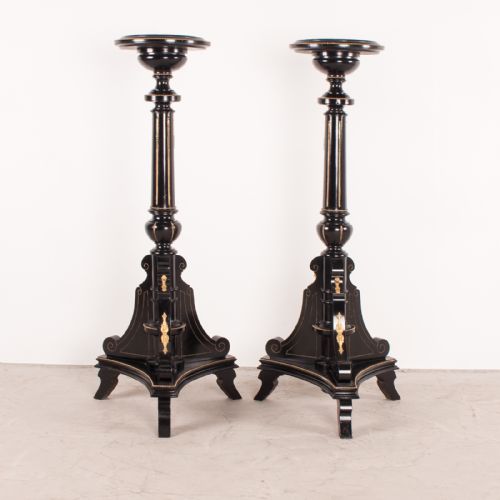


Ebonised Torchere Stand
These ebonised torchere stand pieces offer striking height and dark, dramatic finishes to anchor any room.
Ebonised Torchere Stand
An ebonised torchere stand is a tall, slender column or pedestal designed to elevate lighting, plants, or decorative objects within a room. When you search for this phrase, you encounter tall display furniture that uses dark finishes to mimic costly ebony timber.
The pieces appearing on this page span several distinct periods, including the Regency era, the Victorian period, and the early twentieth century. Alongside standard torcheres, you will find related forms such as pedestals, plant stands, and occasional console tables.
Many examples showcase specific historical revival styles or regional craftsmanship, ranging from French Napoleon III designs to Italian Blackamoor figures and Victorian Gothic columns. These diverse forms share a vertical emphasis and a blackened surface treatment that draws the eye upward.
Materials and construction
Makers achieved the desired dark aesthetic by ebonising timber such as hardwood, walnut, and oak through chemical staining or painting processes. This dark ground frequently serves as a backdrop for contrasting highlights.
Carved wood provides the structural core for many examples, allowing artisans to shape intricate fluting, figures, or animal motifs. Gilt wood, ormolu mounts, and brass elements appear across various pieces to provide metallic contrast against the black surface.
Certain examples incorporate lacquer or specialised finishes, reflecting influences from Aesthetic Movement and Brighton Pavilion styles. These surface treatments protect the underlying wood while creating a polished sheen.
Winged griffins and crouching figures proudly hold up the tops of these stands, turning functional furniture into miniature theatrical stages.
Assessing quality and execution
The refinement of the carving dictates much of the distinction between standard and superior pieces. Skilled hand-carved detailing on figures, fluting, or foliage displays a crispness that machine work cannot replicate.
The integrity of the ebonised surface and the choice of underlying timber contribute significantly to a piece's stature. Dense hardwoods provide stable foundations that resist warping, ensuring the tall, slender structure remains sound over centuries.
Cohesion of style marks the finest examples, where materials like ormolu, brass, and gilt wood integrate harmoniously with the dark finish. Balance and proportion are critical in tall stands, ensuring the base securely supports the weight of the column.
Humphrey Hopper
The Ebonised Torchere Stand Glossary
- Ebonised
- Wood treated with a stain, dye, or paint finish to imitate expensive ebony. This process became widely popular during the nineteenth century for furniture mimicking exotic hardwoods.
- Torchere
- A tall stand originally intended to hold a candle or torch. Over time, the form evolved to display ornamental vases, sculptures, and plants.
- Ormolu
- Gilded bronze applied as a decorative mount to furniture. It provides bright metallic contrast against dark woods like ebonised walnut or mahogany.
- Jardiniere
- A decorative pot or stand for holding plants and flowers. These often share the tall, columnar format of standard display stands.
- Regency
- A British design period spanning the early nineteenth century. Furniture from this era often draws inspiration from classical antiquity.
Ebonised Torchere Stand: Frequently Asked Questions
What is an ebonised torchere stand?
An ebonised torchere stand is a tall, slender piece of furniture finished in a dark, ebony-mimicking stain or paint. These stands were traditionally built to elevate lighting or display decorative objects within grand interiors.
Today, they function as striking architectural elements in a room, providing vertical height and a dramatic dark silhouette. They range from simple fluted columns to elaborate figurative carvings.
How were torchere stands used historically?
Historically, torchere stands held candles or oil lamps to illuminate dark corners of reception rooms and parlours. As artificial lighting advanced, their purpose shifted toward displaying fine porcelain, sculpture, and potted plants.
Their elevated stature ensured that prized decorative items sat at eye level for visitors to admire. They were frequently placed in pairs flanking doorways, fireplaces, or large mirrors.
How do I style a torchere stand at home?
You can place a torchere stand in an empty hallway corner or beside a sofa to add height and architectural interest. Keep the top relatively uncluttered to showcase the wood's finish and the Stand's slender profile.
Display a single statement piece, such as a trailing plant, a bronze sculpture, or a ceramic vessel. Ensure the location avoids heavy foot traffic to protect the tall, narrow structure from accidental knocks.
How can I tell different periods apart?
Regency and Georgian examples often feature classical proportions, restrained carving, and mahogany or ebonised hardwood construction. Victorian and later nineteenth-century pieces tend toward heavier ornamentation, incorporating gothic motifs or figural supports like Blackamoor carvings.
Later Arts and Crafts or early twentieth-century stands show simpler, cleaner lines reflecting a shift away from Victorian excess. Examining the timber grain beneath the ebonising and the style of the carving helps determine the likely era of manufacture.