



Black Lacquered Plant Stand
These black lacquered plant stand pieces bring striking height and dark orientalist polish to a corner, perfect for displaying heavy porcelain or trailing foliage.
Black Lacquered Plant Stand
A black lacquered plant stand is a tall display piece designed to elevate jardinieres and decorative pots, appearing in forms ranging from slender torcheres to sturdy side tables. These furnishings emerge across the eighteenth, nineteenth, and early twentieth centuries in varied regional interpretations.
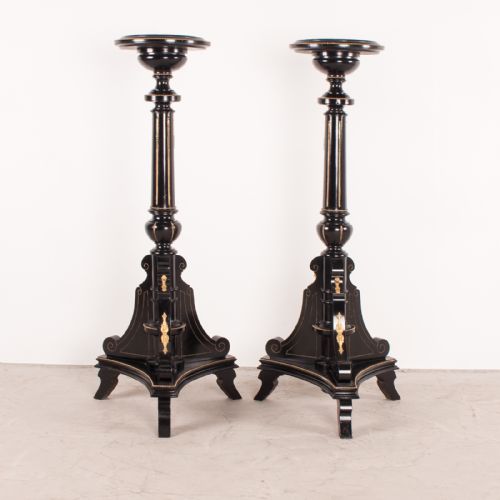
The versions most commonly met here draw on Chinoiserie, Aesthetic Movement, and Victorian designs, often utilising deep black or dark finishes to contrast with metallic details. Makers shaped these stands for domestic display rooms, creating tiered structures and column supports suited for heavy floral arrangements.
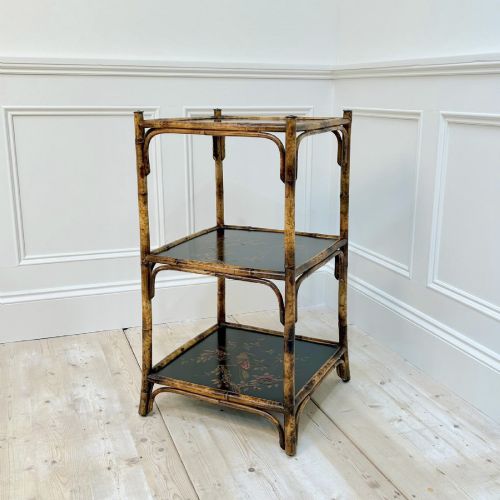
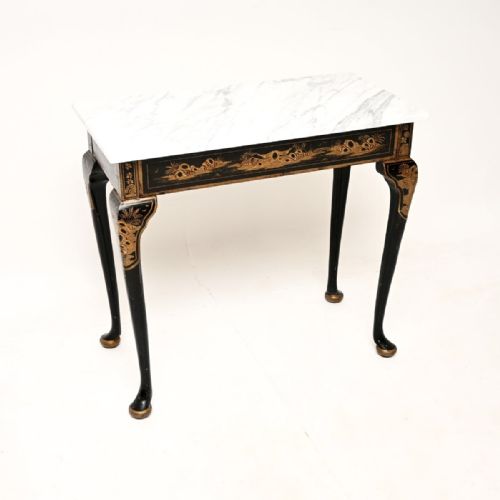
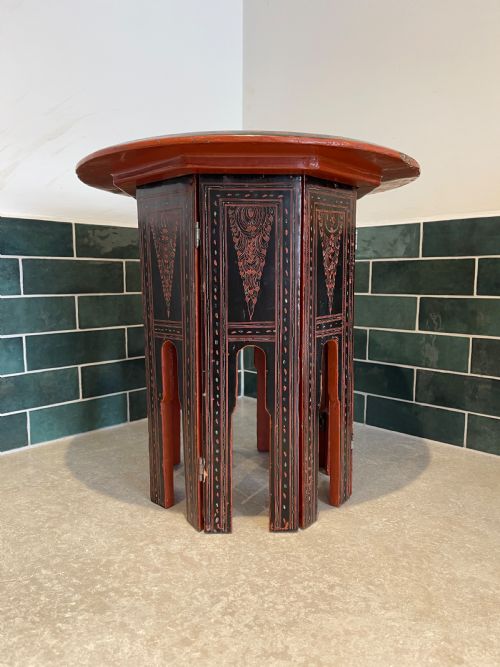
Geographic influences stretch from Chinese and Japanese workshops to English revival studios, incorporating bamboo elements, marble inserts, and painted panels. Such variety means buyers encounter both tall single pedestals and low tiered side furniture carrying dark polished surfaces.
Materials and construction
Wood serves as the core structural material, frequently ebonised or finished with layers of black lacquer and paint to create a deep, reflective surface. Artisans applied gold leaf accents and detailed surface decoration over the dark ground, following stylistic traditions from British revival workshops and eastern traditions.
Secondary materials like brass, marble, and bamboo reinforce the tops and joints, providing durable surfaces for holding heavy planters. These combined elements result in sturdy torcheres and pedestals built to support weight while maintaining decorative visual lightness through slender turned legs.
Listings feature periods from the eighteenth century through to the early twentieth century, spanning Victorian, Regency, and Aesthetic Movement styles.
Evaluating craftsmanship
Quality rests in the depth of the lacquer finish and the precision of the decorative painting, where hand-applied gold leaf demonstrates superior artistry over plain painted surfaces. Superior examples display tight joinery in tiered frames and secure mountings for inset marble tops, ensuring the structure remains stable under load.
Design cohesion separates standard production items from exceptional pieces, particularly in how well styles like Chinoiserie or the Aesthetic Movement integrate carved details with the dark wood. The finesse of turned wooden components and the integrity of the underlying ebonised wood dictate the lasting presence of the piece.
The Black Lacquered Plant Stand Glossary
- Lacquer
- A durable resin finish applied in multiple layers to wood, creating a smooth, dark, and protective surface. This technique requires patient curing and polishing between coats to achieve a deep shine.
- Torchere
- A tall, slender stand designed specifically to hold a lamp, urn, or plant pot. These pieces provide vertical interest in room corners.
- Ebonised wood
- Timber treated with chemical stains or dark paint to simulate expensive ebony. This finish is common in nineteenth-century decorative furniture.
- Jardiniere
- An ornamental pot or stand for holding plants and flowers, often matching the pedestal it rests upon. These items anchor heavy botanical displays.
Black Lacquered Plant Stand: Frequently Asked Questions
What is a black lacquered plant stand used for?
These stands serve primarily to elevate potted plants, jardinieres, or decorative objects, drawing the eye upward and adding vertical dimension to a room.
They function effectively in corners or beside seating, providing a stable platform where heavy foliage or ceramic pieces can catch the light.
How do I care for black lacquer furniture?
Maintain the surface by dusting gently with a soft, dry cloth to prevent microscopic scratches from accumulating on the polished finish.
Avoid placing these pieces in direct sunlight or areas of high humidity, which can damage the delicate layers of lacquer and painted details over time.
How can I tell the period of a stand?
Dating relies on examining the construction methods, fastener types, and stylistic cues such as Aesthetic Movement motifs or Victorian turning styles.
Heavier wood preparation and specific lacquer formulations also point toward nineteenth-century origins compared to later twentieth-century revival pieces.
Are these stands suitable for heavy pots?
Most sturdy pedestals and side tables are built to bear the weight of standard ceramic jardinieres and established houseplants safely.
However, one should check the stability of the joints and the condition of the top surface before placing exceptionally heavy stone vessels on slender frames.