


Black Display Pedestal
A black display pedestal elevates sculpture and ornament, drawing the eye through contrast.
Black Display Pedestal
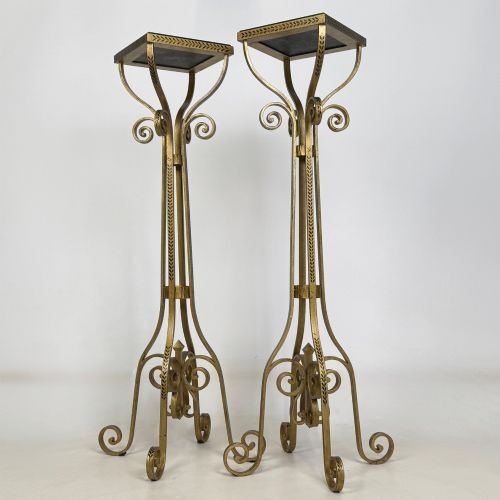
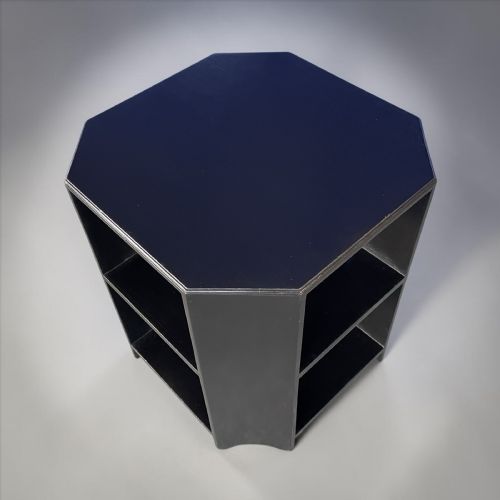
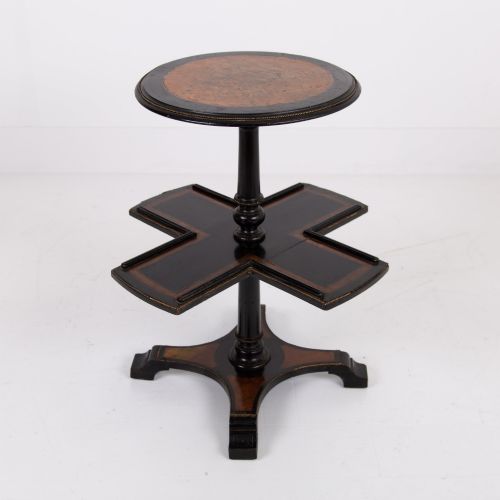
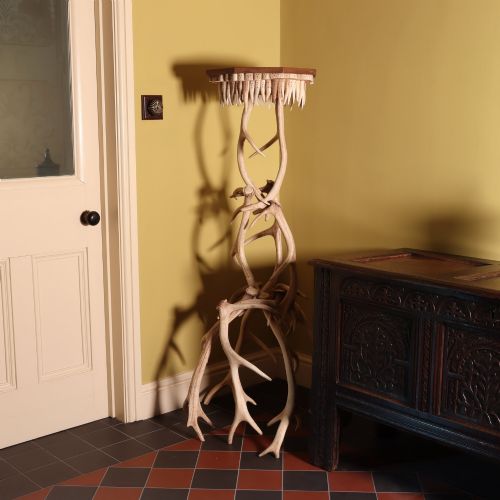
When you search for a black display pedestal, you uncover items designed to elevate objects of importance within a room. These supports appear in diverse forms throughout this selection, including plant stands, side tables, columns, and plinths.
The objects on this page span the nineteenth and twentieth centuries, encompassing Victorian, Edwardian, Art Deco, and Aesthetic Movement styles. Origins range from British workshops to continental Europe, Japan, and China.
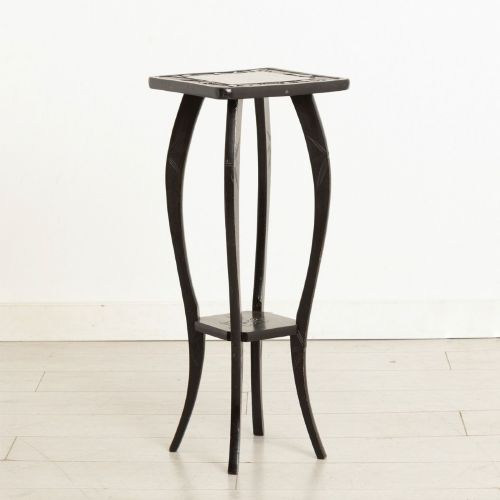
Plant stands and jardiniere stands emerge most frequently among the current listings, serving to hold heavy ceramic vessels or botanical specimens. Ebonised wood and dark marble dominate the forms, creating a deliberate silhouette against lighter domestic backdrops.
How they were made
Craftsmen utilised native and exotic timbers, applying ebonisation processes to turn ordinary wood into a deep, glossy black finish that mimics costly ebony. Other surfaces feature dark lacquer, oil paint, or parcel gilt highlights applied to carved hardwood.
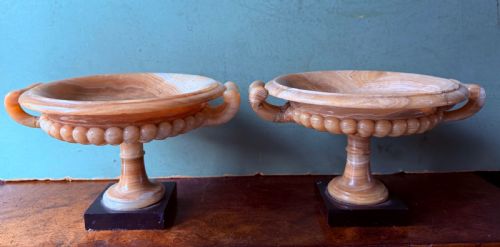
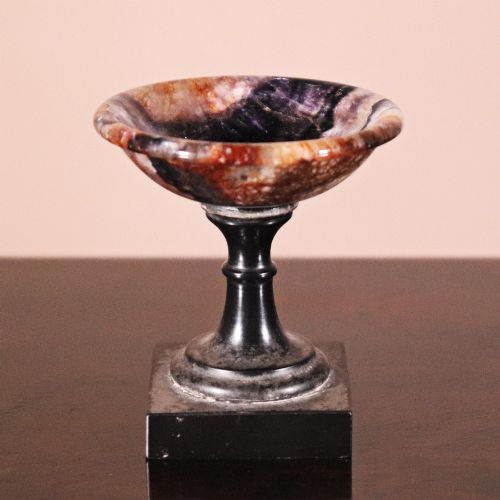
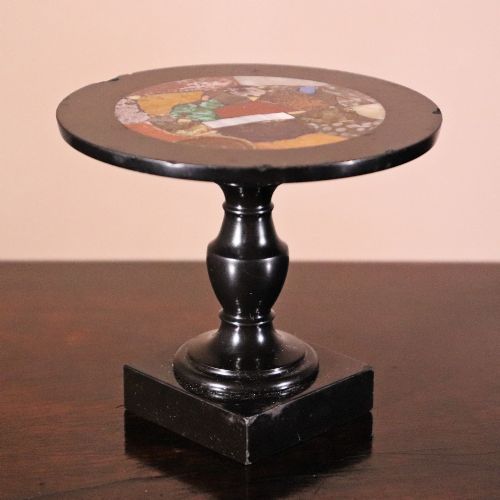
Inlaid and solid stones form the upper surfaces and structural bases, utilising white or black marble, alabaster, scagliola, and specimen minerals. Carving techniques range from geometric turnings to elaborate figural motifs executed by hand.
Listings feature items spanning the nineteenth and twentieth centuries, utilising ebonised wood, marble, and lacquer.
What varies in quality
The distinction between standard utility items and superior examples lies in the weight of materials and the depth of surface ornamentation. Finely carved hardwood and heavy marble columns demonstrate greater stability and command higher visual authority than lighter painted softwood versions.
Execution of detail separates workshop production from mass output. Hand-carved relief work, precise ebonised finishes, and integrated porcelain or gilt accents reflect intentional design choices by makers such as Liberty of London.
Liberty of London·Mougin
The Black Display Pedestal Glossary
- Ebonised wood
- Timber treated with chemical stains or dark paint to imitate the appearance of solid ebony. This dark finish gained immense popularity during the Victorian and Aesthetic periods for furniture and display stands.
- Torchiere
- A tall, slender stand or pedestal originally designed to hold a candle, later adapted to support lamps and tall floral arrangements. These vertical pieces provide height variation in room layouts.
- Scagliola
- A composite material made from selenite, glue, and pigments, pressed into moulds and polished to imitate natural marble. It allows for intricate multicolored decorative columns and table tops.
- Jardiniere stand
- A specialised piece of furniture intended to support a decorative flower pot or planter bowl. They appear frequently in ebonised wood, ceramic, and carved hardwood.
- Grand Tour
- A nineteenth-century tradition where travellers collected souvenirs such as miniature tables, alabaster tazzas, and marble columns across Europe. These souvenir pieces often feature classical architectural motifs.
Black Display Pedestal: Frequently Asked Questions
What fits on a black display pedestal?
These platforms accommodate heavy ceramic vessels, bronze sculptures, and botanical specimens safely.
The sturdy construction of marble and hardwood tops supports substantial weight without tipping.
How do I date a Victorian ebonised pedestal?
Examine the wood grain beneath the black finish and check for hand-turned joinery methods.
Victorian pieces often combine ebonised surfaces with amboyna or gilt details typical of the nineteenth century.
Where should I place a torchere stand?
Position tall stands in room corners or empty hallways to add vertical architectural interest.
They serve well next to seating areas to hold lighting or decorative objects at eye level.