
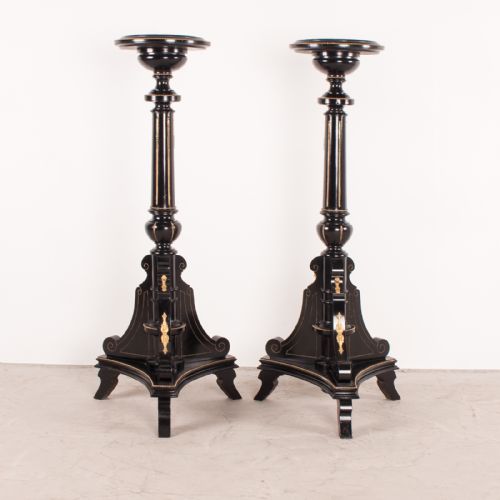

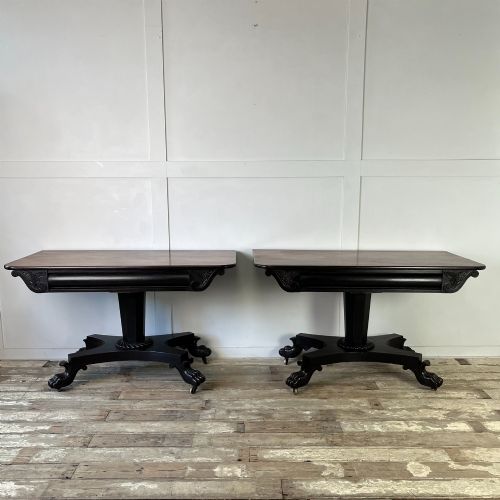


Pair Ebonised Pedestals
These pair ebonised pedestals bring striking architectural presence and deep dark tones to a room, offering a solid stage for display.
Pair Ebonised Pedestals
When you search for pair ebonised pedestals, you are looking at matched supports designed to elevate sculptures, lamps or decorative objects. These items appear across multiple periods, including the nineteenth century and the early twentieth century.
The selections span various forms such as torcheres, plinths and console tables alongside side tables and bedside cabinets. Many examples lean into revival styles, from Regency and William IV to French Napoleon III and Victorian Neoclassical.
You are most likely to encounter nineteenth century iterations alongside pieces dated around nineteen twenty and nineteen thirty. The physical shapes shift from tall columnar columns to lower cabinets and occasional tables.
How they were made
Makers utilised timber bases, predominantly mahogany and walnut, applying ebonisation to mimic costly ebony wood. This dark finish often serves as a deep backdrop for contrasting materials.
Details frequently incorporate brass, ormolu mounts and gilt accents to catch the light against the darkened wood surfaces. Carved elements and amboyna or birdseye maple veneers appear on select examples to add texture and grain.
Listings feature ebonised wood alongside mahogany, amboyna, and birdseye maple, spanning the eighteenth century to the nineteen thirties.
What varies in quality
The standard of a pair ebonised pedestals rests upon the depth of the timber preparation and the crispness of any carved detailing. Superior pieces display precise joinery and well-integrated secondary woods.
The application of decorative metalwork, whether ormolu or brass, marks the distinction between standard workshop output and exhibition quality design. Surfaces that retain their original polished lustre without heavy restoration hold greater integrity.
The Pair Ebonised Pedestals Glossary
- Ebonised wood
- Timber treated with stain, dye or polish to imitate the deep black appearance of genuine ebony. This technique gained significant popularity during the nineteenth century across revival furniture.
- Ormolu
- Gilded bronze or brass applied as mounts and decorative highlights on furniture and pedestals. The technique provides a bright metallic contrast against dark ebonised surfaces.
- Amboyna
- A highly prized exotic wood known for its rich, speckled burr grain pattern. It appears on select tables and pedestals as a contrasting veneer.
- Torchere
- A tall, slender stand historically designed to hold a candle or torch, now typically used for lamps or small sculptures. These pieces form a distinct subset within pedestal design.
Pair Ebonised Pedestals: Frequently Asked Questions
How were pedestals used originally?
In period interiors, these stands elevated statues, urns or heavy lamps to improve eye-level viewing. They functioned primarily as display furniture in reception rooms and hallways.
Over time, matching pairs became popular for symmetry, framing architectural doorways or positioning at either end of a console table.
How do I clean ebonised surfaces?
Maintenance requires a soft, dry cloth to remove dust without disturbing the polished finish. Avoid harsh chemical cleaners or excess moisture which can cloud the dark stain.
Applying a specialist wax occasionally helps preserve the sheen and protects the underlying timber from drying out.
Can I place lamps on them?
Many examples function well as lamp stands, provided the top surface area accommodates the base comfortably. Table heights vary from low bedside versions to tall architectural columns.
Check the weight distribution of your lighting fixture to ensure stable placement on the specific pedestal top.
How do I identify nineteenth century pieces?
Nineteenth century examples often display distinct period revival characteristics such as Victorian Renaissance or Regency styling. Examination of the construction methods, screw types and timber ageing reveals manufacturing eras.
Makers from this period frequently combined ebonised finishes with exotic veneers like amboyna and detailed brass ormolu mounts.