


Gilt Ebonised Display Stand
These gilt ebonised display stand pieces combine dark timber surfaces with bright metallic highlights to showcase treasured objects.
Gilt Ebonised Display Stand
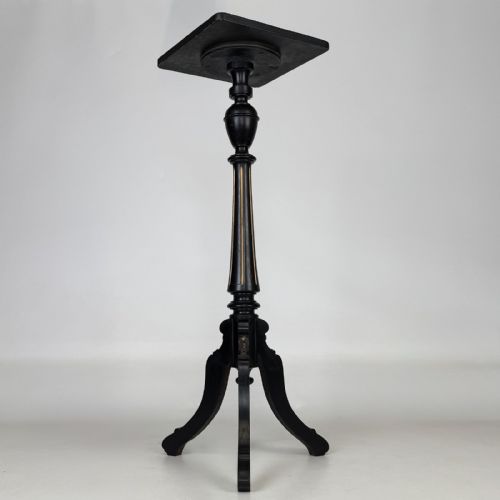
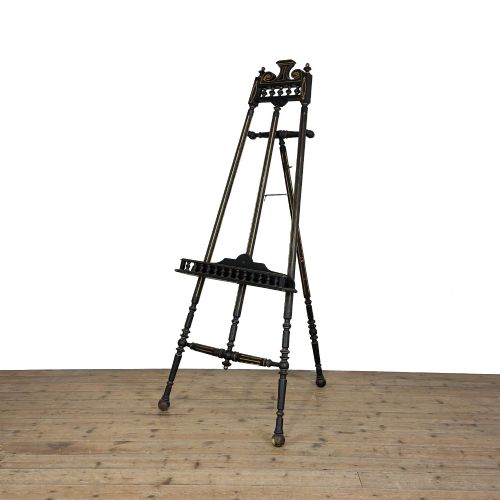
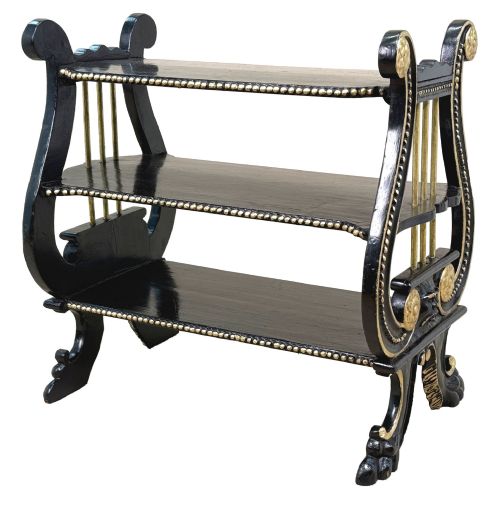
A gilt ebonised display stand brings together dark ebonised wood finishes and gold leaf or gilt highlights, creating a striking contrast that suited nineteenth-century interiors. When searching for a gilt ebonised display stand, buyers encounter a variety of forms designed to elevate and exhibit decorative items.
The selections span multiple periods, including Regency, Victorian, and later nineteenth-century interpretations. Common forms appearing within these listings include floor-standing easels, tiered etagères, pedestals, columns, and vitrines.
Makers and workshops often drew on Aesthetic Movement design principles, incorporating lacquered surfaces, brass details, and glass panels. Pieces range from tall pedestals intended for sculptural display to tabletop frames and multi-tier stands.
Materials and construction
Wood is treated to achieve a deep, dark ebonised finish, frequently paired with parcel gilding or gold leaf highlights that catch the light. Cabinetmakers utilised timbers such as mahogany, amboyna, and burr elm beneath the ebonised surface.
Decoration often extends to lacquered finishes and brass mounts, reflecting the tastes of the Aesthetic Movement and Regency periods. Glass panels feature in cabinets and vitrines, protecting the objects housed inside.
A card case display table lets visiting guests admire calling cards laid out beneath glass.
Assessing quality and execution
Quality in these pieces rests upon the precision of the ebonisation and the crispness of the parcel gilding. Finer examples display meticulous attention to detail in the application of gold leaf and the handling of timber.
Structural integrity matters significantly in load-bearing items like pedestals, columns, and etagères. Superior construction ensures that joints remain tight and tiered platforms maintain stability over time.
Gillow & Co.
The Gilt Ebonised Display Stand Glossary
- Ebonised
- Wood finished to resemble ebony, typically through staining or painting dark. This technique creates a uniform, deep black surface popular in nineteenth-century furniture.
- Gilding
- The application of gold leaf or powder to a surface. This technique highlights carved details and architectural elements.
- Etagère
- A piece of furniture consisting of open shelves for displaying small objects. These tiered stands date from the Regency and Victorian periods.
- Vitrine
- A glass-fronted cabinet designed for displaying fine objects or curiosities. These enclosures protect contents while offering visibility from multiple angles.
- Torchere
- A tall stand or pedestal originally designed to hold a torch or candle. Later versions support decorative urns, figures, or lamps.
Gilt Ebonised Display Stand: Frequently Asked Questions
What periods do these stands cover?
The pieces span several eras, with strong representation from the Regency and Victorian periods, alongside Aesthetic Movement designs.
Craftsmen produced variations ranging from early nineteenth-century tables to late nineteenth-century vitrines and pedestals.
How were etagères used originally?
Etagères served as open display furniture in formal reception rooms. Owners placed porcelain, silver, and small decorative items upon the tiers.
Their open construction allowed light to reach the displayed objects from multiple angles.
What is parcel gilding?
Parcel gilding involves applying gold leaf to specific portions of an object rather than the entire surface. This technique highlights carved details against the dark ebonised wood.
It creates visual contrast on frames, pedestals, and cabinets.
Where should I place a pedestal stand?
Pedestals and columns suit corners, entryways, or focal points in a room where they can elevate sculptures, urns, or plants.
Their vertical presence draws the eye upward while occupying minimal floor space.