
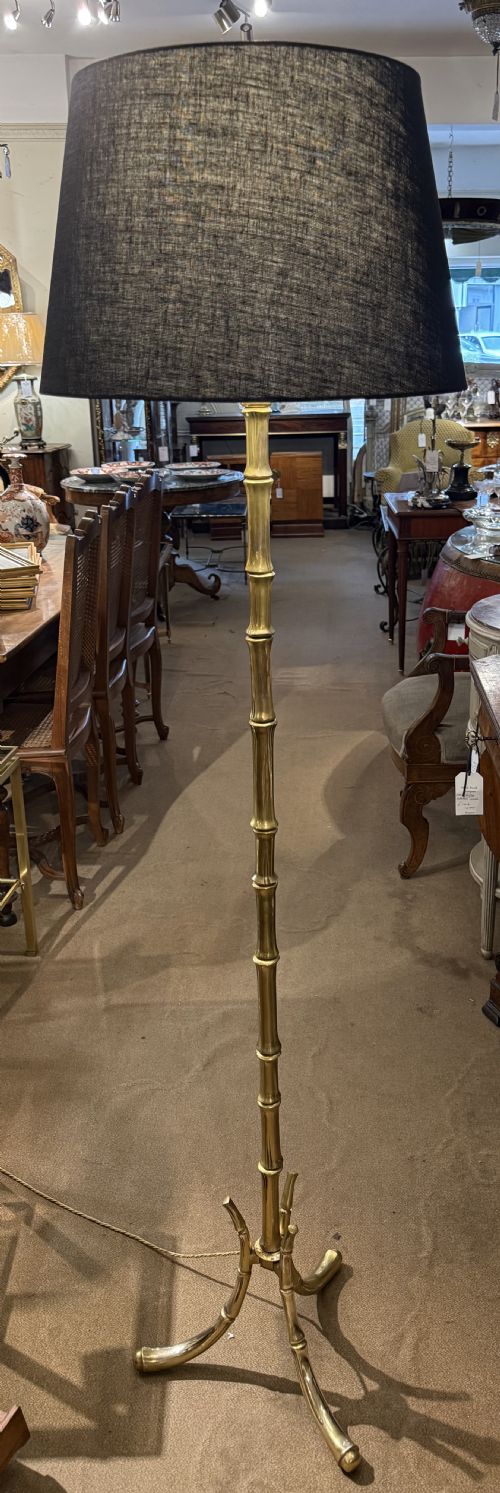
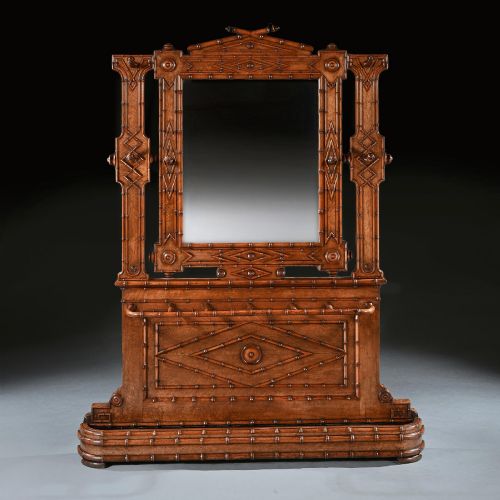
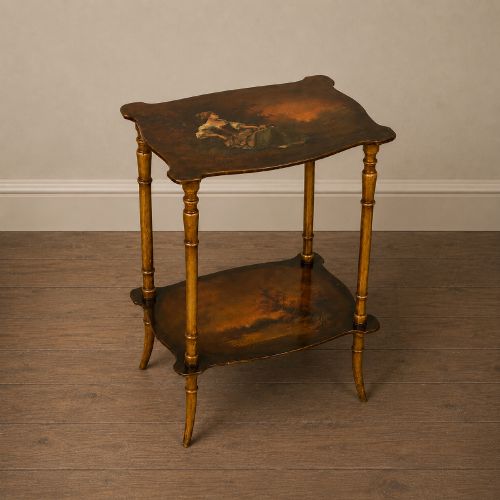
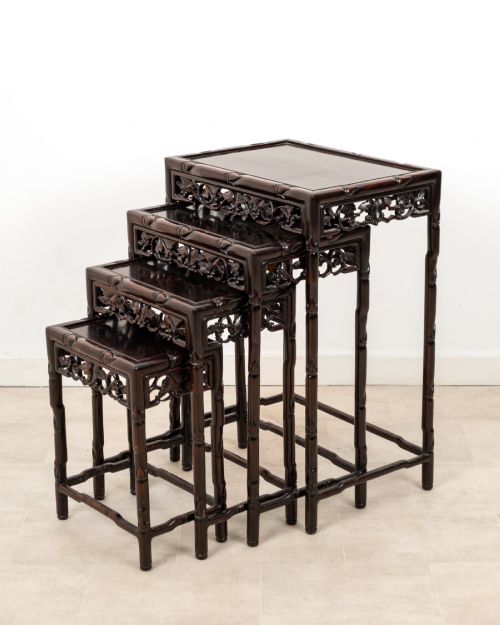
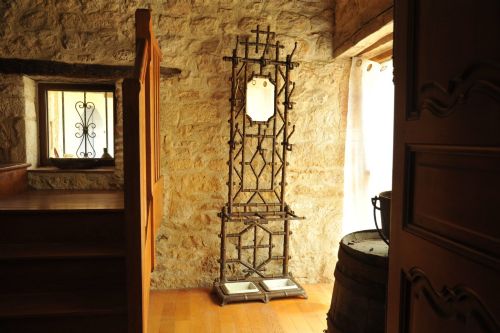
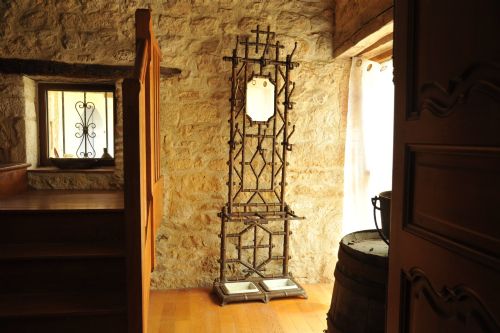
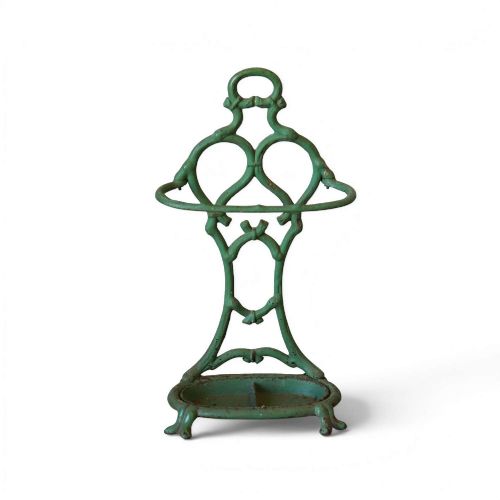


Faux Bamboo Stand
A faux bamboo stand brings inventive nineteenth-century turning and painted finishes to hall stands, tables, and umbrella holders.
Faux Bamboo Stand
A faux bamboo stand replicates the distinctive jointed nodes of natural cane through skilled woodturning, metal casting, or painted surfaces. When you search for a faux bamboo stand, you encounter diverse forms ranging from heavy cast iron umbrella holders to delicate occasional tables and hall stands.
The pieces appearing on this page span the nineteenth and early twentieth centuries, featuring distinct aesthetic influences from Regency, Victorian, and French design traditions. Hall stands and umbrella stands dominate the heavier utility forms, while folding luggage racks, washstands, and tray tables represent domestic utility.
Makers and craftsmen adopted this decorative vocabulary to satisfy nineteenth-century tastes for exoticism and Japanese-inspired design, known as Japonisme. These supports serve both functional domestic roles and decorative display functions within a room scheme.
How they were made
Turned wood provides the primary structural framework for many examples, utilising beech, pine, or maple shaped on a lathe to mimic bamboo segments. Craftsmen hand-carved or moulded the characteristic rings and nodes before applying ebonised finishes, paint, or gold leaf to simulate the natural plant.
Cast iron production created robust umbrella and hall stands, utilising moulds that captured realistic bamboo textures in heavy metal before surface painting. Papier-mâché and painted wood surfaces frequently feature on tray tables and support stands, often decorated with Chinoiserie motifs and lacquer.
Some nineteenth-century anglers rested their fishing rods against dedicated bamboo-turned wooden racks.
What varies in quality
Quality rests in the fidelity of the simulated joints and the crispness of the turning or casting work. Superior examples display meticulously carved or shaped nodes that convince the eye from a distance, whereas lesser pieces rely on simple grooving or flat painting.
The integrity of the original surface finish defines the upper tier of these pieces, particularly where hand-applied gilding, lacquer, or ebonisation survives intact. Structural stability in slender turned limbs and original hardware, such as drip pans in umbrella stands, separates exceptional survivals from compromised items.
Maison Bagues·Jennens and Bettridge
The Faux Bamboo Stand Glossary
- Faux bamboo
- A decorative technique mimicking the jointed cane of bamboo through turned wood, cast metal, or painted motifs. This aesthetic became particularly popular during the Victorian and Aesthetic periods.
- Ebonised
- Wood treated with a chemical stain or black paint to resemble expensive ebony. This finish frequently highlights the turned nodes of nineteenth-century stands.
- Chinoiserie
- European decorative style reflecting Chinese artistic influences, often featuring gilt motifs on lacquered or papier-mâché surfaces. It appears regularly on tray tables paired with bamboo-turned supports.
- Japonisme
- The nineteenth-century craze for Japanese art and design that heavily influenced Western decorative arts. This movement informed the production of many aesthetic period hall stands.
- Tole
- Painted or lacquered sheet metal utilised for trays and decorative containers. These items were frequently mounted upon matching stands.
Faux Bamboo Stand: Frequently Asked Questions
What rooms suit a faux bamboo stand?
Hallways and entryways accommodate the taller umbrella and hat stands effectively, providing both utility and architectural interest. Lighter tray tables and occasional stands fit easily into sitting rooms as display surfaces.
The slender vertical profile of these pieces allows them to occupy awkward corners without dominating a space. They introduce organic texture and historical character into contemporary or traditional interiors alike.
How do I care for a painted stand?
Dust surfaces gently with a dry, soft cloth to protect delicate nineteenth-century paint and lacquer finishes. Avoid moisture and commercial cleaning sprays that might lift historic pigments.
Keep wooden and papier-mâché examples away from direct sunlight and strong heat sources to prevent warping or cracking. Wax can be applied sparingly to unpainted turned wood to nourish the material.
Are cast iron stands heavy?
Cast iron umbrella and hall stands possess considerable weight to ensure stability when holding wet walking sticks and heavy coats. This robust material prevented tipping during daily household use.
Moving these metal pieces requires care to avoid scratching floors or chipping the original painted surface. Their heavy construction explains their high survival rate in usable condition.
How do I distinguish periods?
Regency and early nineteenth-century pieces often display restrained classical proportions combined with lacquer work or tole trays. Victorian and Aesthetic period examples embrace more complex turned nodes and ebonised or Japanned finishes.
Later twentieth-century revivals, such as Hollywood Regency or 1930s interpretations, utilise brighter gilding and sleeker lines. Examining construction methods and fasteners helps clarify the manufacturing era.