




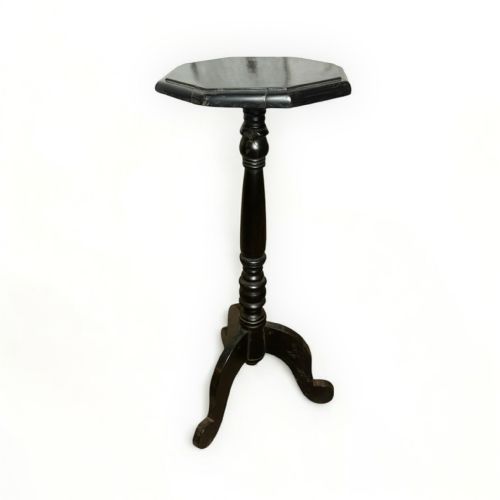


Octagonal Plant Pedestal
An octagonal plant pedestal brings architectural form and elevated display space to a room, offering a sturdy stage for a prized urn or floral arrangement.
Octagonal Plant Pedestal
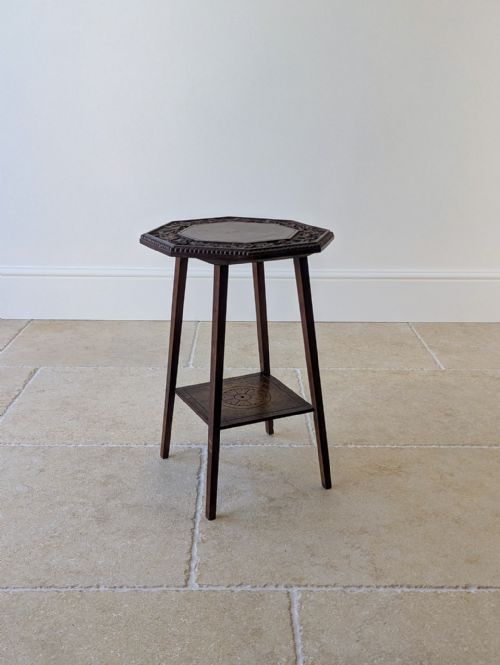
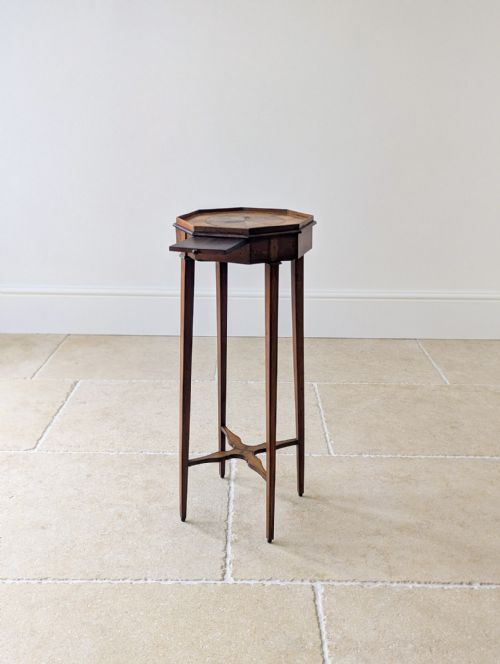
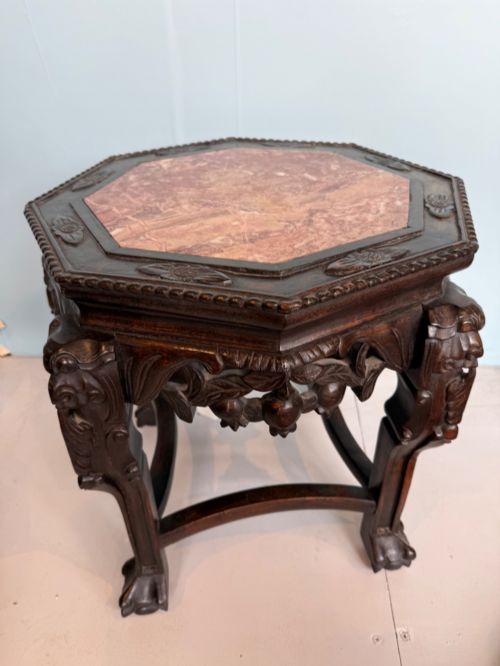
An octagonal plant pedestal functions primarily as a display surface for foliage, sculptures, or decorative objects, utilising an eight-sided top to catch the light from multiple angles. Buyers seeking an octagonal plant pedestal encounter variations spanning the Georgian, Victorian, and Edwardian periods, alongside global influences from Qing Dynasty and Anglo-Indian workshops.
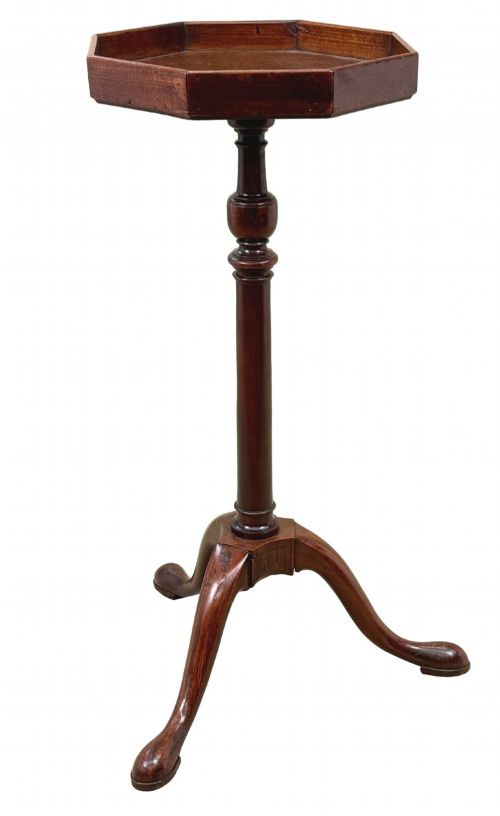
The form often overlaps with torcheres, candle stands, and occasional tables, translating a classical column or tripod base into a compact display piece. Mahogany and walnut dominate the structural choices, though satinwood, padouk, and marble-topped variants also appear across the selection.
Materials and Construction
Cabinetmakers constructed these supports using dense timbers like mahogany, walnut, and ebony, frequently employing veneers over secondary woods to achieve figured surfaces on the geometric tops. Turned columns and tripod legs require precise joinery to ensure stability when bearing heavy marble inserts or ceramic vessels.
Inlaid decorative schemes utilise contrasting light timbers such as satinwood, while specialised finishes range from French polish to grain-painted pine and lacquered surfaces.
The inventory records pieces spanning the 17th century through the 1930s, utilising materials from mahogany and walnut to marble and brass.
Evaluating Craftsmanship
The distinction between standard utility items and superior examples rests on the crispness of the carved detail and the integrity of the timber selection. Finer pieces display harmonious grain matching across the eight-sided top and robust, uncompromised joints in the supporting column or tripod base.
Proportion dictates visual success; a well-balanced pedestal maintains structural equilibrium without heavy-handed bulk, even when supporting substantial marble tops or carved elements.
Shoolbred
The Octagonal Plant Pedestal Glossary
- Torchere
- A tall stand designed originally to hold a torch or candle, now frequently utilised for plants or sculptural displays. These pieces often feature slender columns and tripod bases.
- Padouk
- A heavy, durable tropical hardwood prized by cabinetmakers for its rich reddish-brown colour and fine finish. It appears frequently in pieces with global provenance.
- Satinwood
- A pale, lustrous timber native to India and Sri Lanka, often utilised for fine stringing, banding, and marquetry on eighteenth and nineteenth-century furniture.
- Occasional table
- A small, movable table intended for specific, intermittent use rather than central placement. In this context, octagonal variants often double as display surfaces.
Octagonal Plant Pedestal: Frequently Asked Questions
What were pedestals originally used for?
These supports originally served to elevate lighting devices, candles, or ornamental vases above floor level, drawing illumination closer to eye height in period drawing rooms.
Over time, their decorative utility expanded to accommodate large floral arrangements, ferns, and sculptural busts within domestic interiors.
How do I style a pedestal at home?
Place an octagonal pedestal in an empty corner, beside a seating group, or in a hallway where its geometric top can be appreciated from multiple vantage points.
Ensure the weight of the displayed object remains balanced within the footprint of the eight-sided top to maintain stability.
How do I distinguish Georgian from Victorian examples?
Georgian pieces generally exhibit restrained classical proportions, refined mahogany timbers, and understated carving, reflecting eighteenth-century design ideals.
Victorian iterations often display heavier ornamentation, alternative materials like faux marble, or gothic and arts and crafts influences.
Are these stands sturdy enough for heavy plants?
Solid hardwood and marble-topped variants provide substantial weight and stability, making them suitable for heavier terracotta pots and mature indoor foliage.
Tripod bases and slender columns require careful placement on level flooring to prevent tipping under unbalanced loads.