
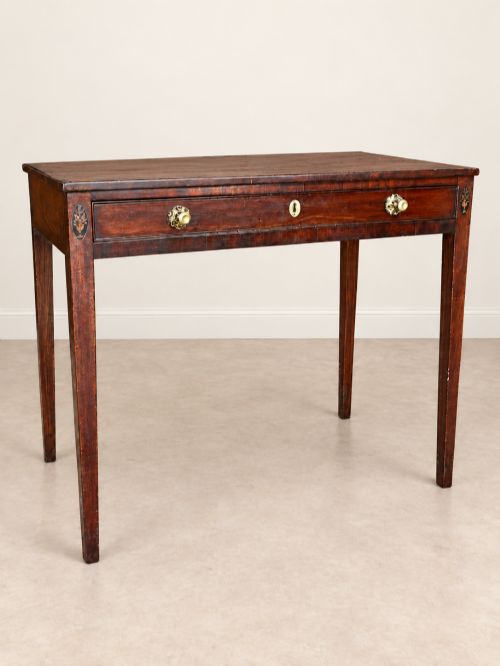
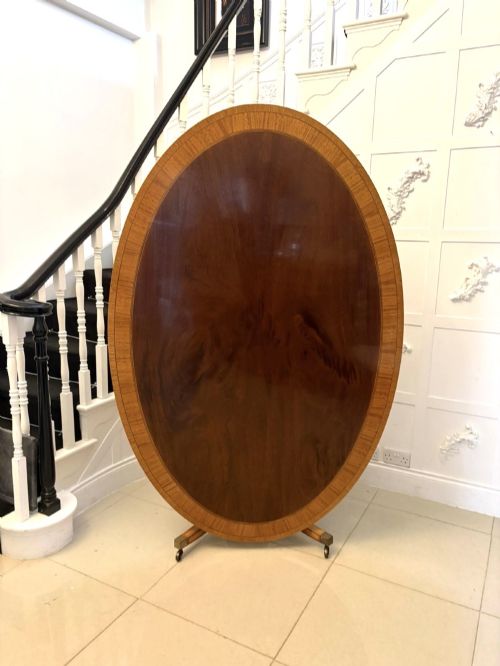
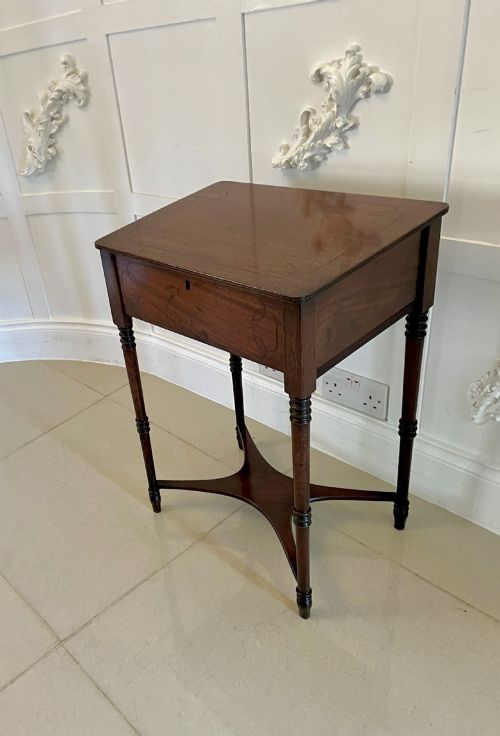
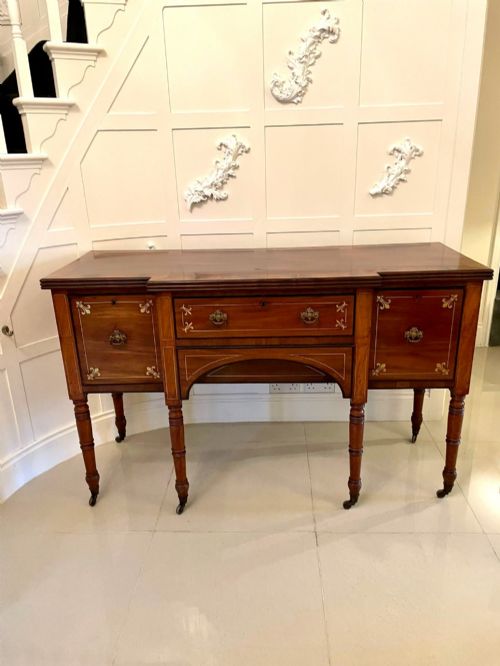

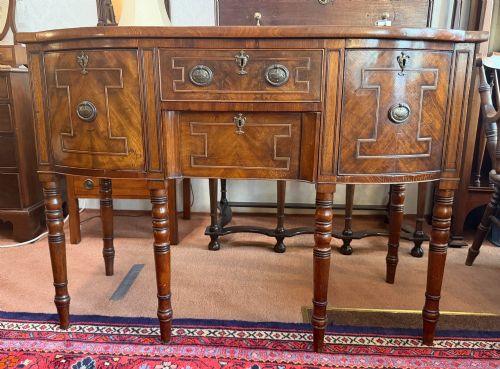
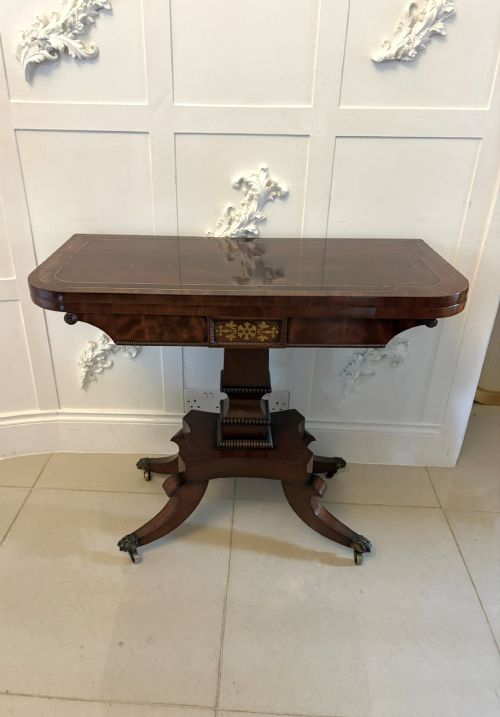
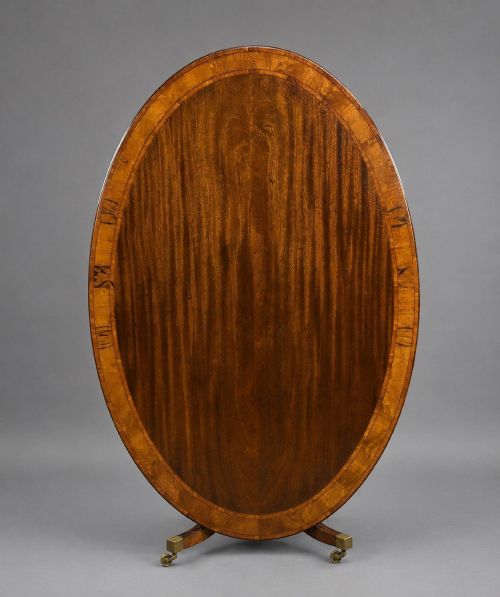
Regency Inlaid Table
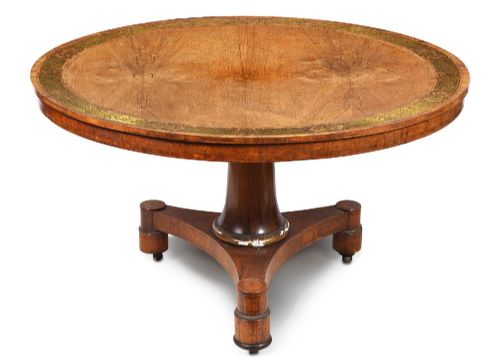
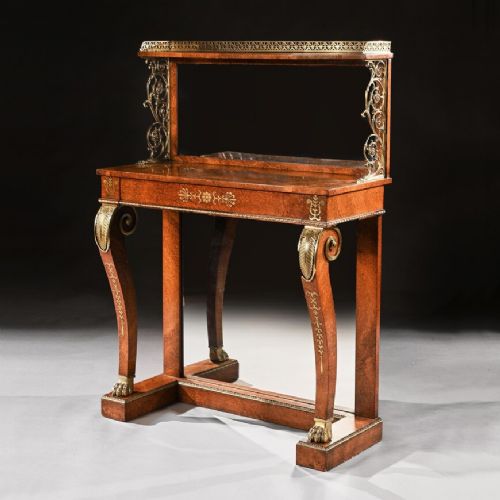
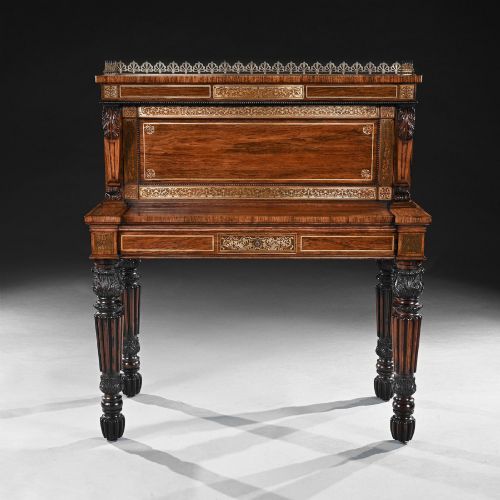
When you want a regency inlaid table, you are looking for timeless timber work defined by sharp brass lines and contrasting wood borders.
Regency Inlaid Table
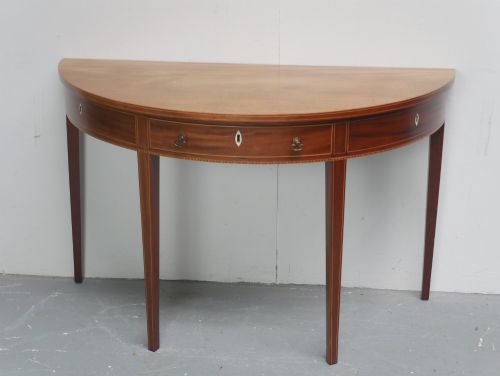
A regency inlaid table brings classical proportion and refined surface decoration into a room, spanning forms like fold-over card tables, sofa tables, and circular centre pieces. You will most frequently encounter mahogany and rosewood examples from the early nineteenth century, alongside later revival pieces produced in Edwardian workshops.
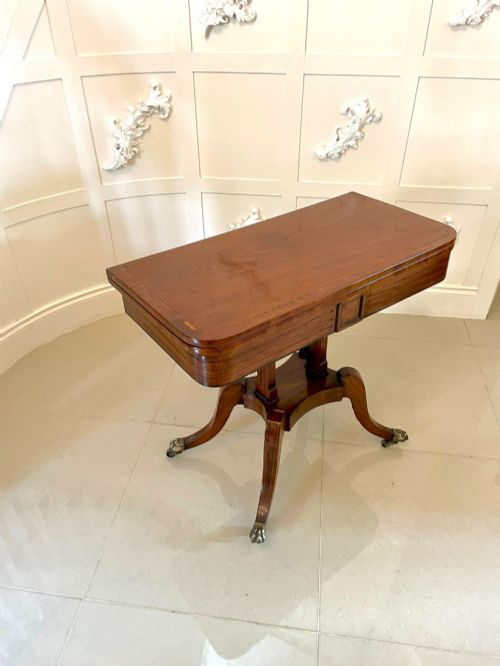
The practical function of these tables dictated their design, with card and games tables featuring hinged tops that swivel to reveal baize-lined playing surfaces. Sofa tables and Pembroke variants offer drop leaves or slim drawers, built to sit neatly beside seating or function as freestanding centrepieces.
How They Were Made
Cabinet makers utilised dense primary timbers such as mahogany and rosewood, often laid as fine veneers over stable pine or oak carcases to prevent warping. Surfaces received decorative enrichment through contrasting veneers and solid wood borders.
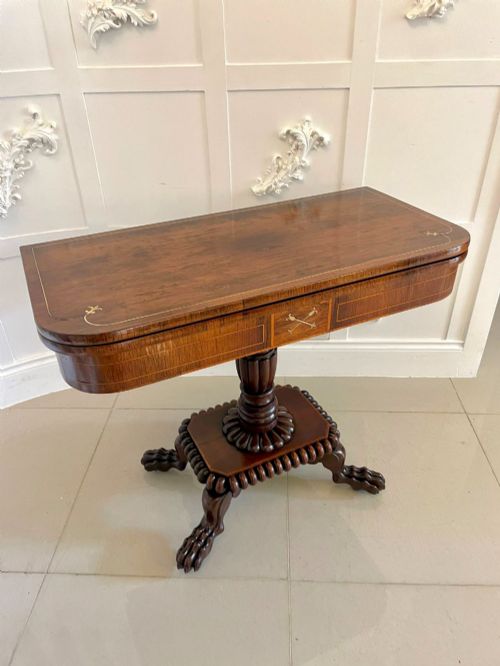
Inlay work relied on precise hand-cut channel inserts of satinwood, boxwood, ebony, and brass wire. Craftsmen embedded these metal and timber strips flush with the tabletop, securing them with animal glue before scraping and polishing the entire surface smooth.
Listings feature woods including mahogany, rosewood, satinwood, amboyna, boxwood, ebony, and oak, alongside brass and glass elements.
What Varies in Quality
The standard of a regency inlaid table rests on the crispness of the brass and wood inlay and the choice of timber figure. Superior examples display tightly matched flame mahogany or rich rosewood grain paired with meticulously mitred stringing.
Secondary structural details separate ordinary pieces from exceptional ones, including the thickness of the drawer linings, the presence of original brass castors, and the integrity of the pivoting mechanisms on card tables.
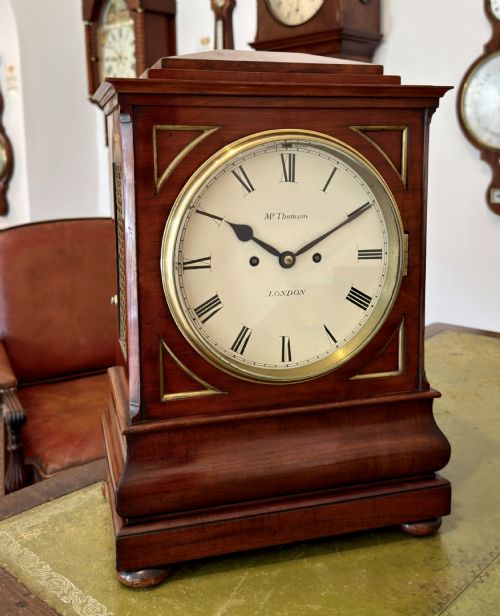
Gillows·George Bullock·Thomson of London·Webster·Charles Pratt
The Regency Inlaid Table Glossary
- Crossbanding
- A border of veneer laid around the edge of a tabletop with the grain running perpendicular to the centre panel. This technique creates a neat framing effect common on better furniture.
- Stringing
- Thin lines of contrasting wood or brass inlaid into channels cut into the solid timber or veneer. It provides delicate linear decoration around table edges and drawer fronts.
- Demi-lune
- A half-moon shape used for console and card tables designed to stand flat against a wall. These pieces often feature hinged tops that open to form a full circle.
- Pembroke table
- A small occasional table with two hinged drop leaves supported by folding brackets. They typically include one or two small drawers beneath the top.
Regency Inlaid Table: Frequently Asked Questions
What is a fold over card table?
A fold over card table has a hinged top that doubles the surface area when opened for gaming or dining.
When closed, it stands compactly against a wall as a console or side table.
How do I care for rosewood and mahogany?
Keep these timbers away from direct sunlight and heat sources to prevent the wood veneers and brass inlays from lifting.
Apply a light microcrystalline wax occasionally to nourish the polished surface without building up residue.
Can I use a sofa table everyday?
Sofa tables were originally designed to sit behind a sofa or serve as light writing desks.
Their drop leaves and delicate stretcher frames mean they suit casual daily use provided heavy loads are avoided.
How do I tell original inlay from later repairs?
Original brass and wood inlay shows age-appropriate tarnish, minor shrinkage, and sits completely flush with the surrounding timber.
Modern replacement sections often feel slightly raised or use brighter, mismatched woods that lack period patina.