
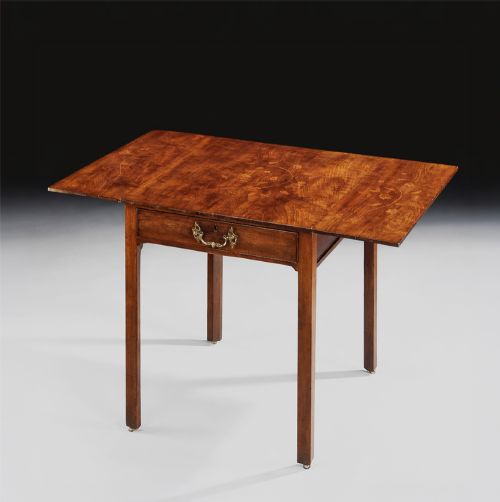
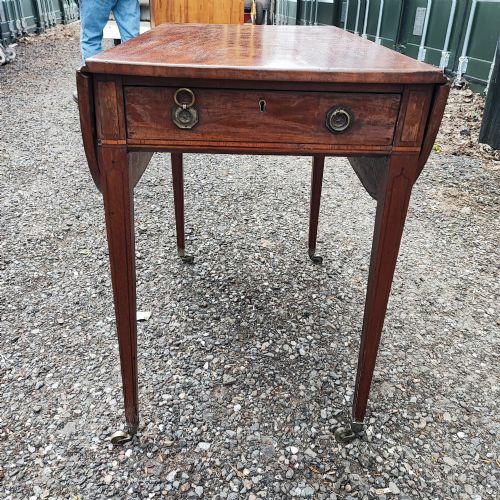
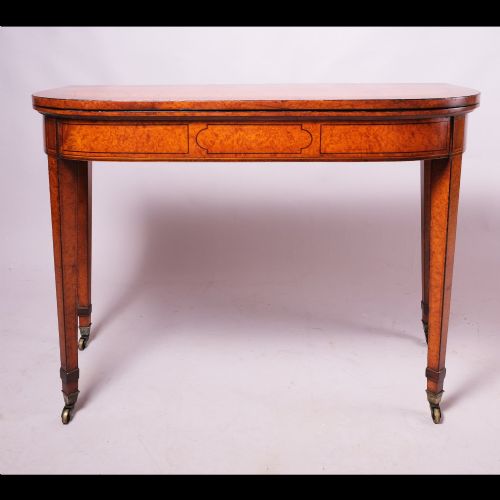
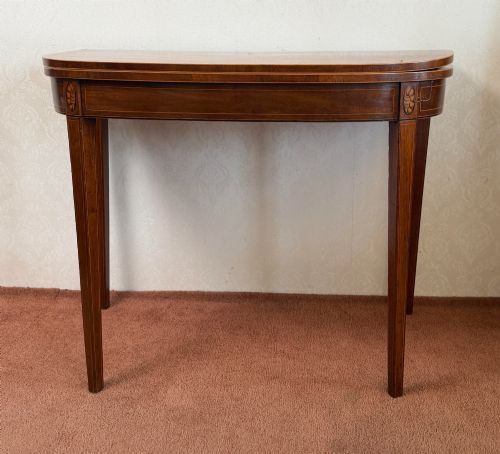

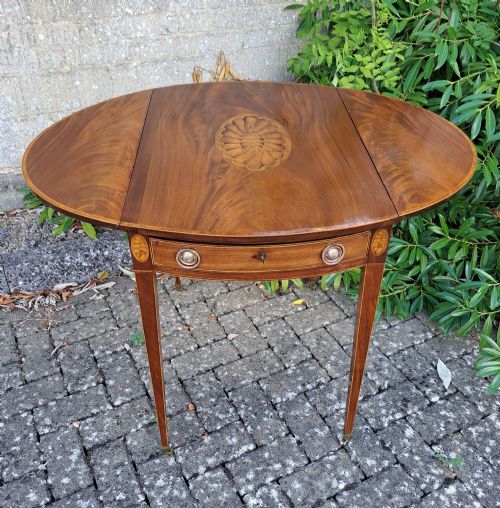
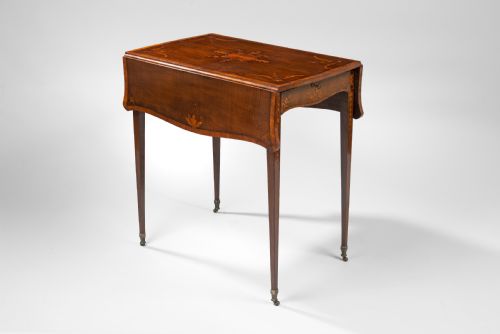


Tapered Leg Tea Table
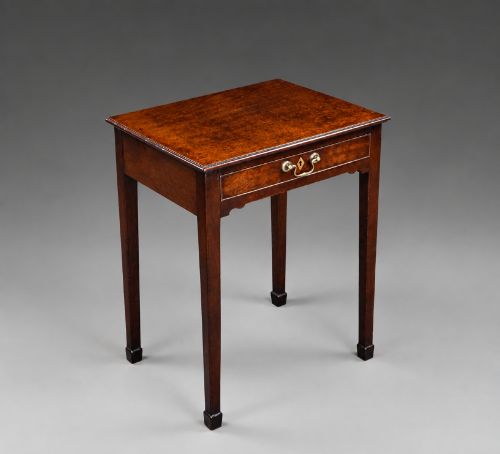
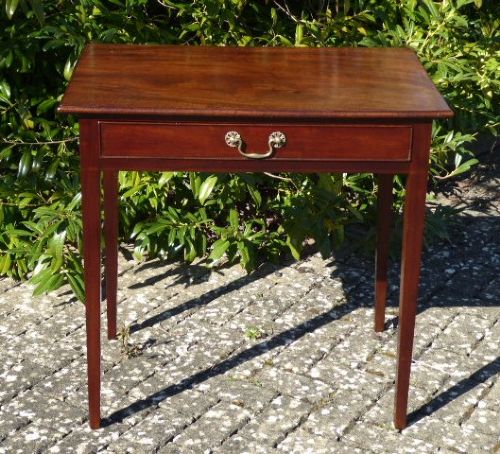
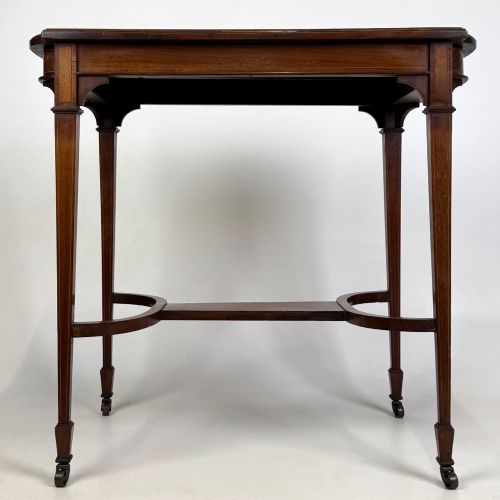
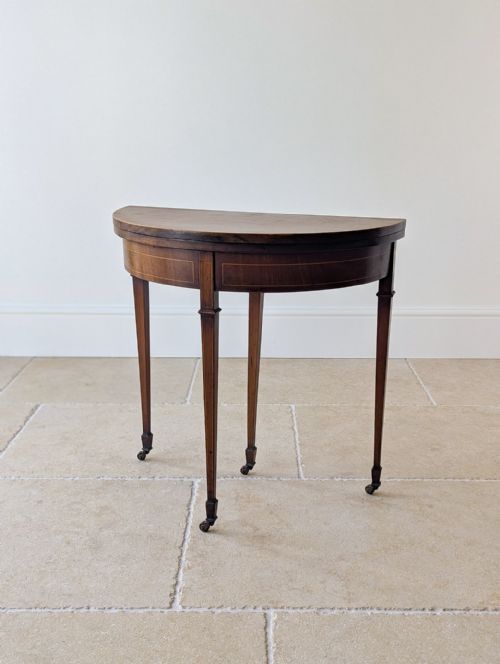
These tapered leg tea table pieces span Georgian and Edwardian periods in mahogany, satinwood, and rosewood, offering timeless surface utility for any traditional room.
Tapered Leg Tea Table
A tapered leg tea table brings domestic history into a modern room, offering compact proportions and sturdy construction. When you search for a tapered leg tea table, you encounter diverse forms including card tables, pembroke tables, and console tables.
The pieces listed on this page predominantly date from the Georgian period through to the Edwardian era. You will find mahogany and satinwood serving as the primary timbers across these occasional and side tables.
How they were made
Cabinet makers utilised solid mahogany and rosewood for structural integrity, often incorporating figured veneers to create striking surface patterns. Timbers were selected for grain movement and durability.
Decoration relied on boxwood inlay, satinwood inlay, and detailed marquetry work rather than heavy carving. Brass hardware frequently accented drawers and fold-over mechanisms.
Tapered Leg Tea Table Retail Price Guide 2026
Typical asking prices for tapered leg tea table among the pieces listed under this phrase on Sellingantiques today, from the lower quarter to the upper quarter. They describe what is for sale here now, not the wider market.
Early card tables doubled as secretive repositories for late-night wagers, hiding baize-lined secrets beneath unassuming folding tops.
What varies in quality
The distinction between standard examples and the finest pieces rests upon timber selection and the precision of the inlay. A well-figured mahogany top with crisp boxwood stringing elevates a table above plain workshop output.
Structural refinement in the leg taper and the tightness of joints determine the longevity of fold-over mechanisms on card and tea tables. Superior execution shows in balanced proportions and symmetrical grain matching.
Bruce & Burns of Edinburgh
The Tapered Leg Tea Table Glossary
- Pembroke table
- A small rectangular table with two hinged drop leaves on opposing sides. It often includes a single drawer and tapered legs.
- Demi lune
- A half-moon shape characteristic of console and card tables designed to sit flush against a wall. These pieces frequently feature folding tops.
- Cross banded
- A decorative border technique where veneer is applied with the grain running perpendicular to the main surface. This frames the primary timber.
- Marquetry
- The art of forming decorative patterns using thin pieces of wood veneer and other materials. It creates pictorial or geometric designs on tabletops.
Tapered Leg Tea Table: Frequently Asked Questions
What is a tapered leg tea table?
A tapered leg tea table is a compact item of antique furniture designed for serving tea or displaying objects. These pieces feature slender, downward-narrowing legs that provide structural support without visual bulk.
Most examples date from the Georgian and Edwardian periods, constructed from mahogany, satinwood, or rosewood. They frequently include drop leaves or fold-over tops to save space in a drawing room.
How were card tables used?
Card tables served as multi-purpose furniture in 18th and 19th-century homes, remaining folded against a wall when not in use. They opened up during social gatherings to accommodate evening games.
Many feature a green baize or felt playing surface concealed beneath the fold-over top. Their tapered legs provided stable support for players without crowding the room.
How do I distinguish Georgian from Edwardian pieces?
Georgian tables originate from the 18th and early 19th centuries, typically displaying heavier structural timbers and hand-cut joinery. The wood grain on genuine Georgian pieces shows natural patination from age and wax.
Edwardian items often reproduce earlier Sheraton or Hepplewhite styles from the early 20th century. These revival pieces frequently incorporate lighter satinwood inlay and machine-assisted precision.
How do I care for antique mahogany tables?
Antique mahogany tables require consistent indoor humidity levels and protection from direct sunlight to prevent timber splitting. Regular application of traditional beeswax maintains the finish without sealing the wood.
Avoid placing hot cups or damp items directly onto polished surfaces to prevent staining the antique polish. Use coasters and protective mats during daily use.